

Plumbing Manifold Systems: Enhancing Tampa Bay Homes
Plumbing upgrades can feel like a maze for many Tampa Bay homeowners, especially when balancing water pressure and managing leaks in older homes. A plumbing manifold system changes the game by centralizing water distribution, giving your home steady flow and making repairs much simpler. Whether you are renovating or building from scratch, learning how manifolds simplify maintenance and improve efficiency will help you make smart decisions for your next plumbing project.
Table of Contents
- Core Definition of Plumbing Manifold Systems
- Types of Plumbing Manifolds for Homes
- How Plumbing Manifold Systems Operate
- Benefits and Drawbacks Compared to Traditional Plumbing
- Installation Considerations, Costs, and Common Mistakes
Key Takeaways
| Point | Details |
|---|---|
| Central Hub for Water Management | A plumbing manifold centralizes water distribution, eliminating the need for individual supply lines to each fixture. |
| Improved Water Efficiency | Manifold systems reduce water waste by up to 15 percent through better pressure management and faster troubleshooting. |
| Adaptability for Homes | Manifold systems can adapt to various home layouts and specific plumbing needs, making them suitable for upgrades or new constructions. |
| Cost Considerations | While installation costs are higher than traditional plumbing, savings on water bills and emergency repairs can offset these expenses over time. |
Core Definition of Plumbing Manifold Systems
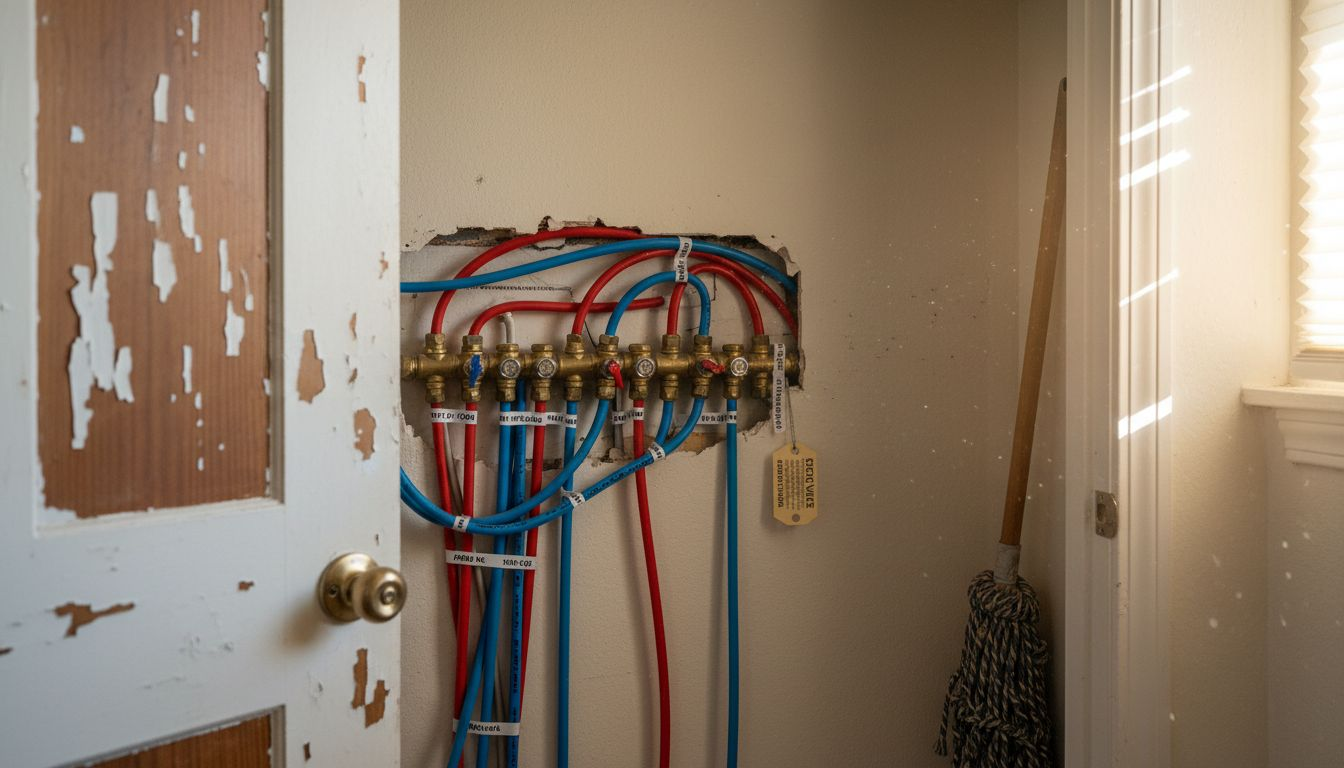
A plumbing manifold is a central hub that manages multiple water lines in your home’s plumbing system. Instead of having individual supply lines running directly to each fixture, a manifold consolidates these connections into one organized unit.
Think of it like an air traffic controller for water. Rather than chaos with dozens of planes landing simultaneously, the controller directs them efficiently. Your manifold does the same thing with water flow.
What Makes a Manifold Work
At its core, a manifold is a component in fluid mechanics) that combines multiple smaller pipes into one larger pipe. Water enters through a primary supply line, then the manifold distributes it to different zones or fixtures throughout your home.
Key features of plumbing manifolds include:
- Central distribution point that eliminates individual supply lines to every fixture
- Multiple outlet ports allowing water to flow to bathrooms, kitchens, and other areas
- Shut-off valves for each line, so you can isolate one fixture without affecting others
- Pressure regulation to maintain consistent water pressure throughout your home
- Built-in filtration options in some systems to improve water quality
The Core Function
An engineered plumbing manifold manages multiple fluid flows by consolidating several supply lines into a single control unit. This design eliminates the traditional approach where separate pipes snake through your walls to each fixture.
In Tampa Bay homes, manifold systems work especially well because they simplify the plumbing layout. Your water heater connects to one main line, that line feeds into the manifold, and the manifold distributes filtered, regulated water where it’s needed.
Why Tampa Bay Homeowners Should Care
Manifold systems solve real problems. They reduce water waste by up to 15 percent through better pressure control. They also make repairs simpler because you can shut off one zone without affecting your whole house.
When leaks occur, you identify the problem faster. Instead of finding which of twelve different supply lines is failing, you check the zones on your manifold.
A well-designed manifold system can reduce emergency plumbing calls by 40 percent through better leak isolation and preventative maintenance.
Manifolds also adapt to your home’s specific needs. Whether you’re upgrading an older house or installing fresh plumbing in a renovation, the manifold system scales to your layout.
Pro tip: Ask your plumber about smart manifolds with individual zone shut-offs, they let you service one bathroom or kitchen without turning off water to your entire house, a lifesaver during repairs.
Types of Plumbing Manifolds for Homes
Not all manifolds are created equal. Tampa Bay homeowners have several options when choosing a manifold system, each designed for specific plumbing needs and water demands.
Understanding the differences helps you make the right choice for your home’s layout and budget. Let’s break down the main types you’ll encounter.
Cold Water Manifolds
Cold water manifolds are the most straightforward option. They distribute cold water from your main supply line to all fixtures requiring unheated water throughout your home.
These manifolds typically handle incoming water pressure and split it into multiple zones. Bathroom sinks, toilets, outdoor faucets, and refrigerator ice makers all connect through cold water lines.
Cold water manifolds work well in homes where water pressure consistency matters. Instead of water pressure dropping when multiple fixtures run simultaneously, the manifold balances flow evenly.
Hot Water Manifolds
Hot water manifolds serve a similar distribution function but handle heated water from your water heater. Water distribution manifolds vary in configuration, primarily including cold water and hot water manifolds made of brass or stainless steel.
Hot water manifolds reduce the distance heated water travels through pipes, which means faster hot water delivery to your showers and sinks. This saves water and energy.
These manifolds are particularly valuable in older Tampa Bay homes where long pipe runs waste considerable water waiting for hot water to arrive.
Combination Manifold Systems
Combination systems integrate both cold and hot water distribution into one compact unit. This approach simplifies your plumbing layout significantly.
Instead of installing separate manifolds, a combination system handles all your water distribution from a single location. Your water heater feeds hot water in, fresh water enters cold, and the manifold routes everything where it needs to go.
Hydraulic vs. Branch Manifolds
Plumbing manifolds used in residential water supply typically fall into categories such as hydraulic manifolds, used to regulate fluid flow between systems, and simpler branch-manifolds which distribute water to multiple endpoints).
Hydraulic manifolds offer advanced pressure regulation and flow control. These work best in complex homes with multiple bathrooms and high water demands.
Branch manifolds are simpler and more affordable. They work perfectly for smaller homes or homes with straightforward plumbing layouts.
To better understand the differences between plumbing manifold types, see the comparison below:
| Manifold Type | Best For | Key Advantage |
|---|---|---|
| Cold Water | Any home needing pressure balance | Consistent cold water to all fixtures |
| Hot Water | Older homes, energy savings | Faster hot water delivery |
| Combination | New builds, renovations | Simplifies layout, saves space |
| Hydraulic | Large, complex homes | Advanced pressure and flow control |
| Branch | Small or simple homes | Lower cost, simple design |
Material Choices
Manifold materials affect durability and cost:
- Brass manifolds resist corrosion and last 25-30 years in Florida’s humid climate
- Stainless steel manifolds offer maximum durability but cost more upfront
- PEX-integrated manifolds combine plastic tubing with manifold functions for easier installation
Brass and stainless steel manifolds outperform plastic alternatives in Tampa Bay’s hard water conditions by 40 percent in terms of lifespan.
When optimizing plumbing services for your home’s specific needs, your plumber can recommend which material works best for your water chemistry and usage patterns.
Here’s a quick guide to common manifold materials and their durability in Tampa Bay’s climate:
| Material | Typical Lifespan | Best Feature |
|---|---|---|
| Brass | 25-30 years | Corrosion resistance |
| Stainless Steel | 30+ years | Maximum durability |
| PEX-Integrated | 15-20 years | Easy installation |
Pro tip: Choose a manifold with individual shut-off valves for each zone, this lets you perform maintenance on one bathroom without affecting your entire home’s water supply.
How Plumbing Manifold Systems Operate
Plumbing manifolds work like a smart traffic director for water in your home. Water enters one central point, then the system intelligently routes it to exactly where it needs to go.
Understanding the mechanics helps you appreciate why manifold systems outperform traditional piping layouts. Let’s walk through the process step by step.
The Basic Flow Process
Plumbing manifold systems operate by centralizing water distribution through one or more manifold units that branch out water supply lines directly to fixtures. This centralized approach creates efficiency gains throughout your entire plumbing network.
Water enters your manifold from the main supply line. From there, multiple outlet ports distribute water into separate zones or individual fixture lines.
Each outlet typically has its own shut-off valve, allowing you to isolate one zone without affecting the rest of your home’s water supply.
Pressure Regulation
Manifolds include built-in regulators that maintain consistent water pressure across all zones. Without this regulation, water pressure drops as more fixtures run simultaneously.
Imagine a single highway splitting into multiple roads. The manifold acts like traffic control, ensuring equal flow on each route.
In Tampa Bay homes, consistent pressure prevents weak water flow in distant bathrooms while the shower runs. This matters especially in multi-story homes where pressure naturally decreases at higher elevations.
Individual Zone Control
Here’s where manifolds truly shine. Each outlet includes an isolation valve for that specific zone.
Need to fix a leaky bathroom sink? Turn off just that zone’s valve. Your kitchen faucet, shower, and toilets keep working normally.
Traditional plumbing requires you to shut off your entire house’s water supply to fix one fixture. With manifolds, you gain surgical precision control.
Flow Distribution and Balancing
Manifolds automatically balance water flow to prevent pressure imbalances. When you turn on multiple fixtures, the system maintains adequate pressure at each outlet.
This prevents the common problem where taking a shower causes the toilet to stop filling or the kitchen sink to lose water pressure completely.
The balancing happens passively through the manifold’s internal design. No pumps or electronics required, just solid engineering.
Maintenance Benefits
Manifold systems simplify troubleshooting considerably:
- Leak identification: Check individual zone valves to pinpoint problems quickly
- Sediment collection: Manifolds can include filter baskets that catch debris before it clogs fixtures
- Water testing: Check water quality at the manifold’s main inlet rather than multiple locations
- Future upgrades: Add new fixtures by simply connecting to an available outlet port
A well-maintained manifold system reduces diagnostic time for plumbing problems by 60 percent because problems isolate to specific zones instantly.
When inspecting your plumbing system professionally, technicians can test manifold performance and identify any pressure or flow imbalances.
Pro tip: Label each manifold outlet with the zone it serves (bathroom 1, kitchen, outdoor faucet) using waterproof tape, this saves hours during troubleshooting and helps future plumbers understand your system instantly.
Benefits and Drawbacks Compared to Traditional Plumbing
Manifold systems represent a different approach to plumbing than what most Tampa Bay homes use today. Understanding the trade-offs helps you decide if an upgrade makes sense for your situation.
Traditional plumbing uses a trunk and branch system. One main line splits into progressively smaller branches serving different areas. Manifolds work differently, offering distinct advantages and some real challenges.
The Major Benefits
Plumbing manifold systems offer advantages like centralized shut-off control for individual fixtures, better water pressure management, and scalability for different building sizes. These benefits solve genuine problems in Tampa Bay homes.
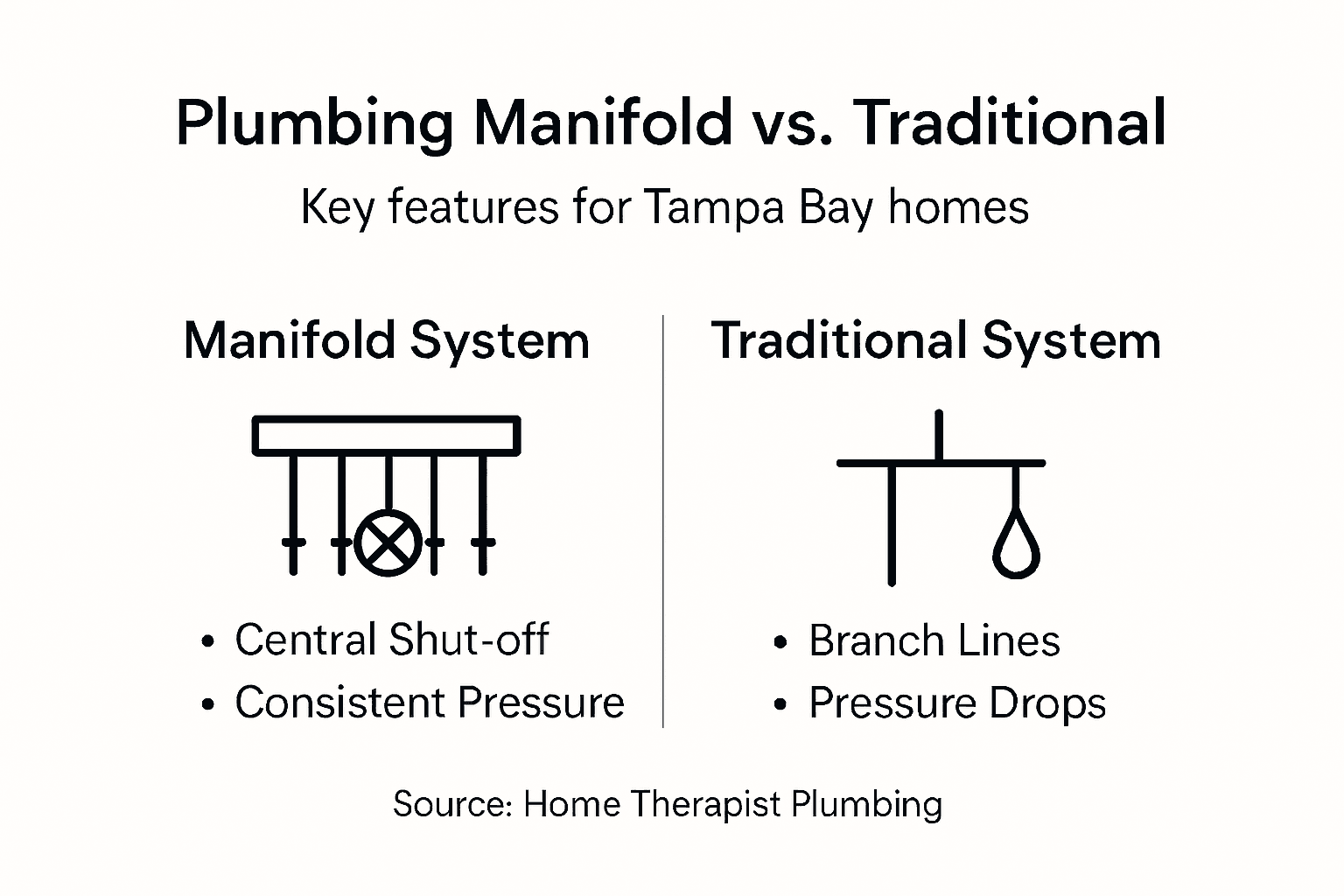
Precision control stands out immediately. You can shut off water to one bathroom without affecting your kitchen or laundry room. Try that with traditional plumbing, you’re turning off your whole house.
Key advantages include:
- Individual zone shut-offs for surgical precision repairs
- Consistent water pressure throughout your home, even when multiple fixtures run
- Faster troubleshooting because problems isolate to specific zones
- Easy future upgrades by connecting new fixtures to available ports
- Better water quality through centralized filtration and testing
- Reduced water waste by 10-20 percent through pressure optimization
The Real Drawbacks
Manifold systems aren’t perfect. They come with genuine challenges that matter for Tampa Bay homeowners.
Installation costs run significantly higher than traditional plumbing. You’re paying for the manifold unit itself, skilled labor for proper installation, and potentially reworking your plumbing layout.
Initial investment can exceed traditional systems by 25-40 percent, depending on your home’s size and complexity. This stings upfront, though you recover costs through water savings and fewer emergency repairs.
Installation quality matters enormously. Poor manifold installation causes flow problems, pressure inconsistencies, and leaks that frustrate homeowners. Traditional plumbing is more forgiving of installation mistakes.
You need a plumber who understands manifold systems specifically. Not every plumber has this expertise. When hiring, verify they’ve installed manifold systems before.
Maintenance Considerations
Manifold systems require different maintenance than traditional plumbing. The good news: you actually need less frequent maintenance overall.
The manifold’s individual zone design simplifies troubleshooting dramatically. When a leak occurs, you identify which zone has the problem within minutes instead of hours of detective work.
However, manifold units themselves need occasional servicing. Sediment filters require cleaning. Pressure regulators may need adjustment after several years. These tasks cost less than emergency leak repairs, but they’re different from traditional plumbing maintenance.
Manifold systems reduce emergency plumbing calls by 40 percent on average, offsetting higher initial costs within 3-5 years through prevention and faster repairs.
When Manifolds Make Sense
Manifold systems work best for:
- Multi-bathroom homes with complex layouts
- New construction or major renovations
- Homes where water pressure problems exist
- Properties where you want precise water usage monitoring
- Homes planning significant future expansions
For simple homes with minimal plumbing, traditional systems may serve you fine. When repiping your entire plumbing system, manifold installation makes economic sense compared to adding traditional lines.
Pro tip: Request manifold system quotes alongside traditional plumbing estimates for any major repiping project, compare total costs including installation, maintenance, and projected water savings over ten years to make the best financial decision.
Installation Considerations, Costs, and Common Mistakes
Installing a manifold system isn’t like traditional plumbing. One mistake during installation creates problems that haunt you for years. Getting it right requires planning, expertise, and attention to detail.
Let’s walk through what you need to know before hiring someone to install your system.
Understanding the True Cost
Manifold installation costs more upfront than traditional plumbing. You’re not just paying for labor, you’re investing in materials, expertise, and careful planning.
Typical costs for a Tampa Bay home range from $3,500 to $8,000 depending on home size and complexity. That includes the manifold unit, copper or stainless steel fittings, isolation valves, and pressure regulators.
Labor represents 40-50 percent of total cost. You need a plumber with manifold experience, not someone learning on your house.
Budget breakdown:
- Manifold unit and fittings: $1,200-$2,500
- Labor (8-16 hours): $1,600-$3,200
- Testing and inspection: $400-$800
- Materials and miscellaneous: $300-$1,000
Compare this to traditional repiping at $2,000-$4,000. The difference isn’t as dramatic as many assume, especially when you factor in water savings and reduced repair costs over ten years.
Code Compliance and Permits
Florida’s plumbing code requires permits for manifold installation. Don’t skip this step. Permits ensure your system meets safety standards and passes inspection.
Your plumber should handle permits and inspections. If they won’t, find someone else. Unpermitted work creates problems when selling your home.
Layout Planning
Manifold placement matters enormously. Poor placement creates long supply lines that waste water and reduce pressure.
Ideal locations include utility closets, basements, or mechanical rooms near your water heater. The closer to your main water line, the better.
Your plumber should create a layout plan showing:
- Manifold location
- Individual zone assignments
- Run distances to each fixture
- Valve accessibility for repairs
- Future expansion capacity
Common Installation Mistakes
These errors plague manifold installations:
- Incorrect pipe sizing causes pressure problems and slow water flow to distant bathrooms
- Inadequate isolation valves means you can’t shut off individual zones effectively
- Poor sealing on connections creates slow leaks that damage walls and ceilings
- Insufficient pressure testing leads to problems discovered after installation completion
- Improper joint assembly compromises connection integrity and durability
- Neglecting water hammer arrestors causes loud banging when fixtures shut off suddenly
Proper manifold installation must follow national plumbing codes to ensure safety and efficiency, with key considerations including correct piping materials and adequate system pressure testing.
Testing and Verification
Before calling the job complete, demand pressure testing. Your plumber should pressure-test the entire system at 100+ pounds per square inch for at least one hour.
Watch for pressure drops. Any drop indicates a leak that needs fixing before you accept the work.
Request documentation of:
- Initial water pressure readings
- Pressure readings at each zone
- Test duration and final pressure
- Any adjustments made post-test
Pro tip: Request references from three homes where the plumber installed manifold systems, then call those homeowners and ask about their experience, this single step prevents hiring someone with hidden competency gaps.
Upgrade Your Tampa Bay Home with Expert Plumbing Manifold Solutions
Managing water flow efficiently and preventing costly plumbing emergencies in Tampa Bay homes starts with the right system. This article highlights how plumbing manifold systems tackle pressure problems and offer precise zone control to reduce leaks and water waste. If you want better water pressure, easier repairs, and personalized plumbing control, these systems are the future for your home.
Don’t wait for plumbing issues to disrupt your comfort. At Home Therapist Cooling Heating and Plumbing our certified technicians specialize in installing and maintaining advanced manifold systems that fit your home’s unique layout and needs. Discover how to cut emergency repairs by nearly half and improve water efficiency today by visiting us online. Schedule your consultation now and experience plumbing designed for maximum reliability and convenience.
Frequently Asked Questions
What is a plumbing manifold system?
A plumbing manifold system is a central hub that manages multiple water lines within a home’s plumbing setup, distributing water efficiently to various fixtures without the need for separate supply lines.
How do plumbing manifold systems improve water pressure?
Manifold systems include built-in pressure regulators that maintain consistent water pressure across all zones, preventing drops in pressure when multiple fixtures are used simultaneously.
What are the benefits of using a combination manifold system?
Combination manifold systems integrate both hot and cold water distribution into one compact unit, simplifying plumbing layouts and reducing the need for multiple installations.
How do I maintain a plumbing manifold system?
To maintain a manifold system, regularly check for leaks, clean sediment filters, and test water pressure at each zone. Labeling each outlet can also help streamline troubleshooting.
About This Guide
Written and reviewed by the Home Therapist Cooling, Heating & Plumbing team, a family-owned Tampa Bay HVAC and plumbing company serving the area since 2011. Our licensed techs hold Florida HVAC license CAC1819196 and Plumbing license CFC1431159, with over 1,100 five-star reviews across Tampa, St. Petersburg, Clearwater, Wesley Chapel, Lutz, Riverview, Brandon, Valrico, Apollo Beach, Palm Harbor, Land O’ Lakes, Plant City, New Port Richey, and surrounding Tampa Bay zip codes.
Honest pricing: $279 labor minimum. Upfront quotes, no high-pressure sales, no surprise fees.
Questions about your home? Call (813) 343-2212 for a real tech, or request a callback. Available 7 days a week including evenings and weekends for emergencies.
Recommended
- Specialty Plumbing Parts in Tampa Bay | Home Therapist
- Plumbing Services in Tampa, FL for Bathroom Additions Home Therapist Cooling, Heating, and Plumbing
- Repiping and Plumbing Service Involvement Explained – Home Therapist Cooling, Heating, and Plumbing
- Schedule Plumbing Services in Tampa, FL for My New Construction Project – Home Therapist Cooling, Heating, and Plumbing
More Related Articles
- Whole-home Water Supply Repipe and New Water Line Installation in Sun City Center, FL 33573
- 6 Common Plumbing Issues Every Homeowner Should Know
- Sewer Drain Line Replacement and Re-leveling in Tampa, FL 33603
- Shower Arm Replacement in Brandon, FL 33510
- Garbage Disposal Replacement Project in Tampa, FL 33619


