

Plumbing corrosion: Signs, risks, and solutions for Tampa Bay homes
TL;DR:
- Invisible pipe corrosion often causes leaks and water damage without warning signs.
- Regular inspections and water testing can detect early corrosion and prevent costly repairs.
- Upgrading to non-metallic piping like PEX eliminates corrosion risks in Tampa Bay homes.
Invisible pipe corrosion is responsible for over 65% of unexpected plumbing repairs in Tampa Bay homes, yet most homeowners never see it coming until water is already dripping from the ceiling or soaking into the walls. Corrosion doesn’t announce itself. It works quietly inside your pipes, thinning walls, creating pinhole leaks, and contaminating your water supply, sometimes for years before a single warning sign appears on the surface. If you’ve ever dismissed slightly discolored water or a small pressure drop as “nothing serious,” this guide is for you. We’ll break down exactly what plumbing corrosion is, how to recognize it, and what you can do about it before a small problem becomes a very expensive one.
Table of Contents
- What is plumbing corrosion?
- Types of corrosion: What Tampa homeowners need to know
- How to spot corrosion in your plumbing system
- Preventing and solving plumbing corrosion in Tampa Bay
- Our take: Why Tampa homeowners shouldn’t wait for visible corrosion
- Get expert help with plumbing corrosion in Tampa Bay
- Frequently asked questions
Key Takeaways
| Point | Details |
|---|---|
| Corrosion is hidden damage | Plumbing corrosion often occurs out of sight, causing leaks and repairs before you notice visible signs. |
| Older homes are at risk | Homes in Tampa Bay over 30 years old with metallic pipes face a significantly higher chance of corrosion problems. |
| PEX pipes prevent corrosion | Switching to PEX pipes eliminates corrosion issues and reduces maintenance needs. |
| Annual inspections save money | Regular plumbing inspections can cut unexpected repair costs by up to 65% in Tampa Bay homes. |
| Proactive maintenance is key | Don’t wait for leaks. Prevent corrosion with routine checks and timely upgrades. |
What is plumbing corrosion?
Plumbing corrosion is the chemical process that causes metal pipes to break down over time. Think of it like rust on the outside of a car, except it’s happening on the inside of the pipes carrying your drinking water. When water interacts with metal, it triggers a reaction that slowly eats away at the pipe material. The result is weakened pipe walls, restricted water flow, and eventually leaks or full pipe failure.
Several factors speed up corrosion in Tampa Bay specifically. Our local water chemistry plays a big role. Tampa’s water supply tends to have varying pH levels and mineral content, and when water is even slightly acidic, it accelerates the breakdown of copper and galvanized steel pipes. High chlorine content, used to treat municipal water, can also contribute over time. Add in Florida’s humidity and the age of many local homes, and you have a recipe for serious pipe deterioration.
What makes corrosion particularly sneaky is that it’s an ongoing, silent process. A pipe can lose significant wall thickness over years without showing any external signs. By the time you notice rust-colored water coming from your tap or spot a wet patch on the drywall, the corrosion has typically been working for a very long time.
Here’s a useful overview of the most common corrosion types:
- Uniform corrosion: Slow, even thinning across a pipe’s surface, the most predictable and easiest to monitor
- Pitting corrosion: Localized holes that form in specific spots, often invisible from the outside, and extremely dangerous
- Galvanic corrosion: Happens when two different metals (like copper and steel) are joined together and one corrodes faster
- Erosion corrosion: Caused by high water velocity wearing away pipe walls at elbows, joints, and bends
- Microbiologically influenced corrosion (MIC): Triggered by bacteria that thrive in stagnant water areas, like inside water heaters
According to pipe research, common corrosion types include uniform, pitting, galvanic, erosion, and MIC, each with distinct causes and patterns of damage.
Getting a professional set of plumbing inspections Tampa done regularly is the best first step to catching any of these early.
Corrosion causes sudden leaks and costly repairs, often before any visible signs appear on the surface of your pipes.
Types of corrosion: What Tampa homeowners need to know
Now that we understand what corrosion is, let’s break down the types Tampa homeowners most often encounter and why each one deserves your attention.
1. Uniform corrosion
This is the most common and, oddly enough, the least dangerous type in the short term. Uniform corrosion spreads evenly across a pipe’s inner or outer surface, thinning the wall at a slow and relatively predictable rate. Because it progresses steadily, a professional can monitor it with inspections and plan pipe replacements before a failure occurs. Older galvanized steel pipes in Tampa homes built before the 1980s are prime candidates for this type.
2. Pitting corrosion
Pitting is the troublemaker. Unlike uniform corrosion, pitting concentrates in specific spots and digs deep holes rather than thinning the surface evenly. These holes can be microscopic and virtually impossible to see without specialized equipment. The danger is that a pipe can look completely normal from the outside while a pinhole leak is forming inside. Pitting is especially common in copper pipes exposed to soft, slightly acidic water.
3. Galvanic corrosion
This type occurs when dissimilar metals in contact are joined in the same plumbing system. For example, if a copper pipe is connected directly to a steel fitting, an electrochemical reaction occurs. The less noble metal (steel in this case) corrodes much faster than it would on its own. Older Tampa Bay homes that have undergone partial plumbing upgrades often have these mixed metal connections hiding inside walls.
4. Erosion corrosion
Water moving at high velocity, especially around tight bends, T-junctions, and valves, can physically wear away pipe walls over time. Erosion corrosion is more common in homes with high water pressure and in plumbing systems where pipe diameters change abruptly. The damage tends to concentrate at elbows and fittings rather than along straight pipe runs.
5. Microbiologically influenced corrosion (MIC)
MIC is caused by bacteria that colonize inside pipes, particularly in areas where water sits still for long periods. Water heaters and low-flow sections of a plumbing system are prime locations. These bacteria produce acids and other byproducts that attack metal from within. If your water smells sulfuric or like rotten eggs, MIC may already be a factor.
Here’s a quick comparison of the five types:
| Corrosion type | Primary cause | Detection difficulty | Risk level |
|---|---|---|---|
| Uniform | Age, water chemistry | Low | Moderate |
| Pitting | Acidic water, localized chemistry | Very high | High |
| Galvanic | Mixed metals in contact | Moderate | Moderate to high |
| Erosion | High velocity water flow | Moderate | Moderate |
| MIC | Bacterial activity, stagnant water | High | High |
Pro Tip: Pay close attention to your water heater and any areas where copper meets steel pipe. These are the two locations where pitting and galvanic corrosion most commonly strike Tampa homeowners without warning.
If your home has older metal pipes, it may be time to seriously consider whether to replace old piping entirely. Homes that have already seen partial updates can also benefit from targeted plumbing upgrades older homes that address the most vulnerable sections first. Scheduling annual plumbing inspections ensures you stay ahead of deterioration rather than reacting to it.
How to spot corrosion in your plumbing system
Understanding the different forms helps us recognize corrosion early before it leads to major headaches. The challenge is that many corrosion symptoms are subtle, and homeowners often misread them as minor inconveniences rather than warning signs of deeper pipe damage.
Visible signs to watch for
Some corrosion signs are obvious if you know what to look for:
- Rust-colored or brown water coming from faucets, especially first thing in the morning
- Blue-green staining around copper pipe fittings or on sink basins, a sign of copper oxide forming from pipe deterioration
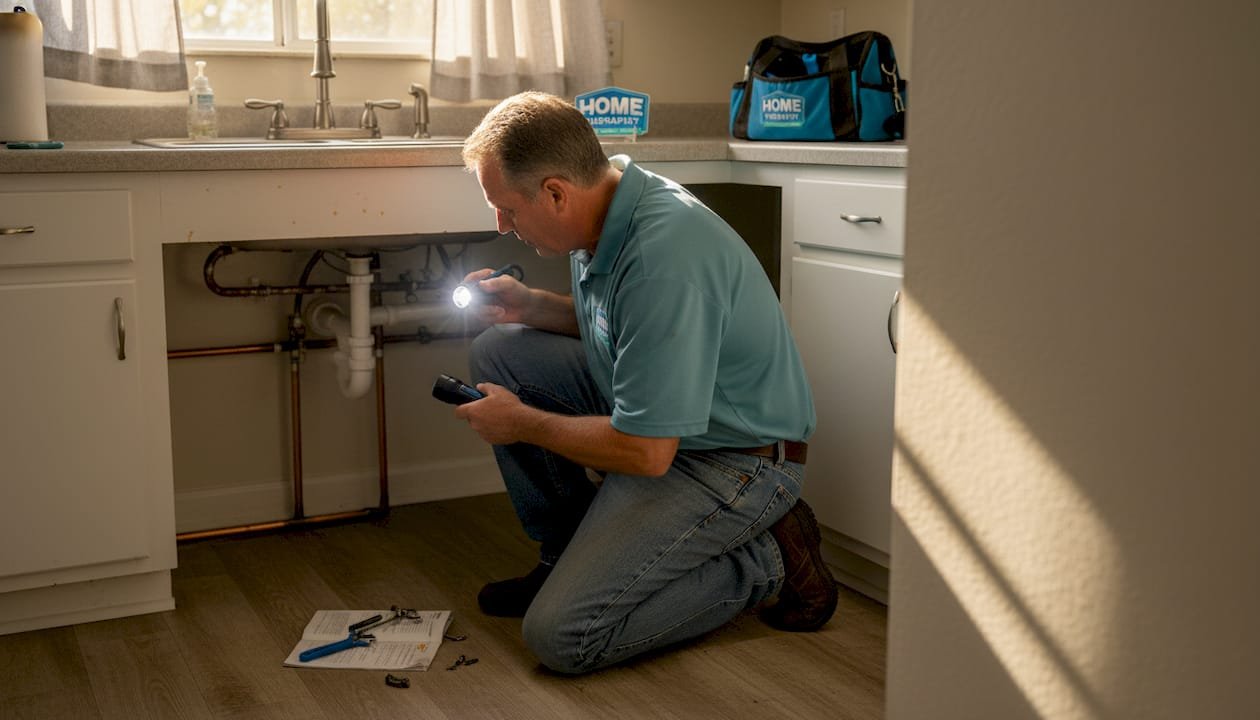
- Visible rust or discoloration on exposed pipes in the garage, under sinks, or in crawl spaces
- Moisture or water stains on walls, ceilings, or cabinets near plumbing lines
- White mineral buildup or chalky deposits around pipe joints, which can indicate chemical reactions at connection points
Subtle signs you might miss
These are the warning signs most homeowners overlook entirely:
- Gradually decreasing water pressure throughout the house, which can signal pipe narrowing from mineral buildup associated with corrosion
- Frequent unexplained clogs in the same areas, sometimes caused by corrosion flakes breaking off inside pipes
- Water that tastes metallic or has an unusual smell, suggesting pipe material is leaching into your water supply
- Unexpectedly high water bills without a clear increase in usage, which can point to a slow leak caused by a pinhole
Research consistently shows that early corrosion detection is critical because pitting is much harder to find than uniform corrosion and can cause sudden leaks with zero advance warning. Annual plumbing inspections can cut Tampa Bay repair costs by 65%, making routine plumbing pipe inspection one of the smartest investments a homeowner can make.
Pro Tip: If you’re hearing dripping inside a wall but can’t find the source, don’t ignore it. Silent leaks behind drywall are a classic sign of pitting corrosion. The longer you wait, the more expensive the water damage repair becomes.
A thorough full house plumbing inspection will cover every section of your system, including areas that are impossible to see without professional equipment. Certified plumbers use tools like moisture meters and pressure gauges alongside plumbing inspections for accurate measurement to find problems before they turn into emergencies.
Preventing and solving plumbing corrosion in Tampa Bay
Detecting corrosion is only half the battle. Let’s look at proven ways Tampa Bay homeowners can prevent or address it before the damage gets out of hand.
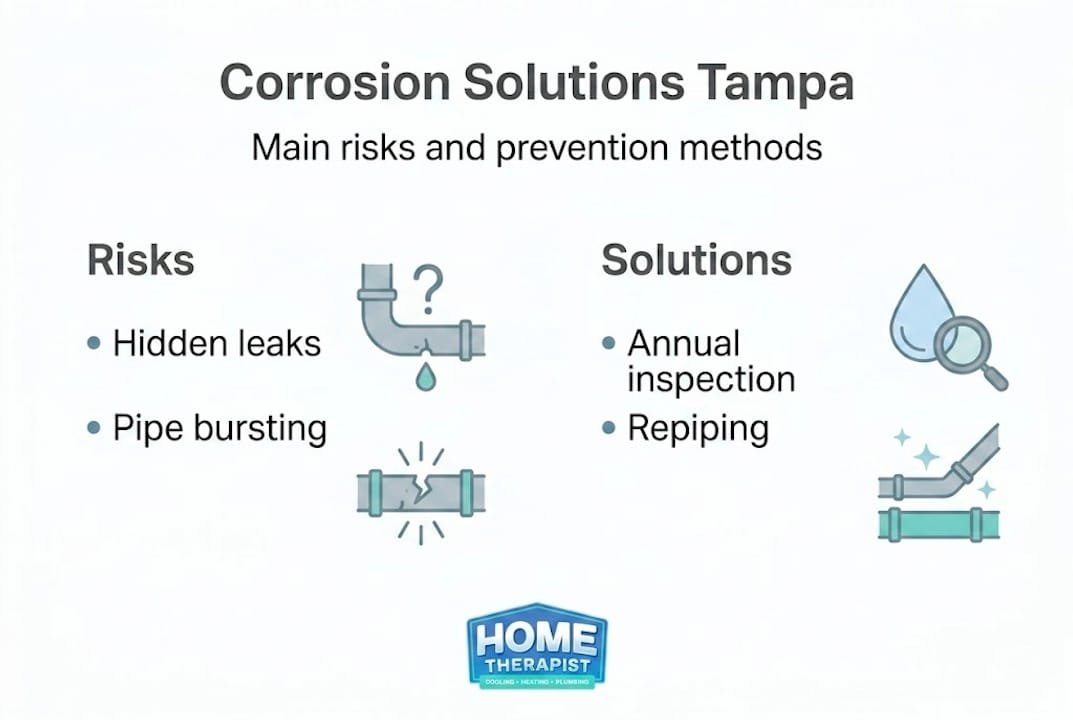
Tampa Bay’s older housing stock is a real concern here. Homes built before the 1990s frequently still have original galvanized steel or early copper plumbing, both of which are well past their ideal service life. According to Florida pipe material guidelines, homes over 30 years old face significantly elevated corrosion risk, and switching to PEX (cross-linked polyethylene) piping eliminates corrosion risk entirely since it’s non-metallic.
Here’s a practical plan for protecting your pipes:
- Schedule an annual inspection. A certified plumber can assess your current pipe condition, spot early corrosion, and create a maintenance plan before damage spreads.
- Test your water quality. A basic water test reveals pH levels and mineral content. If your water is acidic (pH below 7), it’s actively accelerating pipe deterioration. A whole-house water filter or pH neutralizer can address this affordably.
- Flush your water heater annually. Sediment and bacteria build up at the bottom of the tank, creating ideal conditions for MIC. A simple annual flush removes this buildup and extends the heater’s life.
- Upgrade mixed metal connections. If your plumber finds spots where copper meets steel, adding dielectric (electrically isolating) unions stops galvanic corrosion at those joints immediately.
- Consider repiping if your home is over 30 years old. If you’re seeing repeated leaks or have galvanized steel pipes, a full repipe with PEX is often more cost-effective than continual spot repairs.
| Prevention method | Best for | Estimated benefit |
|---|---|---|
| Annual inspection | All homes | Catches issues early, reduces emergency repairs |
| Water quality testing | Acidic or hard water areas | Slows corrosion rate significantly |
| Water heater flushing | Homes with older heaters | Prevents MIC, extends heater life |
| Dielectric unions | Mixed metal pipe systems | Stops galvanic corrosion at joints |
| PEX repiping | Homes over 30 years old | Eliminates metallic corrosion risk entirely |
Understanding the repiping cost Tampa side of things helps you plan ahead without surprises. Many homeowners delay repiping because they don’t realize how affordable it is relative to repeated emergency repairs. Pairing repiping with other preventative plumbing tips creates a system-wide defense against corrosion.
Pro Tip: If your home is over 30 years old and you’ve had even one pinhole leak, treat it as a system-wide warning, not an isolated event. One visible pitting leak almost always means more are developing elsewhere.
Our take: Why Tampa homeowners shouldn’t wait for visible corrosion
Here’s the uncomfortable truth we’ve seen play out time and time again working with Tampa Bay families: most homeowners only call us after something has already gone wrong. A burst pipe. A soaked ceiling. A mold problem that turns out to have started behind the walls months earlier. And in nearly every case, the corrosion causing that damage had been progressing quietly for years.
The idea that “if it’s not leaking, it’s fine” is genuinely dangerous in an older Tampa home. Corrosion doesn’t give you visible warning signs until it’s already done significant structural damage. Waiting for a symptom means paying for both the plumbing repair and the water damage repair, sometimes tens of thousands of dollars more than a proactive inspection would have cost.
We firmly believe that annual plumbing inspections combined with a conversation about pipe material upgrades are the two most impactful investments a Tampa Bay homeowner can make. Tampa’s humidity, water chemistry, and aging housing stock create a uniquely challenging environment for metal pipes. The homes that avoid major plumbing emergencies aren’t lucky. They’re the ones with homeowners who take a look inside their systems before a crisis forces them to.
Preventative action beats costly emergency repairs every time, and in Tampa Bay, the difference between the two is usually just one annual inspection.
Get expert help with plumbing corrosion in Tampa Bay
If any part of this guide sounded familiar, whether it’s the discolored water, the mystery pressure drop, or the sneaking suspicion that your 1970s pipes might be on borrowed time, getting a professional set of eyes on your system is the right next step.
At Home Therapist Cooling, Heating, and Plumbing, our certified plumbers specialize in diagnosing and fixing corrosion issues across Tampa Bay. Whether you need a full leak inspection and diagnosis to find hidden pinhole leaks, want to understand what repiping service explained actually involves, or you’re ready to review repiping cost comparison options for your home, we’re here to guide you through every step. As a family-owned business, we treat every Tampa Bay home like it’s our own. Contact us today for a consultation you can trust.
Frequently asked questions
- How do I know if my pipes are corroded?
Look for discolored water (brown, red, or blue-green tints), a metallic taste, reduced water pressure, visible green or white mineral buildup on exposed pipes, and pinhole leaks leaving stains on walls or ceilings. Tampa Bay's high humidity and hard water accelerate these warning signs faster than in drier climates. Home Therapist has completed over 308 jobs in Tampa and offers FREE diagnosis on every visit.
- What gets rid of corrosion on pipes?
For minor external corrosion, a licensed plumber can clean affected sections and apply protective coatings. For internal corrosion causing discolored water or leaks, the most effective solutions are pipe relining (epoxy lining) or full pipe replacement. Tampa Bay's coastal salt air and mineral-rich water make surface treatments alone a short-term fix; a professional assessment determines the right approach.
- Can corroded pipes be repaired?
Yes, in many cases. Localized corrosion with pinhole leaks can be repaired by replacing the damaged section. Widespread internal corrosion often calls for epoxy pipe lining or repiping the affected runs. A licensed plumber (Home Therapist holds plumbing license CFC1431159) will inspect the full system to determine whether repair or replacement is the safer long-term choice.
- How much does it cost to fix corroded pipes?
Cost depends on the extent of corrosion, pipe material, accessibility, and whether repair or repiping is needed. A small section replacement costs far less than a whole-home repipe. Home Therapist provides FREE estimates so you know the exact scope and price before any work begins. Call (813) 343-2212 to schedule your no-cost assessment.
Is corrosion common in Tampa Bay homes?
Yes, especially in homes over 30 years old or with metallic pipes. Local water chemistry and humidity make Tampa Bay properties particularly vulnerable to corrosion, and galvanized or early copper systems are frequently affected.
What is the most dangerous type of corrosion in plumbing?
Pitting corrosion is the most dangerous because it’s nearly impossible to detect visually and can cause sudden pipe failure without any prior leaking or discoloration to warn you.
Can non-metallic pipes like PEX prevent corrosion?
Yes, completely. PEX is non-metallic, which means it eliminates corrosion risk entirely. It’s now one of the most recommended pipe materials for repiping projects in Florida homes.
How often should I inspect my plumbing for corrosion?
Annual inspections are the standard recommendation. Regular plumbing checkups allow professionals to catch early-stage corrosion and can reduce Tampa Bay repair costs by as much as 65%.
Recommended
- Preventative plumbing tips for Tampa Bay homeowners 2026
- Why Inspect Plumbing Pipes, Tampa Bay Homeowners
- Plumbing inspection checklist: Tampa homeowners’ guide
- 7 Plumbing Tips Every Homeowner in Tampa Bay Should Know
More Repiping Articles
- Repiping and Pipe Repair FAQ for Tampa Bay Homeowners
- Whole Home Repiping Cost: What Actually Drives Your Tampa Bay Quote
- PEX piping guide for Tampa Bay homeowners
- Nearly 24 Hours to Restore a Disconnected Sewer Line: PVC Repair With 9 SharkBite Connectors in Tampa, FL 33613
- How Long Does a Repipe Take in Tampa, FL? Day-by-Day Timeline


