

Why schedule pre-season checks: a Tampa homeowner’s guide
TL;DR:
- Scheduling pre-season HVAC and plumbing checks in Tampa prevents costly breakdowns during peak demand and extends system lifespan. Early inspections catch hidden issues like clogged drains, dirty coils, and refrigerant leaks, especially critical in Tampa’s humid climate. Booking these services before the first hot or rainy days ensures priority access, proper maintenance, and protects your home’s comfort and your budget.
Waiting until your AC stops blowing cold air on a 95°F July afternoon is one of the most expensive decisions a Tampa homeowner can make. The reason to why schedule pre season checks is simple: catching small problems before they become system failures saves you money, keeps your home comfortable, and means you are not scrambling to find a technician during the busiest weeks of the year. In a city where air conditioning runs nearly year-round and summer humidity turns minor plumbing issues into urgent ones, proactive maintenance is not a luxury. It is the only approach that makes financial sense.
Table of Contents
- Why schedule pre-season checks before Tampa’s peak seasons
- The operational risks of skipping or delaying pre-season maintenance
- Comparing pre-season maintenance: HVAC vs plumbing considerations in Tampa homes
- How to schedule and prepare for pre-season checks in Tampa Bay
- Maximizing the value of pre-season checks: common pitfalls and expert tips
- A Tampa Bay homeowner’s essential take on pre-season checks
- Schedule your pre-season HVAC and plumbing checks with Home Therapist
- Frequently asked questions
Key Takeaways
| Point | Details |
|---|---|
| Pre-season timing matters | Scheduling maintenance before Tampa’s peak seasons prevents system failures and long waiting times. |
| Pre-summer check is critical | In Tampa’s year-round heat, the pre-summer HVAC tune-up protects your equipment most effectively. |
| Skipping maintenance risks costly repairs | Neglecting checks can shorten system life and lead to expensive emergency fixes. |
| Both HVAC and plumbing need attention | Pre-season checks of both systems keep your home comfortable and protect against damage. |
| Plan ahead and document | Early scheduling and keeping maintenance records optimize benefits and support warranties. |
Why schedule pre-season checks before Tampa’s peak seasons
Pre-season checks are professional inspections and tune-ups performed on your HVAC and plumbing systems before they hit their period of peak demand. In Tampa Bay, that means scheduling an AC inspection before summer arrives and a heating check before the brief but real cool season begins.
The timing matters more here than almost anywhere else in the country. Many HVAC maintenance plans include two professional visits per year, one before cooling season and one before heating season, so issues are caught before the system runs under full seasonal load. In Tampa, the pre-summer visit carries far more weight. Your AC runs six to eight months at full capacity, and any undetected problem will get worse fast once daily highs push past 90°F.
What a typical pre-season HVAC check covers:
- Air filter inspection and replacement
- Evaporator and condenser coil cleaning
- Condensate drain flush and flow test
- Thermostat calibration and safety device testing
- Refrigerant level check
- Electrical connection inspection and tightening
- Blower motor and fan performance check
For a deeper look at seasonal preparation steps specific to this area, the seasonal HVAC steps Tampa guide walks through each one in detail.
Why timing is everything:
- Book before the first 85°F day of the year
- Expect 2 to 3 week wait times once summer demand peaks
- Early scheduling means technicians can take their time rather than rush between calls
- You have space to follow up on any recommended repairs before the heat arrives
The importance of seasonal inspections is not about following a maintenance calendar for its own sake. It is about beating the rush while your system still has room to be properly serviced.
The operational risks of skipping or delaying pre-season maintenance
Understanding the benefits of pre season checks becomes a lot clearer when you see what actually happens inside a system that has been left unchecked.
Diagnostic problems often remain invisible until the system runs longer under peak demand, causing restricted airflow, frozen coils, or condensate line blockages. In other words, your system can look and feel like it is running fine in April. By July, that same undetected issue can shut the whole unit down.
The most common hidden failures caught during pre-season checks:
- Clogged condensate drain lines, which cause water damage and mold inside air handlers
- Dirty evaporator coils, which reduce cooling capacity by up to 30%
- Worn capacitors and contactors, which fail suddenly under summer electrical load
- Low refrigerant, which forces the compressor to work harder and shortens its life
- Blocked outdoor condenser units, which overheat when airflow is restricted
In Tampa’s humidity, these problems escalate faster than in drier climates. A partially clogged condensate drain in Phoenix might take a year to cause water damage. In Tampa, it can do the same damage in a single month.
Skipping a $150 tune-up is a gamble with a $3,000 to $6,000 system replacement on the line. The math has never favored waiting.
Pro Tip: If your AC has been running for three or more years without a professional check, treat your next appointment as both a tune-up and a full diagnostic. You may find issues that have been accumulating silently.
To understand why annual maintenance deserves a standing appointment on your calendar, the page on why schedule HVAC maintenance covers the full case in plain terms.
Comparing pre-season maintenance: HVAC vs plumbing considerations in Tampa homes
Most homeowners think “pre-season check” and go straight to air conditioning. Plumbing is just as vulnerable to seasonal stress, especially heading into Tampa’s rainy season and hurricane season, which overlaps almost entirely with peak cooling demand.
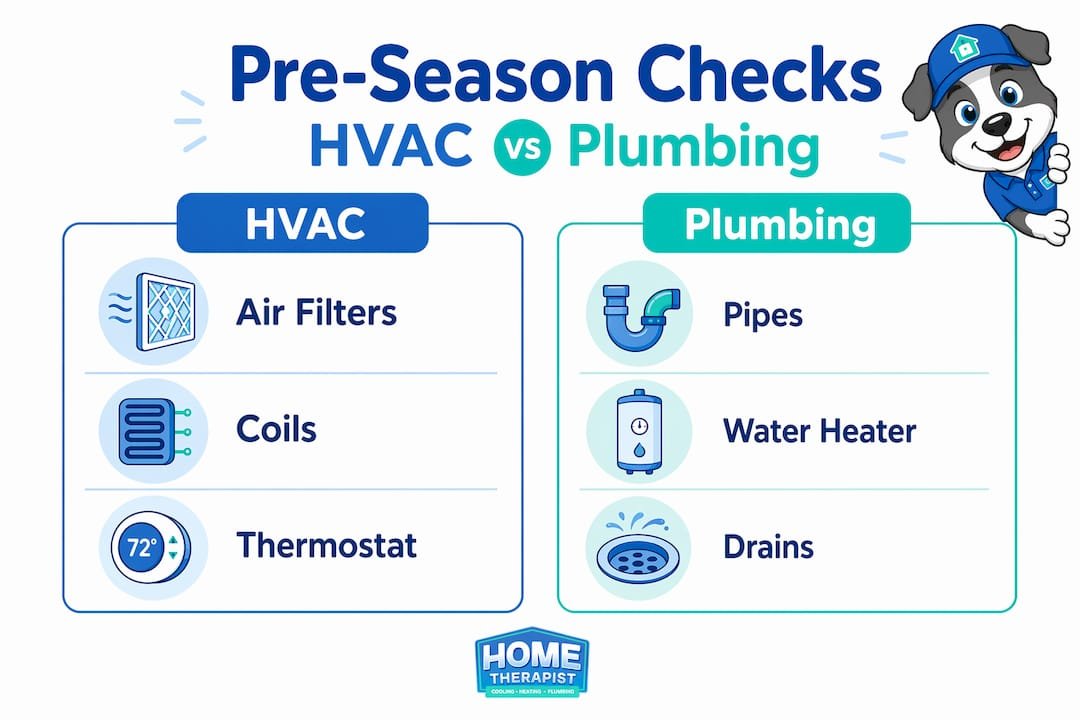
Scheduling regular seasonal checks helps manage these threats effectively, keeping systems performing year-round and preventing expensive repairs. The table below shows how HVAC and plumbing maintenance compare across key categories.
| Category | HVAC focus areas | Plumbing focus areas |
|---|---|---|
| Primary inspection target | Coils, filters, condensate lines | Pipes, fixtures, drain lines |
| Seasonal timing | Pre-summer (March to April) | Pre-rainy season (May) |
| Common failure mode | Frozen coils, refrigerant loss | Pipe leaks, water heater failures |
| DIY accessible tasks | Filter replacement | Clearing visible drain clogs |
| Requires professional service | Coil cleaning, refrigerant checks | Water heater flush, leak detection |
| Tampa-specific risk | Humidity-driven mold in drain pans | Heavy rainfall surge stressing drains |
Plumbing pre-season tasks that protect Tampa homes:
- Water heater flush and sediment removal (particularly important if your heater is over 5 years old)
- Leak inspection under sinks and behind toilets
- Outdoor hose bib and irrigation line check before rainy season surge
- Main drain line clearing to prevent backup during heavy rains
- Water pressure test to catch supply line stress before it becomes a burst pipe
Thinking about both systems together is how to prepare for the season properly. Neither works in isolation when it comes to protecting your home’s comfort and your repair budget. Explore your options through plumbing maintenance plans designed specifically for Tampa Bay homes.
How to schedule and prepare for pre-season checks in Tampa Bay
Knowing what needs to be checked is half the job. Getting the timing and logistics right is the other half.
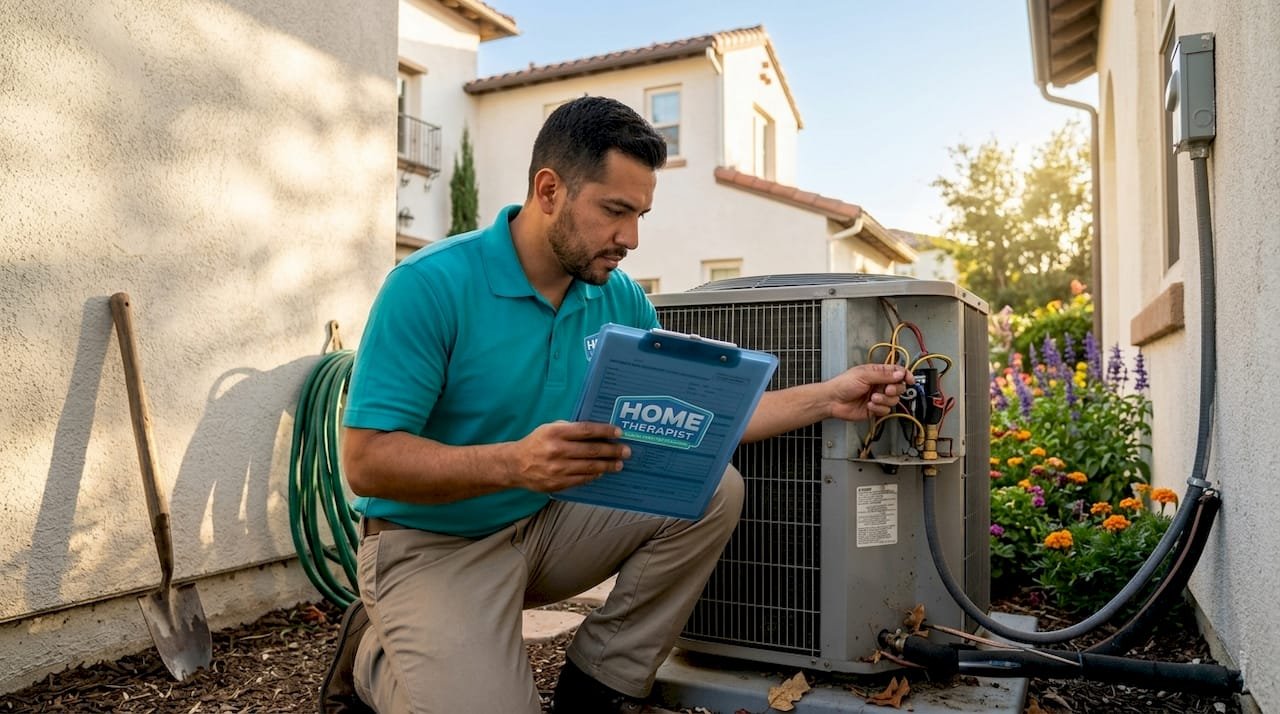
Homeowners who wait until noticing problems face 2 to 3 week booking delays during peak season. Early spring and late fall are your two scheduling windows, and both are worth protecting on your calendar like any other important appointment.
Step-by-step: how to schedule pre-season maintenance effectively
- Target your booking date. For AC service, aim for March or early April before temperatures consistently hit 85°F. For heating, late October or early November works for Tampa’s mild winters.
- Clear the area around outdoor equipment. Remove debris, trim back any vegetation within two feet of the condenser, and make sure there is clear access to all units.
- Document unusual behavior. Note any sounds, smells, or temperature inconsistencies your system has shown. Share these with the technician before they start.
- Ask for a written checklist. A documented service report protects your equipment warranty and provides proof of maintenance for resale.
- Consider a maintenance plan. Plans typically include priority scheduling, which means you move ahead of the queue during peak season.
Pro Tip: Keep a simple folder, physical or digital, with every service report, filter change date, and technician note. If you ever sell your home, this documented history adds real value and credibility to your HVAC and plumbing systems.
For more on what a professional checkup should include and what it returns in value, the page on annual HVAC checkup benefits Tampa is worth reading before your next appointment.
Maximizing the value of pre-season checks: common pitfalls and expert tips
Scheduling the appointment is step one. Getting full value from it requires avoiding a few common mistakes that undercut the whole effort.
Deferred maintenance costs noticeably more in high-heat regions like Florida than anywhere else. Prioritizing pre-summer checks protects equipment lifespan and reduces emergency repairs. That is not a generalization. Florida’s combination of year-round AC demand and humidity means wear accumulates faster here than in most other states.
Mistakes that reduce the value of pre-season maintenance:
- Replacing filters right before the technician arrives. Let the technician see the actual condition of your filter. It tells them a lot about how your system has been running.
- Ignoring the outdoor unit. A condenser surrounded by overgrown shrubs or debris cannot dissipate heat properly, and no amount of servicing inside compensates for restricted airflow outside.
- Canceling when the system “seems fine.” Most failures feel fine right up until the point they do not. That is precisely why a proactive check matters.
- Skipping plumbing because there are no visible leaks. Most serious plumbing problems are hidden inside walls or under slabs. Waiting for visible damage is waiting for the expensive version of the problem.
The homeowners who call us in August for emergency AC repairs almost always had the same small issue in April that a pre-season check would have cost $150 to fix.
Pro Tip: Before your technician arrives, run your AC for 15 to 20 minutes and note the supply and return air temperatures. A well-functioning system typically produces air that is 15 to 20 degrees cooler than the air it pulls in. Sharing this reading gives your technician a useful baseline.
Additional guidance on staying ahead of problems throughout the year is available on HVAC maintenance tips homeowners can use between professional visits.
A Tampa Bay homeowner’s essential take on pre-season checks
Here is a belief worth challenging: many Tampa homeowners assume that because winters are mild, they only need one real seasonal check per year. That logic has a serious flaw.
In Florida and other high-use climates, systems run essentially year-round, and the pre-summer visit carries the most weight for protecting equipment. But the fall check still matters. The heating components in your system, including heat strips and ignition controls, sit dormant through the summer. Running them for the first time in January without a prior inspection is how you find out they stopped working sometime in March.
The uncomfortable truth is that Tampa’s mild climate actually creates overconfidence. Homeowners in Chicago or Minneapolis know their systems face brutal seasonal stress, so they maintain religiously. Tampa homeowners sometimes assume the gentler climate means their systems coast. The reality is that running AC continuously from April through November puts more annual hours on a system than most northern homes ever see.
Pre-season checks are not just about preventing breakdowns. They are about protecting an asset. A well-maintained HVAC system that lasts 20 years costs far less per year than one that fails at year 12 because it never got consistent attention. That math applies to plumbing too, where an $89 water heater flush today is a direct investment against a $1,500 emergency replacement in three years.
The benefits of regular HVAC service extend well beyond comfort. They show up in lower utility bills, fewer emergency calls, and a home that is easier to sell when the time comes.
Schedule your pre-season HVAC and plumbing checks with Home Therapist
If you have read this far, you already know what separates homeowners who stay comfortable all year from those who scramble during Tampa’s hottest days. The next step is simply making the call before the rush starts.
At Home Therapist Cooling, Heating, and Plumbing, our certified technicians know Tampa Bay’s climate demands and prepare your systems accordingly. Whether you need a full Tampa HVAC maintenance evaluation before summer or want to explore our plumbing maintenance plans to protect your whole home, we offer flexible scheduling and priority access for plan members. As a family-owned business, we treat every service call the way we would want our own home treated. Book your pre-season visit today before the calendar fills up.
Frequently asked questions
Why is it important to schedule HVAC maintenance before the first hot day in Tampa?
Scheduling before Tampa’s first 85°F day prevents system stress at peak demand. Spring maintenance should happen early because peak season creates 2 to 3 week technician booking delays.
Can skipping pre-season maintenance shorten my HVAC system’s lifespan?
Yes. Maintained systems last 18 to 22 years on average, while systems without regular upkeep typically fail at 11 to 14 years.
What are common issues that pre-season checks can prevent in Tampa homes?
They catch problems like restricted airflow and drainage issues from dirty coils, clogged filters, and condensate line blockages that go undetected until peak demand.
How do maintenance plans benefit Tampa homeowners?
Most plans include two visits per year, priority emergency scheduling, discounted repairs, and a documented service history that protects both equipment and your budget.
Recommended
- Essential plumbing maintenance checklist for Tampa Bay
- Seasonal HVAC Maintenance Steps for Tampa Homeowners
- Your Essential HVAC Checklist for Fall in Tampa Bay
- Seasonal HVAC Prep: Maximizing Home Comfort in Tampa
More AC Maintenance Articles
- Five Visits, Zero Issues: How a 2022 AC Stays Healthy With Elite Plan Maintenance in Wesley Chapel, FL 33543
- Pet Hair Inside the Unit, Not the Filter: AC Maintenance on E Henry Ave, Tampa, FL 33604
- Visit #4 and a $10 Invoice: Premium Plan AC Maintenance on Oakshire Dr, Port Richey, FL 34668
- Visit #4 on 62nd Ave: Why Old Fiber Ducts Outranked a 4-Year-Old AC System | AC Maintenance in St. Petersburg, FL 33702
- Blower Motor Dead, Float Switch Gone, Drain Line Cracked: Alejandro Restores a Rooftop HVAC System on Johns Rd, Tampa FL 33634


