

11 Best Water Softeners For Home: Reviews & Buying Guide
If you live in the Tampa Bay area, or anywhere in Florida, really, you already know what hard water does. Chalky buildup on faucets, stiff laundry, dry skin, and water heaters that die years before they should. It’s not just annoying; it’s expensive. That’s why finding the best water softeners for home use is one of the smartest investments you can make for your house and your wallet.
But the market is crowded. Salt-based, salt-free, dual-tank, magnetic, every manufacturer claims theirs is the one. Sorting through spec sheets and marketing claims gets old fast, especially when you just want clean, soft water running through your pipes. We put together this guide to cut through the noise and give you a clear picture of what actually works in real homes.
At Home Therapist, we’ve been installing and servicing water softeners across the Greater Tampa Bay Area since 2011. Our plumbing technicians see firsthand what hard water does to pipes, fixtures, and water heaters, and which softener systems hold up over time. This list pulls from that hands-on experience, combined with current product performance, customer feedback, and value for the money. Whether you’re replacing an old unit or buying your first system, the 11 options below cover every budget and household size to help you pick the right one.
1. Home Therapist Whole-Home Water Softener Install
When you hire Home Therapist to install a whole-home water softener, you get more than a unit dropped in your garage. Our licensed plumbing technicians handle the full job, from water testing to system sizing to final hookup, so you know the equipment fits your home and your actual water conditions before a single pipe gets touched.
What you get with a pro-sized, pro-installed system
A correctly sized water softener runs more efficiently and lasts longer than an oversized or undersized unit. Home Therapist installs salt-based ion exchange systems from trusted brands, matched to your household’s water hardness level and daily water usage. You get a system that regenerates only when needed, cuts unnecessary salt and water waste, and protects every fixture and appliance in your home.
A system that’s too small will run out of soft water during peak usage; one that’s too large wastes salt on unnecessary regeneration cycles.
Who this option fits best in the Tampa Bay area
This option works best for homeowners in the Greater Tampa Bay Area who want a hands-off, done-right solution rather than a weekend DIY project. Tampa Bay water hardness typically runs between 170 and 250 parts per million, placing it firmly in the hard to very hard category.
If you’ve noticed scale buildup on showerheads or faucets, shortened water heater life, or soap that won’t lather properly, a professionally installed whole-home system addresses all of it in a single appointment.
What to expect during an in-home water check and sizing
Before any equipment gets ordered, a Home Therapist technician visits your home to test your water hardness and assess your household’s peak water demand. That data drives the sizing decision, including the grain capacity your softener needs to handle your home between regeneration cycles. You’ll walk away from that conversation knowing:
- Your exact water hardness reading in grains per gallon
- The right system size for your household
- Where the unit will be installed and how the drain line will route
Installation details that matter in Florida homes
Florida homes come with specific plumbing considerations that affect every water softener install. Older copper or PVC supply lines, slab foundations, and high ambient humidity all factor into where and how the system gets placed. Home Therapist technicians account for bypass valve placement, drain line routing, and proper brine tank positioning to keep the system accessible for future maintenance.
Typical installed price range
Most whole-home water softener installations through Home Therapist run between $1,200 and $3,500, depending on system size, brand, and any additional plumbing work your home requires. That price includes the equipment, all fittings, and labor with no hidden fees. Free estimates are available, so you know the exact number before any work begins.
2. SpringWell SS Salt-Based Water Softener
SpringWell’s SS series ranks as a strong mid-range option among the best water softeners for home use. It ships direct to your door in multiple grain capacities and uses a proven salt-based ion exchange process that delivers genuinely soft water through every tap in your home.
How it softens water
Hard water flows through a resin tank packed with negatively charged beads that capture calcium and magnesium ions and replace them with sodium. When the resin reaches capacity, the system flushes and recharges automatically using a brine solution pulled from the salt storage tank beside it.
That on-demand regeneration means the system only cycles when it actually needs to, which cuts both salt usage and water waste compared to older timer-based systems.
Who it fits best
The SpringWell SS suits DIY-comfortable homeowners on city water or well water with moderate to high hardness levels. It handles households of two to six people well, depending on which grain capacity you select.
If you’re not comfortable cutting into your main supply line, bringing in a licensed plumber for installation is the right call.
Key specs to compare before you buy
- Grain capacities available: 32,000 / 48,000 / 80,000
- Flow rate: up to 12 GPM on the 48K unit
- Resin type: high-capacity 8% cross-linked resin
- Control valve: digital metered head for on-demand regeneration
- Warranty: lifetime on the tank, 5 years on the valve
Installation and maintenance reality check
Installation requires basic plumbing skills, a nearby floor drain, and a few hours with standard tools. The included bypass valve makes future maintenance simpler, but routing the drain line and brine overflow correctly matters for long-term reliability.
Plan to refill the salt tank every four to eight weeks depending on your water hardness and household usage.
Typical price range
The SpringWell SS runs $800 to $1,200 depending on grain capacity. Add $150 to $400 for professional installation if you hire a plumber to handle the hookup.
3. SoftPro Elite High-Efficiency Water Softener
The SoftPro Elite earns a spot among the best water softeners for home use through genuinely lower salt and water consumption compared to older timer-based systems. Your utility bills and your ongoing salt costs both benefit from the efficiency built into this unit from the start.
How it softens water
SoftPro’s Elite uses standard ion exchange, drawing calcium and magnesium out of your water and swapping them with sodium as water moves through the resin tank. Its demand-initiated regeneration controller tracks actual household consumption and triggers a recharge only when the resin needs it, not on a fixed timer.
Demand-based regeneration can reduce salt use by 30% or more compared to older timer-controlled softeners.
Who it fits best
This system works well for homeowners on city or well water dealing with moderate to very hard conditions who want reliable, low-maintenance operation. It suits households of two to five people depending on the grain capacity you select.
Good fits include:
- Homes with hardness between 10 and 75 GPG
- Well water with iron levels below 1 ppm
- Households wanting automated, consumption-based softening
Key specs to compare before you buy
- Grain capacities: 32,000 / 48,000 / 64,000 / 80,000
- Flow rate: up to 13 GPM
- Resin: premium fine mesh
- Control valve: digital demand meter
- Warranty: lifetime tank, 5-year valve
Installation and maintenance reality check
Installing the SoftPro Elite requires basic plumbing confidence and a floor drain within reach of your main supply line. The unit ships with a bypass valve already included, which makes future service straightforward.
Plan on refilling the salt tank every four to eight weeks based on your household’s water hardness and daily consumption volume.
Typical price range
The SoftPro Elite costs between $700 and $1,100 depending on grain capacity. Professional installation adds roughly $150 to $400 on top of the equipment price.
4. Fleck 5600SXT Metered Water Softener
The Fleck 5600SXT has been a reliable standard in residential water treatment for decades. Its digital metered valve is widely regarded as one of the most dependable control heads in this price range, and strong parts availability makes it a practical long-term investment for most homeowners.
How it softens water
The 5600SXT runs on standard ion exchange resin, pulling calcium and magnesium out of your water and replacing them with sodium as flow passes through the tank. The digital metered valve tracks your actual water consumption and triggers regeneration only when the resin needs it, not on a fixed timer.
Metered regeneration keeps you from wasting salt and water on unnecessary cycles, which adds up to meaningful savings over a full year of use.
Who it fits best
This system suits experienced DIYers and budget-focused homeowners who want a proven, widely supported platform. It handles moderate to high hardness levels well and performs reliably on both city water and well water when iron content stays low.
Key specs to compare before you buy
Reviewing the specs across grain sizes helps you match the right capacity to your household before you buy. The table below covers the numbers that matter most.
- Grain capacities: 24,000 / 32,000 / 48,000 / 64,000
- Flow rate: up to 12 GPM
- Resin: standard 8% cross-linked
- Control valve: digital metered Fleck 5600SXT head
- Warranty: 5 years on the valve, 10 years on the tank
Installation and maintenance reality check
Installing the Fleck 5600SXT requires basic plumbing skill and a floor drain within reach of your main supply line. Parts are widely stocked at plumbing supply houses, which keeps future repairs straightforward. Salt refills typically run every four to six weeks based on your household size and local hardness levels.
Typical price range
The Fleck 5600SXT runs between $400 and $750 depending on grain capacity. Professional installation adds $150 to $400 on top of the equipment cost.
5. Kinetico Premier Series Non-Electric Water Softener
The Kinetico Premier Series stands out among the best water softeners for home use because it runs entirely on water pressure rather than electricity. No control valve, no timer, no programming means fewer electronic components that can fail, which makes this system appealing if you want long-term reliability without much hands-on attention.
How it softens water without power
Kinetico uses a twin-tank, non-electric design driven purely by the kinetic energy of flowing water. While one resin tank softens your incoming water, the second tank regenerates using brine. The system switches tanks automatically when one is exhausted, so you always have soft water available, even during regeneration cycles.
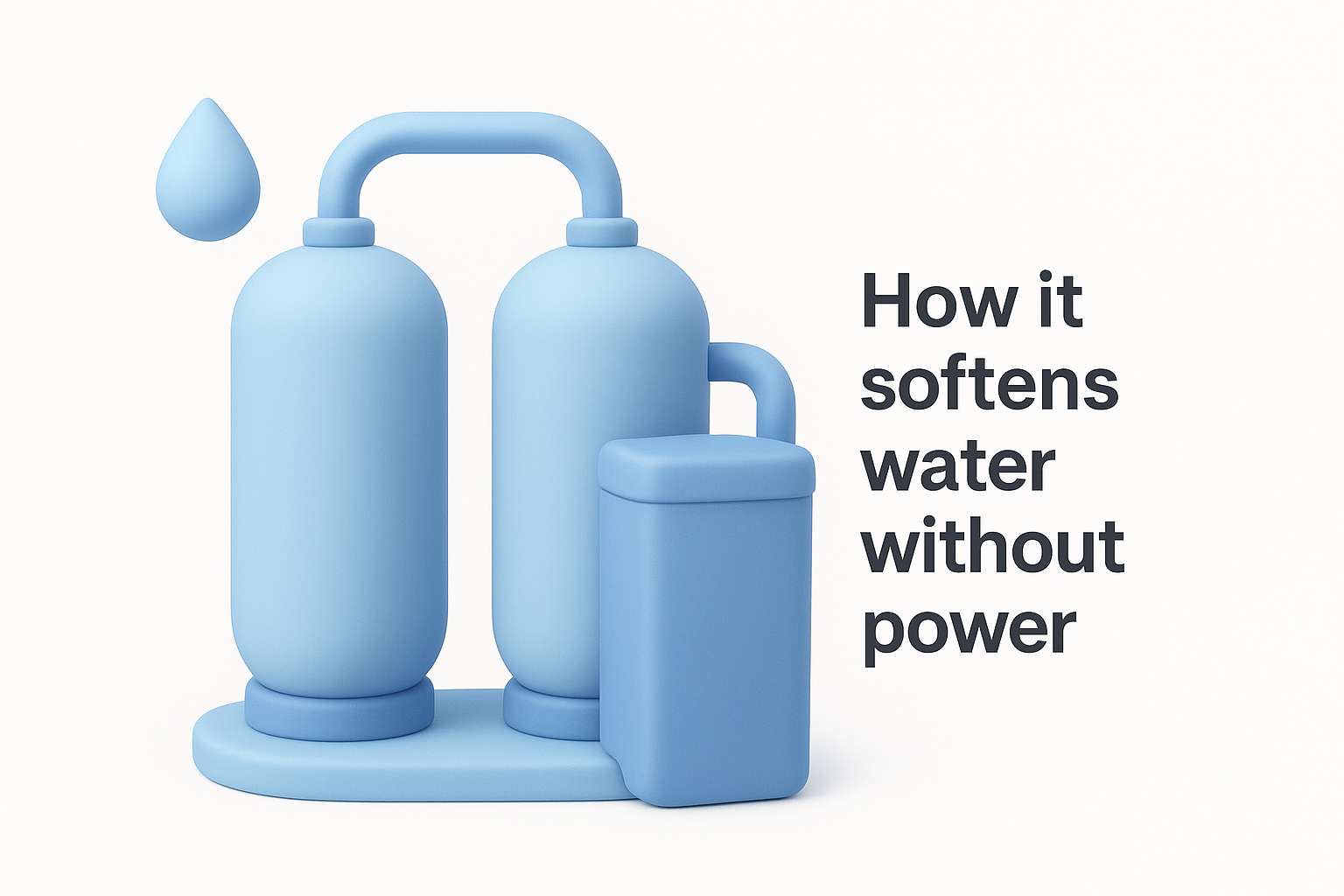
Twin-tank operation means you never experience the "hard water break" that single-tank systems produce during their regeneration downtime.
Who it fits best
This system works best for homeowners who prioritize low maintenance and operational reliability over upfront cost savings. It suits households on city water with moderate to high hardness levels who want a set-it-and-forget-it system backed by a strong dealer network.
Key specs to compare before you buy
- Grain capacity: varies by model, typically 30,000 to 60,000
- Flow rate: up to 10 GPM depending on model
- Power requirement: none
- Resin: high-capacity proprietary resin
- Warranty: 10-year comprehensive warranty on parts
Installation and maintenance reality check
Kinetico sells and installs exclusively through authorized dealers, so this is not a DIY-friendly purchase. Dealer installation ensures proper sizing and setup, but pricing and service quality vary by dealer, so get multiple quotes before committing.
Typical price range
Kinetico Premier Series systems typically cost between $1,500 and $3,500 installed, depending on your location and the dealer handling the job. The premium reflects the non-electric design and comprehensive warranty coverage.
6. Culligan High-Efficiency Water Softener
Culligan brings name recognition and a national dealer network to the water treatment market, and their high-efficiency water softener backs that reputation with solid performance for homeowners who want a professionally managed system from day one. If you’re comparing the best water softeners for home use and want dealer support built into the purchase, Culligan belongs in that conversation.
How it softens water
Culligan uses standard salt-based ion exchange to strip calcium and magnesium from your water supply and replace them with sodium as water moves through the resin bed. The system’s demand-initiated regeneration monitors your actual water consumption and triggers a recharge cycle only when the resin needs it, cutting unnecessary salt and water use compared to older timer-based models.
Demand-initiated regeneration can meaningfully reduce your monthly salt costs compared to systems that cycle on a fixed schedule regardless of actual water use.
Who it fits best
This system suits homeowners who prefer dealer-managed service over DIY maintenance. Culligan sells through a network of local dealers who handle sizing, installation, and ongoing salt delivery if you want that option. It works well for households with moderate to high water hardness on either city water or well water.
Key specs to compare before you buy
- Grain capacities: varies by model, typically 30,000 to 50,000
- Flow rate: up to 12 GPM
- Control: digital demand meter
- Warranty: varies by dealer, typically 3 to 10 years on parts
Installation and maintenance reality check
Dealer installation is the standard path with Culligan, so you won’t be sourcing fittings yourself. Salt refills and routine resin checks are available through your local dealer as a service plan, which appeals to homeowners who want everything handled for them.
Typical price range
Culligan systems typically cost between $800 and $2,500 installed, depending on your dealer’s pricing structure and the specific model they recommend for your home.
7. EcoPure Whole-Home Water Softener
EcoPure positions itself as a budget-accessible entry point among the best water softeners for home use, and it delivers on that promise for smaller households. You get a salt-based system with a digital control head at a price point that undercuts most of the competition without sacrificing basic performance.
How it softens water
EcoPure runs on standard ion exchange resin, pulling calcium and magnesium from your incoming water and substituting sodium as flow moves through the tank. The digital demand-initiated control valve monitors your actual consumption and triggers regeneration based on use rather than a fixed schedule, which keeps salt and water waste lower than older timer-based systems.
Who it fits best
This system fits smaller households of one to three people dealing with moderate hardness levels on city water. If your hardness readings fall below 25 grains per gallon and your household’s daily demand stays modest, EcoPure handles the job reliably without excess capacity sitting idle.
Buying more grain capacity than your household needs wastes salt on unnecessary regeneration cycles and raises your ongoing operating costs.
Key specs to compare before you buy
- Grain capacity: 31,000
- Flow rate: up to 9 GPM
- Resin: standard ion exchange
- Control valve: digital demand meter
- Warranty: 10 years on the tank, 3 years on the valve
Installation and maintenance reality check
Installation requires basic plumbing skills and a nearby floor drain. The unit is more compact than higher-capacity systems, which helps in tighter utility spaces. Plan on refilling the salt tank every four to six weeks depending on your usage levels.
Typical price range
EcoPure units cost between $300 and $500 for the equipment alone. Adding professional installation brings your total to roughly $500 to $900.
8. Aquasure Harmony Whole-House Water Softener
Aquasure’s Harmony series gives you a capable salt-based system at a price that sits below most brand-name competitors. The package combines a resin tank, brine tank, and digital control head in a single bundle, which keeps the purchase and setup process straightforward for homeowners who want everything in one order.
How it softens water
The Harmony uses standard ion exchange resin to pull calcium and magnesium from your water supply and replace them with sodium as flow passes through the tank. Its digital metered control valve tracks actual water consumption and initiates regeneration only when the resin needs it, reducing unnecessary salt and water use compared to fixed-timer systems.
Who it fits best
This system suits budget-focused homeowners on city water dealing with moderate hardness levels. It handles households of two to four people comfortably at the 48,000-grain capacity, making it a solid pick for mid-sized homes where hardness doesn’t push into extreme territory.
If your water hardness exceeds 50 grains per gallon, step up to a higher-grain model or consult a water treatment professional before purchasing.
Key specs to compare before you buy
- Grain capacities: 32,000 / 48,000 / 64,000
- Flow rate: up to 12 GPM
- Resin: fine mesh ion exchange
- Control valve: digital demand meter
- Warranty: 5 years on the control head, lifetime on the tank
Installation and maintenance reality check
Installing the Aquasure Harmony requires basic plumbing skills and access to a nearby floor drain. The unit ships with a bypass valve included, which simplifies future service calls. Salt refills typically run every four to six weeks depending on your household’s water hardness and daily usage volume.
Typical price range
The Aquasure Harmony costs between $400 and $700 depending on grain capacity. Professional installation adds approximately $150 to $400 to your total cost.
9. Yarna CWD24 Capacitive Electronic Descaler
The Yarna CWD24 takes a completely different approach from every other unit on this list of the best water softeners for home use. It wraps signal-emitting cables around your incoming supply pipe and runs no water through any tank or media, making it one of the easiest installs you’ll find in this category.
How electronic descaling differs from softening
Electronic descalers do not remove calcium and magnesium from your water. Instead, the Yarna sends low-frequency capacitive impulses through the pipe wall that alter the physical structure of mineral crystals so they lose their ability to stick to surfaces. Minerals stay in your water but pass through your plumbing without forming hard scale deposits on fixtures, pipes, or heating elements.
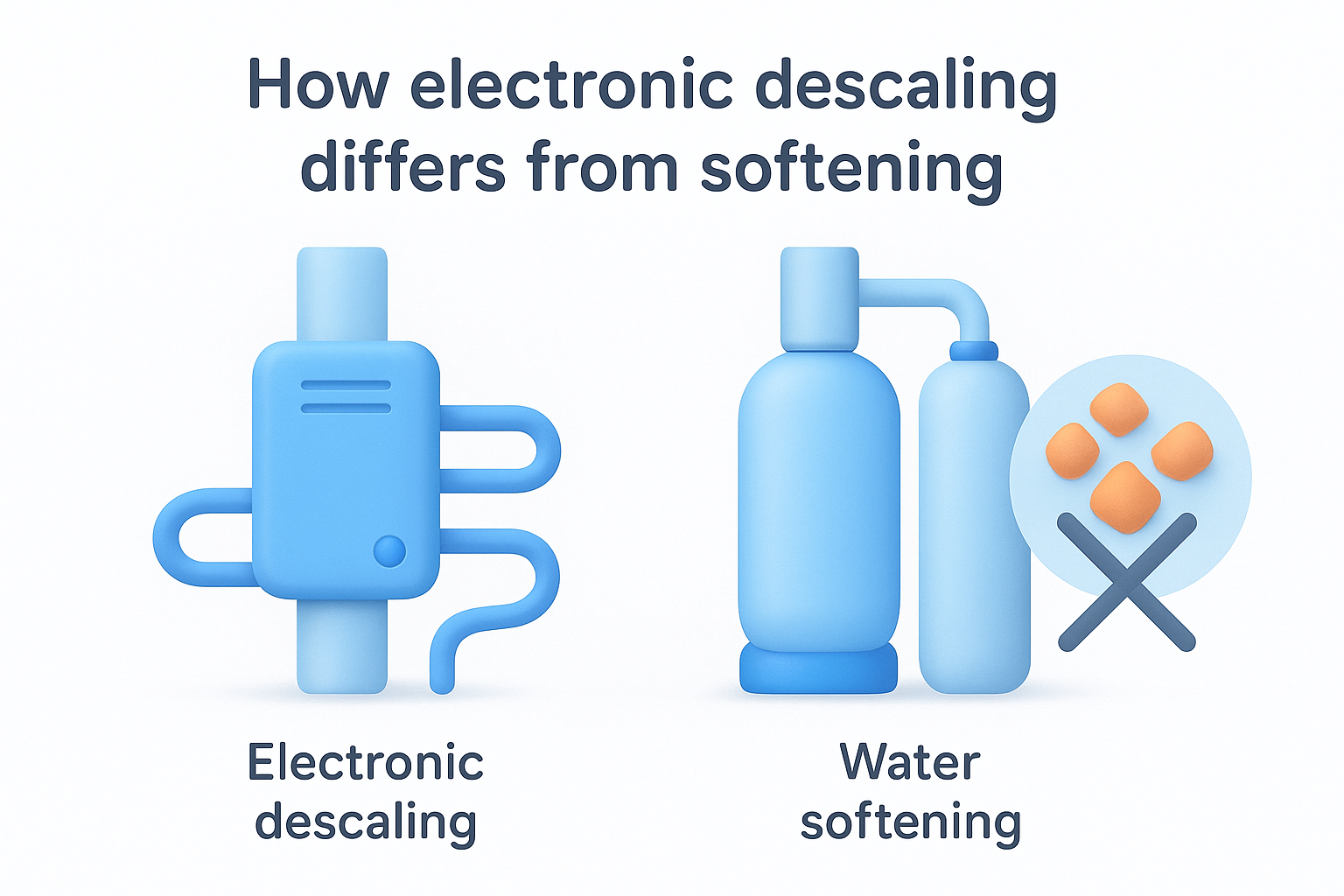
This means your water technically remains hard by measurement, but it behaves more like soft water when it contacts surfaces inside your home.
Who it fits best
The Yarna CWD24 suits renters, condo owners, or homeowners who cannot modify their plumbing or prefer to avoid adding salt to their water supply. It also works well for people who want scale prevention on a tight budget without committing to a full softener installation.
Key specs to compare before you buy
- Pipe compatibility: works on copper, PVC, and steel pipes up to 2 inches in diameter
- Power draw: roughly 5 watts continuously
- Warranty: 1 year on the unit
Installation and maintenance reality check
You wrap the signal cables around your supply pipe and plug the unit into a standard outlet. No plumbing cuts, no drain line, and no salt purchases are required. The ongoing cost is essentially your electricity, which amounts to only a few dollars per year.
Typical price range
The Yarna CWD24 costs between $150 and $200, with no installation labor required.
10. SpringWell FutureSoft Salt-Free Conditioner
The SpringWell FutureSoft earns its place among the best water softeners for home use by delivering scale prevention without any salt, backwash, or electricity. It conditions your water through a physical process rather than a chemical ion exchange, which appeals to homeowners who want protection without adding sodium to their water supply.
How TAC conditioning works
Template-assisted crystallization, or TAC, converts dissolved calcium and magnesium into microscopic crystals that stay suspended in your water rather than bonding to pipe walls and fixture surfaces. Those crystals pass harmlessly through your plumbing without forming the scale buildup that damages water heaters and clogs showerheads.
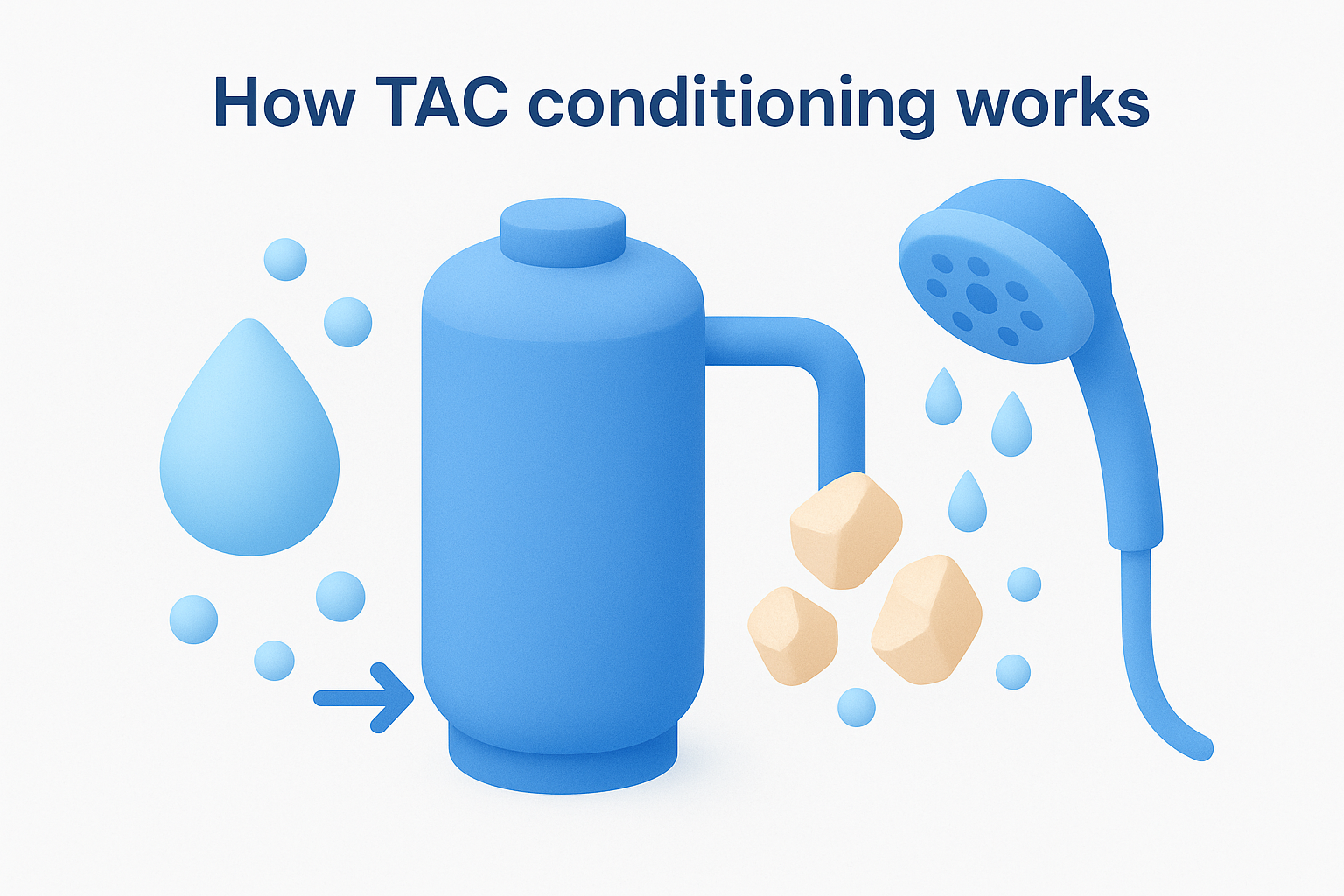
Your water hardness reading stays unchanged after TAC conditioning, but the minerals behave differently and stop adhering to surfaces throughout your home.
Who it fits best
The FutureSoft suits environmentally conscious homeowners who want scale prevention without salt discharge or wastewater. It also works well for households on municipal water with moderate hardness levels where sodium addition is a concern, such as homes with residents on low-sodium diets.
Key specs to compare before you buy
- Flow rate: up to 12 GPM
- Grain capacity: handles up to 81 GPG hardness
- Media: catalytic TAC media
- Warranty: lifetime on the tank, 6 months on the media
Installation and maintenance reality check
Installation involves cutting into your main supply line and connecting the inline housing, which requires basic plumbing skill. The unit needs no drain line, no salt storage, and no electrical connection. TAC media lasts approximately three to five years before it needs replacement.
Typical price range
The SpringWell FutureSoft costs between $800 and $1,100 for the unit alone. Professional installation adds roughly $150 to $350 depending on your plumbing setup.
11. Kind E-2000 Cartridge-Based Salt-Free Conditioner
The Kind E-2000 rounds out this list of the best water softeners for home use with a compact, cartridge-based approach to scale prevention that skips salt, backwash, and electricity entirely. It connects directly to your main supply line and treats water as it flows through without any tank, brine storage, or drain connection required.
How cartridge TAC conditioning works
The E-2000 uses template-assisted crystallization media packed inside a replaceable cartridge to convert dissolved calcium and magnesium into stable crystals that move through your plumbing without bonding to surfaces. Water flows through the cartridge, the minerals shift in structure, and your pipes, water heater, and fixtures stay clear of hard scale buildup without any chemical exchange taking place.
Unlike ion exchange softeners, TAC conditioning leaves your hardness reading unchanged but prevents minerals from adhering to surfaces throughout your home.
Who it fits best
The Kind E-2000 works best for homeowners on municipal water with moderate hardness levels who want a minimal-footprint solution without significant plumbing modifications. It suits smaller households where daily water demand stays within the cartridge’s rated flow capacity and where sodium-free conditioning is a priority.
Key specs to compare before you buy
- Flow rate: up to 10 GPM
- Hardness rating: handles up to 25 GPG effectively
- Cartridge lifespan: 6 to 12 months depending on usage
- Power requirement: none
- Warranty: 1 year on the housing
Installation and maintenance reality check
Installing the E-2000 requires cutting into your main supply line and threading the housing in line, which demands basic plumbing skill. The unit itself installs quickly, but cartridge replacement every six to twelve months is the primary ongoing commitment you need to budget for and schedule.
Typical price range
The Kind E-2000 costs between $300 and $500 for the unit itself. Plan on $50 to $100 per replacement cartridge as a recurring annual operating expense.
Next Steps for Softer Water at Home
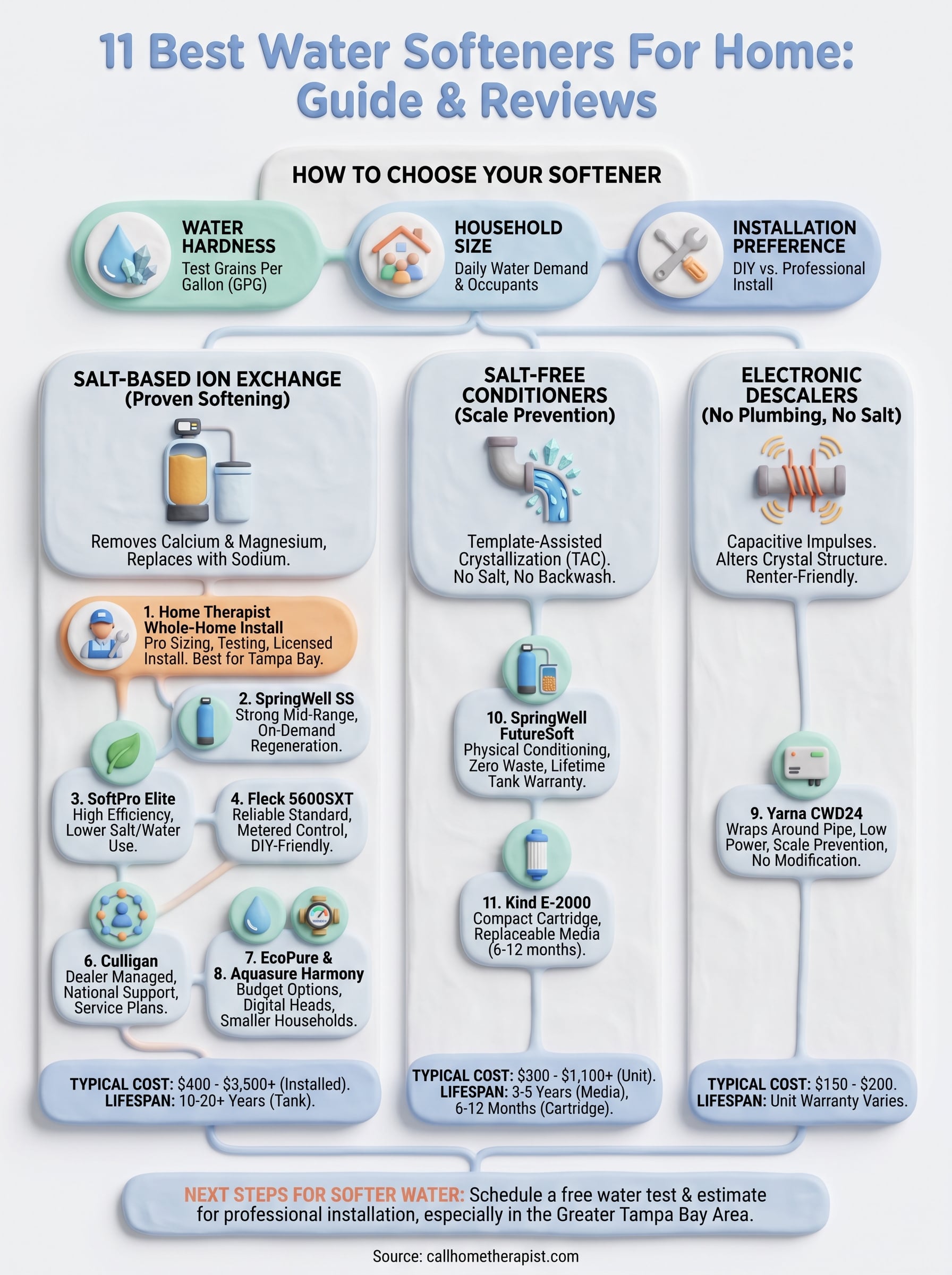
Picking from the best water softeners for home use comes down to three things: your water hardness level, your household size, and how much involvement you want in installation and maintenance. DIY-friendly options like the Fleck 5600SXT or Aquasure Harmony work well if you’re comfortable with basic plumbing. Salt-free conditioners suit households that want to skip sodium and salt refills entirely. Electronic descalers fit renters or anyone who can’t modify their supply line.
For homeowners in the Greater Tampa Bay Area, the simplest path to soft water is a professional install sized specifically to your home’s actual hardness readings. You skip the guesswork, get a system that fits your pipes and usage patterns, and have licensed technicians handle the hookup from start to finish. Schedule a free water softener estimate with Home Therapist and find out exactly what your home needs before you spend a dollar on equipment.


