

Why Water Heater Flushes Matter for Your Home
TL;DR:
- Sediment buildup in water heaters occurs daily from mineral deposits, reducing efficiency, lifespan, and safety. Regular flushing, at least once a year, prevents damage, saves money, and reduces health risks associated with bacteria growth. Professional inspections and maintenance help ensure proper function, especially for older units or homes with hard water.
Most homeowners never think about their water heater until it stops working. That mindset is exactly why water heater flushes matter more than you might expect. Every day your tank runs, minerals from your water supply settle at the bottom and slowly undermine your heater’s performance, lifespan, and even the safety of your water. This guide breaks down what sediment actually does to your system, what happens when you ignore it, how often you should flush, and what the process looks like so you can protect your investment before a repair bill forces your hand.
Table of Contents
- Key takeaways
- What sediment buildup actually is
- What happens when you skip the flush
- How often you should flush your water heater
- How flushing works and what else to check
- Making flushing part of your home routine
- My honest take on flushing: what most guides skip
- Let Callhometherapist handle your water heater flush
- FAQ
Key takeaways
| Point | Details |
|---|---|
| Sediment builds up constantly | Calcium and magnesium deposits form with every heating cycle, regardless of water quality. |
| Skipping flushes costs money | Sediment insulates the tank from heat, driving up energy bills and accelerating wear. |
| Health risks are real | Sediment layers can harbor harmful bacteria, including those linked to Legionnaires’ disease. |
| Annual flushing is the baseline | Most households need a flush once a year, more often with hard water or heavy use. |
| DIY has limits | Severely neglected or older tanks often need a professional before any flushing is attempted. |
What sediment buildup actually is
Tap water carries dissolved minerals, mainly calcium and magnesium. The moment that water gets heated, those minerals separate from the water and sink. They settle at the bottom of your tank, layer by layer, every single day your heater runs. It is a slow process, which is exactly why most homeowners never notice it until the damage is already done.
The result is a thick, grainy layer sitting between your burner and the water it is supposed to heat. Think of it like putting a blanket over a stovetop burner. The heat still comes, but much less of it reaches the water efficiently. That forces your system to work longer and harder to hit the temperature you set.
Hard water areas face this problem faster. If you live in a region where mineral-rich water flows through your pipes, your tank accumulates sediment at a significantly higher rate than the national average. The Tampa Bay area, for example, is known for water hardness that accelerates buildup compared to softer water regions.
Here is what sediment buildup looks like in practice:
- A thin, sand-like layer forms within the first year of operation
- Over several years, this layer can reach several inches thick
- In severe cases, it hardens into a cement-like crust that is very difficult to remove
- Older, unserviced tanks often have sediment that has bonded to the tank lining itself
The impact of sediment in water heaters is not just a performance issue. It is a structural one. Once sediment hardens, it traps moisture against the tank floor, which accelerates corrosion from the inside out.
What happens when you skip the flush
Neglecting a flush for one year might feel harmless. Skipping it for five years is a different story entirely.
The most immediate consequence is energy waste. Sediment reduces heating efficiency by acting as an insulating barrier between your burner and the water. Your heater runs longer cycles to compensate, and your utility bill reflects it. Over a year, that added consumption adds up to a noticeable cost increase that most homeowners never trace back to their water heater.
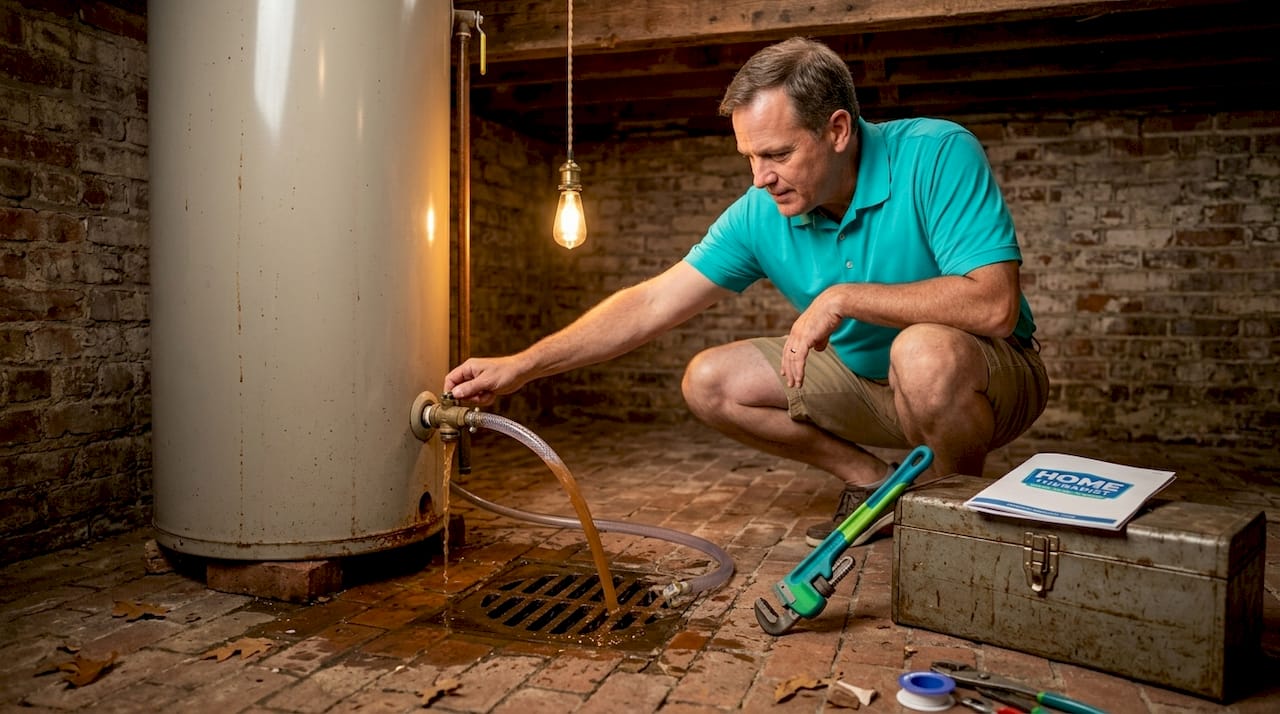
The second consequence is noise. Rumbling and popping sounds coming from your tank are not random. They happen because water gets trapped beneath the sediment layer, then superheats and forces its way out. If your heater sounds like a coffee percolator, sediment is almost certainly the cause.
Then there is the health concern most homeowners do not expect.
Sediment layers create warm, stagnant zones inside your tank that can become breeding grounds for waterborne bacteria, including those responsible for Legionnaires’ disease. Bacteria thrive in sediment-heavy tanks, particularly when water temperatures fluctuate or drop below safe levels.
Beyond health and efficiency, there is the cost of replacement to consider. Replacing a water heater costs between $800 and $3,000 depending on the unit type. A routine annual flush costs a fraction of that and can add years to your tank’s useful life. The math strongly favors maintenance.
Watch for these warning signs that your tank needs immediate attention:
- Discolored or rusty water at the hot tap
- Noticeably less hot water than usual
- Longer wait times for water to heat up
- Persistent rumbling or popping during heating cycles
- Visible sediment or grit in your water
How often you should flush your water heater
The general recommendation is clear: flush your water heater at least once a year. That is the baseline for a household with average water usage and moderate water hardness. But your situation may call for more frequent attention.
| Household situation | Recommended flush frequency |
|---|---|
| Average usage, moderate water hardness | Once per year |
| Hard water area or high usage | Every 6 months |
| Large family with heavy daily demand | Every 4 to 6 months |
| Older tank (10+ years) | Annually with professional inspection |
| Tankless water heater | Annual descaling, not draining |
Tankless units are a separate category worth noting. They do not accumulate sediment in a tank the same way, but mineral deposits clog the heat exchanger over time. Annual descaling keeps the flow rate and efficiency intact. Skipping it causes the same efficiency loss as neglecting a tank unit.
If your water heater is over 10 years old and has never been flushed, do not attempt it alone. Disturbing long-settled sediment in an older tank can trigger leaks at the drain valve or damage the tank lining. A professional inspection first is the safer call.
Pro Tip: Set a phone calendar reminder on the same date each year for your water heater flush. Pair it with another annual task you already do, like changing smoke detector batteries, so it never gets overlooked.
How flushing works and what else to check
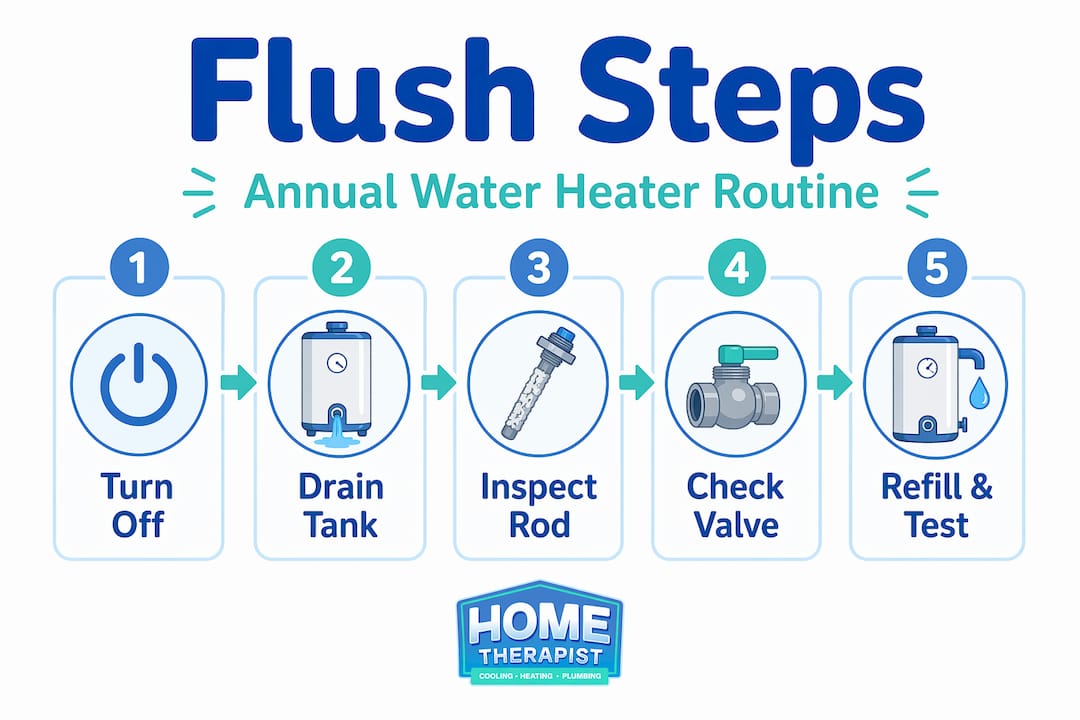
Understanding the water heater flush process removes the mystery and helps you see why each step matters. Here is a practical overview of what a proper flush involves:
- Turn off the power supply (electric) or set the gas valve to pilot mode
- Shut off the cold water supply valve feeding the tank
- Connect a garden hose to the drain valve at the base of the tank and run it to a suitable drain or outdoor area
- Open a hot water tap somewhere in the house to allow air into the system and prevent a vacuum
- Open the drain valve and let the water flow out completely
- Turn the cold water supply back on briefly to stir up remaining sediment and flush it through
- Continue flushing until water runs clear, which is the only reliable sign that the sediment has been fully removed
- Close the drain valve, remove the hose, refill the tank, and restore power or gas
Water clarity during that final flush is something many homeowners miss entirely. Cloudy or murky drained water means sediment is still present. Clear water means you are done. It is a simple check but a critical one.
While the tank is drained, it is the right time to inspect the anode rod. This component sits inside the tank and corrodes intentionally to protect the tank walls from rust. Anode rods should be inspected regularly and replaced when more than half consumed. Pairing an anode rod check with your annual flush is one of the highest return maintenance habits you can build for your water heater. Learn more about water heater care to understand how these tasks work together.
Pro Tip: If your drain valve drips after flushing, replace it before closing the system back up. A leaking drain valve is an inexpensive fix that homeowners often delay until it becomes a water damage situation.
Also check the temperature and pressure relief valve during this visit. It should open and close smoothly when tested. A sticky or corroded T&P valve is a safety issue that should be addressed immediately.
Making flushing part of your home routine
Knowing why water heater flushes matter is only useful if it leads to action. The best way to protect your system is to treat flushing like any other scheduled home task, not something you only do when something goes wrong.
Here is how to build it into your maintenance routine:
- Log every flush in a home maintenance notebook or app with the date and any observations about water color or sediment volume
- Check for early sediment signs every few months by running your hot tap briefly and looking for discoloration or grit
- Schedule a professional plumbing inspection that includes a water heater flush annually, especially as your unit ages
- Compare your energy bills year over year to spot creeping increases that may signal reduced heater efficiency
- Know your tank’s age. Most standard tank heaters last 8 to 12 years with consistent maintenance. Without it, expect closer to 6 to 8 years
The benefits of flushing water heaters compound over time. A tank that gets flushed every year at age 5 is in dramatically better condition than one that gets its first flush at age 8. Early consistency is what separates a 12-year tank from one that fails at 7.
Annual professional inspections also catch problems you would not spot on your own, like early corrosion at fittings, a failing heating element, or a T&P valve that is past its safe service life.
My honest take on flushing: what most guides skip
I have talked with hundreds of homeowners about their water heaters, and the pattern is almost always the same. They learn about flushing after something goes wrong, not before. That gap between knowing and acting is where most of the real damage happens.
What I have seen most often is homeowners who try to flush a tank that has not been touched in 8 or 10 years. The sediment has hardened. The drain valve has not moved in years. They force it open, and suddenly they have a slow drip that will not stop, or worse, a valve that breaks off entirely. That is a service call that could have been avoided entirely with earlier, more regular maintenance.
My honest advice: if your tank is older than 7 years and you have never flushed it, call a professional first. Have them assess the valve condition and sediment level before you attempt anything. It is not a sign of failure to ask for help on this. It is the smarter move.
I also want to push back on the idea that flushing alone is enough. In my experience, the homeowners with the best results treat the flush as part of a larger annual checkup that includes the anode rod, the T&P valve, and a look at any visible pipe connections. Flushing a tank but ignoring a half-corroded anode rod is like changing your car’s oil but ignoring a cracked belt. You are doing good work, but you are leaving a real problem unaddressed.
Adopt a proactive mindset early. Your water heater works every single day without complaint, and it rarely gives you much warning before it fails. The homeowners who stay ahead of that curve almost always end up spending less money and dealing with far fewer emergencies.
– Alex
Let Callhometherapist handle your water heater flush
Knowing the importance of water heater maintenance is the first step. Having a trusted team handle it is the one that protects your home.
At Callhometherapist, our certified technicians serve homeowners across the Tampa Bay area with thorough water heater flushes and complete plumbing inspections that go beyond just draining the tank. We check your anode rod, test your T&P valve, inspect connections, and flag any early signs of trouble before they turn into expensive repairs. If you want a one-stop annual visit that keeps your system running at full efficiency, we are ready to schedule it. Reach out to Callhometherapist today and stop guessing about your water heater’s condition.
FAQ
Why do water heater flushes matter so much?
Flushing removes sediment that reduces efficiency, drives up energy bills, and can harbor harmful bacteria. Without regular flushing, water heaters wear out faster and cost significantly more to replace.
How often should I flush my water heater?
Most households need a flush at least once a year. Homes with hard water or high usage may need flushing every four to six months.
What are the signs my water heater needs flushing now?
Look for rumbling or popping noises, rusty or discolored hot water, reduced hot water availability, or a noticeable increase in your energy bills without another explanation.
Can I flush my water heater myself?
Most homeowners can flush a regularly maintained tank safely. However, if your unit is older than 7 years and has never been flushed, a professional should assess it first to avoid triggering leaks from hardened sediment.
Do tankless water heaters need to be flushed too?
Tankless heaters do not drain the same way, but they require annual descaling to clear mineral deposits from the heat exchanger and maintain proper flow and efficiency.
Recommended
- Water Heater Flush and Inspection in Tampa, FL 33615 | Home Therapist
- Water Heater Flush & Plumbing Inspection in Clearwater, FL 33755
- Water Heater Flush and Maintenance in Odessa, FL 33556
- Water Heater Flush & Plumbing Inspection in Riverview, FL | Value Home Therapy Plan
More Water Heater (Tank) Articles
- Five-Point Tank Inspection + Sediment Washout: Water Heater Flush in Wesley Chapel, FL 33543
- Five Checks, One Flush: Water Heater Flush on Marquette Ave in Wesley Chapel, FL 33545
- Nearly 5 Hours on Seafoam Dr: What Micheal Found During a Water Heater Flush in New Port Richey, FL 34652
- 50-Gal Rheem Tank, 42K-Grain Softener, and an Electrical Box Detail: Water Heater Installation in Spring Hill, FL 34608
- Water Heater Installation New Port Richey FL: When the Tank and Shower Both Fail on Shallow Creek Court, FL 34653


