HVAC Efficiency Ratings: What They Mean for Tampa Homes
Shopping for a new air conditioner or heat pump in Tampa Bay can feel confusing when every unit boasts numbers and ratings like SEER or EER. These labels are not just industry jargon. Understanding HVAC efficiency ratings gives you the power to spend less on electricity while keeping your home comfortable through Tampa’s long, humid summers. Learn how these ratings work and why myths about equipment size and performance could end up costing you more than necessary.
Table of Contents
- Defining HVAC Efficiency Ratings And Common Myths
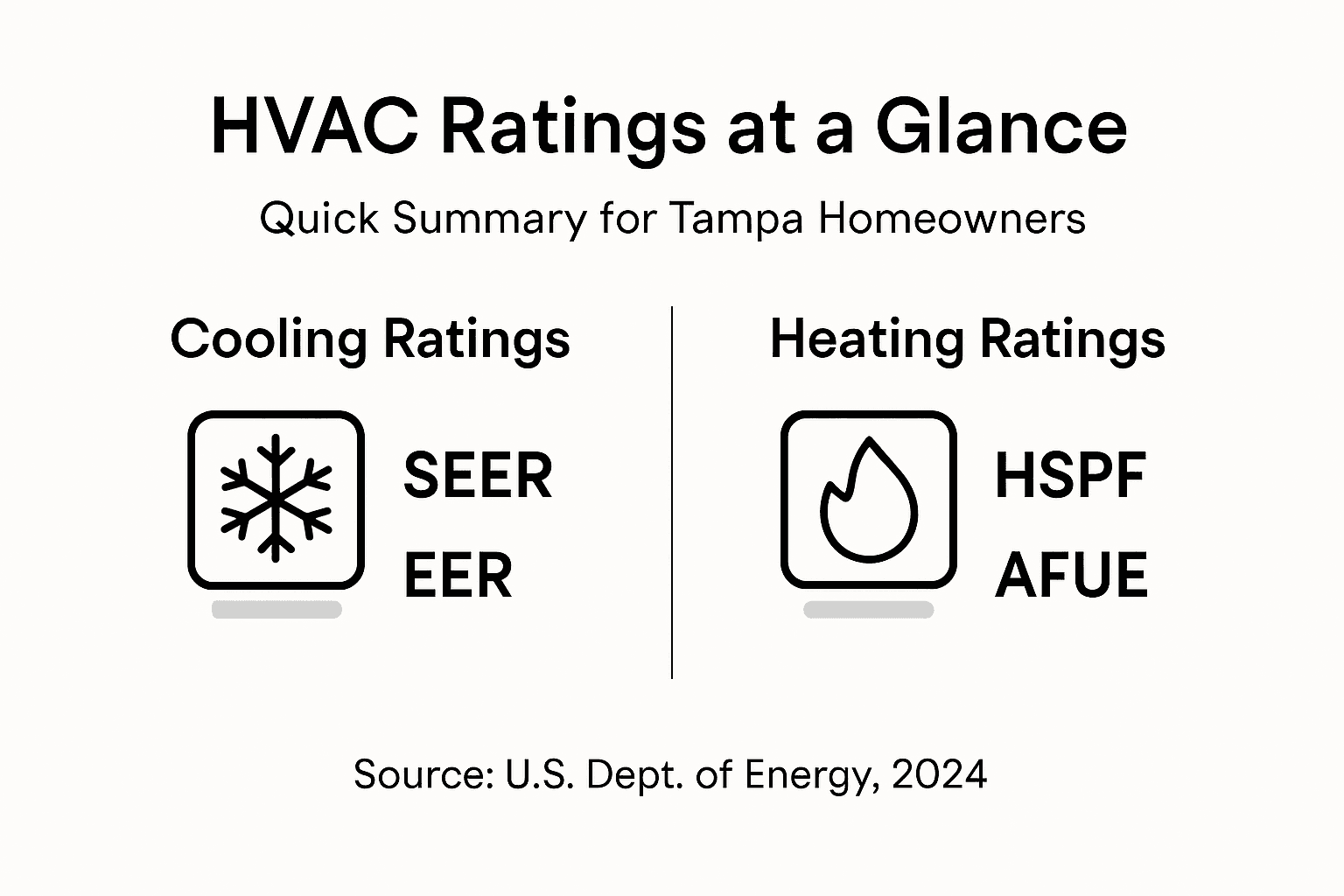
- Key Rating Types: SEER, EER, HSPF, AFUE
- How Ratings Are Determined And Interpreted
- 2026 Federal And Florida Efficiency Standards
- Choosing Efficient HVAC For Tampa’s Climate
- Financial Impacts, Common Pitfalls, And Alternatives
Key Takeaways
| Point | Details |
|---|---|
| Understand HVAC Ratings | Familiarize yourself with SEER, EER, and HSPF ratings to make informed purchasing decisions for HVAC systems. |
| Myth vs. Reality | Be aware that higher SEER ratings do not necessarily guarantee better comfort; they indicate energy efficiency over time. |
| Importance of Sizing | Proper sizing of HVAC units is crucial to avoid inefficiencies and ensure effective humidity control, especially in Tampa’s climate. |
| Financial Planning | Explore financing options and rebates to make high-efficiency HVAC upgrades more accessible while benefiting from long-term energy savings. |
Defining HVAC Efficiency Ratings and Common Myths
When you start shopping for a new air conditioning or heating system in Tampa, you’ll see numbers like SEER, EER, and HSPF plastered across product labels. These aren’t random figures. SEER (Seasonal Energy Efficiency Ratio) measures how much cooling you get per watt of electricity consumed over an entire cooling season, while EER (Energy Efficiency Ratio) measures the same thing but for a single operating condition. HSPF (Heating Seasonal Performance Factor) does the equivalent job for heat pumps during winter months. Think of these ratings as fuel economy labels for your HVAC system. Just like a car’s miles-per-gallon tells you efficiency on the road, these ratings show how much cooling or heating output you receive for every dollar you spend on electricity. Understanding SEER, EER, and HSPF ratings helps you make informed purchasing decisions instead of guessing which system will actually save you money.
But here’s where myths start creeping in. Many Tampa homeowners believe that a higher SEER rating automatically means better comfort in their home. Not quite. A SEER 16 unit won’t cool your house faster than a SEER 13 unit on a scorching July afternoon. What it does is use less electricity to achieve the same temperature over the course of an entire season. Another common misunderstanding involves confusing tonnage with weight. When an HVAC technician mentions a 3-ton system, they’re not talking about how heavy the outdoor unit is. Tonnage refers to cooling capacity, specifically the amount of heat the system can remove from your home per hour. A 3-ton unit moves the same amount of heat whether it weighs 85 pounds or 120 pounds. Additionally, some folks assume that bigger is always better for their home. Installing an oversized unit actually wastes energy and cycles on and off frequently, which reduces efficiency and increases wear on components. Conversely, an undersized system runs constantly without reaching your desired temperature, driving up electricity bills.
Another myth worth addressing is the idea that air conditioning creates cold. It doesn’t. Your AC system moves heat from inside your home to the outside environment. This is why efficiency ratings focus on heat removal rather than cold production. A properly functioning HVAC system maintains the temperature difference you want by actively transferring thermal energy, not by generating cold air from nothing. When you understand what these ratings actually measure and what they don’t promise, you can compare systems accurately and choose one that fits both your budget and your home’s square footage.
Pro tip: Request a Manual J load calculation from your HVAC technician before purchasing a new system. This assessment determines your home’s actual heating and cooling needs based on insulation, windows, and climate, ensuring you select the right capacity unit rather than oversizing or undersizing.
Key Rating Types: SEER, EER, HSPF, AFUE
Now that you understand efficiency ratings aren’t magic numbers, let’s break down what each specific rating actually measures. If you’re shopping for cooling equipment, you’ll encounter SEER (Seasonal Energy Efficiency Ratio) and EER (Energy Efficiency Ratio). SEER looks at your air conditioner’s performance over an entire cooling season, accounting for temperature swings from mild spring days to brutal Tampa summer heat waves. It’s the broader picture of efficiency. EER, by contrast, measures cooling performance at one specific outdoor temperature, typically 95 degrees Fahrenheit. Think of SEER as your annual gas mileage and EER as your efficiency during highway driving at a consistent speed. Both matter when comparing units, but SEER gives you the better sense of real-world savings on your electricity bill throughout the year.
For heating systems, you’ll see HSPF (Heating Seasonal Performance Factor) on heat pump equipment and AFUE (Annual Fuel Utilization Efficiency) on furnaces. HSPF measures how efficiently a heat pump moves heat into your home during the entire heating season, making it particularly relevant for Tampa’s mild winters where heat pumps perform well. AFUE applies to furnaces and measures how much of the fuel you burn actually gets converted into usable heat for your home, with the remainder lost up the chimney or through other means. When comparing air conditioner ratings, you’re primarily looking at SEER and EER numbers, but understanding HSPF and AFUE helps you make smart decisions if you install a heat pump or need backup heating during those rare Florida cold snaps.
Here’s the practical difference these ratings create in your wallet. A SEER 16 system might cost you 15 to 20 percent more upfront than a SEER 13 system, but it could save you 15 to 20 percent on cooling costs each month during the cooling season. In Tampa’s climate where you’re running your AC from April through October, that compounds quickly. Similarly, federal minimum efficiency requirements set baseline standards for what manufacturers can sell, so every unit on the market meets a minimum threshold. The ratings become your tool for comparing what’s available and estimating payback periods. A higher-rated unit typically costs more but uses less electricity, while a lower-rated unit is cheaper initially but will cost more to operate over its lifespan.

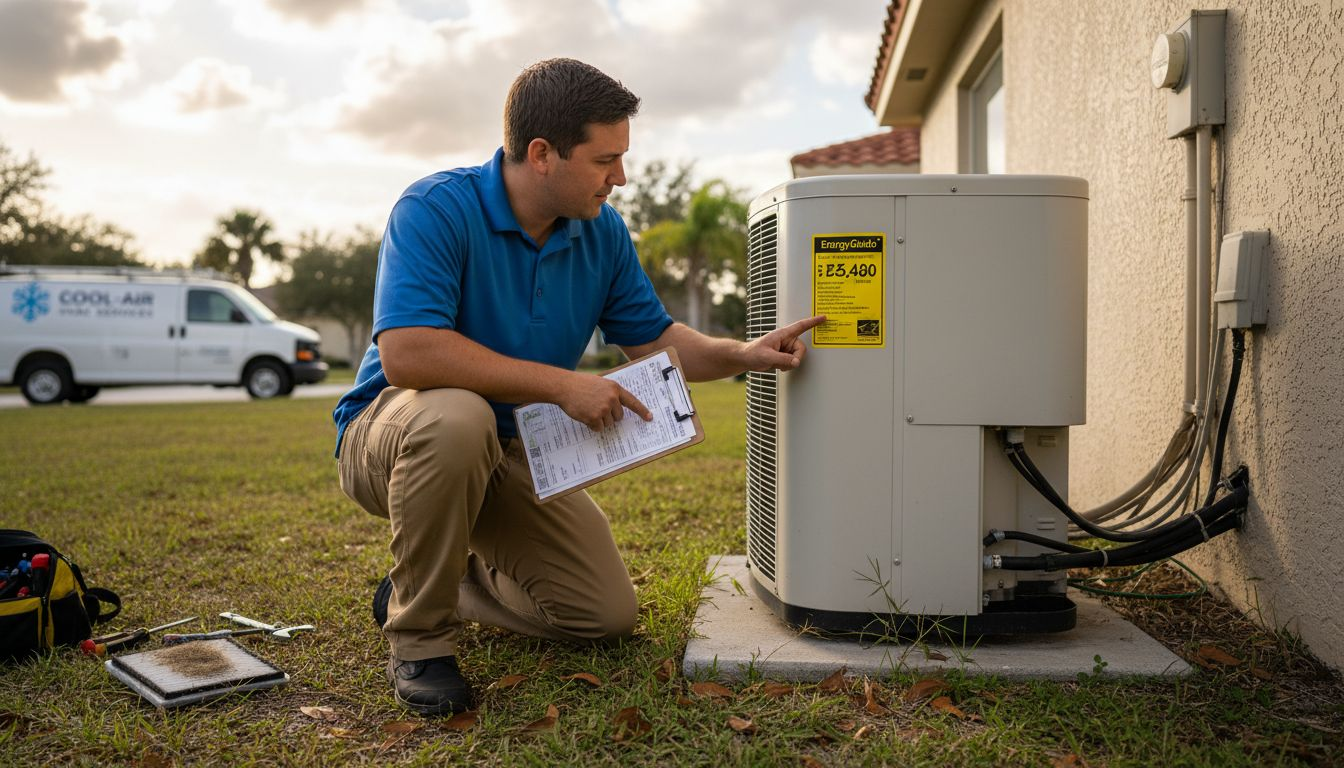
Pro tip: Compare units using the EnergyGuide labels on appliances, which show estimated annual energy costs based on national averages. Adjust that number down by 10 to 15 percent for Tampa’s climate since we use cooling more frequently than the national average, giving you a more accurate picture of your potential savings.
Here is a quick reference comparing common HVAC efficiency ratings and what each measures:
| Rating Type | Primary Use | What It Measures | Typical Value Range |
|---|---|---|---|
| SEER | Cooling systems | Seasonal cooling output per watt | 13–22 (higher is better) |
| EER | Cooling systems | Output at specific high heat | 8–14 (higher is better) |
| HSPF | Heat pumps | Seasonal heating efficiency | 7–13 (higher is better) |
| AFUE | Furnaces | % fuel converted to heat | 80–98% (higher is better) |
How Ratings Are Determined and Interpreted
HVAC efficiency ratings don’t appear out of thin air. Manufacturers test their equipment under controlled laboratory conditions that follow strict federal standards. For cooling systems, technicians measure SEER by running the unit through a simulated cooling season with varying outdoor temperatures ranging from 62 degrees to 104 degrees Fahrenheit. EER gets measured at one specific condition: 95 degrees outdoor temperature and 80 degrees indoors. This standardized approach lets you compare apples to apples when looking at different brands and models. The testing happens in a lab, not in someone’s actual home, which is important to understand. Real-world performance depends on installation quality, ductwork design, thermostat settings, and maintenance practices. A perfectly rated unit installed incorrectly won’t deliver the efficiency it promises.
When you look at an efficiency rating, you’re seeing a number calculated from laboratory test data, but that doesn’t mean your actual home will achieve exactly those results. How SEER and EER ratings are measured under specific temperature conditions helps explain why a unit performing great in testing might perform differently in your Tampa home depending on factors like sun exposure, insulation quality, and how often your doors and windows stay open. This gap between rated efficiency and actual efficiency is why installation matters tremendously. A technician from Home Therapist Cooling, Heating, and Plumbing will properly size your ductwork, seal connections, and calibrate your system to help you achieve closer to the rated efficiency. Additionally, HVAC performance degradation over time means your unit won’t maintain peak efficiency forever. A 10-year-old SEER 16 system won’t perform like a brand-new one due to refrigerant leaks, compressor wear, and coil fouling.
To interpret ratings accurately for Tampa, remember that higher numbers always mean lower energy consumption, but the real benefit depends on your current system’s age and efficiency. Replacing a 20-year-old 8 SEER unit with a modern 16 SEER system will deliver dramatic savings because the efficiency jump is so large. Upgrading from a 13 SEER to a 16 SEER saves money too, but the payback period stretches longer. You’ll also see ratings combined with rebate information and utility incentives. Tampa Bay and Florida utility companies sometimes offer rebates for upgrading to higher-efficiency equipment, effectively reducing your upfront cost and accelerating payback. These incentives appear and disappear, so timing your purchase strategically can add significant value to your investment.
Pro tip: Ask your HVAC technician for a written baseline of your current system’s efficiency before recommending replacement. Many older units can be tested to show actual performance, which helps you calculate real savings from an upgrade rather than relying solely on theoretical ratings.
2026 Federal and Florida Efficiency Standards
If you’re thinking about replacing your HVAC system soon, timing matters more than you might realize. The U.S. Department of Energy has mandated significant changes to federal efficiency standards taking effect May 26, 2026. Starting that date, manufacturers cannot sell new central air conditioning units, heat pumps, or air handlers that don’t meet substantially higher minimum efficiency requirements. This isn’t optional compliance for manufacturers. It’s a hard deadline that will reshape what’s available on the market and affect pricing for everyone buying equipment in Tampa. The regulations apply nationwide, but Florida faces particularly interesting implications because our climate profile differs from colder regions. Since Tampa homeowners rely heavily on cooling and minimally on heating, the new standards focus intensely on cooling efficiency metrics like SEER while also raising heating performance requirements for heat pumps.
What do these new standards actually mean for your wallet? 2026 federal efficiency standards for room air conditioners will push minimum SEER ratings upward significantly. Currently, the federal minimum for most regions is SEER 13 for central air conditioners and SEER 15 for heat pumps. Come May 2026, expect those minimums to jump substantially, potentially to SEER 15 and SEER 16 or higher depending on cooling capacity. This means every unit you can legally purchase in the United States will be more efficient than most systems currently running in Tampa homes. Manufacturers have already begun phasing out lower-efficiency models to prepare for this transition. Consequently, if you buy replacement equipment after May 2026, you’ll automatically get a more efficient system than older standards allowed, though you’ll also pay more upfront for that efficiency.
For Tampa specifically, the implications center on cost recovery and energy savings. The new 2026 efficiency standards for heat pumps particularly benefit homeowners considering heat pump installations as their primary heating and cooling solution. A heat pump with higher HSPF ratings will perform better during Florida’s rare winter days while maintaining excellent summer cooling efficiency. Higher initial equipment costs will be offset by faster energy bill reductions, meaning payback periods shrink. If you’re planning an HVAC replacement, purchasing before May 2026 lets you choose from lower-efficiency, lower-cost options currently legal. Waiting until after May 2026 means you’ll have no choice but to buy high-efficiency equipment, which costs more initially but delivers stronger long-term savings. Neither timing is wrong, but understanding this regulatory shift helps you make strategic decisions aligned with your budget and energy goals.

Pro tip: Contact Home Therapist Cooling, Heating, and Plumbing now to discuss your system’s remaining lifespan and plan replacement timing strategically. Proactive planning before the 2026 standards take effect lets you leverage current rebates and avoid premium pricing during the transition period when manufacturers are converting their product lines.
Choosing Efficient HVAC for Tampa’s Climate
Tampa’s subtropical climate presents unique challenges that don’t apply to homeowners in northern states. You’re not fighting brutal winters or occasional cooling needs. You’re managing nearly year-round heat and oppressive humidity that makes your air conditioning run hard from March through November. This reality shapes what efficiency ratings matter most and which system types perform best in your specific environment. A heat pump excels in Tampa because it handles both cooling and heating, though heating rarely demands serious work here. A traditional air conditioner paired with a furnace makes less sense in Florida since you’ll rarely use that furnace. Selecting equipment optimized for hot, humid climates means prioritizing units with strong SEER ratings, excellent humidity removal capability, and proven durability in corrosive salty air near coastal Tampa areas. ENERGY STAR certified equipment provides a reliable baseline, but you want to dig deeper into what performs best when your outdoor temperature hits 95 degrees and the humidity sits at 80 percent.
When choosing your next system, properly sizing the unit matters as much as its efficiency rating. An undersized unit runs constantly without adequately dehumidifying your home, leaving you uncomfortable despite high electricity bills. An oversized unit cycles on and off, wasting energy and failing to remove humidity effectively. How to choose HVAC systems for Tampa involves considering your home’s square footage, insulation quality, window orientation, and existing ductwork. This is where professional guidance from Home Therapist Cooling, Heating, and Plumbing becomes invaluable. A Manual J load calculation determines your actual cooling and heating needs based on Tampa’s climate data, preventing costly oversizing or undersizing mistakes. You should also consider HVAC system strategies for home cooling that extend beyond just the equipment itself. Proper attic insulation, window shading, ceiling fans, and ductwork sealing all enhance your HVAC system’s efficiency by reducing the cooling load it must handle.
Tampa’s humidity presents another critical consideration often overlooked in efficiency discussions. High-efficiency air conditioning systems sometimes sacrifice dehumidification performance if not properly configured. HVAC choices for Florida’s subtropical environment emphasize selecting systems with variable-speed compressors and enhanced humidity control features. These systems run at reduced capacity during mild days, removing more moisture from your home without over-cooling. Variable-refrigerant-flow heat pumps represent cutting-edge technology for Tampa, delivering exceptional efficiency while managing the humidity challenges that plague the region. Older single-stage systems run full speed or off, providing less precise humidity control. You want equipment that adjusts output based on actual demand, keeping your home comfortable while using minimal energy. Durability matters too. Coastal corrosion from salt air requires systems with quality construction and appropriate materials. Cheaper units may offer attractive upfront pricing but fail prematurely in Tampa’s corrosive environment, negating any initial savings through replacement costs and inefficiency during their declining years.
Pro tip: Request your HVAC technician to conduct humidity measurements in your home before and after system installation. Proper humidity control in Tampa should keep indoor relative humidity between 40 and 60 percent. If your new system can’t achieve this range despite excellent SEER ratings, something’s wrong with sizing or configuration that needs correction.
The table below highlights key decision factors when choosing a new HVAC system for Tampa:
| Factor | Why It Matters | Tampa Consideration |
|---|---|---|
| Sizing Accuracy | Prevents waste, improves comfort | Essential for humidity control |
| Humidity Handling | Reduces mold, increases comfort | High priority due to climate |
| Salt Air Durability | Extends system lifespan | Crucial near coast |
| Variable-Speed Tech | Improves efficiency, comfort | Especially effective in Tampa |
Financial Impacts, Common Pitfalls, and Alternatives
The sticker shock of a new HVAC system can make you hesitate. A high-efficiency unit costs significantly more upfront than a basic model, sometimes 20 to 40 percent more depending on the equipment tier. But this upfront investment generates measurable savings that compound over years. A SEER 16 system running for 15 years in Tampa’s climate saves thousands of dollars in electricity compared to a SEER 13 unit. The payback period typically falls between 5 to 8 years, after which you’re enjoying pure savings. However, this calculation only works if you maintain your system properly and install it correctly. Common pitfalls undermine these financial benefits faster than you might expect. Improper installation, oversizing, undersizing, neglected maintenance, and ignoring local climate factors all reduce efficiency and inflate operating costs. A perfectly rated unit installed by someone who doesn’t properly seal ductwork or set your thermostat correctly will underperform its specifications. Similarly, skipping annual maintenance allows refrigerant leaks, coil fouling, and compressor wear to degrade efficiency by 5 to 15 percent annually.
Many Tampa homeowners face upfront cost barriers that prevent them from upgrading to efficient equipment despite knowing the long-term benefits. This is where financial alternatives become game changers. Financing options for energy efficiency upgrades include utility rebates, tax credits, equipment financing programs, and performance contracting models that spread costs over time. Tampa Electric Company and other local utilities frequently offer rebates for installing high-efficiency air conditioners and heat pumps. Federal tax credits available through the Inflation Reduction Act provide additional incentives for qualifying HVAC upgrades. Some HVAC contractors offer financing plans with zero or low interest rates, letting you spread payments across 60 to 84 months. This transforms a 6,000 dollar system into a 100 dollar monthly payment aligned with your energy savings. Performance contracting represents another alternative where a company guarantees specific energy savings and finances the system, recouping costs from the savings you generate. These options exist specifically because financing barriers shouldn’t prevent you from accessing efficiency benefits.
Beyond financing, alternatives exist to traditional replacement. Smart thermostats and advanced controls can improve your current system’s efficiency by 10 to 15 percent without replacing anything. Ductless mini-split heat pumps offer exceptional efficiency for zone cooling or heating without extensive ductwork renovation. Hybrid systems pair your existing furnace with a heat pump to optimize efficiency for Tampa’s climate. Understanding performance degradation in HVAC systems helps you decide whether repairing an aging unit or replacing it makes financial sense. A 15-year-old system running at 40 percent below its original efficiency might cost less to replace with a high-efficiency unit than to keep repairing. Conversely, a 5-year-old system with a minor refrigerant leak costs hundreds to fix but works another decade at high efficiency. The decision depends on your system’s age, current efficiency, repair history, and remaining lifespan. Home Therapist Cooling, Heating, and Plumbing can assess your specific situation and model different scenarios showing financial outcomes for replacement versus repair.
Pro tip: Schedule a comprehensive energy audit before deciding on HVAC replacement. Many utility companies offer free or subsidized audits identifying your home’s biggest energy waste. This helps you prioritize spending on HVAC versus insulation, windows, or other upgrades that might deliver better returns for your investment.
Maximize Your Home Comfort with Expert HVAC Solutions in Tampa
Understanding HVAC efficiency ratings like SEER, EER, and HSPF is essential to avoid overspending on energy bills and mismatched systems. If you want to beat common pitfalls such as improper sizing or poor installation that reduce efficiency and comfort, trust the certified professionals at Home Therapist Cooling, Heating, and Plumbing. We specialize in tailoring HVAC solutions that match Tampa’s unique climate challenges including high humidity and salty coastal air.

Ready to upgrade to a system that actually saves you money and improves your indoor environment? Visit our HVAC Archives – Home Therapist Cooling, Heating, and Plumbing to explore expert advice and services designed specifically for Tampa Bay homes. Don’t wait until the 2026 federal efficiency standards increase costs—start planning your replacement or upgrade now. Contact us today at Home Therapist Cooling, Heating, and Plumbing and get a customized assessment that ensures the right sizing, optimal humidity control, and lasting durability. Your comfort and energy savings deserve expert care and reliable solutions.
Frequently Asked Questions
What do SEER, EER, and HSPF ratings mean?
SEER (Seasonal Energy Efficiency Ratio) measures cooling output per watt consumed over a cooling season, EER (Energy Efficiency Ratio) measures cooling efficiency at a specific high temperature, and HSPF (Heating Seasonal Performance Factor) measures heating efficiency for heat pumps during the heating season.
How does SEER rating affect my energy bills?
A higher SEER rating indicates a more efficient air conditioning unit, which can lead to lower energy bills. For example, upgrading from a SEER 13 to a SEER 16 unit may result in monthly savings of 15 to 20 percent on cooling costs.
Is it better to have a larger HVAC unit for my home?
No, larger HVAC units can waste energy and cause inefficiencies. An oversized unit cools too quickly without adequately removing humidity, while an undersized unit will run constantly without reaching the desired temperature. Proper sizing is essential for optimal performance and efficiency.
Why is humidity control important in HVAC systems?
Humidity control is crucial in HVAC systems because high humidity can affect comfort levels and lead to issues like mold growth. High-efficiency systems with variable-speed technology can improve humidity management by running at reduced capacity to effectively remove moisture without over-cooling the space.
Recommended
- Why Choose Energy Efficient HVAC Systems in Tampa
- Comparing Air Conditioner Ratings for Installation in Tampa, FL – Home Therapist Cooling, Heating, and Plumbing
- Why Upgrade HVAC System: Complete Tampa Bay Guide – Home Therapist Cooling, Heating, and Plumbing
- How to Choose HVAC System for Tampa Bay Homes Easily – Home Therapist Cooling, Heating, and Plumbing
- Energy Efficient Roofing: Lower Costs, Greater Comfort – J. A. Kelly Contracting Services