

Plumbing Checklist for New Homeowners: 2026 Guide
TL;DR:
- A thorough plumbing checklist helps new homeowners detect leaks and issues early, protecting their investment. Regular inspections, stocking essential tools, and professional help when needed prevent costly damage and ensure long-term system health. Proper maintenance and prompt repair efforts are key to avoiding serious plumbing problems over time.
Moving into a new home is exciting right up until you hear a suspicious drip or notice a water stain on the ceiling. Having a solid plumbing checklist for new homeowners changes that feeling fast. Instead of guessing what to look for or waiting for something to break, you can walk through your home with purpose, spot problems early, and know exactly which tools to keep on hand. This guide covers everything from your first inspection to routine maintenance habits that protect your investment for years.
Table of Contents
- Key takeaways
- 1. Your plumbing checklist for new homeowners starts here
- 2. Key criteria to check during your home plumbing inspection
- 3. Must-have plumbing tools for new homeowners
- 4. Step-by-step plumbing maintenance tasks to protect your home
- 5. Common plumbing problems and what to do about them
- What I actually learned managing plumbing as a new homeowner
- How Callhometherapist supports your plumbing checklist
- FAQ
Key takeaways
| Point | Details |
|---|---|
| Inspect before you settle in | Walk through the entire plumbing system early to catch leaks, corrosion, or pressure problems before they become costly. |
| Stock the right tools | A few quality tools like a drain snake, toilet auger, and adjustable wrench handle most common plumbing problems at home. |
| Maintain on a schedule | Monthly and seasonal maintenance checks catch hidden issues like slow drains and water heater buildup before they escalate. |
| Know your shutoff valves | Locating every shutoff valve now prevents serious water damage during any unexpected leak or burst pipe. |
| Call a pro for hidden issues | Professional inspections using acoustic technology find leaks behind walls and under slabs without tearing anything apart. |
1. Your plumbing checklist for new homeowners starts here
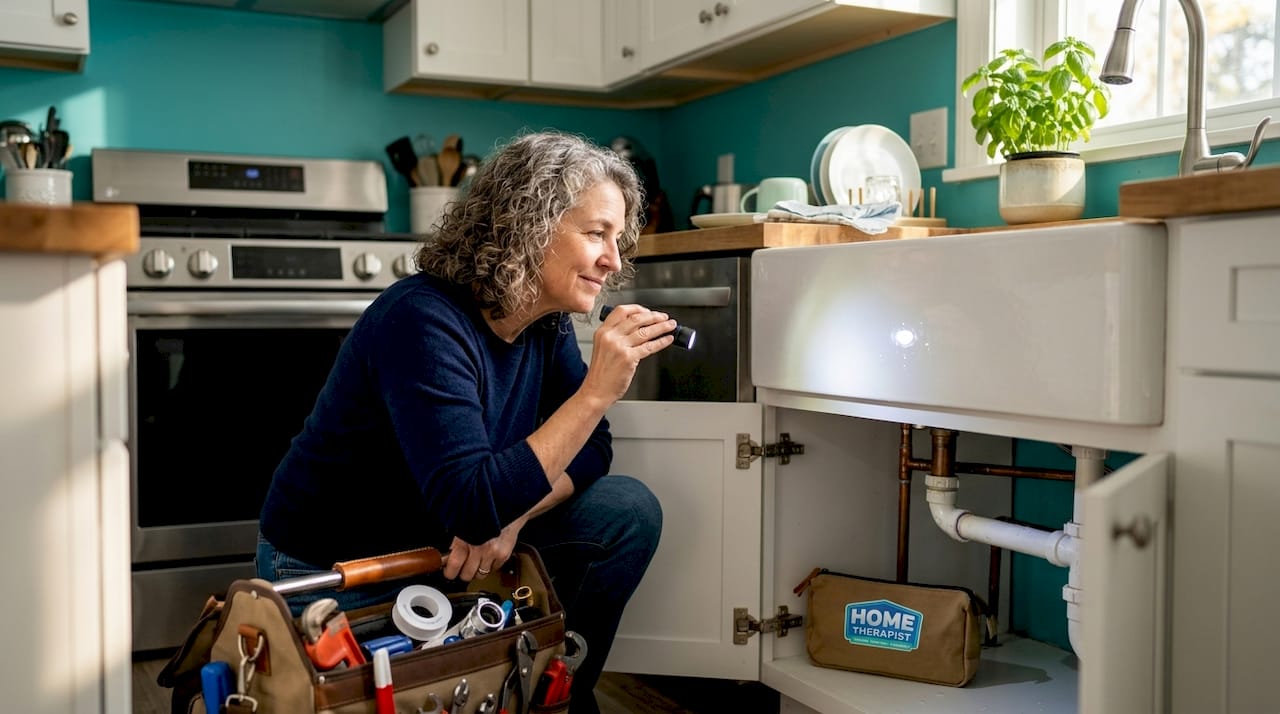
The very first thing to do when you move in is treat your plumbing system like you would a used car you just bought. You need a baseline. Walk through every room with fresh eyes and check every fixture, fitting, and pipe you can see. Turn on faucets, flush toilets, and run the shower. You are looking for slow drains, unusual noises, inconsistent water pressure, and any sign of moisture where it should not be.
Slow drains and pressure problems are early warning signs that should prompt maintenance or professional help right away. The sooner you catch them, the cheaper the fix.
2. Key criteria to check during your home plumbing inspection
A good home plumbing inspection checklist goes beyond just looking for drips. Here is what to assess:
- Leaks and water damage: Check under sinks, around toilet bases, and near the water heater for staining, soft drywall, or active moisture.
- Water pressure: Turn on multiple fixtures at once. Weak or inconsistent pressure can signal a hidden leak, a failing pressure regulator, or a buildup problem in older pipes.
- Shutoff valve locations: Find the main shutoff and every individual fixture shutoff in the house. Quick access to shutoffs minimizes damage fast during a burst pipe or leak emergency.
- Pipe materials and age: Look at exposed pipes in the basement, crawl space, or utility areas. Older pipes like galvanized steel and cast iron may be past their useful life and can affect water quality or home value.
- Water heater condition: Check the age (usually on the label), look for rust or corrosion around connections, and test the pressure relief valve. A water heater older than 10 to 12 years is likely living on borrowed time.
- Drain flow: Run water in every sink and tub. A drain that clears slowly may have a developing clog or a venting problem.
Pro Tip: Take photos of every shutoff valve location, the water meter, and your water heater label on your first day in the home. Store them in a phone album labeled “Plumbing.” You will thank yourself the first time something goes wrong at midnight.
3. Must-have plumbing tools for new homeowners
Building a starter toolkit does not mean buying everything at once. Buying fewer reliable tools beats owning a large set of cheap ones you cannot trust when it counts. Here are the tools that cover the majority of common plumbing repairs for new homeowners:
- Water-powered plunger: Traditional cup plungers work, but water-powered plungers clear clogs faster and cleaner, and they work especially well on modern low-flow toilets. If you upgrade one tool, make it this one.
- Toilet auger (closet auger): A drain snake for toilets specifically. It reaches deeper than a plunger and breaks up or retrieves obstructions that plunging cannot touch.
- Drain snake (hand auger): For clearing sink, tub, and shower drains. The 25-foot version handles the vast majority of residential clogs.
- Adjustable wrench: Use it for shutoff valves, supply lines, and most threaded fittings. A 10-inch model works for nearly everything.
- Plumber’s tape (Teflon tape): Costs almost nothing and prevents leaks on threaded pipe connections. Wrap it on before reconnecting any threaded fitting.
- Slip-joint pliers (channel-lock pliers): These give you extra grip on larger nuts and connections that an adjustable wrench cannot fit around.
- Bucket and towels: Not glamorous, but having these near every repair saves floors and cabinets from water damage.
Pro Tip: You do not need a full tool chest. Start with these seven items and you can handle the most common plumbing repairs without calling a plumber for every small job.
4. Step-by-step plumbing maintenance tasks to protect your home
Plumbing maintenance tips for new homes come down to consistency. Small, regular checks are what prevent the big surprises. Here is a practical schedule to follow:
- Monthly: Check under sinks and around toilets. Look for moisture, staining, or soft cabinet floors. Dripping faucets and small leaks can lead to high water bills and serious water damage if left unaddressed.
- Monthly: Run water in rarely used fixtures. Guest bathrooms and basement sinks can develop dry P-traps that allow sewer gas into the home. Running the water for 30 seconds prevents this.
- Every 3 months: Clean your drains. Pour boiling water down kitchen drains and use a bio-enzyme drain cleaner in showers and tubs. Camera inspections of drain lines can identify root intrusion or grease buildup before it becomes a backup.
- Every 6 months: Flush your water heater. Sediment builds up in the tank over time, reducing efficiency and shortening the heater’s life. Attaching a garden hose to the drain valve and flushing out a few gallons takes about 15 minutes.
- Every 6 months: Test your shutoff valves. Turn them all the way off and back on. Valves left untouched for years can seize when you need them most.
- Annually: Monitor your water bill trends. A bill that creeps up without a change in usage often signals a hidden leak. Your water meter can confirm it. Turn off everything inside and watch whether the meter still moves.
- Before winter: Winterize outdoor plumbing. Insulating exposed pipes and disconnecting garden hoses prevents frozen and burst pipes when temperatures drop. In Tampa Bay, this is less of a concern, but any outdoor or uninsulated supply lines still deserve attention during cold snaps.
5. Common plumbing problems and what to do about them
Part of any new homeowner plumbing guide is knowing what problems to expect and how to respond. Here is a comparison of the most common issues, their warning signs, and the best course of action:
| Problem | Warning signs | DIY or pro? | Estimated effort |
|---|---|---|---|
| Clogged drain | Slow water, gurgling sounds | DIY (drain snake or plunger) | Low |
| Running toilet | Constant water noise in tank | DIY (flapper or fill valve) | Low |
| Dripping faucet | Visible drip, rising water bill | DIY (cartridge or washer) | Low to medium |
| Low water pressure | Weak flow at multiple fixtures | Pro recommended | Medium |
| Water heater failure | No hot water, rusty water, puddles | Pro required | High |
| Slab or wall leak | Wet floors, warm spots, mold smell | Pro required | High |
A few additional points on being prepared:
- Know the difference between a slow drain (usually local and DIY-fixable) and multiple slow drains at once (which points to a main line problem requiring professional attention).
- Keep your plumber’s phone number saved before you need it. Choosing the right person under pressure leads to poor decisions. When thinking about how to choose a plumber for a new home, look for licensed, insured contractors with local reviews and transparent pricing.
- Proactive inspections before problems arise save significantly more money and stress than emergency calls after the fact.
What I actually learned managing plumbing as a new homeowner
I have talked with hundreds of homeowners over the years, and the pattern is almost always the same. People skip the initial walkthrough because moving day is chaos. Then six months later, they find a slow leak under the kitchen sink that has quietly rotted out the cabinet floor.
What I have found is that the homeowners who stay ahead of plumbing problems are not the ones with the most knowledge. They are the ones who look regularly. A five-minute monthly check under every sink takes less time than a single trip to the hardware store. The difference is enormous.
Here is something most checklists will not tell you: your water bill is one of the best plumbing diagnostic tools you own. If it rises without explanation, something is leaking somewhere. That single data point has prompted repairs that would have cost thousands if left alone.
My honest take on DIY plumbing is this: do the small stuff yourself (plunging, snaking, replacing flappers and cartridges, wrapping threads with plumber’s tape), but do not delay calling a professional when you see signs of a slab leak, a sewer line issue, or water heater failure. The tools and training required for those jobs are not in any homeowner’s starter kit. Recognizing that line saves money and frustration.
— Alex
How Callhometherapist supports your plumbing checklist
Being a new homeowner does not mean handling everything alone. Callhometherapist, a family-owned plumbing and HVAC company serving the Tampa Bay area, offers exactly the kind of backup new homeowners need when DIY reaches its limits.
Callhometherapist’s certified technicians use acoustic leak detection to locate hidden leaks behind walls, under slabs, and inside ceilings without tearing up your home. This technology pinpoints problems that no visual inspection or DIY check can find on its own. For everything beyond the basics, their plumbing maintenance plans give new homeowners a scheduled, professional layer of protection that fits right alongside the routine tasks in this guide. If you want the peace of mind of a full plumbing inspection and backup solution, Callhometherapist has you covered from first inspection to long-term care.
FAQ
What is the first thing to check on a new home’s plumbing?
Locate the main water shutoff valve and test it first. Then run every faucet, flush every toilet, and check for slow drains or leaks under sinks.
How often should new homeowners inspect their plumbing?
Do a quick visual check monthly, a more thorough check every six months, and schedule a professional inspection at least once a year or when you notice warning signs.
What tools does every new homeowner need for plumbing?
A water-powered plunger, toilet auger, drain snake, adjustable wrench, and plumber’s tape cover the vast majority of common home plumbing problems without needing a professional.
How do I know if I have a hidden water leak?
Watch your water meter with all fixtures off. If it keeps moving, you have a leak somewhere. A rising water bill with no change in usage is another reliable sign.
How do I choose a plumber for a new home?
Look for a licensed, insured plumber with strong local reviews, transparent pricing, and experience with your type of home. Ask about their inspection process before committing.
Recommended
- Plumbing inspection checklist: Tampa homeowners’ guide
- Plumbing safety tips to protect your Tampa Bay home
- 6 Common Plumbing Issues Every Homeowner Should Know
- Preventative plumbing tips for Tampa Bay homeowners 2026


