

Maximize Home Comfort: The Role of Thermostat Calibration
TL;DR:
- Your thermostat plays a crucial role in home comfort and energy efficiency, often overlooked until issues arise. Proper calibration ensures accurate temperature readings, preventing unnecessary system overwork and uneven heating or cooling throughout your home. Regularly checking and adjusting your thermostat can save money, extend equipment lifespan, and improve overall comfort, especially in demanding climates like Tampa Bay.
Your thermostat controls more of your daily comfort than you probably realize, and when it’s even slightly off, you feel it in every room and every month on your utility bill. Many Tampa Bay homeowners invest in energy-efficient HVAC equipment, seal their windows, and change their filters on schedule, but they never think to check whether their thermostat is reading the temperature correctly. A thermostat that’s off by just a few degrees can quietly push your system to overwork, create uneven temperatures throughout your home, and add unnecessary dollars to your electric bill without giving you any obvious warning signs.
Table of Contents
- What is thermostat calibration and why does it matter?
- Common signs your thermostat needs calibration
- How thermostat calibration impacts comfort and efficiency
- DIY thermostat calibration: What homeowners can (and can’t) do
- The overlooked power of thermostat calibration: Why most comfort issues start here
- Need help? Professional calibration and HVAC services for Tampa Bay homes
- Frequently asked questions
Key Takeaways
| Point | Details |
|---|---|
| Small errors matter | A calibration error of just a couple degrees can significantly impact comfort and energy bills. |
| Signs are often subtle | Most calibration problems go unnoticed until discomfort or higher bills become persistent. |
| DIY is possible, with limits | Homeowners can check and adjust basic calibration, but larger discrepancies often require professional service. |
| Regular checks save money | Periodic thermostat calibration helps maintain comfort and keep costs low. |
What is thermostat calibration and why does it matter?
Thermostat calibration is the process of verifying and adjusting your thermostat so that the temperature it reads and displays matches the actual temperature in your home. When a thermostat is properly calibrated, your HVAC system turns on and off at exactly the right moments. When it’s out of calibration, the system responds to false readings, which throws off your entire comfort setup.
Several common culprits cause thermostats to lose accuracy over time:
- Dust and debris accumulating inside the thermostat casing, especially in older mechanical models
- Age and component wear, which gradually degrades sensor accuracy in both analog and digital units
- Poor placement, such as being too close to a window, vent, lamp, or exterior wall that skews temperature readings
- Electrical fluctuations or power surges that can reset internal calibration settings
- Mechanical drift in bimetallic strip thermostats, where the metal coil shifts over years of use
When your thermostat misreads the temperature, the effects ripple through your whole home. You get uneven hot or cold spots in different rooms. Your system runs in longer or shorter cycles than it should. Some days feel stuffy, other days feel too cold, and you end up constantly adjusting the setpoint to chase a comfortable temperature that should stay steady on its own.
One often-overlooked factor is what engineers call a “deadband,” which is the temperature range around your setpoint where the system stays idle before switching on or off. As thermostat deadband impacts both energy use and occupant comfort, getting this parameter right is just as important as the setpoint itself. A deadband that’s too wide means your home swings several degrees above or below the target before the system kicks in. A deadband that’s too narrow means the system cycles on and off constantly, wasting energy and wearing out components faster.
A miscalibrated thermostat is like a slightly wrong clock. You might not notice it at first, but over time, you’re always running late, or in this case, always uncomfortable.
Understanding these basics gives you a foundation for efficient home climate control in Tampa Bay’s demanding climate, where humidity and heat put your HVAC system through its paces year-round.
Common signs your thermostat needs calibration
Now that you understand what calibration means, here’s how to spot the problem in your own home. These warning signs are easy to miss because they build gradually, but once you know what to look for, they’re hard to ignore.
- Your home feels warmer or cooler than the setpoint. If you set your thermostat to 74°F but the room consistently feels like it’s 77°F or 71°F, that’s a strong indicator.
- Temperature swings between cycles. If you notice the room getting noticeably hotter before the AC turns on, or colder before the heat kicks in, the deadband or calibration may be off.
- Your HVAC system runs unusually long or cycles on and off frequently. Both patterns suggest the thermostat isn’t accurately sensing when to start and stop.
- Your energy bills have crept up without an obvious reason. Higher costs without a change in weather or habits often point to a system working harder than it should.
- Certain rooms feel different from others. While this can have multiple causes, a miscalibrated thermostat is often the starting point.
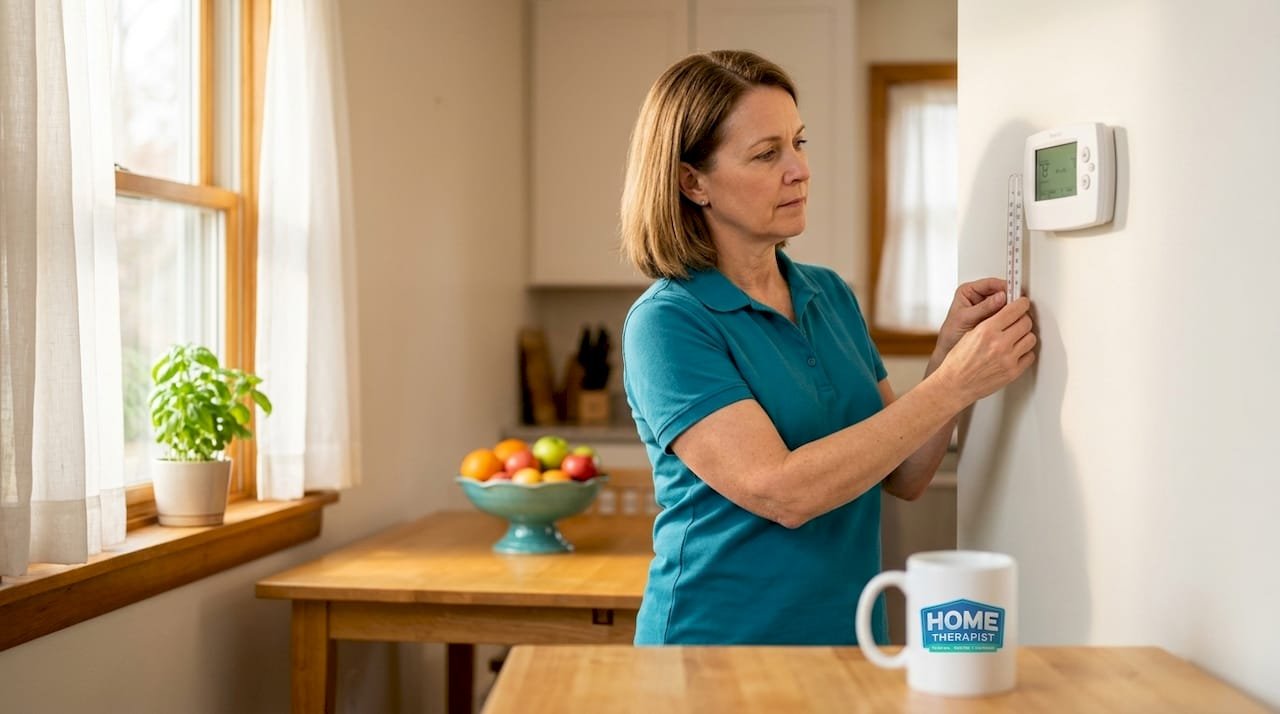
To check your thermostat’s accuracy at home, tape a reliable room thermometer directly next to your thermostat and wait 15 minutes without opening doors or running appliances nearby. Then compare the two readings. According to testing guidance, a 1 to 2°F difference is generally within an acceptable margin, but anything beyond that consistently points toward recalibration or service.
Pro Tip: Use a glass tube thermometer or a calibrated digital probe thermometer for the comparison test. Cheap plastic thermometers from a hardware store can have their own accuracy issues and might give you a false reading.
If you’ve noticed any of the signs of HVAC inefficiency in your home, checking thermostat calibration should be the very first step before calling for any equipment repairs or upgrades.
How thermostat calibration impacts comfort and efficiency
Small calibration errors have a surprisingly large real-world impact. Consider this: if your thermostat reads 2°F lower than the actual room temperature, your air conditioner will keep running past the point where cooling is needed, because the thermostat “thinks” the room is still too warm. That extra runtime adds wear on the system and spikes your electricity costs.
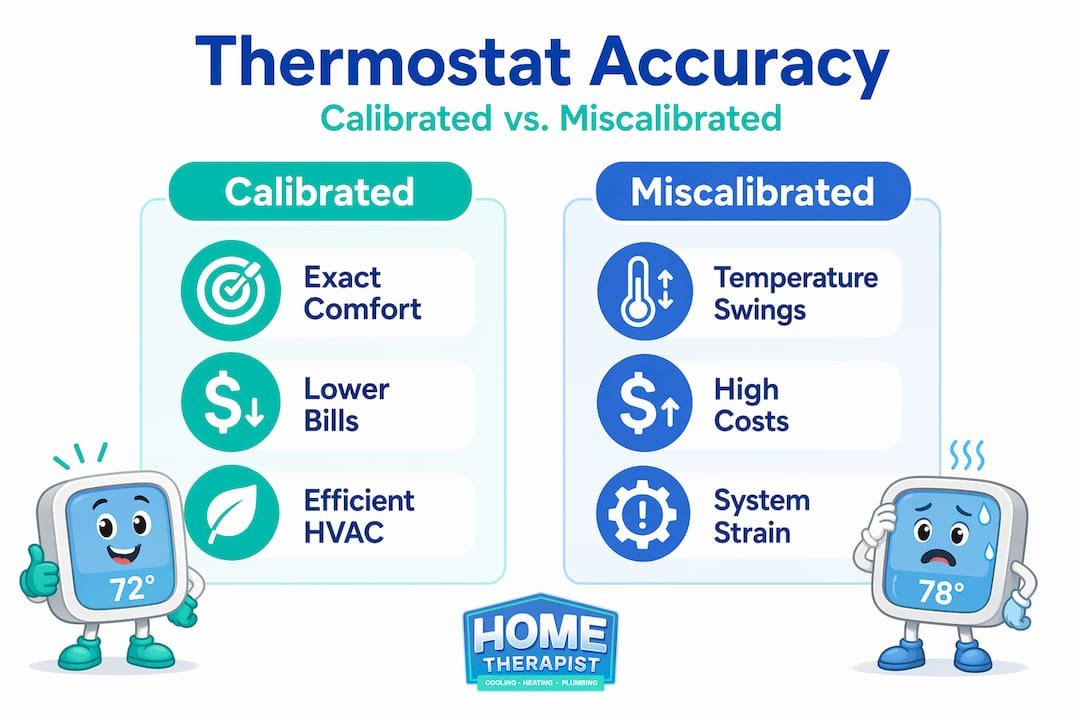
Here’s a side-by-side look at how calibrated and miscalibrated thermostats compare in daily performance:
| Performance factor | Calibrated thermostat | Miscalibrated thermostat |
|---|---|---|
| Room temperature accuracy | Within 0.5°F of setpoint | 2°F or more off setpoint |
| System cycle frequency | Consistent, efficient cycles | Frequent short cycling or long runtimes |
| Monthly energy use | Optimized for setpoint | 5 to 15% higher than necessary |
| Comfort consistency | Steady, predictable feel | Noticeable swings throughout the day |
| Equipment wear rate | Normal | Accelerated due to excess cycles |
The deadband factor plays a direct role here. Research confirms that different smart thermostats have varying deadbands even when programmed to the same setpoint, leading to measurably different comfort and efficiency results in the same home. A thermostat with a wide deadband might let your home climb 4°F before cooling starts, while a well-calibrated one with a tight deadband holds the temperature within 1°F consistently.
For Tampa Bay homeowners, this matters more than it might in a milder climate. Our region sees smart climate control challenges similar to other high-heat, high-humidity areas, where the margin between comfort and misery is razor-thin. A 2°F calibration error in July feels far more significant when outdoor temps are pushing 95°F and humidity is near 90%.
The key takeaways on calibration’s real-world impact include:
- Energy costs: Even small miscalibrations add up to noticeable monthly increases
- Equipment lifespan: Systems that cycle abnormally wear out components faster
- Comfort predictability: Calibrated systems give you a steady, reliable indoor environment
- Indoor air quality: Proper cycling keeps humidity levels in check, which is critical in Florida
If you’re already noticing issues, thermostat repair solutions and thermostat troubleshooting resources can help you take the right next steps quickly.
DIY thermostat calibration: What homeowners can (and can’t) do
Whether you’re curious or actively troubleshooting, there are several things you can safely check and adjust on your own before bringing in a technician.
Here’s how to run a basic calibration check:
- Gather your tools. Get a reliable reference thermometer, ideally a digital probe type. Avoid cheap dial thermometers.
- Place the thermometer near the thermostat. Tape it to the wall within six inches of the thermostat display, but not touching it.
- Wait 15 minutes. Make sure no doors open, no direct sunlight hits the area, and no appliances run nearby during this time.
- Compare the readings. Write down both numbers and calculate the difference.
- Check your thermostat manual for offset settings. Many modern digital and smart thermostats include a temperature offset adjustment in the settings menu. If your thermostat reads 2°F high, you can often dial that offset in directly.
- Clean the unit. On older mechanical thermostats, carefully remove the cover and use a soft brush or compressed air to remove dust from the bimetallic coil and contact points. Dust is the single most common cause of calibration drift in these older units.
- Perform a system reset. Many digital thermostats have a reset option that returns calibration to factory defaults. This can fix software-based drift issues.
As guidance confirms, 1 to 2°F offsets are often acceptable and don’t require action, but consistent larger errors mean you need to either adjust the offset setting or call in a professional.
Pro Tip: If your thermostat is more than 10 years old and has consistent calibration problems even after cleaning and resetting, replacement is often more cost-effective than ongoing recalibration attempts. Modern smart thermostats hold calibration far better than older mechanical units.
Here’s a clear breakdown of what’s safe for homeowners versus what should be left to a professional:
| Task | DIY safe? | Notes |
|---|---|---|
| Temperature accuracy test | Yes | Use a reliable reference thermometer |
| Cleaning dust from thermostat interior | Yes (mechanical models) | Use gentle tools, avoid bending components |
| Adjusting digital offset settings | Yes | Check manufacturer instructions first |
| Performing a factory reset | Yes | Backs up any programmed schedules first |
| Checking thermostat placement | Yes | Look for nearby heat sources or vents |
| Replacing thermostat wiring | No | Risk of electrical damage or injury |
| Recalibrating old bimetallic thermostats | Caution | Fragile components; easy to damage |
| Diagnosing persistent or complex errors | No | Requires professional tools and expertise |
For more involved upgrades or persistent issues, the thermostat installation guide for Tampa homeowners and the troubleshooting HVAC issues guide walk you through what to expect from each type of service.
The overlooked power of thermostat calibration: Why most comfort issues start here
After years of helping Tampa Bay homeowners with their HVAC systems, we’ve seen a clear pattern. When someone calls about uneven temperatures, high bills, or a system that just doesn’t feel right, the conversation usually starts with questions about equipment age and capacity. People want to know if their unit is too small, too old, or ready for replacement. And sometimes that’s the right answer. But far more often than most homeowners expect, the real issue traces back to thermostat calibration.
Here’s the uncomfortable truth: HVAC manufacturers have little incentive to highlight calibration drift or deadband issues. It’s not exciting. It doesn’t sell new equipment. So the subject gets buried in fine print while the industry focuses on selling higher-efficiency units, smart controls, and system upgrades. But a top-of-the-line HVAC system paired with a miscalibrated thermostat will still deliver frustrating, inconsistent comfort.
In Tampa Bay specifically, this problem is amplified. Our climate swings from humid and warm to occasionally sharp winter drops, and humidity is a constant wildcard. A thermostat that’s off by 2°F in Minnesota might be barely noticeable. In July in Hillsborough County, that same error means your system runs almost continuously and your home still feels like a sauna. The stakes are simply higher here.
We consistently find that diagnosing HVAC inefficiency almost always surfaces a calibration problem before it surfaces an equipment failure. Calibration is the quickest, most affordable fix on the table. A professional calibration check takes less than an hour. A new HVAC unit costs thousands. The right first step is obvious, yet it gets skipped constantly.
Our advice: before you agree to any significant HVAC repair or equipment upgrade, ask your technician to verify thermostat calibration first. It costs almost nothing to check and could save you from an unnecessary expense.
Need help? Professional calibration and HVAC services for Tampa Bay homes
When your DIY checks don’t resolve the issue, or you simply want the confidence that comes with a professional assessment, our team at Home Therapist Cooling, Heating, and Plumbing is ready to help.
We provide expert thermostat calibration, full system diagnostics, and complete HVAC comfort in Tampa Bay for homeowners who want accurate results the first time. Whether you need a quick calibration check, a full system tune-up, or guidance from a troubleshooting guide for homeowners, our certified technicians bring the tools and experience to get your system dialed in precisely. For homeowners newer to HVAC care, our beginner HVAC maintenance resources cover everything you need to stay on top of your system year-round. Contact us today for honest, reliable service from a family-owned team that genuinely cares about your comfort.
Frequently asked questions
How can I test if my thermostat is accurate?
Place a reliable room thermometer near your thermostat and compare the readings after 15 minutes. A difference of more than 1 to 2°F consistently may indicate calibration is needed.
How often should homeowners check thermostat calibration?
Check calibration at least once a year, ideally before the peak cooling season in Tampa Bay, or any time you notice comfort or efficiency changes in your home.
Can smart thermostats also be miscalibrated?
Yes, even smart thermostats can have varying deadbands and sensor accuracy issues that affect both comfort and energy efficiency, regardless of their advanced features.
What causes a thermostat to go out of calibration?
Dust buildup, component age, electrical fluctuations, mechanical wear, and improper placement near heat sources or vents are the most common causes of calibration drift over time.
Does thermostat calibration affect utility bills?
Absolutely. A miscalibrated thermostat causes your HVAC system to run longer than needed, and since thermostat deadband impacts energy use, even small errors lead to measurably higher monthly costs.


