

Why Is My AC Freezing Up? 5 Causes & Fixes For Florida
You walk over to your thermostat, crank the AC down a few degrees, and nothing happens. Then you check the unit and find ice coating the coils, in the middle of a Florida summer. It sounds backwards, but your AC freezing up is one of the most common cooling problems we see across the Tampa Bay area, especially when systems are working overtime against our brutal humidity.
The good news: not every frozen AC means an expensive repair. Some causes are simple enough to fix yourself in under an hour. Others point to deeper mechanical or refrigerant issues that need a licensed technician.
At Home Therapist, we’ve been diagnosing and repairing frozen air conditioners for Tampa Bay homeowners since 2011. Below, we’ll walk you through the five most common reasons your AC ices over, what you can do right now to thaw it safely, and when it’s time to call a professional instead of troubleshooting on your own.
1. Turn it off and thaw it safely
Before you diagnose why your AC is freezing up, your first job is to stop the damage from getting worse. Running a frozen unit puts serious strain on the compressor, which is the most expensive component in your system to replace. Shut it down now, then work through the steps below.
Signs your system has started icing over
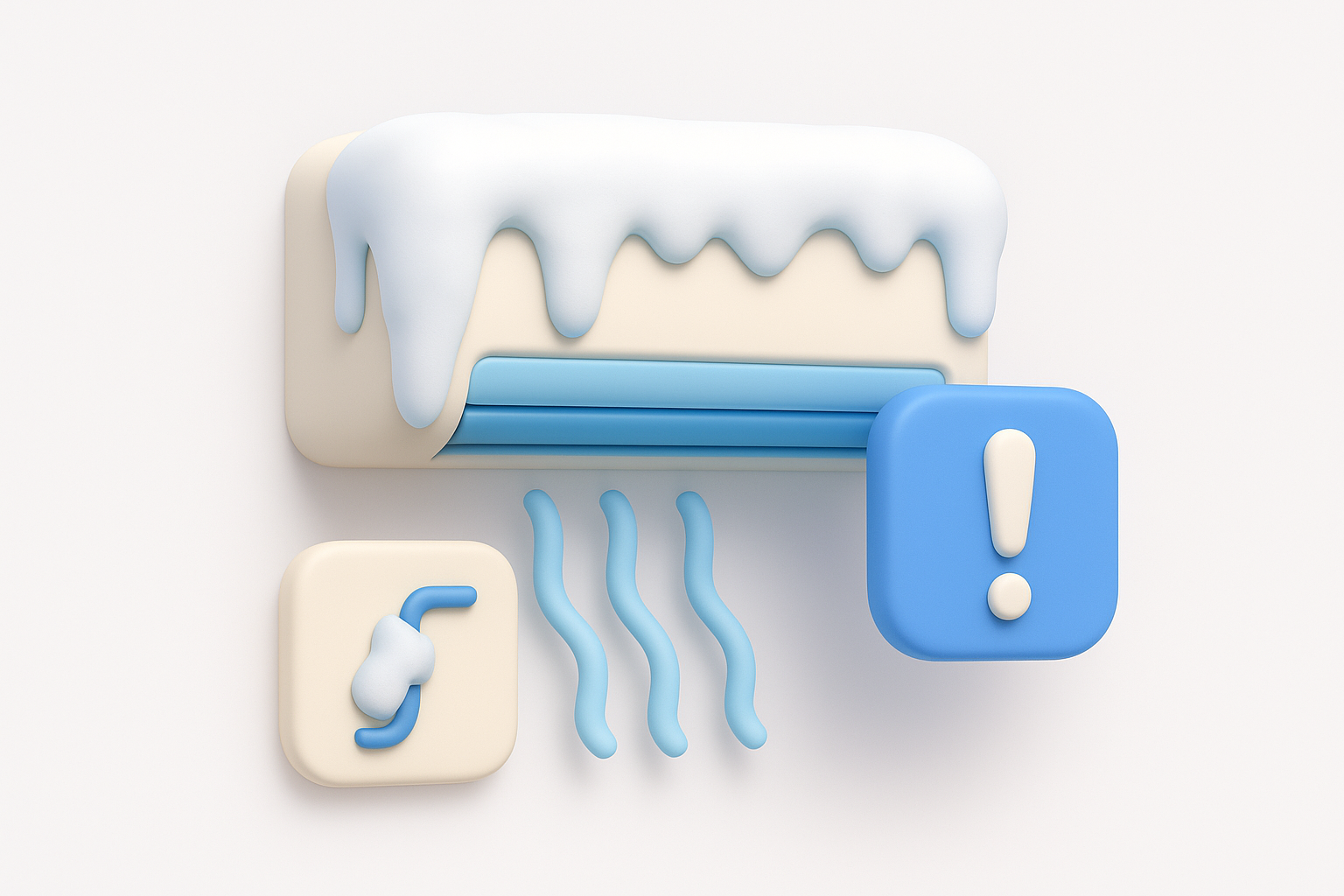
The most obvious sign is visible ice on the refrigerant line or the indoor air handler. You might also notice warm air blowing from your vents despite the system running, water pooling around the indoor unit, or a sudden drop in cooling performance. In Florida’s humid climate, ice can build up fast, so if you spot any of these symptoms, don’t wait.
Steps to thaw the unit without damaging it
Turn your thermostat from "cool" to "off" immediately, then switch the fan setting from "auto" to "on" so the blower keeps running without the compressor. This pushes room-temperature air across the coil and speeds up the thaw. Most units need 2 to 24 hours to clear completely, depending on how much ice built up. Place towels around the indoor unit and check your condensate drain line so meltwater has somewhere to go.
Do not turn the system back on until all ice is gone and the coil is fully dry.
What not to do while ice is on the coil or line
Never use a hair dryer, heat gun, or any direct heat source to speed things up. Rapid temperature changes can crack the coil or damage refrigerant lines. Also avoid chipping or scraping the ice by hand, which bends delicate coil fins and can puncture the refrigerant line. Let it thaw on its own with the fan running.
When to call Home Therapist for same-day help
If the unit freezes again within a day or two of thawing, something deeper is wrong and a technician needs to look at it. Also call if you notice refrigerant oil stains, hear hissing sounds, or find ice returning to the same spot repeatedly. Home Therapist offers same-day service across the Greater Tampa Bay Area, so you won’t be sitting in the heat waiting for answers.
2. Blocked airflow from filters, vents, or returns
Blocked airflow is the most common answer to why is my ac freezing up, and it’s often the easiest fix. When your system can’t move enough air across the evaporator coil, the coil drops below freezing and moisture in Florida’s humid air turns directly to ice.
Why low airflow freezes the evaporator coil
Your evaporator coil works by pulling heat from the air moving over it. When airflow drops, the coil gets too cold and humidity freezes onto the surface instead of draining away. The three most common causes are a clogged filter, closed supply vents, or a blocked return grille.
If your filter looks gray and matted, it’s already restricting airflow enough to freeze your coil.
Fast checks you can do in 10 minutes
Start with these quick checks before calling anyone:
- Air filter: Pull it out and hold it to the light. Replace it if you can’t see through it.
- Supply vents: Walk each room and confirm every vent is fully open and unobstructed.
- Return grilles: Look for heavy dust buildup or furniture pushed against the grille face.
Fixes that usually solve the problem
Swap in a clean filter rated for your system, open every closed vent, and run the fan on "on" for 30 minutes before switching back to cool. Most systems recover quickly once airflow is restored.
When you need a technician to check static pressure
If your unit freezes again after you’ve cleared every obstruction, your ductwork may have a restriction or a collapsed section. A technician can test static pressure across the system to find exactly where airflow is being choked and correct it properly.
3. Dirty evaporator coil and drainage issues
Florida’s high humidity and nonstop AC use make dirty coils and blocked drains a top cause of why your AC is freezing up. When grime coats the coil, it acts as insulation, prevents heat transfer, and drops coil temperature until moisture freezes in place.
How dirt and humidity turn into ice in Florida
Your evaporator coil removes moisture from the air as it cools your home. In Florida, that’s a heavy, constant workload. When dust coats the coil surface, heat transfer drops. The coil falls below 32°F, and condensation freezes on contact instead of draining away.
A dirty coil and a clogged drain line usually fail together, so fixing one without checking the other leads to repeat freezing.
Clues that point to a coil or condensate problem
Watch for water pooling near your indoor unit, musty odors at the vents, or algae around the drain outlet. A condensate pan overflowing signals a blocked drain.
What you can clean yourself and what you should not
You can flush the condensate drain line with water and distilled white vinegar to clear minor clogs. Leave the coil itself alone, since improper cleaning products can bend fins or damage the surface.
What a pro will inspect and clean during service
A technician will apply specialized coil cleaner with low-pressure tools, clear the drain fully, and verify drainage flows properly before finishing.
4. Low refrigerant from a leak or wrong charge
Low refrigerant is one of the less obvious reasons why is my ac freezing up, but it causes serious damage when left unaddressed. When refrigerant levels drop, the pressure inside the coil falls too low, and the coil temperature plunges well below freezing.
How low refrigerant leads to ice
Refrigerant absorbs heat as it travels through the evaporator coil. When the charge is too low, the refrigerant expands too aggressively, drops to an extremely low temperature, and freezes any moisture it contacts on the coil surface. A wrong initial charge from a previous repair produces the exact same result.
Symptoms that suggest a refrigerant problem
Watch for hissing or bubbling sounds near the indoor unit, refrigerant oil stains on the line set, or ice that forms only on one section of the coil. Your system will also struggle to reach the set temperature even after a complete thaw and restart.
If you notice these symptoms together, stop running the system and call a technician right away.
Why you should not top off refrigerant yourself
Refrigerant handling requires EPA Section 608 certification because improper handling is both hazardous and illegal. Adding refrigerant without locating the leak first only delays the problem and wastes money on a charge that will escape again.
What a refrigerant repair and recharge typically includes
A technician will locate and repair the leak, pressure-test the system, evacuate any remaining refrigerant, and recharge to the exact specification printed on your equipment nameplate.
5. Blower, thermostat, and run-time problems
Not every case of why is my ac freezing up points to refrigerant or a dirty coil. Sometimes the blower motor, thermostat settings, or run time are the real culprits, and fixing them costs far less than a refrigerant repair.
Blower fan issues that cut airflow and freeze coils
Your blower fan keeps air moving across the evaporator coil at all times. When the motor runs slow or loses a capacitor, airflow drops and the coil temperature falls below freezing. A weak blower produces the same result as a clogged filter, so check whether air flows strongly from your vents before assuming the filter is the only problem.
A failing blower capacitor is one of the most common causes of reduced airflow in Florida systems during summer.
Thermostat and fan settings that can trigger icing
Setting your thermostat below 68°F on humid Florida nights pushes the coil toward freezing faster than the system can handle. Also confirm your fan is set to "auto" and not "on" during normal operation, since continuous fan use without cooling cycles contributes to moisture buildup on the coil.
Why freezing often shows up at night or early morning
Temperatures drop overnight, and your AC runs longer cycles trying to reach the set point. Those extended run times let the coil stay cold long enough for ice to form gradually without you noticing until morning.
Fixes and adjustments that prevent repeat freeze-ups
Set your thermostat no lower than 70°F overnight, keep the fan on "auto," and schedule an annual blower inspection so a technician can catch a weak motor or failing capacitor before it triggers another freeze.
Quick recap and next steps
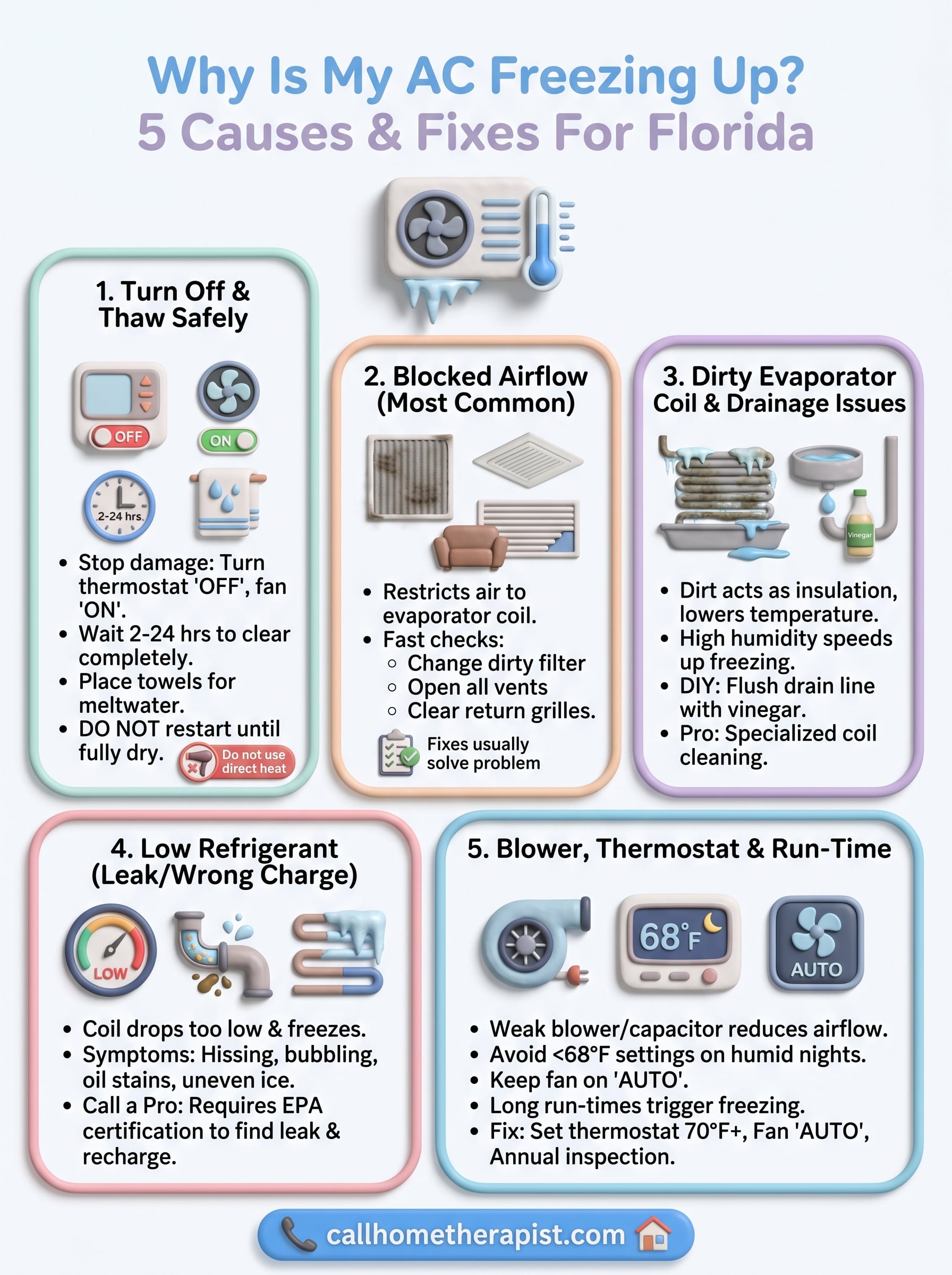
If you’ve worked through this guide, you now have a clear picture of why is my ac freezing up: restricted airflow, a dirty evaporator coil, blocked condensate drainage, low refrigerant, and blower or thermostat problems. Most freeze-ups start with something simple, like a clogged filter or a closed vent, so always check the basics before calling for help.
Some fixes you can handle yourself in under an hour. Others, like refrigerant leaks or a failing blower motor, require a licensed technician with the right tools and certifications. Skipping professional help on those issues risks damaging your compressor and turning a manageable repair into a costly replacement.
Your system should not repeat the same freeze-up twice in one season. If it does, contact Home Therapist for same-day diagnosis across the Greater Tampa Bay Area. We’ll find the root cause and get your home cooling again the same day.
More AC Repair Articles
- Why Is My AC Not Cooling? 7 Quick DIY Checks & Fixes Today
- AC Repair Plant City FL: Frayed Low-Voltage Wire Stopped the Condenser on Emerson Pl, 33566
- What a 45-Minute Tune-Up Reveals When the Blower Motor Was Already Replaced: AC Maintenance in Zephyrhills, FL 33541
- Mini Split Blowing Warm on S Dakota Ave: R410A Refill + Tune-Up AC Repair in Tampa, FL 33606
- AC Contactor vs Relay: How to Tell Which One Is Failing in Your Tampa AC


