

Early Signs of Plumbing Problems Tampa Homeowners Must Know
TL;DR:
- Tampa’s hard water and humid climate accelerate pipe corrosion, leaks, and mold growth risks.
- Early signs include low water pressure, water stains, damp spots, and strange pipe noises.
- Regular inspections and prompt professional help prevent costly plumbing emergencies.
Tampa homes face a hidden threat most people don’t think about until the repair bill arrives. Between the area’s notoriously hard water, year-round humidity, and aging pipe infrastructure in many neighborhoods, small plumbing issues can spiral into thousands of dollars in damage within weeks. This guide walks you through the most important early warning signs, explains why Tampa’s environment makes each one more urgent, and gives you a practical framework for knowing when to pick up the phone and call a professional before a minor drip turns into a major disaster.
Table of Contents
- Low water pressure in faucets and showers
- Water stains, damp spots, and mysterious odors
- Strange noises coming from your pipes
- Comparing the top plumbing warning signs
- Our perspective: What most guides miss about Tampa plumbing warning signs
- Get help diagnosing and fixing plumbing problems in Tampa
- Frequently asked questions
Key Takeaways
| Point | Details |
|---|---|
| Spot problems early | Catching warning signs like low water pressure or odors early prevents expensive damage to your Tampa home. |
| Tampa climate risks | Humidity and hard water accelerate corrosion, leaks, and mold growth. Regular checks are crucial. |
| Act fast on stains | Any unexplained spot or musty smell should be investigated right away to avoid escalating repair costs. |
| Noisy pipes matter | Unusual pipe noises often indicate serious blockages or venting problems beneath the surface. |
| Professional help pays off | Regular maintenance and prompt professional inspections can save you money and worry in the long run. |
Low water pressure in faucets and showers
With an understanding of why catching problems early matters, let’s start with one of the first red flags most homeowners notice: dwindling water pressure.
You turn on the shower and it feels like someone put their thumb over the showerhead. Or you run the kitchen faucet and get a trickle instead of a steady flow. Low water pressure is one of the most common signs that something is quietly wrong inside your pipes. The tricky part is that the cause can range from a quick fix to a serious structural problem.
Low water pressure across fixtures signals pipe corrosion, mineral buildup from hard water, hidden leaks, or sediment, a problem made worse in Tampa by hard water from the Floridan Aquifer. The Floridan Aquifer is the underground water source that supplies much of the Tampa Bay region, and it carries a high mineral content. Over time, calcium and magnesium deposits coat the inside of pipes and fixtures, slowly choking off the flow of water.
Here’s what low water pressure usually points to in a Tampa home:
- Mineral buildup inside pipes from hard water reducing the effective diameter of the pipe
- Corroding galvanized steel pipes in older homes, which flake inward and block flow
- A hidden leak somewhere in the supply line, diverting water before it reaches your faucet
- Sediment in the water heater, which restricts hot water flow specifically
- A failing pressure regulator, which controls the pressure entering your home from the street
The first thing to figure out is whether the low pressure is happening at just one fixture or throughout the entire house. If only one faucet has weak flow, the issue is likely localized to that fixture’s aerator or shutoff valve. If every faucet and shower is affected, you’re likely dealing with a pipe-wide problem.
Pro Tip: Unscrew the aerator (the small screen at the tip of your faucet) and rinse it under water. Hard water deposits often clog this part first. If pressure returns after cleaning it, you’ve confirmed a mineral buildup problem that’s likely happening deeper in your pipes too.
If left untreated, pipe corrosion doesn’t stabilize. It accelerates. A corroded section of pipe that loses one percent of its diameter each year will become a serious restriction within a few years, and a leak or burst within a decade. Reviewing our plumbing tips for Tampa homeowners can help you understand your home’s specific risks based on your water source and pipe material. You can also use a plumbing maintenance checklist to track pressure trends over time and catch a decline before it becomes a crisis.
Water stains, damp spots, and mysterious odors
Beyond the flow of water, your senses can also alert you to plumbing trouble.
A brownish ring on the ceiling, a soft patch of drywall in the bathroom, or a musty smell that lingers no matter how much you clean are not cosmetic problems. They’re your house telling you water is going somewhere it shouldn’t be. In Tampa, these signs carry extra urgency because of how fast mold and wood rot develop in our climate.
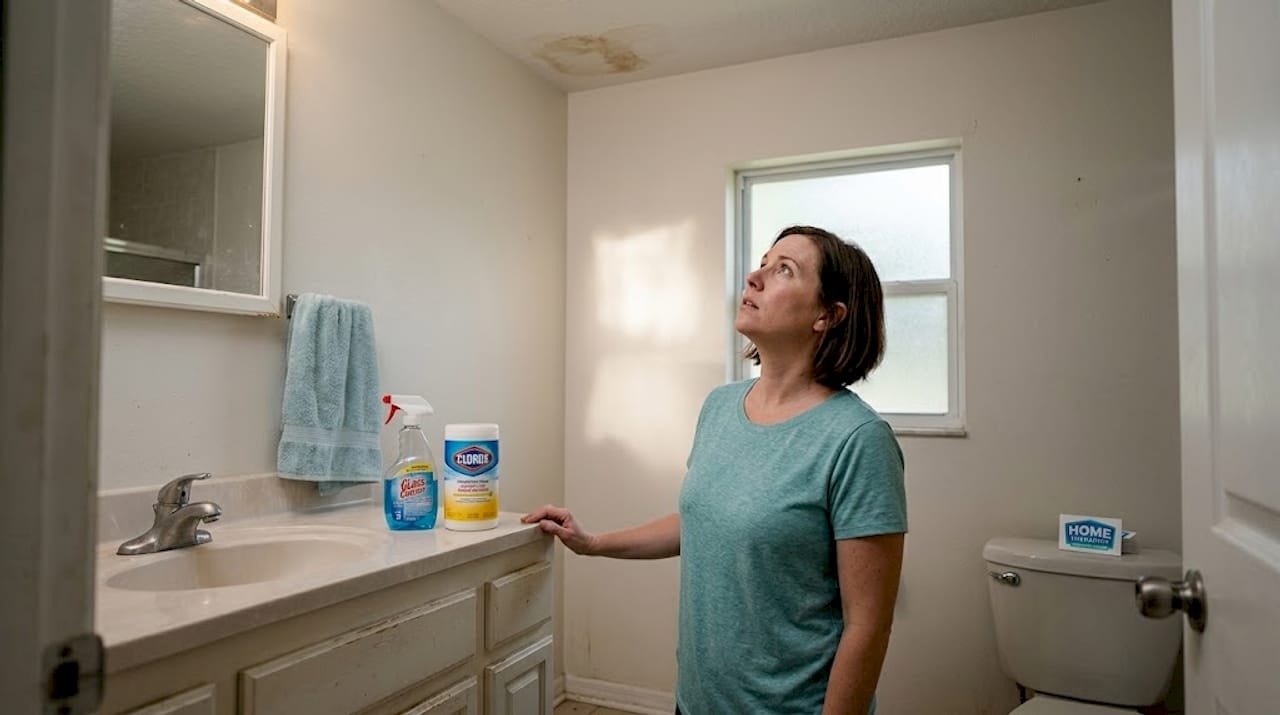
Water stains, damp spots, mold growth, or musty odors indicate leaks behind walls, ceilings, or under slabs, and Tampa’s humidity makes each one worse and faster-spreading. Florida’s average indoor humidity can stay above 60 percent for much of the year without a well-functioning HVAC system, and that’s the perfect environment for mold to colonize a damp wall within 24 to 48 hours of a slow leak beginning.
Common places to look for water stains and damp spots include:
- Ceilings below bathrooms or kitchens, often showing as yellow or brown rings
- Under kitchen and bathroom sinks, where supply lines and drain connections are prone to slow drips
- Along baseboards near toilets, tubs, or dishwashers
- Around the water heater, especially at connection points
- Concrete slab floors that feel warmer in spots, which may indicate a slab leak
A musty smell in a room that doesn’t have visible water damage is often a sign of a slow, hidden leak inside a wall or under the floor that has been active for weeks.
Knowing how to identify wall moisture signs early can help you distinguish surface condensation from an active leak. Similarly, understanding the broader humidity risks and solutions for residential properties underlines why Tampa homeowners face a tighter window for action than homeowners in drier climates.
The hidden cost of waiting isn’t just mold remediation. Water that reaches wooden framing begins to rot it. Water that reaches electrical wiring creates fire and shock hazards. By the time a stain is visible on your drywall, the leak has usually been active for weeks or months. Reviewing plumbing corrosion signs can help you connect the dots between what you see on the surface and what’s happening inside the pipe.
Pro Tip: Place a dry paper towel under each sink cabinet and check it every few days. A slightly damp towel means a slow drip is happening. Catching it at the drip stage rather than the flood stage saves hundreds in cabinet repairs alone. Also check our plumbing safety tips for how to safely assess dampness near electrical panels.
Strange noises coming from your pipes
While stains and smells are visual cues, your ears can also clue you in to deeper plumbing issues.
Your plumbing system should move water quietly. When it starts making noise, something has changed in the flow, pressure, or structure of your pipes. Different sounds point to different problems, and knowing which sound means what helps you prioritize how quickly to act.
Strange noises like gurgling, banging, or whistling from pipes suggest blockages, pressure issues, water hammer, or venting problems. Each of these has a different origin and a different level of urgency.
Here’s what the most common pipe sounds usually indicate:
- Gurgling from drains after flushing or running water often points to a partial clog or a venting problem that’s pulling air through the trap
- Banging or thumping sounds when you shut off a faucet quickly are called water hammer, caused by water slamming against a closed valve
- Whistling or squealing during flow often means a worn washer, a failing valve seat, or pressure that’s too high for the pipe diameter
- Rumbling from the water heater suggests significant sediment buildup on the tank floor
- Clicking sounds in walls may indicate pipes expanding and contracting around loose supports
Water hammer is worth special attention. When pressurized water suddenly stops, the force has nowhere to go and it creates a shockwave. Over time, repeated water hammer can loosen pipe joints and fittings, eventually causing a leak at a connection point. Homes with older plumbing that lacks water hammer arrestors are especially vulnerable.
The steps to take when you first notice pipe noises:
- Note exactly when the sound occurs (during flow, after shutoff, or continuously)
- Identify which fixture or area the sound originates from
- Check whether other fixtures in the same room produce the same noise
- Test the water pressure with an inexpensive gauge from a hardware store
- Call a licensed plumber if the sound persists or worsens over 48 hours
Understanding plumbing venting in Tampa homes specifically helps because Florida’s building codes and construction styles affect how vent stacks are positioned and maintained. A blocked vent stack can create gurgling across multiple drains at once, leading some homeowners to treat each drain individually when the fix is a single vent clearance.
Most pipe noises are not emergencies on day one. But every noise that goes uninvestigated for a month is a problem that grows.
Following preventative plumbing tips tailored to the Tampa Bay area can help you stay ahead of conditions that make noise-related problems more common here than in cooler or drier parts of the country.
Comparing the top plumbing warning signs
It can be tough to remember which signals are most urgent, so here’s how the key signs stack up side by side.
Low water pressure, stains, and noises each indicate different underlying plumbing issues, which may be influenced by Tampa’s unique hard water and climate. The table below gives you a quick reference for what each symptom likely means, how fast it typically escalates, and what your first action should be.
| Warning sign | Most likely cause | Escalation speed | First action |
|---|---|---|---|
| Low pressure throughout house | Pipe corrosion or hidden leak | Moderate to fast | Test pressure, inspect visible pipes |
| Low pressure at one fixture | Clogged aerator or local valve | Slow | Clean aerator, check shutoff valve |
| Water stains on ceiling or wall | Active hidden leak | Fast in Tampa humidity | Locate source, call plumber same day |
| Musty odor without visible stain | Slow hidden leak or mold | Moderate | Inspect under sinks and behind walls |
| Gurgling drains | Blockage or venting issue | Slow to moderate | Check for partial clog first |
| Banging pipes | Water hammer or loose pipes | Slow | Install arrestors or tighten supports |
| Whistling during flow | Worn valve or high pressure | Moderate | Check pressure, inspect valves |
Tampa-area factors that change how quickly these signs appear include:
- Hard water accelerates sediment and corrosion compared to cities with softer water supplies
- High ambient humidity speeds mold development after any leak event
- Older concrete slab construction makes slab leaks more common in homes built before the 1990s
- Year-round warmth means pipes rarely get the seasonal pressure relief that cold climates experience
For issues involving older pipes specifically, exploring the option of replacing old piping is worth reviewing before a minor leak becomes a repiping emergency. If you also have pool plumbing on your property, learning pool plumbing best practices for Florida specifically helps you catch outdoor plumbing problems that can affect your home’s water pressure and drainage.
Monthly checks to add to your routine:
- Test one faucet for pressure changes using a pressure gauge
- Look under every sink for moisture or staining
- Listen to your drains after normal use for gurgling
- Check the water heater area for rust stains or pooling
- Look at exposed pipe sections in the garage or utility room for discoloration
Scheduling a professional maintenance and inspection once a year gives you a baseline to compare against and catches problems that are invisible to the untrained eye.
Our perspective: What most guides miss about Tampa plumbing warning signs
Most online articles treat plumbing warning signs as universal. They’re not. Tampa is a specific environment with specific stressors, and what would be a manageable, slow-moving problem in Phoenix or Denver can become an urgent situation here in a matter of weeks.
We’ve seen it repeatedly. A homeowner notices a faint musty smell in their hallway, assumes it’s leftover humidity from the rainy season, and waits three months to investigate. By then, a slow pipe joint drip has soaked the wall insulation, grown a mold colony, and started softening the wooden framing behind the drywall. What would have been a $300 fix becomes a $4,000 remediation and repair project.
The myth that only old homes have plumbing issues is worth addressing directly. Homes built in the last 20 years can develop hard water buildup, pressure problems, and venting failures just as readily as a 1970s build. The pipes may be newer, but Tampa’s water supply and climate don’t care about your home’s age.
Investing in a professional inspection every year costs far less than a single reactive repair. Think about upgrading Tampa plumbing systems not as a luxury but as basic maintenance for your largest financial asset. The homeowners who catch problems early almost always spend less overall than those who wait for a visible crisis.
Get help diagnosing and fixing plumbing problems in Tampa
If you spot any of these warning signs, professional help is your fastest path to peace of mind.
At Home Therapist Cooling, Heating, and Plumbing, our certified technicians know Tampa Bay’s plumbing challenges inside and out. We specialize in catching problems early before they reach the expensive stage.
Whether you need a thorough leak inspection and diagnosis to find a hidden source of moisture, a full assessment of aging pipes through our repiping and plumbing services, or simply want to understand your coverage through our warranty coverage for plumbing services, we’re ready to help. As a family-owned business serving the Tampa Bay area, we stand behind every job with the kind of accountability your home deserves. Call us today.
Frequently asked questions
Why is my water pressure suddenly lower in every faucet?
Sudden low water pressure often signals pipe corrosion, mineral buildup from Tampa’s hard water, or a hidden leak somewhere in the supply line. It’s worth getting a professional assessment before the underlying issue worsens.
What causes musty smells even if there’s no visible water leak?
Musty odors suggest hidden leaks, mold, or mildew that thrive in Tampa’s humid environment, often showing up before any stain becomes visible. Leaks behind walls or under slabs can remain hidden for weeks while mold spreads.
Are plumbing noises dangerous or just annoying?
Pipe noises can warn of blockages, pressure problems, or venting issues, and gurgling, banging, or whistling left unaddressed may eventually cause leaks or pipe failures. Getting a diagnosis early prevents a minor noise from becoming a costly repair.
How fast should I act if I notice a water stain or damp spot?
Investigate immediately. In Tampa’s climate, mold growth and property damage from a hidden leak can escalate within 24 to 48 hours of the leak becoming active. Same-day action is always the right call.
Is hard water a serious plumbing issue for Tampa Bay homes?
Yes, hard water from the Floridan Aquifer causes mineral deposits and corrosion over time, making early warning signs like reduced pressure and visible scale critically important to catch before major damage occurs.
Recommended
- 7 Plumbing Tips Every Homeowner in Tampa Bay Should Know
- Preventative plumbing tips for Tampa Bay homeowners 2026
- Why Inspect Plumbing Pipes, Tampa Bay Homeowners
- Plumbing inspection checklist: Tampa homeowners’ guide
More Leak Detection Articles
- Plastic Angle Stop Valves Found During Plumbing Inspection on Eagle Feather Dr, Riverview, FL 33578
- Slab Leak Detection Explained: Protect Your Tampa Bay Home
- P-Trap Replacement on Marjory Ave: 85-Minute Sink Drain Plumbing Repair in Tampa, FL 33612
- Plumbing safety tips to protect your Tampa Bay home
- Low on R-410A With No Obvious Leak: HVAC Refrigerant Recharge on W Fig St, Tampa, FL 33609


