

Home ventilation improvement guide for Tampa Bay homes
TL;DR:
- Tampa Bay’s humid climate causes indoor moisture and poor air quality, requiring specialized ventilation solutions.
- Installing balanced systems like ERVs with proper duct sealing and responsive exhaust fans improves indoor air conditions significantly.
Tampa Bay’s heat and humidity don’t stay outside. They seep into your home through every gap, and if your ventilation system isn’t built for this climate, the air you breathe indoors can be worse than what’s outside. Americans spend about 90% of their time indoors, where air pollution can run two to five times higher than outdoor levels. This home ventilation improvement guide is built specifically for Tampa Bay homeowners who want real answers: what’s causing stale air and moisture problems, and exactly what to do about it.
Table of Contents
- Understanding home ventilation basics in Tampa Bay
- Assessing your current ventilation and setting goals
- Practical steps to improve home ventilation in Tampa Bay
- Maintaining your ventilation system and verifying results
- Why Tampa Bay homeowners should prioritize balanced ventilation with ERVs
- Enhance your home ventilation with expert HVAC services in Tampa Bay
- Frequently asked questions
Understanding home ventilation basics in Tampa Bay
Before you can fix a ventilation problem, you need to know what ventilation actually does. At its core, ventilation moves fresh outdoor air into your home while pushing stale, contaminated air out. In most parts of the country, cracking a window on a cool evening handles a good chunk of that job. In Tampa Bay, that strategy falls apart fast.
Tampa Bay sits in a humid subtropical climate zone, which means outdoor air is often already loaded with moisture. Natural ventilation alone is insufficient in hot humid climates like Tampa Bay because the small temperature swings and high moisture levels make passive airflow unreliable. You can’t count on natural breezes to flush out your home when the air coming in is 85°F and 80% humidity.
That’s why mechanical ventilation is often needed in humid climates to do what natural airflow simply cannot. There are four main types of mechanical ventilation systems:
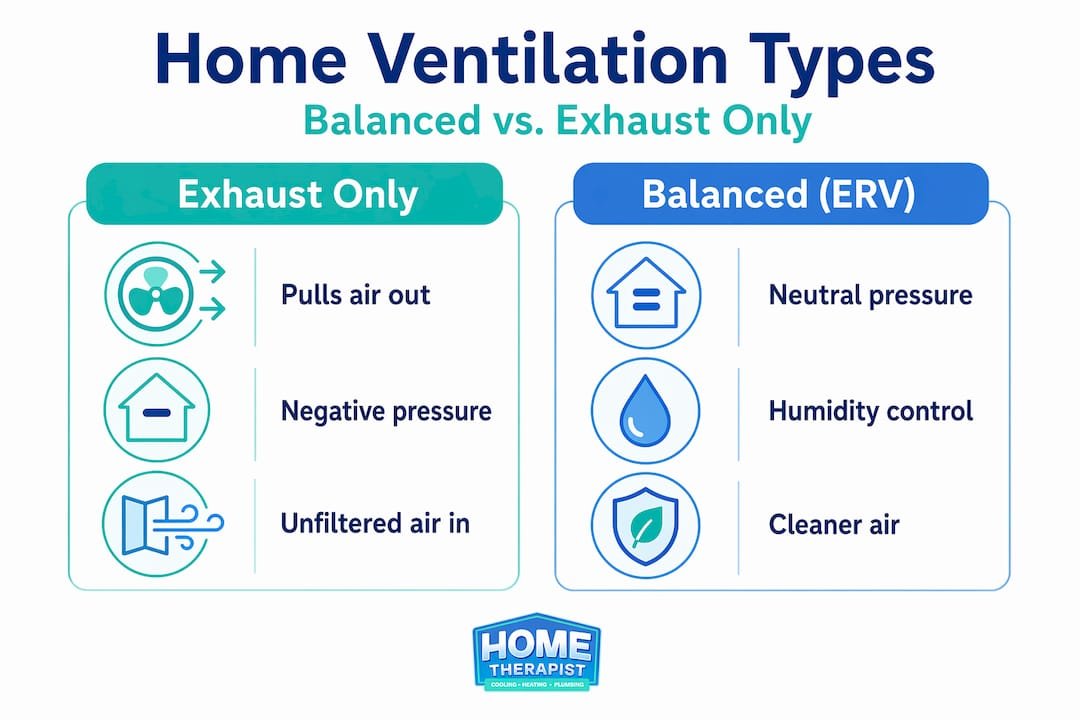
- Exhaust-only systems: Pull stale air out, allowing outdoor air to leak in through gaps. Simple and inexpensive, but they can draw in unfiltered, humid outside air.
- Supply-only systems: Push filtered outdoor air in and let stale air escape through cracks. Better for air quality, but they can create positive pressure that forces humid air into wall cavities.
- Balanced systems: Move equal amounts of air in and out, maintaining neutral pressure. Much better suited for tight, energy-efficient Tampa Bay homes.
- Energy recovery ventilators (ERVs): The gold standard for humid climates. ERVs transfer both heat and moisture between incoming and outgoing air streams, so your AC isn’t overwhelmed by a flood of hot, humid replacement air.
For most Tampa Bay homes built or renovated in the last decade, an ERV paired with a well-balanced duct system gives you the best control over both air quality and humidity. The benefits of heat recovery ventilators are significant, but ERVs take that concept further by also managing moisture transfer, which is the real battle here.
Assessing your current ventilation and setting goals
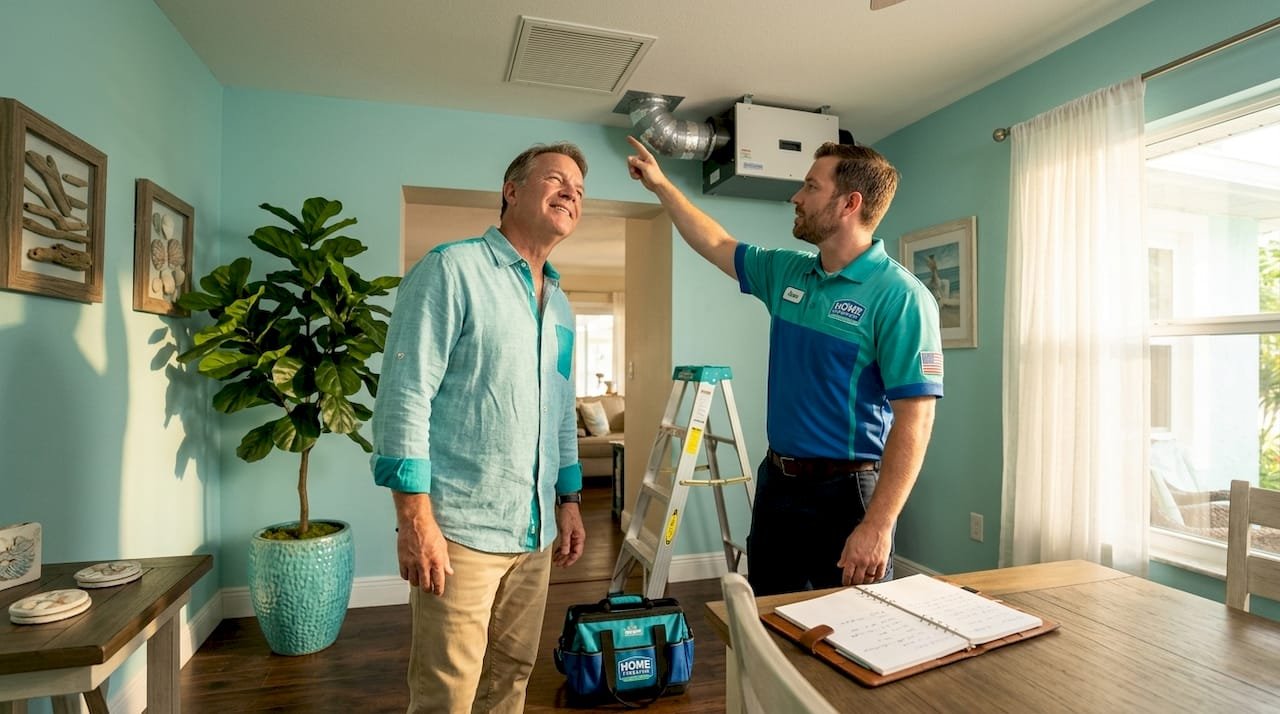
Knowing which system you have is step one. Knowing whether it’s working is step two. Before spending a dollar on upgrades, do a structured assessment of your current setup.
How to assess your home’s ventilation in four steps:
- Check your exhaust fan CFM ratings. CFM stands for cubic feet per minute, and it measures how much air a fan moves. Look at the fan label or product documentation in your bathrooms and kitchen. If the numbers aren’t there, a simple anemometer (an airflow meter) can help measure output.
- Compare against code requirements. The Florida Building Code 2026 requires a minimum of 100 CFM mechanical exhaust for kitchens, with 150-200 CFM recommended for open-concept layouts common throughout Tampa Bay neighborhoods.
- Calculate your whole-house ventilation needs. ASHRAE Standard 62.2 sets the baseline: multiply your floor area in square feet by 0.03, then add 7.5 CFM for each bedroom plus one. A 2,000 sq ft, three-bedroom home needs at least 90 CFM of continuous whole-house ventilation.
- Walk through and look for warning signs. Condensation on windows, musty odors in closets, visible mold near vents, peeling paint near bathroom ceilings, and persistent allergy symptoms are all signs your ventilation is falling short.
| Warning sign | What it likely indicates |
|---|---|
| Condensation on interior windows | Excess indoor humidity, poor exhaust ventilation |
| Musty odors in bathrooms or closets | Mold growth from moisture buildup |
| Stale or stuffy air in bedrooms | Insufficient fresh air supply |
| Peeling paint near exhaust fans | Fan not venting properly or venting into attic |
| Allergy flare-ups indoors | Elevated VOCs, dust, or biological pollutants |
Pro Tip: Don’t just check if your bathroom fan runs. Hold a tissue near the grille while it’s on. If it barely moves, your fan may be clogged, undersized, or improperly ducted. Many Tampa Bay homes have bathroom fans that vent into the attic instead of outside, creating a whole new moisture problem above your ceiling.
You can also review the ductwork and air quality FAQ for common duct-related issues that quietly undermine ventilation performance in local homes.
Practical steps to improve home ventilation in Tampa Bay
Once you know what’s lacking, here’s how to fix it. These are the improvements that deliver the biggest results for Tampa Bay homes specifically.
Step-by-step ventilation upgrades:
- Replace bathroom fans with humidity-sensing models. Standard on/off fans only run when someone remembers to flip the switch. Humidity-sensing fans detect moisture levels and run automatically until the air is clear. Position them directly over the shower, not across the room.
- Upgrade kitchen ventilation to meet or exceed code. For open-concept kitchens, kitchen range hoods should provide at least 100 CFM, with 150-200 CFM for larger open-plan layouts. Use rigid metal ductwork, not flexible vinyl, which collapses and traps grease.
- Install or upgrade to an ERV system. This is the single biggest improvement most Tampa Bay homeowners can make. ERV systems recover 70-80% of energy from exiting air while transferring moisture, which keeps your AC load lower and your indoor humidity in check. Learn more about energy recovery ventilation systems and how they integrate with your existing HVAC.
- Seal and size your ductwork properly. Leaky ducts are a massive problem in Florida homes. Even a small gap in supply ducts can pull unconditioned attic air (150°F in summer) into your living space. Have your ducts professionally sealed and confirm sizing matches your system’s airflow requirements.
| Upgrade | Typical CFM improvement | Best for |
|---|---|---|
| Humidity-sensing bathroom fan | 50-110 CFM | Moisture and mold control |
| Range hood upgrade (rigid duct) | 150-400 CFM | Cooking odors, grease, VOCs |
| Whole-house ERV installation | Continuous fresh air exchange | Balanced humidity and air quality |
| Duct sealing and insulation | 15-30% system efficiency gain | Airflow consistency and cooling load |
Pro Tip: When installing an ERV, make sure the contractor connects it to your existing HVAC ductwork so fresh air distributes throughout the house, not just in one room. A standalone ERV exhausting into a hallway is significantly less effective than one integrated with your air handler.
These upgrades work best as a system. A new ERV won’t perform well if your ducts are leaking. And upgraded kitchen ventilation won’t solve whole-house air quality if your bathrooms are still dumping moisture into the attic.
Maintaining your ventilation system and verifying results
Installing better equipment is only half the job. The other half is keeping it performing well over time, especially in Tampa Bay’s climate, which pushes ventilation systems harder than in drier regions.
Core maintenance habits that actually matter:
- Change HVAC filters every 1-3 months. Clogged air filters reduce airflow by 20-30%, strain your equipment, and worsen indoor air quality. Tampa Bay’s combination of dust, pollen, and humidity means filters load up fast.
- Clean ERV heat exchangers annually. ERV systems need annual cleaning to prevent efficiency drops and mold growth inside the core. Most manufacturers provide a simple washable core that takes about 30 minutes to clean.
- Check exhaust fan grilles seasonally. Dust and lint accumulate on grilles and reduce airflow significantly. A quick wipe-down every few months keeps fans moving air at their rated capacity.
- Inspect duct connections at every service visit. Connections near air handlers and at flex duct junctions are the most common leak points. Your HVAC technician should check these annually.
“A ventilation system is only as good as its last maintenance visit. In Tampa Bay’s humid climate, one skipped filter change or one clogged ERV core can undo months of good air quality in a matter of weeks.”
You’ll know your improvements are working when morning window condensation disappears, musty odors stop returning after rainstorms, and your AC doesn’t run constantly just to manage indoor humidity. A simple digital hygrometer (humidity monitor) placed in your main living area tells you a lot. Indoor relative humidity should stay between 40-60% for comfort and health. If you’re consistently above 60%, your ventilation system still needs attention.
For detailed HVAC maintenance tips specific to Tampa Bay homes, including what to check before and after hurricane season, that’s a resource worth bookmarking.
Why Tampa Bay homeowners should prioritize balanced ventilation with ERVs
Here’s the perspective most ventilation articles skip: the type of imbalance in your ventilation system matters as much as the amount of ventilation you have.
Most older Tampa Bay homes rely on exhaust-only systems. Bathroom fans and range hoods pull air out, and outdoor air seeps in through every gap and crack. The problem is that this creates negative pressure inside the home, which actively pulls humid Florida air through your wall assemblies and insulation. Over time, that moisture infiltration is what causes hidden mold behind walls, not just bathroom mold on tiles.
Balanced ventilation systems maintain neutral air pressure to prevent drawing in unwanted humid air and pollutants. This is especially critical in newer, tighter Tampa Bay homes built to current energy codes. The tighter a home is, the more deliberate its ventilation needs to be.
The EPA is clear that source control comes first, then ventilation. That means fixing moisture sources, choosing low-VOC materials, and controlling biological pollutants before leaning on ventilation to clean up the mess. But once source control is addressed, ERVs are the right tool for this climate because they transfer moisture, not just heat. An HRV (heat recovery ventilator) does a fine job in cold, dry climates, but in Tampa Bay it can actually introduce more humidity than it removes.
We’ve seen homeowners install HRVs based on general recommendations from out-of-state contractors, then wonder why their humidity problems persist. The humidity role in Tampa Bay homes is distinct enough that climate-specific guidance isn’t optional. It’s the difference between a system that works and one that makes things worse.
Enhance your home ventilation with expert HVAC services in Tampa Bay
Putting this guide into practice is much easier with a professional who knows Tampa Bay homes inside and out.

At Home Therapist Cooling, Heating, and Plumbing, our certified technicians handle everything from HVAC maintenance and system evaluation to full air handler and duct replacement and energy recovery ventilation installation. As a family-owned business serving Tampa Bay, we size and install ventilation systems for this climate specifically, not a one-size-fits-all approach copied from a northern HVAC manual. Whether you need a quick fan upgrade or a full ERV system integration, we’re ready to help you breathe better at home. Call us today to schedule your ventilation assessment.
Frequently asked questions
What is the recommended bathroom exhaust fan capacity for Tampa Bay homes?
Bathroom exhaust fans should provide at least 50 CFM and be vented directly outdoors, not into the attic. Given Tampa Bay’s humidity levels, humidity-sensing fans rated at 80-110 CFM offer better moisture control than the minimum.
Why are energy recovery ventilators (ERVs) preferred over heat recovery ventilators (HRVs) in Tampa Bay?
ERVs transfer both heat and moisture between incoming and outgoing air streams, which helps manage Tampa Bay’s persistent high humidity. HRVs only transfer heat, making them less effective and potentially counterproductive in this climate.
How often should HVAC air filters be changed to maintain good ventilation?
Tampa Bay’s dust, pollen, and humidity load up filters quickly. Changing filters every 1-3 months prevents the 20-30% airflow reduction that comes with clogged filters and keeps your indoor air quality from slipping.
What is the minimum kitchen ventilation airflow required under Florida Building Code 2026?
The Florida Building Code 2026 requires a minimum of 100 CFM mechanical exhaust for residential kitchens, with 150-200 CFM recommended for the open-concept layouts that are common in Tampa Bay new construction and remodels.
Recommended
- Attic ventilation: Boost comfort and cut cooling costs in Tampa Bay
- Indoor Air Quality and Ductwork FAQ for Tampa Bay Homeowners | Home Therapist
- Energy Saving HVAC Tips for Lower Tampa Bay Home Bills
- Essential Home Cooling Methods 2025 for Tampa Homeowners
More Ductwork & Airflow Articles
- 7 Best Duct Cleaning Companies Near Me In Tampa Bay (2026)
- Attic ventilation: Boost comfort and cut cooling costs in Tampa Bay
- Room-by-Room Attic Measurements on Pennsbury Dr: Ductwork Design in Tampa, FL 33624
- Blower Wheel Pulled, Washed, and Reinstalled Before Duct Sanitation on E 33rd Ave: Tampa, FL 33603
- AC Tune-Up and Ductwork Inspection on Blossom Ave: What Barbaro Found in Tampa, FL 33614


