

Why change air filters? Boost HVAC efficiency now
TL;DR:
- Regularly replacing your HVAC filter in Tampa Bay prevents system strain, enhances efficiency, and extends the equipment’s lifespan. Neglecting timely filter changes forces the system to work harder, increases energy bills, and risks costly repairs or premature replacement. Visual checks and scheduled replacements based on household conditions are essential for maintaining optimal home comfort and protecting your investment.
Your HVAC system runs quietly in the background, and it’s easy to forget that one small component determines whether it runs efficiently or struggles through every Tampa Bay summer. Most homeowners assume they’ll swap out the air filter when it looks visibly dirty. That assumption is costing them money every month. A neglected filter doesn’t just reduce air quality. It forces your equipment to work harder, drives up energy bills, and chips away at a system that costs thousands of dollars to replace. This guide breaks down exactly why timely filter changes matter and gives you practical, Tampa-specific guidance to protect your home comfort and your budget.
Table of Contents
- What does your HVAC air filter do?
- How dirty air filters affect HVAC efficiency and costs
- Protecting your HVAC investment: System longevity and performance
- How often should you really change your filter in Tampa Bay?
- What most people get wrong about filter changes
- Expert HVAC maintenance for lasting comfort
- Frequently asked questions
Key Takeaways
| Point | Details |
|---|---|
| Filters prevent damage | Replacing your air filter on time protects your HVAC system from dirt buildup and premature breakdowns. |
| Save on energy bills | Clean filters keep your air conditioner running efficiently and can lower household energy costs. |
| Check filters monthly | Especially in Tampa Bay’s humid climate, monthly inspections help you stay ahead of issues. |
| Follow expert advice | Use manufacturer and contractor recommendations for the right filter type and change frequency. |
What does your HVAC air filter do?
Your air filter is positioned at the return air intake of your HVAC system, and its primary job is to catch airborne particles before they travel through the equipment. Dust, pollen, pet dander, mold spores, and debris get pulled through your return vents constantly. Without a filter capturing those particles, they’d coat the internal components of your system and circulate back into your living space.
Here’s what a properly functioning filter protects:
- Evaporator coils: These coils absorb heat from indoor air. Dirt coating them acts like insulation, reducing their ability to cool effectively.
- Blower motor: The motor moves air through the system. A clogged filter makes it strain, increasing wear and the chance of burnout.
- Ductwork: Dirty air deposits particles inside ducts, accumulating over time and degrading air quality throughout the home.
- Indoor air quality: Allergens and irritants caught by the filter never reach your breathing air, which matters in a humid climate prone to mold and pollen.
When a filter becomes heavily loaded with captured debris, it shifts from helper to obstacle. Airflow drops. The system has to run longer cycles just to reach the temperature you set. As the U.S. Department of Energy confirms, dirty HVAC air filters restrict airflow, causing the system to run longer and harder, reducing efficiency and increasing energy consumption.
“A filter that worked hard for 30 days has done its job. Keeping it another 60 days means your system is doing extra work to push air through a wall of captured debris.”
For new homeowners or anyone looking to build a solid maintenance foundation, our beginner HVAC maintenance guide walks through everything you need to know. If you want a broader look at keeping your system in top shape, the step-by-step HVAC maintenance resource covers the full picture.
How dirty air filters affect HVAC efficiency and costs
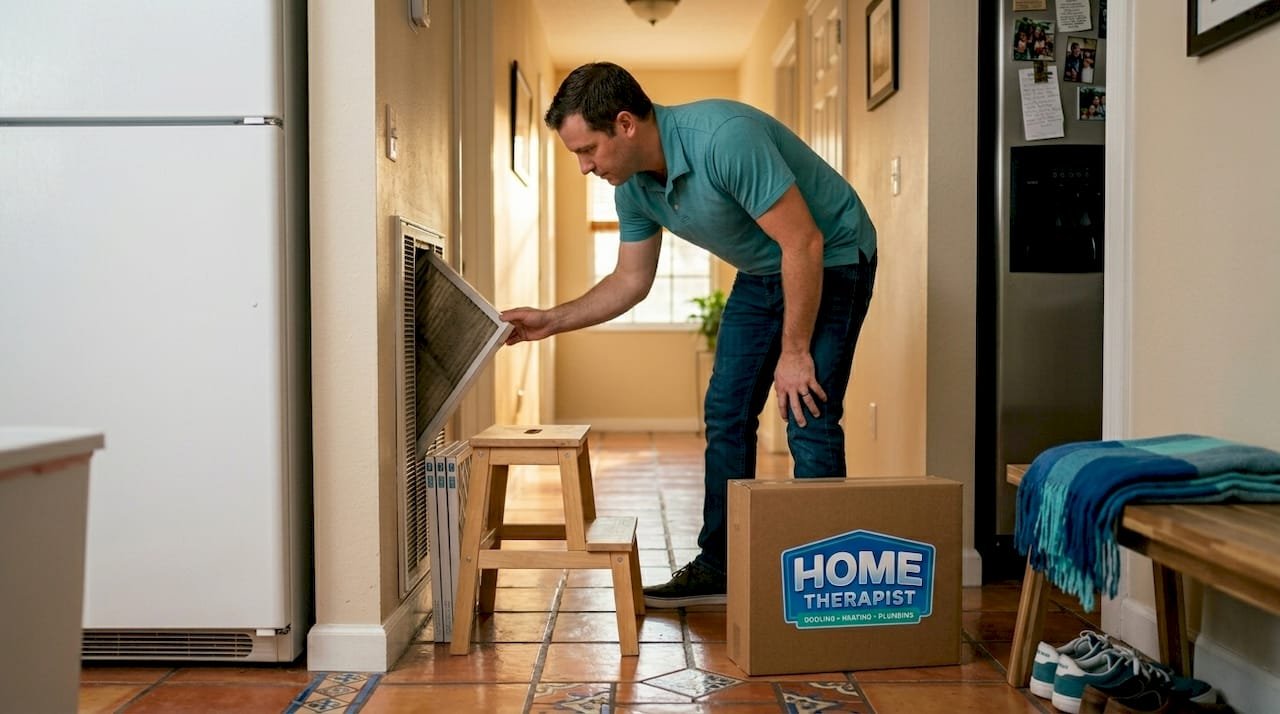
With the filter’s role understood, it’s easy to see how neglecting it impacts your system. Let’s break down what happens to efficiency and your wallet when filters aren’t changed on time.
The HVAC system in a Tampa Bay home runs hard. Summer temperatures regularly climb into the low 90s, and the humidity makes it feel even hotter. Your air conditioner may run nearly continuously during peak months just to keep interior temps comfortable. A restricted filter during that stretch is like asking your car to drive across the state with a partially clogged air intake. It works, but not well, and not cheaply.
Here’s a look at how filter condition affects key performance metrics:
| Filter condition | Airflow efficiency | Energy use | Risk level |
|---|---|---|---|
| New or recently changed | Optimal | Baseline | Low |
| Moderately dirty (30 to 45 days) | Slightly reduced | Slightly elevated | Low to moderate |
| Very dirty (60 to 90+ days) | Significantly reduced | Noticeably higher | High |
| Completely blocked | Severely restricted | Maximum strain | Critical |
The U.S. Department of Energy notes that replacing a dirty filter helps the air conditioner operate efficiently and protects the system from dirt buildup. That’s not vague guidance. It’s a direct link between one simple action and measurable savings.
Filter neglect can raise your monthly cooling costs by 5 to 15 percent. In a Tampa Bay home running the AC for eight to ten months a year, that adds up fast. If your average monthly bill is $200 during summer, even a 10 percent increase means you’re leaving $20 extra on the table every month purely because of a filter that costs $5 to $20 to replace.
Pro Tip: Set a recurring reminder on your phone for filter checks every 30 days. You don’t have to replace every month, but a visual check takes less than two minutes and tells you exactly where you stand.
Check out our HVAC filter maintenance tips for more guidance specific to Tampa Bay homes, and use our HVAC maintenance checklist to stay organized across all your seasonal tasks.
Protecting your HVAC investment: System longevity and performance
Energy savings are great, but neglecting this small maintenance step can also cost you big in repair bills and system longevity. Here’s how filter changes protect the parts that matter most.
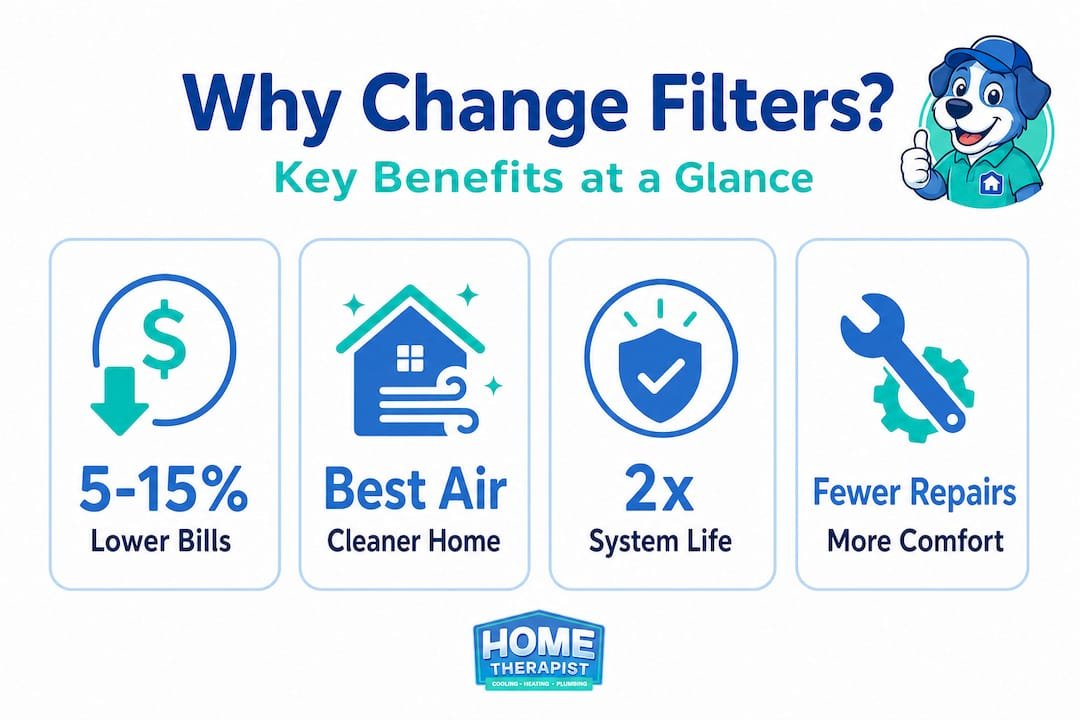
A central air conditioning system in Tampa Bay costs anywhere from $5,000 to $12,000 or more to replace, depending on size and features. That’s a significant investment. Regular filter changes are one of the least expensive ways to extend the life of that investment, and the cost comparison is eye-opening.
| Maintenance action | Average cost | Frequency | Annual cost |
|---|---|---|---|
| Filter replacement | $5 to $20 | Monthly to every 2 months | $30 to $120 |
| Evaporator coil cleaning | $150 to $400 | As needed | Variable |
| Blower motor replacement | $300 to $700 | When failed | Variable |
| Full system replacement | $5,000 to $12,000 | Every 12 to 20 years | Variable |
The pattern is clear. Spending a few dollars on filters consistently prevents the need for the bigger, more expensive line items.
Here’s what actually happens when filters are ignored long-term:
- Dirt bypasses a saturated filter and coats the evaporator coil. Once coated, those coils lose their ability to absorb heat. The system cools less effectively even while running constantly.
- The blower motor strains against restricted airflow for months, shortening its operational life significantly.
- Frozen coils become a real risk when airflow drops low enough. Ice forms on the coil, completely stopping the cooling process and sometimes flooding the drain pan.
- Refrigerant pressure imbalances can develop, leading to compressor stress and the kind of repair bill that makes homeowners consider full replacement instead.
As the DOE’s guidance confirms, regular filter changes help protect equipment components from dirt buildup and help prevent premature failures. The word “premature” is doing a lot of work there. A system that should last 15 years might only reach 8 or 10 with chronic filter neglect.
“Every emergency service call we’ve seen in Tampa Bay heat waves where the AC simply stops working almost always comes back to airflow restriction. A filter that went too long. It’s a frustrating lesson to learn in July.”
If you want to actively extend your HVAC lifespan, filter changes are the single most impactful habit you can build. Combine that with professional tune-ups, and you get the full picture of what regular HVAC service benefits look like in practice.
How often should you really change your filter in Tampa Bay?
So how do you know when it’s time for a new filter? Here’s a practical reality check for Tampa Bay homes.
Generic packaging on filters often says “replace every 90 days.” That guidance works fine in a mild climate where the HVAC runs occasionally. Tampa Bay is not that climate. Your system may run 10 to 14 hours a day during summer. The math is completely different here.
Here’s a practical schedule based on your household situation:
- Single occupant, no pets, no allergies: Inspect monthly, replace every 60 days during peak cooling season (April through October), and every 90 days in the cooler months.
- Multiple occupants or one pet: Inspect every three to four weeks, replace every 45 to 60 days year-round given Tampa Bay’s long cooling season.
- Multiple pets or one heavy shedder: Inspect every two to three weeks, replace every 30 to 45 days. Pet hair and dander load filters faster than almost anything else.
- Allergy sufferers or respiratory conditions in the household: Replace every 30 days and consider a MERV 11 or MERV 13 filter for better particle capture, after confirming your system can handle the increased resistance.
- Homes near active construction or with recent renovation work: Check weekly during active work, replace as soon as the filter shows any visible loading. Construction dust is extremely dense and loads filters very quickly.
Following regular HVAC maintenance habits means adjusting your filter schedule to real conditions, not just what the box suggests. Tampa Bay’s spring season brings heavy pollen, which is another reason our spring HVAC maintenance tips recommend an early-season filter check before you ramp up cooling demand.
On the question of filter type, the MERV rating (Minimum Efficiency Reporting Value) indicates how effectively a filter captures particles. Higher MERV means better filtration but also more airflow resistance. An evidence-based approach is to follow your HVAC contractor’s or manufacturer’s guidance for your specific filter size and maximum allowable static pressure. If you’re considering a higher MERV filter, verify your system can handle it to avoid reducing efficiency instead of improving it.
Pro Tip: Hold your filter up to a window or light source. If you can’t see light passing through it at all, you’re already past the point where replacement should have happened. Don’t wait for the next “scheduled” date.
What most people get wrong about filter changes
Here’s where we want to be honest with you, because this is something we see play out in Tampa Bay homes repeatedly. The biggest misconception isn’t that homeowners don’t know filters need changing. Most people know. The problem is the logic they use to decide when.
Waiting until a filter looks dirty sounds sensible. If it’s gray and visibly coated, clearly it’s time. But that logic fails because by the time you see that level of buildup, your system has already been straining for weeks. Airflow restriction doesn’t start when the filter looks full. It starts gradually, getting worse with every passing day. Your equipment is under increased stress long before the filter looks alarming.
We hear from technicians constantly about service calls for uneven cooling, higher-than-normal bills, or systems that just stop working. When they open the unit, a severely restricted or completely blocked filter is the culprit more often than any other single cause. The homeowner almost always thought they were on top of it. They just used the wrong signal to judge when to act.
The fix is simple. Use time and a monthly visual check as your guide, not appearance alone. Pair that habit with our HVAC troubleshooting guide to catch other early warning signs before they become expensive problems.
Filter changes cost almost nothing. Emergency AC repairs in the middle of a Tampa Bay summer, when every technician is fully booked and every day without cooling is miserable, cost a great deal more. The small habit protects the big investment. That’s the whole story, and it’s a straightforward one once you stop relying on visual cues alone.
Expert HVAC maintenance for lasting comfort
Armed with the facts, you don’t have to handle HVAC care alone. Local experts make it even easier to do it right.
Knowing the right filter schedule is one thing. Having a professional confirm that your specific system, ductwork, and household conditions are accounted for takes the guesswork out completely.
At Home Therapist Cooling, Heating, and Plumbing, our certified technicians provide thorough HVAC maintenance evaluations in Tampa that go beyond a basic filter check. We look at airflow, coil condition, refrigerant levels, and overall system performance so you know exactly where you stand. Whether you need a scheduled HVAC inspection in Tampa or are dealing with ductwork issues that affect how well your filter even works, we cover it all. For homes with older or inefficient duct systems, our duct replacement services in St. Pete restore proper airflow and help your filter do its job the way it should. As a family-owned business serving Tampa Bay, we’re here when you need us.
Frequently asked questions
Will running my AC with a dirty filter damage the system?
Yes. Dirty filters restrict airflow, forcing the system to work harder, which leads to dirt buildup on components and can cause equipment failures over time.
How can I tell my HVAC filter needs changing if it still looks clean?
Even a filter that appears relatively clean can restrict airflow through invisible particle accumulation. Follow your manufacturer’s guidance and replace on a set schedule rather than waiting for visible cues.
Does using a higher MERV filter mean I can change it less often?
Not necessarily. Higher MERV filters capture more particles and can actually fill up faster. Always verify your system can handle the added airflow resistance before upgrading to a higher MERV rating.
What are signs that my filter is overdue for replacement?
Rooms that aren’t cooling evenly, a noticeable spike in your energy bill, or weaker-than-usual airflow from your vents are all strong indicators that your filter is past due for a change.
Recommended
- Role of HVAC Filters – Boosting Air Quality at Home
- AC Filter Replacement Workflow for Optimal Home Comfort
- 7 Smart Ways to Extend Your HVAC Lifespan
- How to Replace HVAC Filters for Optimal Air Quality
More Indoor Air Quality Articles
- Why Balancing Home Humidity Matters for Tampa Bay Comfort
- Coil Clean, UV Light Install, and AC Diagnosis on Half Moon Lake Road, Tampa, FL 33625
- Pet hair HVAC cleaning tips for Tampa Bay pet owners
- Why We Physically Verify the UV Light on Every Visit: AC Maintenance on Amesbury Cir, Sun City Center FL 33573
- Mini Split Installation for Florida Rooms and Garages in Tampa, FL: What to Expect


