

How Two-Stage Furnaces Boost Comfort and Efficiency
TL;DR:
- Two-stage furnaces run at low capacity most of the time, improving comfort and reducing noise.
- Actual energy savings depend on design factors like AFUE and condensing technology, not staging alone.
- Proper sizing, ductwork, and thermostat compatibility are crucial before upgrading to a two-stage system.
Most homeowners assume a furnace is simple: it either blasts heat at full power or sits completely idle. That assumption costs people real money and comfort every winter. Two-stage furnaces challenge that old model entirely, running at a gentler low stage for most heating cycles and only ramping up when temperatures drop sharply. For Tampa Bay homeowners who want steadier indoor comfort and smarter energy use, understanding how staging actually works, what it genuinely delivers, and where it falls short is the clearest path to a smarter HVAC decision.
Table of Contents
- How a two-stage furnace works
- Why two-stage furnaces improve comfort and sound
- True impact on energy efficiency: facts vs. myths
- Is a two-stage furnace the right investment?
- Our take: When to choose a two-stage furnace and when not to
- Ready to enhance your home comfort? Explore your HVAC options
- Frequently asked questions
Key Takeaways
| Point | Details |
|---|---|
| Precise temperature control | Two-stage furnaces adjust energy output for stable, comfortable indoor temperatures. |
| Quieter home environment | Operating mostly at low speed, two-stage models reduce furnace noise in your living space. |
| Efficiency depends on design | Staging boosts comfort, but true energy savings rely on overall furnace technology and correct home setup. |
| Weigh cost vs. benefits | Consider installation, maintenance, and system compatibility before choosing a two-stage furnace for your home. |
How a two-stage furnace works
Picture a car engine that only had two settings: parked or full throttle. Every stop-and-go trip would feel jarring, burn more fuel, and wear out the engine faster. A single-stage furnace works exactly like that. It fires at 100% capacity every single time it starts, then shuts off completely when the thermostat is satisfied. The result is a constant, dramatic on-off cycle that creates temperature swings, noise bursts, and wasted energy.
A two-stage furnace is a gas furnace designed to operate at two distinct firing and capacity levels, low and high, rather than only full output, so it can better match heating demand. In practice, the furnace runs at the low stage, typically around 65% of its total capacity, for the vast majority of heating cycles. Only when outdoor temperatures drop significantly or the home needs a fast heat recovery does it shift to the high stage at full capacity.
This matters because most heating days in Tampa Bay are mild. Even during our cooler winter months, indoor temperatures rarely demand maximum furnace output for hours at a time. A two-stage unit quietly ticks along at low fire, maintaining a comfortable range without the dramatic blasts that wake you up or cause those annoying hot-cold swings between rooms.
Here is a quick comparison of how the two operation modes differ:
| Feature | Low stage | High stage |
|---|---|---|
| Firing capacity | ~65% | 100% |
| Noise level | Low and steady | Noticeably louder |
| Temperature variability | Minimal swing | Wider swing |
| When it activates | Most heating cycles | Cold snaps, quick recovery |
| Runtime per cycle | Longer, gradual | Shorter, intense |
For Tampa Bay homes, the low stage is the workhorse. It runs longer but more gently, circulating air continuously without dramatic temperature spikes.
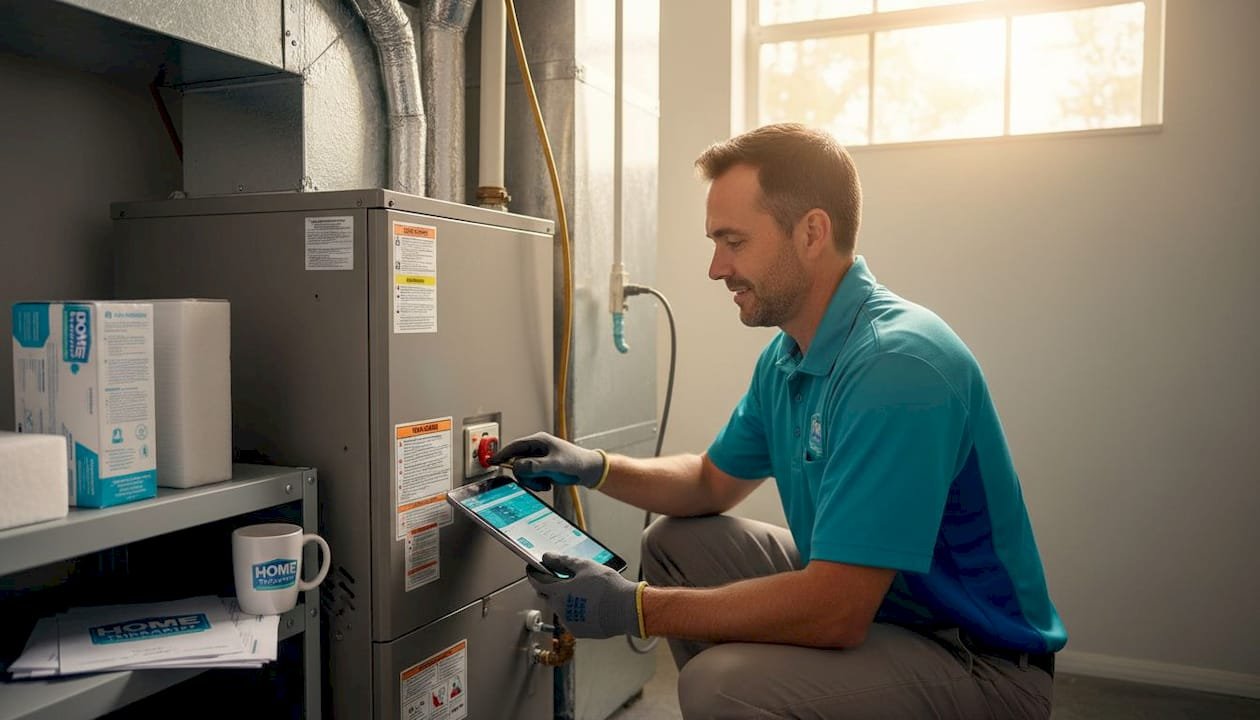
To get the full value from staging, you also need to pair the furnace with the right thermostat. Most standard thermostats only send a single “call for heat” signal. A smart or two-stage thermostat sends a more nuanced signal that tells the furnace whether to use low or high fire based on how far the room temperature has drifted from the setpoint.
Pro Tip: Before purchasing a two-stage furnace, confirm your thermostat has a two-stage output. If it only has a single-stage output, you will not be using the staging feature effectively, no matter how advanced your furnace is. Read more about high-efficiency furnace basics to understand how equipment choices interact.
Two-stage furnaces deliver more precise temperature control and quieter operation than single-stage models by running at partial capacity for most cycles, reducing cycling frequency and creating a more consistent indoor environment.
Why two-stage furnaces improve comfort and sound
Walk into a home heated by a single-stage furnace, and you will likely notice a pattern: a blast of hot air, the room overheating slightly, the furnace shutting off, then the room slowly drifting cool again before the next big cycle. This “overshoot and undershoot” pattern is what creates uncomfortable hot spots near the vents and chilly corners away from them.
Two-stage furnaces break this pattern. Because the low stage runs longer and more continuously, the air in your home stays in motion more consistently. Think of it like a slow river versus a series of unpredictable water bursts. The slow, steady flow distributes heat far more evenly. This is especially noticeable in larger Tampa Bay homes with multiple rooms or split floor plans, where temperature balance between spaces is a constant struggle with single-stage equipment.
A major benefit homeowners immediately notice is quieter operation compared with single-stage “all-or-nothing” cycling. The low stage simply generates less airflow turbulence, which means less duct noise, less swooshing air at vents, and a significantly lower overall sound profile inside the home.
Here is what that comfort difference adds up to in real daily life:
- Fewer hot and cold swings between furnace cycles, meaning your home stays in a narrower, more comfortable temperature range
- Less noise disruption during sleep, conversation, or while watching TV, since the low stage is noticeably quieter than full-blast operation
- Reduced draft feeling near vents, since lower airflow velocity is less likely to feel like a direct blast of air
- Better comfort for sensitive family members, including young children, elderly relatives, and pets, who are often more sensitive to sudden temperature and airflow changes
- Improved air filtration because the blower runs longer, pushing more air through your filter during each cycle
The extended runtime of the low stage also has a less obvious benefit: better humidity control. In Florida, even during winter, managing indoor humidity matters. Longer, slower heating cycles give your system more time to process air through any dehumidification features, maintaining a healthier indoor environment.
Pro Tip: Pair your two-stage furnace with a programmable thermostat to schedule gradual temperature adjustments rather than sharp setpoint changes. Gradual changes keep the furnace in low stage almost exclusively, maximizing both comfort and efficiency.
For homeowners focused on improving home heating comfort, two-stage operation is one of the most impactful hardware upgrades available at the furnace level.
“Longer, lower-intensity heating cycles translate to more even temperature distribution across rooms, less noise, and a more stable indoor climate that homeowners consistently prefer over single-stage cycling patterns.”
True impact on energy efficiency: facts vs. myths
Here is where a lot of marketing messaging misleads Tampa Bay homeowners. Two-stage furnaces are often sold with heavy emphasis on “energy savings,” and while that claim has merit in specific contexts, the full picture is more nuanced.
The most important efficiency metric for a furnace is AFUE, which stands for Annual Fuel Utilization Efficiency. A furnace with a 96% AFUE converts 96 cents of every dollar of natural gas into usable heat. Importantly, AFUE depends on furnace design, such as whether it uses condensing technology, but staging affects comfort and sound by reducing cycling rather than automatically guaranteeing higher efficiency.
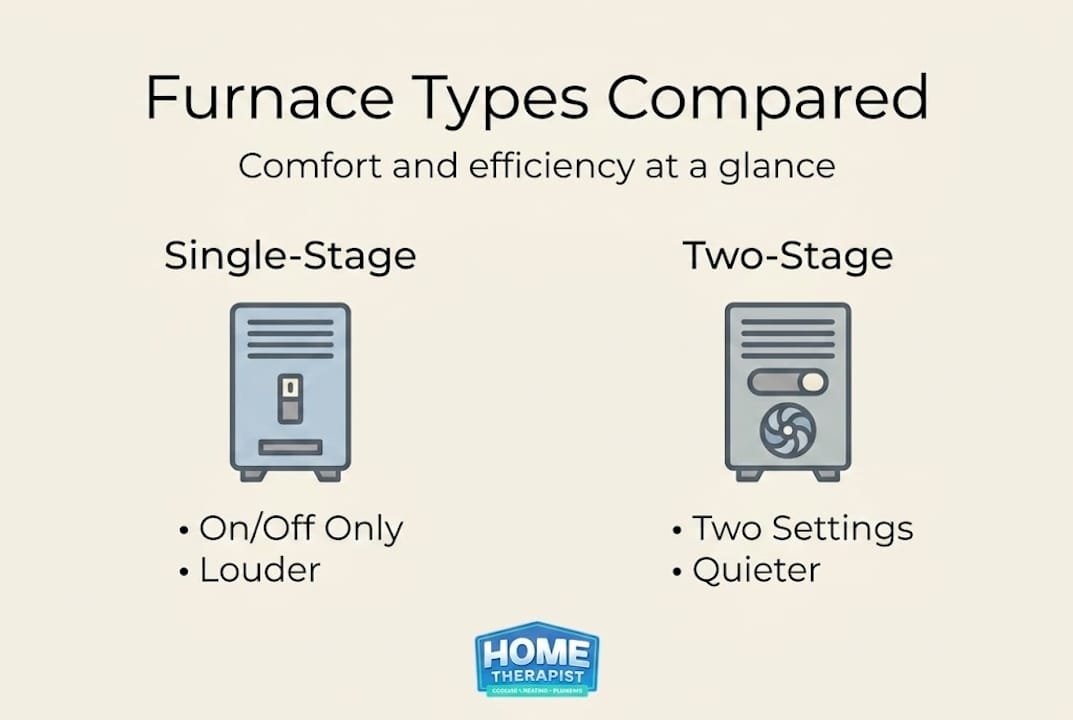
In simple terms: a two-stage furnace is not inherently more efficient than a single-stage one just because it has two stages. What actually drives AFUE is whether the furnace uses a secondary heat exchanger to recapture exhaust heat, known as a condensing furnace, and how well the system is sized and installed.
Here is how the major furnace types compare honestly:
| Furnace type | AFUE range | Comfort level | Noise level | Upfront cost |
|---|---|---|---|---|
| Single-stage standard | 80% | Basic | Higher | Lowest |
| Two-stage standard | 80 to 96% | Better | Lower | Moderate |
| Two-stage condensing | 90 to 98% | Best | Lowest | Highest |
| Single-stage condensing | 90 to 97% | Good | Moderate | Moderate to high |
Notice that a two-stage furnace can exist at 80% AFUE or at 96% AFUE depending on its design. Staging alone does not push that number higher. What does push it higher is condensing technology, proper sizing, and quality installation.
What truly impacts your monthly energy bill breaks down into these factors:
- System design (condensing vs. non-condensing) drives the largest share of efficiency differences
- Correct sizing through a proper load calculation ensures the furnace is not over or undersized for your home
- Ductwork condition determines how much heated air actually reaches the rooms you want to heat
- Thermostat programming affects how frequently and how intensely the system runs
- Regular maintenance keeps combustion efficiency, airflow, and controls performing as designed
For homeowners researching energy-efficient HVAC options or exploring HVAC efficiency ratings, understanding AFUE in context is far more valuable than fixating on the number of stages.
The real efficiency benefit of two-stage operation is more subtle: because the furnace runs in low stage most of the time, it completes fewer cold starts. Each cold start wastes a small amount of fuel in ignition and ramp-up. Over a full heating season, fewer cold starts add up to modest, real-world fuel savings even if AFUE on paper looks identical.
Is a two-stage furnace the right investment?
Knowing the facts, the honest question becomes: does a two-stage furnace actually make sense for your home, your budget, and your comfort priorities?
The upfront cost difference is real. A two-stage furnace typically costs $300 to $800 more than a comparable single-stage unit before installation. Combined with the added complexity of two-stage controls and gas valve systems, repair scenarios down the road can be slightly more involved.
“Some homeowners and technicians prefer simpler single-stage furnaces for their lower cost, easier maintenance, and straightforward parts availability, accepting the trade-off in comfort performance.”
That perspective from experienced HVAC professionals is worth taking seriously. Simplicity has genuine value, especially for homeowners who want reliable equipment with a long service life and straightforward repair options.
At the same time, a well-matched two-stage system with correct sizing, proper ductwork, and a compatible thermostat genuinely improves comfort in ways that homeowners notice every single day.
Here are the practical factors to evaluate before committing to a two-stage upgrade:
- Home size and layout: Larger homes with multiple zones or rooms that struggle with temperature balance gain the most from two-stage staging
- Current comfort complaints: If hot-cold swings and noise from your furnace are ongoing frustrations, staging directly addresses both
- Ductwork condition: Leaky or undersized ducts undermine any furnace upgrade; fix the ducts first
- Thermostat compatibility: Confirm your existing or planned thermostat supports two-stage control signals
- Budget and priorities: If tight renovation budgets push toward simplicity, a well-maintained single-stage condensing unit can still deliver excellent efficiency
- Repair service access: In some areas, two-stage parts are less immediately available; verify your local service providers stock them
Pro Tip: Before any furnace upgrade, have a professional inspect your ductwork for leaks and sizing issues. Staging benefits disappear quickly if heated air escapes into unconditioned attic or crawl space before it reaches your living areas. Pairing the right furnace with quality HVAC maintenance practices is what separates a good investment from an expensive disappointment.
For Tampa Bay homeowners, the math often favors two-stage units in larger homes with comfort-sensitive families, while smaller, simpler homes with tighter budgets may genuinely be better served by a reliable single-stage condensing furnace.
Our take: When to choose a two-stage furnace and when not to
After years of working on Tampa Bay homes, our honest perspective is this: the technology matters far less than the application. We have seen beautifully spec-ed two-stage furnaces underperform in homes with leaky ductwork and mismatched thermostats. We have also seen basic single-stage condensing units keep families perfectly comfortable for 15-plus years with almost no issues.
The homeowners who benefit most from two-stage systems are those in larger homes with multiple living zones, families where some members are sensitive to noise or temperature fluctuations, and anyone who genuinely wants a higher-comfort indoor environment and has the ductwork and thermostat setup to support it.
The homeowners who often do better with simpler systems are those in smaller homes with open floor plans, renovation budgets that are already stretched, or anyone whose primary concern is reliability over premium comfort features.
Our strongest advice: chase the solution that fits your actual home, not the most impressive-sounding feature list. Explore HVAC energy-saving tips that apply regardless of which furnace type you choose. Getting sizing right, sealing ducts, and maintaining your system year-round will always outperform any equipment upgrade made in isolation.
Ready to enhance your home comfort? Explore your HVAC options
Choosing the right furnace is one piece of the bigger picture of whole-home comfort and efficiency. Whether you are leaning toward a two-stage upgrade or want to optimize your current setup, the right guidance makes all the difference.
At Home Therapist Cooling, Heating, and Plumbing, our certified technicians help Tampa Bay homeowners navigate these decisions with honest, practical advice tailored to your home’s real needs. Start by exploring what HVAC comfort in Tampa Bay looks like for your specific situation, work through our beginner HVAC maintenance guide to protect your existing equipment, or learn how HVAC retrofitting can modernize your home’s system without a full replacement. Contact us today and let’s find the right solution for your home.
Frequently asked questions
- What does stage 2 heating mean?
Stage 2 heating is the full-capacity mode of a two-stage furnace. When outdoor temperatures drop sharply or the home is far below the thermostat setpoint, the furnace escalates from its low first stage (roughly 65% capacity) to second stage (100% capacity) to recover heat faster. Most Tampa Bay homes rarely need second stage except on the coldest winter nights.
- What are the disadvantages of a two-stage furnace?
Two-stage furnaces cost more upfront than single-stage models and have a more complex gas valve and control board, which adds potential repair points. In mild climates like Tampa Bay, the efficiency advantage is smaller than in colder regions because the furnace runs fewer total heating hours per year, so the payback period is longer.
- Is stage 2 heat more expensive?
Yes, running in second stage burns more gas per hour than first stage because the burner fires at full capacity. However, second stage typically activates only during brief cold snaps, so the overall seasonal fuel cost difference is modest. A properly sized two-stage furnace spends most of its runtime in efficient first-stage operation, keeping monthly bills lower on average. Home Therapist offers FREE estimates and FREE diagnosis so you can compare options before committing.
What is the main advantage of a two-stage furnace?
A two-stage furnace delivers more consistent temperatures and quieter operation because it runs at a lower capacity for most heating cycles rather than blasting at full power and shutting off repeatedly.
Does a two-stage furnace always save more energy than a single-stage furnace?
Not automatically. AFUE depends on furnace design and whether condensing technology is used, so a two-stage furnace is not inherently more efficient than a well-designed single-stage unit.
What factors should I consider before upgrading to a two-stage furnace?
Focus on correct sizing and ductwork integrity first, then confirm your thermostat supports two-stage control signals before committing to the upgrade.
Are two-stage furnaces more expensive to maintain?
They can be, because single-stage furnaces have simpler components and broader parts availability, making repairs more straightforward and sometimes less costly than two-stage repairs.
Recommended
- How to Improve Home Heating for Maximum Comfort and Savings
- What is a high-efficiency furnace? Save energy at home
- Programmable HVAC: Boosting Comfort and Savings in Tampa
- HVAC Retrofitting Explained: Enhancing Home Comfort Home Therapist Cooling, Heating, and Plumbing
More Heating & Heat Pumps Articles
- A $89 Tune-Up on Indigo Oasis Ct: Cooling and Heating Maintenance in Gibsonton, FL 33534
- How Heat pumps work: Guide for Tampa Bay homeowners
- Step-by-step furnace cleaning guide for Tampa Bay homeowners
- Best 5 Heat Pumps 2025 for Efficient Heating Solutions
- Rental Property Heat Pump Replacement in Tampa: Repair or Replace?


