
★★★★★ 4.8 · 1,300+ reviews
Lic. CAC1819196 · CFC1431159
✓ FREE Estimates   |   ✓ FREE Diagnosis
No diagnostic fee. No trip charge. You only pay if you approve the repair. Call (813) 343-2212

Airflow Troubleshooting

Cold Spots in Rooms?

Specific room always cold or hot? Usually airflow distribution + insulation. CAC1819196.

Quick Answer

Cold spots in Tampa = (1) too-close to supply vent (airflow balance), (2) insulation gap in wall/ceiling, (3) duct leak in attic (conditioned air escapes), (4) window + shade issue. Fix: (1) partially close vent for balance, (2) duct seal $79+, (3) blown-in insulation $499+, (4) window treatment. Call (813) 343-2212.

Cold Spot Causes

Supply Vent Proximity

DIY possible

Symptom: Too close to supply = cold. Far from supply = warm.

Partially close vent (60% open). Or install deflectors. Cheap.

Insulation Gap

Call a tech

Symptom: Wall or ceiling insulation thin/missing at that spot.

Blown-in insulation $499+.

Duct Leak

Call a tech

Symptom: Supply duct leaking cold air into attic before reaching vent.

Duct seal $79+.

Window / Shade

Call a tech

Symptom: Single-pane window or no shade = hot/cold spot.

Solar shade or window replacement. Separate trade.

One Room Is Cold, Rest Are Fine (Single-Room Diagnostic)

When one room in your Tampa home runs colder than the rest while your main living areas stay comfortable, you are dealing with a localized airflow, insulation, or load-balance issue, not a broken AC. Our techs see the same four culprits repeat across Tampa Bay tract homes, and most have nothing to do with the condenser outside.

The Four Usual Suspects

  • Corner rooms with exterior walls on two sides. Two walls of concrete block exposed to outdoor heat means double the thermal conduction. If that corner also faces south or west, you are fighting radiant load plus conductive load at the same time.
  • Bonus rooms above the garage. This is the Tampa tract-home classic. The garage ceiling is almost always uninsulated, the room is served by a single long duct run from the air handler, and there is usually no return grille at all. These rooms routinely run 10 degrees warmer in summer and 8 degrees colder in winter than the main house.
  • West-facing rooms. Tampa gets brutal afternoon sun from May through September. A west-facing bedroom with standard builder-grade windows absorbs heat from roughly 2 PM to 7 PM, and interior temps swing 5 to 8 degrees above neighboring rooms during those hours.
  • Return-starved rooms. The supply vent is blowing cold or hot air just fine, but there is no return path. Air gets pushed in, pressurizes the room against a closed door, and the AC short-cycles because it cannot move air through the zone.
Sound familiar? Get a FREE Tampa Bay diagnosis today. Call (813) 343-2212 Book Online

Why Tampa Construction Makes It Worse

Concrete block and stucco walls are thermal mass sponges. They absorb heat all afternoon, then radiate it into your rooms well into the evening, long after sundown. A west-facing block wall can still be pushing heat into your bedroom at 9 PM when you are trying to sleep. Combine that with Florida’s stick-built second floors (wood framing, minimal insulation, tile or shingle roof baking at 160 degrees) and you get the uneven comfort patterns every Tampa homeowner recognizes. Our FREE diagnosis includes thermal camera checks on suspected walls so you know exactly where heat is entering.

DIY Airflow Test You Can Do in 10 Minutes

Before you call anyone, run these three quick tests. They will tell you whether the issue is airflow, load, or both.

Test 1: Tissue Paper Flap

Tear a small strip of tissue paper. Hold it 6 inches below each supply vent in the house, one at a time. In a healthy room, the tissue should flap energetically and stay pulled toward the ceiling. In the cold (or hot) room, compare the flap strength. Weak flap means low airflow from an undersized duct, a crushed flex line, or a leak.

Test 2: Door Closed vs. Open

With the AC running, close the problem room’s door. Listen to your outdoor unit for the next 10 minutes. If it short-cycles (turns on and off more than once) when the door closes but runs steady with the door open, the room is return-starved.

Test 3: Time-to-Temp

At noon on a sunny day, note the thermostat reading and the problem room’s temperature using a separate thermometer. Set the thermostat 5 degrees lower. Wait 30 minutes. Working rooms should drop 3 to 4 degrees. If your cold room matches the working rooms, you have a load problem (insulation, sun, or thermal mass). If it does not match, you have an airflow problem.

The “Close the Unused Vents” Myth

This is the most common DIY mistake in Tampa. The logic seems reasonable: close vents in guest rooms to push more air to the cold room. It does not work, and it damages your system.

When you close supply vents, static pressure across the blower rises sharply. Your blower motor was sized for the full duct system carrying design airflow. Cut that airflow, and the motor strains against the back pressure, running hotter, drawing more amps, and shortening its lifespan. Duct leakage actually increases because the higher pressure forces more air out of every seam and joint, mostly into your attic.

Tampa homes with oversized ACs (very common in older installs) short-cycle worse when vents are closed. The right answer is zoning.

Fix Options by Cause

Once we diagnose the actual cause during your FREE estimate, here is what the fix typically costs:

  • Return-starved room: Add a return grille and duct. $299 to $499 installed.
  • Undersized supply duct: Upsize the branch run from the plenum. $349 to $699 per run.
  • Poor exterior wall insulation: Blown-in cellulose or foam. $400 to $900 per room.
  • Bonus room above garage (chronic isolation): Dedicated Daikin or Goodman single-zone mini-split. $3,499 to $5,999 installed.
  • Afternoon sun overload: Solar window film ($300 to $800), exterior shade, or a zoning system.
  • Thermostat placement issue: Relocate thermostat. $279 to $449.
  • Leaking duct in attic: Mastic seal or replacement of damaged section. $199 to $399 per leak.
  • Full zoning retrofit: Motorized dampers plus multi-zone thermostat. $2,500 to $4,500.

Why Mini-Splits Win for Tampa Bonus Rooms

For bonus rooms above garages, the math usually favors a ductless mini-split over trying to fix the existing duct run. A Daikin 12,000 BTU wall cassette handles 300 to 500 square feet, runs independently of your main system, needs zero new ductwork, and uses a fraction of the energy because it is sized exactly for the room. It also gives you independent temperature control.

Florida Code Corner: Duct Work and Zoning in Tampa

Duct system modifications — adding a return grille, extending a supply run, or installing a zoning bypass damper — require a mechanical permit in Hillsborough County under Florida Building Code Section 1006.1 when the scope involves cutting new penetrations or extending ductwork. Minor repairs such as sealing an existing connection or adjusting a balancing damper typically do not require a permit.

Florida’s Energy Conservation Code (Section 13-610.1) requires duct systems to be sealed to a total leakage of 4 percent or less of system airflow on new installations and replacements. Existing systems are exempt from testing but not from the physical sealing standard when modifications are made. Any contractor performing duct work on an existing system should seal connections with mastic compound rather than duct tape alone — duct tape degrades in Tampa’s attic heat and fails within 1 to 3 years. Home Therapist uses mastic on all duct connections. Licensed CAC1819196.

Tampa Seasonal Pattern: When Cold-Spot Complaints Peak

Duct leakage problems and cold spots exist year-round in Tampa homes, but the symptoms shift with the season.

  • November through January: The first genuinely cold nights expose rooms that rely on marginal duct performance. A bedroom at the end of a 40-foot attic duct run stays 6 to 8 degrees colder than the living room on a 38-degree night because the duct loses heat to the cold attic faster than the air can carry it to the register. This is the most common winter cold-spot pattern in Tampa Bay.
  • January cold snaps: Multi-day cold fronts below 40 degrees push heat pump capacity to its limit. A room that holds 68 degrees during a mild 50-degree night may drop to 62 during a sustained 35-degree snap if its duct supply was already marginal. The cold snap reveals a duct leakage or airflow imbalance that was always there.
  • Symmetry check: The same room that is your coldest room in winter is almost always your hottest room in summer. If that pattern holds in your home, the root cause is inadequate conditioned airflow to that specific space — a duct issue that applies equally to both seasons. One duct repair solves the problem year-round.

Cold Spot Maintenance: Tampa Preventive Steps

Most cold spots in Tampa homes develop gradually from duct separation in extreme attic heat rather than from a sudden failure. A small annual maintenance routine slows that process and catches problems before they become a comfort issue.

  • September: Before turning on heat for the season, run the system in heating mode for 15 minutes and walk each room. Note any room where vents feel noticeably weaker than others. That asymmetry is the clearest early indicator of a duct problem worth investigating before the first cold snap.
  • Filter check: A clogged air filter raises the static pressure across the entire duct system. Rooms at the end of long duct runs, which already receive the lowest pressure, suffer the most from a dirty filter. Replacing the filter every 30 to 60 days during Tampa’s peak cooling season prevents pressure-induced cold spots.
  • Attic access inspection: If your attic is safely accessible, shine a flashlight along each flex duct run once a year. Any section that looks kinked, compressed, or drooping from a support hanger is reducing airflow to the room it serves. A kinked 6-inch flex duct can reduce airflow by 50 percent or more.
  • Register balance: Never close more than 10 to 15 percent of supply registers in an attempt to redirect airflow to a cold room. Closing registers raises static pressure and actually worsens the cold spot problem by reducing system-wide efficiency.
  • Duct inspection every 5 to 7 years: A duct leakage test measures total system leakage as a percentage of airflow. Tampa homes with original flex duct from the 1990s and early 2000s often test at 25 to 40 percent leakage — far above the 4 percent new-construction standard and a direct explanation for the cold rooms and high utility bills. Call (813) 343-2212 for a duct leakage test quote.

What to Do Right Now

  1. Walk around room with hand, find specific cold spot.
  2. Check insulation (attic or wall).
  3. Feel at supply vent, consistent air or weak?
  4. Call for duct inspection.

Duct seal: $79+. Blown-in insulation: $499+. Full duct replace $599+/section.

Get a FREE Diagnosis From a Licensed Tampa Bay Tech

No diagnostic fee. No trip charge. We tell you exactly what is wrong and what it costs before you approve anything.
Call (813) 343-2212   Book Online

Available 7 days a week  |  Same-day service  |  Licensed & insured

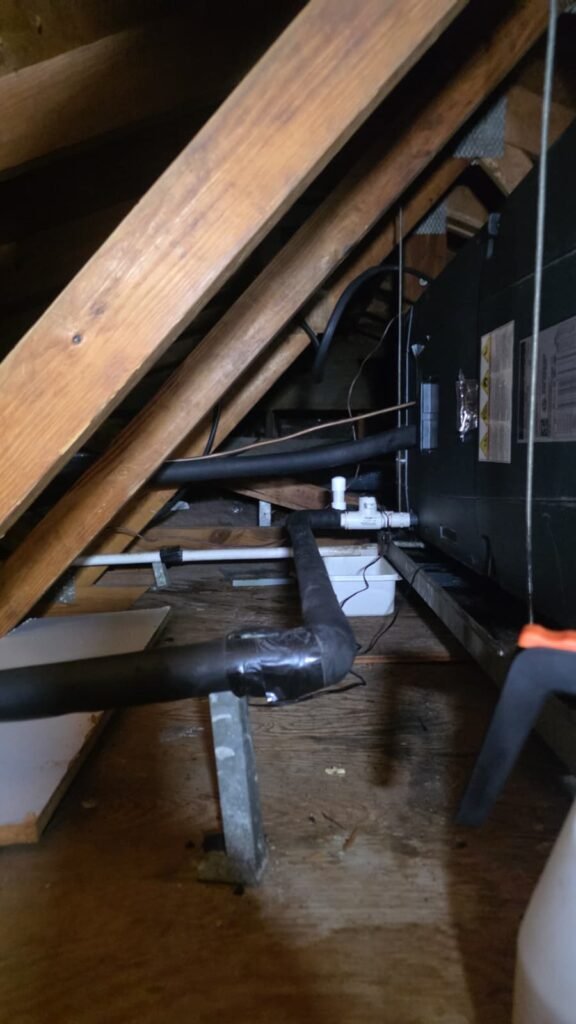
Attic view showing HVAC ductwork in St. Petersburg, FL 33703.
HVAC Ductwork in Attic, St. Petersburg, FL 33703
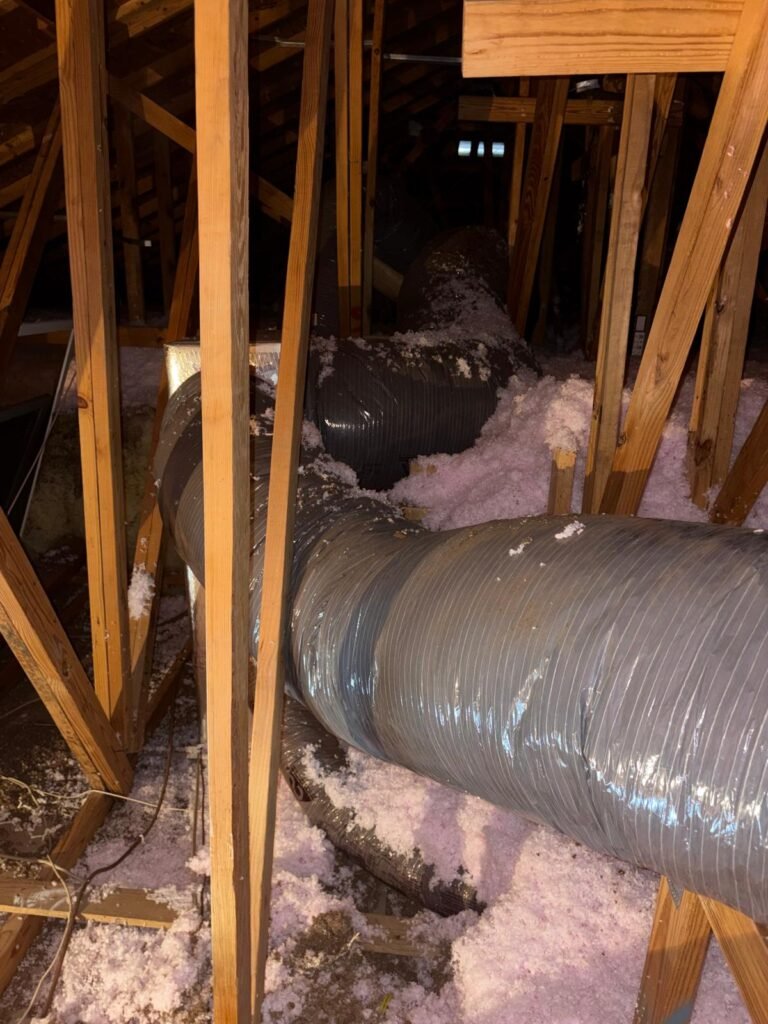
Attic view of ductwork installation with insulation in Odessa, FL 33556.
Attic Ductwork – Odessa, FL 33556

FAQ

Why just one room?

Typically duct leak for that branch, or insulation gap. Ducts run to each room separately.

Infrared camera?

Pro HVAC diagnostic tool shows insulation gaps + duct leaks invisibly. We use during eval.

Zoning fix?

Zone system ($2,599) gives each zone its own thermostat. Overkill for one cold spot usually.

Why is my bonus room always 10 degrees different from the rest of the house?

Three reasons combine. The garage ceiling below is almost never insulated, the single long duct run from the air handler loses capacity to friction and attic heat before reaching the room, and there is rarely a return grille. A mini-split sidesteps all three problems.

Can a mini-split fix a single cold room?

Yes, and it is our go-to recommendation for Tampa bonus rooms, converted garages, and additions. A single-zone ductless system gives you dedicated cooling and heating with no dependence on your existing ducts.

Why do west-facing rooms get hot in Tampa?

From roughly 2 PM to 7 PM, May through September, the sun hits west-facing walls at a low angle directly through windows and into block walls. Your room is still absorbing that heat hours after sunset. Solar film or exterior shades cut 40 to 60 percent of that load.

Is closing unused vents a bad idea?

Yes. It raises static pressure across the system, strains the blower motor, increases duct leakage, and does not actually redirect meaningful airflow. Zoning is the proper solution.

How much does zoning cost?

A retrofit zoning system for a typical Tampa home runs $2,500 to $4,500 installed, depending on zone count and duct accessibility.

What is a return-starved room?

A room that has a supply vent pushing air in but no return grille letting air out. When the door closes, the room pressurizes, air stops flowing, and the AC short-cycles.

Can I add a return grille myself?

Possible if you are comfortable cutting drywall and connecting flex duct in the attic. DIY cost is $50 to $100 in materials. Our install runs $299 to $499.

How do I know if a duct is leaking to my cold room?

Climb into the attic and feel the duct serving that room. A leaking duct usually has damp or compressed insulation near the leak, and you will feel cold air escaping if the AC is running.

Call Home Therapist at (813) 343-2212 for a FREE estimate and FREE diagnosis. Florida HVAC license CAC1819196.

How does Tampa’s attic heat affect cold spots in winter?

Tampa attics reach 130 to 150 degrees in summer, which thermally cycles flex duct liners and foil jackets repeatedly over years. By winter, the same attic drops to 40 to 50 degrees on cold nights. Flex duct connections that loosened from summer heat expansion have now contracted in the cold, and any separation gap becomes a direct path for conditioned heated air to escape into the cold attic before reaching the room. A duct that is 25 percent separated loses a quarter of its heat output into the attic on every cycle. Tampa’s extreme attic temperature swings accelerate duct deterioration faster than in most other climates. Call (813) 343-2212 for a FREE duct inspection. Licensed CAC1819196.

Is sealing my ducts really worth the cost in a mild Tampa climate?

Yes, probably more so than in a cold climate. Because Tampa’s cooling season is 9 to 10 months long and cooling dominates every utility bill, duct leakage that dumps 25 to 40 percent of conditioned air into the attic wastes far more money per year than in a northern climate with a 3-month cooling season. Tampa homeowners who seal duct systems to below 8 percent leakage typically recover the sealing cost in 2 to 4 years through utility savings alone, before accounting for comfort improvement. Call (813) 343-2212 for a duct leakage test quote.

My bonus room is above the garage. Why is it so much harder to heat than the rest of the house?

Bonus rooms over garages are thermally isolated from the main house envelope. The floor of the bonus room sits above an unconditioned garage that may drop to 45 to 55 degrees on a cold Tampa night. Unless the floor assembly is insulated, the room loses heat through the floor directly into the garage. Combined with typically longer duct runs and often a single small supply register, bonus rooms over garages are structurally the hardest rooms in a Tampa home to heat. Solutions include floor insulation, an upsized supply duct, or a dedicated mini-split for that space. Call (813) 343-2212 for a room-specific assessment. Licensed CAC1819196.

Can a dirty air filter cause cold spots in a specific room?

Yes, and it is one of the most common overlooked causes. A clogged filter raises the static pressure across the entire duct system. Rooms at the end of long duct runs, which already receive lower pressure from duct friction and heat loss through attic insulation, are the first to lose meaningful airflow when filter restriction climbs. Replacing a badly clogged filter sometimes resolves a mild cold spot immediately. If the room stays cold after a fresh filter, the issue is structural — duct separation, undersized supply, or a return air problem. Call (813) 343-2212.

My new home in Wesley Chapel has a cold bedroom even with a brand-new HVAC system. Is that normal?

Unfortunately, yes in some cases. New construction duct work in Hillsborough and Pasco County often uses Manual S and D sizing, but field installation quality varies. A bedroom at the end of a long second-floor duct run can be undersupplied from day one if the installer used a smaller-than-calculated flex duct or made sharp bends that reduce effective diameter. If the room has been cold since move-in, ask your builder to perform a duct leakage test and room-by-room airflow measurement. Home Therapist performs these tests independently if your builder relationship is complicated. Call (813) 343-2212. Licensed CAC1819196.

How long does a duct repair take, and will the house be comfortable the same day?

Most single-room duct repairs — sealing a separated connection, adding a duct brace, or replacing a kinked flex section — take 1 to 3 hours including attic access time. In many cases the difference in that room’s airflow is noticeable within the same heating or cooling cycle after the repair. More involved work like adding a return grille or extending a supply run takes 3 to 6 hours and may require permit coordination. Call (813) 343-2212 to schedule a duct inspection. Licensed CAC1819196.

Need Tampa Service Today?

Same-day Tampa Bay. FREE diagnosis. (813) 343-2212.

★★★★ 4.8 (1,351 verified reviews)
Verified4.8★ · 1,351 reviews
🛡 FL Licensed: CAC1819196 · CFC1431159💼 $1M General Liability + Workers’ Comp🏠 Family-owned since 2017⚡ Same-day service
★★★★★Plumbing

Fast within hr of call. And fast service on fix also explained all he was going to do and did. Showed me the outside water meter was,shut off and how it works…

L.D. DeLaRosa · · Google
★★★★★

Easy to setup. Fare price. Knows the job.

M Samaian · · Google
★★★★★

They made the entire process quick and easy from start to finish. Someone was able to come out the same day, and their communication was excellent throughout the whole process. I never…

Ana Rodriguez · · Google
★★★★★Plumbing

I had a great experience with Alejandro from Home Therapist Cooling, Heating, and Plumbing. He repaired two toilets and installed the water line to my new refrigerator after the delivery team refused…

Thomas Jones · · Google
★★★★★AC repair

Amazing service from start to finish. My AC system completely stopped working, and they were able to come out the same day, which was a huge relief. The technician was professional, knowledgeable,…

Manny Velasquez · · Google
★★★★★Water heater

As an engineer/fabricator/assembler, I have high standards from my contractors. This guy Sam, he fulfilled all my requests and installation needs. He took pride of his work, and left me with a…

ALEXANDROS ORESTIS · · Google
★★★★★Plumbing

A big THANK YOU to Home Therapist Cooling, Heating and Plumbing for running sewer pipes to our RV and shed! Samuel was beyond amazing! He was prompt, professional, and his communication style…

Mindy Walker · · Google
Latest review: June 2026 · auto-refreshed daily
Call (813) 343-2212 Read all 880 on Google
Reviewed by Richard MoralesCo-Owner & FL Class B Air Conditioning Contractor, Home Therapist

Richard co-owns Home Therapist Cooling, Heating, and Plumbing and holds the FL Class B Air Conditioning Contractor license (CAC1819196) since 2017. The company holds licenses CAC1819196 (FL Class B AC Contractor, Richard Morales) and CFC1431159 (FL Plumbing Contractor, Alex Morales), serving the Tampa Bay metro with a six-technician field team and 1,378+ verified five-star reviews.

Published: Last reviewed: