

What This iWave Adds to Air Quality Equipment in Tampa
Air quality equipment can improve indoor air when it is installed in the HVAC system and matched to the home’s airflow path. In this Tampa, FL 33615 job, the solution was an iWave air purifier installed in the duct system so treated air could move through the home during normal heating and cooling operation.
At this Bay Crest Dr home in Tampa, FL 33615, Aridel handled an indoor air quality upgrade after the homeowner approved adding an iWave air purifier to the existing system. This was not a repair call for a failed part. It was a targeted air quality equipment installation meant to add active in-duct treatment without creating a maintenance-heavy add-on. The detail that mattered most on this visit was the purifier’s placement inside the HVAC system, along with the wiring needed to integrate it cleanly so it could operate as part of the home’s normal air circulation.
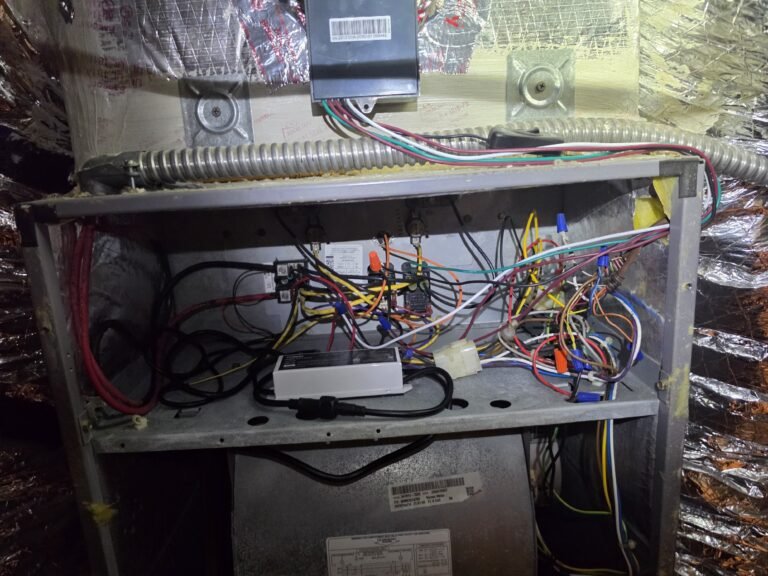
- Service performed: iWave air purifier installation
- Neighborhood or street: Bay Crest Dr
- Technician: Aridel
- What was done: Installed in-duct air quality equipment and completed wiring integration
- Parts installed: Nu-Calgon iWave-R air purifier
- Warranty noted: Three-year warranty
This air quality equipment installation focused on active treatment inside the duct system
The key decision on this job was to improve air treatment where the home already moves the most air, inside the HVAC system rather than with a portable room device. That matters because in-duct equipment works with the system’s normal circulation path. As air passes through the equipment, treatment happens upstream of the living space instead of only in one room. For many Tampa households, that is the practical advantage. The air handler and duct system already reach the bedrooms, common areas, and return path, so the upgrade becomes part of day to day operation rather than a separate appliance to move, clean, or remember to run.
This is also where homeowners often misjudge indoor air upgrades. The headline feature gets attention, but the real value is usually in how the accessory fits the system. A purifier that installs cleanly in the ductwork and does not rely on frequent replacement media can be a better fit than a more complicated add-on that gets neglected after a few months. Homeowners comparing options can see how our indoor air quality service in Tampa approaches those decisions around the actual HVAC layout.
The iWave setup on Bay Crest Dr was chosen for low-maintenance operation
The specific product on this visit was a Nu-Calgon iWave-R air purifier. The job description for this equipment highlights a self-cleaning design, needle point bipolar ionization, no replacement parts, and a programmable cleaning cycle. In plain language, that means the homeowner is not signing up for a routine filter cartridge swap or another consumable that has to be tracked and reordered. That low-maintenance profile is a big reason this type of air quality equipment makes sense for some homes in Tampa, especially when the goal is to add treatment without creating another recurring chore.
Another useful point from this job is that accessories often matter more than homeowners expect. People naturally ask whether an air quality upgrade “works,” but the better first question is whether the equipment fits the system and the household’s habits. If the best device on paper is too fussy to maintain, it tends to underperform in real life. If the installed option operates automatically with the HVAC cycle, it stands a better chance of delivering consistent benefit. For readers dealing with odor or airflow concerns, our page on ductwork and air quality explains why the distribution side of the system matters just as much as the accessory itself.
The invoice for this single service, including the air purifier and installation work, came to $1,299.
Wiring and placement were the real make-or-break details on this Tampa job
On add-on IAQ work like this, the visible product is only part of the story. The installation quality comes down to where the unit is mounted inside the system and how the wiring is handled inside the equipment panel. The job photos from this visit showed both the installed purifier within the HVAC system and the wiring detail inside the panel, which lines up with what matters most in the field. A clean install protects serviceability later. It also helps avoid loose routing, awkward access, or an accessory that makes future maintenance harder than it needs to be.
That is an insider point many homeowners never hear. The accessory itself gets marketed heavily, but the install details decide whether the upgrade feels like part of the system or like something added as an afterthought. On Bay Crest Dr, the work was about integrating the purifier into the existing setup so the system could keep doing its normal job while adding air treatment. For related comfort complaints, especially persistent odors, our guide on mold smell from vents helps explain when the issue is really in the air path rather than the thermostat or temperature setting.
Why this kind of indoor air upgrade makes sense in Tampa’s long cooling season
Tampa homes run cooling equipment for a large part of the year, which means the duct system moves a lot of air for a lot of months. That long runtime is one reason in-duct air quality equipment can be a sensible upgrade here. The more consistently the HVAC system circulates air, the more consistently the purifier has an opportunity to treat it. In a climate with humidity, odors, and long AC cycles, homeowners are often looking for air quality help that works quietly in the background rather than as a separate appliance in the middle of the room.
This is also why indoor air quality should never be separated from the rest of the HVAC conversation. If a home has airflow restrictions, duct leakage, or moisture issues, those conditions still need attention. Air treatment equipment is one layer, not the whole answer. The U.S. Department of Energy has good homeowner guidance on how central air systems move and condition air, and that bigger system view is the right way to think about upgrades like this. When humidity is part of the complaint, our article on high humidity despite ac shows why air quality and moisture control often overlap in Tampa Bay homes.
Pro Tips for Tampa Homeowners Considering Air Quality Equipment
Choose air quality equipment that matches how your home actually runs. If your AC operates most days for much of the year, an in-duct option can make more sense than a portable device that only treats one room.
Ask what maintenance the accessory will require after installation. On this Bay Crest Dr job, the no-replacement-parts design was part of the appeal because simpler upkeep usually means the upgrade gets used as intended.
Think beyond the product label and ask about placement. A well-located accessory inside the HVAC system is easier to service and more likely to treat air consistently as it circulates.
If your concern includes odors or mustiness, do not assume an air purifier is the only fix. Tampa homes can also have duct, drainage, or humidity issues that need to be addressed alongside the accessory.
Keep records of the installed model and warranty details. This job included a three-year warranty, and having that information handy makes future service visits faster.
Air Quality Equipment Questions Raised by This Tampa Installation
What devices improve air quality in a central HVAC system?
In-duct accessories such as air purifiers, filtration upgrades, and humidity-related solutions can improve air quality in a central HVAC system. On this Tampa job, the device was an iWave air purifier installed inside the system so treatment could happen as air moved through the ductwork. The right choice depends on the home’s layout, the HVAC setup, and whether the concern is particles, odors, moisture, or overall air freshness.
Do air quality machines actually work?
Air quality machines can help when they are properly selected and properly installed. This Bay Crest Dr project is a good example because the value was not just the product itself, but the fact that it was integrated into the home’s HVAC airflow path. Equipment that operates automatically with the system often delivers more consistent real-world use than a standalone device that has to be moved, monitored, or turned on manually.
What is used to measure air quality?
Air quality is measured with monitoring devices that track specific conditions such as particles, humidity, or other indoor air indicators. That was not the purpose of this job. This visit was for air quality equipment installation, not testing equipment installation. Homeowners sometimes mix those categories together, but they are different. One type of equipment measures conditions, while another type, like the in-duct purifier installed here, is meant to actively treat the air moving through the system.
Is an in-duct air purifier high maintenance?
Some in-duct air purifiers are relatively low maintenance, depending on the design. The unit installed on this Tampa visit was described as having no replacement parts and a self-cleaning design, which is important for homeowners who want an air quality upgrade without adding another frequent service item. Low-maintenance does not mean no professional oversight at all, but it does mean fewer homeowner tasks compared with products that rely on regular media replacement.
What should homeowners ask before installing air quality equipment?
Homeowners should ask where the equipment will be installed, how it will be powered, what maintenance it needs, and what problem it is meant to address. Those questions get to the heart of whether the accessory truly fits the HVAC system. On this job, placement in the duct system and clean wiring integration were just as important as the purifier model itself, because those details shape long-term usability and service access.
Schedule Air Quality Equipment Service in Tampa, FL 33615
If you are comparing air quality equipment in Tampa, FL 33615, Home Therapist can help you sort out what fits your system and what only sounds good on a product sheet. We have served Tampa Bay since 2017, and our team brings licensed HVAC and plumbing expertise to every visit. Our HVAC license is CAC1819196, our plumbing license is CFC1431159, and our company has earned 1,300+ five-star reviews from local homeowners who wanted clear answers and solid workmanship.
For indoor air upgrades, we focus on how the accessory integrates with the system you already have, because that is what drives long-term value. Whether you are dealing with odors, stale air, humidity concerns, or simply want to improve day to day indoor comfort, we can walk you through practical options without pressure. We offer FREE estimates and FREE diagnosis on every service call. If you live in Tampa or nearby and want help with air quality equipment Tampa homeowners can actually use, call Home Therapist at (813) 343-2212 to schedule service.


