★★★★★ 4.8 · 1,300+ reviews
Lic. CAC1819196 · CFC1431159
✓ FREE Estimates   |   ✓ FREE Diagnosis
No diagnostic fee. No trip charge. You only pay if you approve the repair. Call (813) 343-2212

EMERGENCY

AC Dripping from Ceiling?

Water stain or drip from ceiling below your attic air handler? Turn off AC now, drywall damage grows fast in Tampa humidity. FREE diagnosis, transparent pricing on approved repair. CAC1819196.

Quick Answer

Ceiling drip under attic air handler in Tampa = (1) clogged condensate drain (80% of cases, $279 flush), (2) cracked/rusted drain pan ($699-$799 replace), or (3) no float switch = overflow ($279 install prevents future). TURN OFF AC first, place bucket, call. FREE diagnosis. (813) 343-2212 24/7.

3 Causes of Ceiling Drip

Clogged Condensate Drain (80%)

Call a tech

Symptom: PVC drain line clogged with algae, water backs up in pan, overflows.

Drain line flush $279. Monthly vinegar flush prevents recurrence.

Cracked/Rusted Drain Pan

Call a tech

Symptom: Drain line clear but pan leaks. Older systems (10+ years).

Vertical pan $699. Horizontal pan $799. Secondary pan $399 catches overflow.

No Float Switch / Failed Float

Call a tech

Symptom: Overflow safety didn’t shut off AC when pan filled.

Float switch install $279, prevents future ceiling damage.

What Causes AC Water to Drip Through the Ceiling in Tampa Homes

Water stains spreading across a ceiling or an active drip from above an attic air handler is a genuine emergency in Tampa Bay. The damage happens fast: drywall softens, insulation compresses, and mold can start growing within 24 to 48 hours in Florida’s humidity. Here are the four causes we find on these calls, ranked by frequency.

  1. Clogged condensate drain line. This is the cause on the overwhelming majority of ceiling-drip calls in Tampa Bay. Your air handler pulls humidity out of the air and the resulting condensate water drains through a PVC line, typically out through the garage wall or to a floor drain. That drain line passes through the humid attic environment and algae grows inside it year-round in Florida’s climate. Once the line plugs, the drain pan inside the air handler fills up and overflows. In attic-mounted systems, that water has nowhere to go but down through the ceiling below.
  2. Overflowed or damaged secondary drain pan. Code-compliant attic air handler installations include a secondary drain pan under the entire unit, a second line of defense if the primary drain clogs. That secondary pan also has a drain line, usually exiting at the eave or through a different exterior wall than the primary. If the secondary pan itself rusts through (common on units older than 10 years in Tampa’s humidity), or if its drain line also plugs, water overflows directly onto the attic floor and then through the ceiling below.

First Signs Water Is About to Damage Your Ceiling

  • Small water stain or yellowing on drywall directly below the air handler location
  • Musty or mold smell from supply vents, especially from rooms adjacent to the air handler
  • System shuts off unexpectedly (float switch tripped) and will not restart without a reset
  • AC runs normally but you hear dripping sounds inside the return air chase or wall cavity
  • Ceiling drywall feels soft or spongy when pressed near the air handler platform
  • Active dripping or water flow at a ceiling light fixture or seam below the attic air handler
  • Drain line access cap is wet or has visible algae growth on its outside surface
Sound familiar? Get a FREE Tampa Bay diagnosis today. Call (813) 343-2212 Book Online

Tampa Ceiling Drip Repair Cost Guide

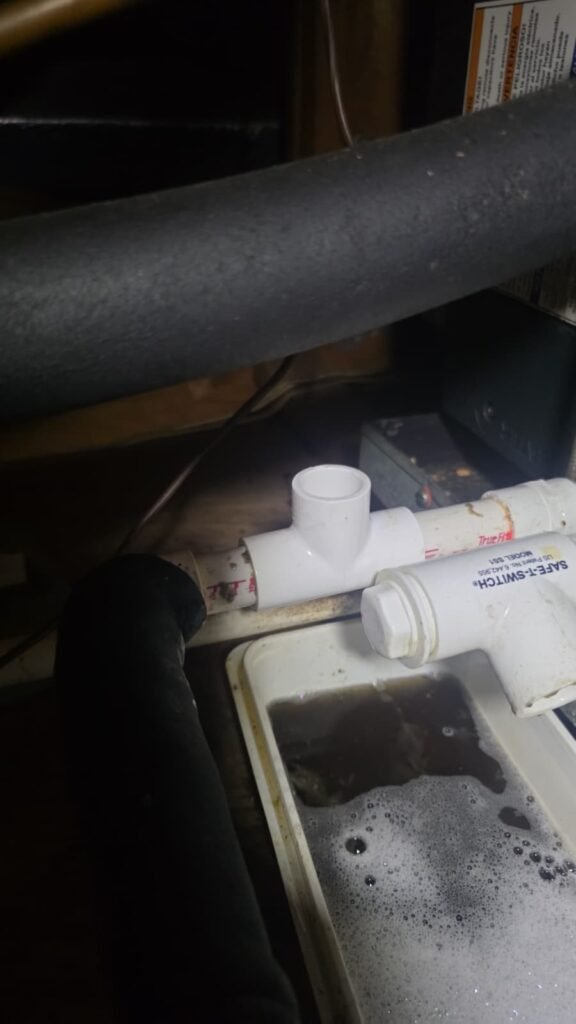
PVC drain line repair with water tray, St. Petersburg, FL 33703.
PVC Drain Line Repair St. Petersburg, FL 33703
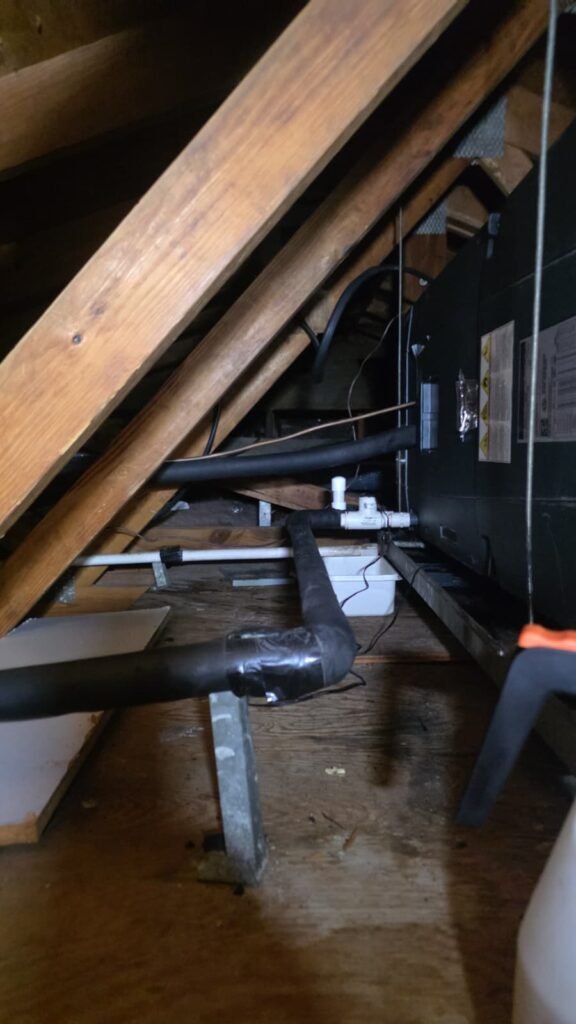
Attic view of HVAC ductwork and PVC piping in St. Petersburg, FL 33703.
Attic HVAC View in St. Petersburg, FL 33703
Repair TypeTampa LowTampa HighWhat’s Included
Condensate drain flush and clean$279$349Wet-vac pull, nitrogen blow, pan flush, algaecide tablet drop, flow test
Float switch installation$279$349Inline or pan-mount switch, wiring to air handler, trip-test verified before leaving
Secondary drain pan replacement$399$499Galvanized or plastic secondary pan under air handler, drain line run to exterior
Vertical primary drain pan replacement$699$899Integrated drain pan on vertical air handler, includes drain line reconnect, leak test
Horizontal primary drain pan replacement$799$999Horizontal cased coil drain pan, includes refrigerant handling, new line set connections
PVC drain line replacement$299$699Full drain line from air handler to exterior, proper slope to code, cleanout access cap
Drywall repair (handyman estimate)$300$800Cut and patch damaged drywall, texture match, primer coat, paint not always included

Ready to get this fixed? FREE diagnosis. No trip charge.

You only pay if you approve the repair. Same-day service across Tampa Bay.

Call (813) 343-2212 Book Online

Licensed CAC1819196 (HVAC)  |  CFC1431159 (Plumbing)  |  1,300+ Five-Star Reviews

The 48-Hour Drywall Rule for Tampa Homes

In Tampa’s climate, wet drywall that remains saturated for more than 48 hours becomes a mold risk. The combination of 74 percent average relative humidity, temperatures that rarely drop below 70 degrees at night, and the dark enclosed space of an attic ceiling cavity creates near-ideal conditions for mold spore germination. The rule is simple: if water has been dripping from the ceiling for longer than 48 hours before you discovered it, treat the ceiling cavity as a potential mold situation, not just a wet drywall situation. That means opening the affected section rather than drying it from the surface, inspecting the insulation above, and replacing any drywall that shows staining deeper than the surface layer. Painted drywall that looks dry on the surface can remain wet behind the paint film for days. Insurance adjusters in Tampa use moisture meters, not visual inspection, for this reason. Document the drip location and the date you discovered it for your insurance records. Most homeowners policies cover sudden water damage; long-term leakage coverage depends on the specific policy language.

Florida Code Corner: Condensate Drain Requirements

Florida Building Code Section 1411.3 (FBC Mechanical) requires that HVAC installations in attic spaces include a secondary condensate drain or overflow protection. This means either a secondary drain pan with its own independent drain line run to a visible exterior location (so you can see when the primary drain fails), or a float switch wired to shut down the air handler when water accumulates in the primary pan. Most Hillsborough County inspectors require both for attic-mounted horizontal systems. If your air handler is in the attic and was installed before 2007, it may predate the requirement and have neither a secondary pan drain to the exterior nor a float switch. Adding these to an existing installation does not require a new permit in Hillsborough County, but all work must be performed by a licensed CAC contractor. At home sale, inspectors flag the absence of secondary drain protection as a deficiency, and some buyers’ lenders require it corrected before closing.

Ceiling Drip Prevention Maintenance for Tampa Homes

  • Every month (year-round): Pour one cup of distilled white vinegar into the condensate drain line access cap. Tampa’s heat and humidity grow algae in PVC drain lines faster than any other Florida climate zone. Vinegar prevents buildup without damaging the PVC or the float switch.
  • Every spring (April before peak season): Have the drain line professionally flushed with a wet-vac and nitrogen blow. A line that flows in April can be fully blocked by July. One flush in spring prevents ceiling damage all summer.
  • Every year: Inspect the primary drain pan for rust blisters. Tampa’s high humidity causes galvanized steel pans to rust from the inside out. A pan that looks fine from below can have pinhole rust through on the bottom. Replace any pan showing rust through.
  • Every 3 to 5 years: Test the float switch by pouring water directly into the primary pan. The system should shut down within 30 seconds. If it does not, the switch is failed or wired incorrectly. A float switch that does not trip is not protecting your ceiling.
  • After any ceiling water event: Check attic insulation above the drip location. Wet insulation holds moisture for weeks and can sustain mold growth even after the drain is fixed and the drywall appears dry. Replace saturated insulation rather than letting it dry in place.

What to Do Right Now

  1. Turn off AC at thermostat + breaker.
  2. Place bucket under drip.
  3. Photograph damage for insurance.
  4. Call (813) 343-2212, same-day Tampa emergency dispatch.
  5. Consider float switch install to prevent next occurrence.

FREE diagnosis. Drain flush: $279. Pan replace: $699-$799. Float switch install: $279. Drywall repair: separate contractor (handyman ~$300-$800 for spot patch).

Get a FREE Diagnosis From a Licensed Tampa Bay Tech

No diagnostic fee. No trip charge. We tell you exactly what is wrong and what it costs before you approve anything.

Call (813) 343-2212   Book Online

Available 7 days a week  |  Same-day service  |  Licensed & insured

FAQ

Will homeowners insurance cover?

Often yes for sudden water damage. Usually NOT covered: the AC repair itself or mold from prolonged leak. Document with photos.

How fast does drywall damage in Tampa?

Noticeable in hours. Ceiling stain by day 1. Mold starts at 48 hrs in Tampa humidity. Fix immediately.

Can I just clear the drain myself?

Shop-vac at the outside PVC drain end pulls most clogs. $10 DIY try. If fails, call.

Why Tampa drains clog so fast?

Humidity pulls 3-5 gal water/day through the drain. Algae grows in it. Monthly vinegar flush = prevention.

Float switch worth $279?

Absolutely. One prevented ceiling repair saves $500-$3,000. Most insurers discount for having one.

Will homeowners insurance cover?

Most standard homeowners policies (HO-3) cover sudden and accidental water damage from HVAC condensate overflow. If the float switch failed and the drain pan overflowed suddenly, that typically qualifies. If the drain was slowly leaking for months before the ceiling showed damage, many insurers deny the claim as maintenance neglect. Document the date you first noticed the drip, the date the system was last serviced, and whether a float switch was present and functional. A properly functioning float switch that still allowed overflow may support a covered claim. Call (813) 343-2212 for a same-day drain call and documentation of findings for your insurer.

How fast does drywall damage in Tampa?

Faster than almost anywhere else in the country. Tampa’s humidity is 74 percent on average, and attic ceiling cavities see even higher humidity. Wet drywall begins losing structural integrity within 24 hours. Mold spores can germinate on saturated drywall within 24 to 48 hours when ambient temperature is above 70 degrees Fahrenheit, which in Tampa is year-round. A drip that has been running for three days before discovery may have progressed from a cosmetic stain to structural drywall replacement and mold remediation territory. Do not delay diagnosis or drying once water is discovered.

Can I just clear the drain myself?

You can attempt a DIY drain clear by pouring a mix of equal parts white vinegar and warm water into the condensate drain access cap (the PVC tee fitting with a removable cap, usually near the air handler). Let it sit for 30 minutes, then flush with water. This works for minor algae buildup in the first foot or two of the drain line. It does not work for full blockages deep in the run, cracked drain pans, or failed float switches. If the ceiling is actively dripping or you can see standing water in the drain pan, call a tech. The underlying pan or float switch may need replacement, not just a flush.

Why Tampa drains clog so fast?

Tampa’s drain lines stay warm year-round because the AC runs almost continuously from March through November. The drain line carries condensate water through a PVC pipe at ambient attic temperature of 100 to 140 degrees in summer. Algae and biofilm thrive in warm, dark, moist environments, and Tampa provides all three conditions simultaneously for eight or nine months a year. Northern homes that run their AC for four months give algae a shorter growing window. Tampa drains need monthly vinegar treatment and annual professional flushing to stay clear.

Float switch worth $279?

Absolutely yes. A float switch at $279 installed protects against ceiling water damage that costs $300 to $800 in drywall repair alone, plus potential mold remediation costs of $1,000 to $5,000 if the moisture is not discovered quickly. In Tampa’s climate, drain lines clog at least once per system life cycle regardless of maintenance. The float switch is the insurance policy that turns a service call into a service call rather than a service call plus a contractor call. Call (813) 343-2212. Licensed CAC1819196.

Does Florida require a float switch on attic air handlers?

Yes. Florida Building Code Section 1411.3 requires overflow protection on HVAC installations in attic spaces, satisfied by either a secondary drain pan with an independent exterior drain line or a float switch wired to shut off the air handler. Hillsborough County inspectors typically require both on attic horizontal systems. Units installed before the 2007 FBC adoption may not have this protection. Adding a float switch to an existing system does not require a permit but must be performed by a licensed CAC contractor. Call (813) 343-2212. Licensed CAC1819196.

My air handler is in a closet on the first floor, not in the attic. Can it still drip through the ceiling?

First-floor closet air handlers drain through a condensate line that typically routes through the wall and out to the exterior or into a floor drain. If the drain line clogs on a first-floor unit, the primary pan overflows into the closet floor and adjacent walls rather than the ceiling above. However, if the home has a second air handler in the attic serving the second floor, that unit is the one that would drip through upstairs ceilings. The distinction matters because the fix is different. A first-floor unit overflow typically requires drain cleaning and possibly a float switch; an attic unit ceiling drip is more urgent due to drywall and mold risk. Licensed CAC1819196.

Why is there water around the outdoor unit as well as dripping from the ceiling inside?

Water near the outdoor condensing unit is typically normal condensation from the coil operating in Tampa’s humidity and does not indicate a problem. The ceiling drip inside is a separate issue from the indoor air handler’s condensate drain. These two water sources are unrelated; the outdoor unit does not drain to the attic or ceiling. If you are seeing both, address the indoor ceiling drip urgently and ignore the outdoor puddle unless it is excessive or the outdoor unit is in standing water, which can indicate a drainage site issue at the pad. Licensed CAC1819196.

How do I know if my secondary drain line is actually discharging outside?

Secondary drain lines in Hillsborough County installations are supposed to terminate at a visible exterior location, often at the eave or through a different exterior wall than the primary line. The intent is that you can see water dripping from the secondary exit when the primary drain has plugged, giving you a visual warning before damage occurs. To confirm your secondary line works, have a technician pour water directly into the secondary pan during the service call and verify it exits at the expected exterior point within 60 seconds. If you cannot locate a second drip edge on the exterior of your home, the secondary line may be missing or incorrectly terminated. Licensed CAC1819196.

AC Dripping? Call Now.

24/7 Tampa Bay same-day. FREE diagnosis. (813) 343-2212.

★★★★ 4.8 (1,351 verified reviews)
Verified4.8★ · 1,351 reviews
🛡 FL Licensed: CAC1819196 · CFC1431159💼 $1M General Liability + Workers’ Comp🏠 Family-owned since 2017⚡ Same-day service
★★★★★Plumbing

Fast within hr of call. And fast service on fix also explained all he was going to do and did. Showed me the outside water meter was,shut off and how it works…

L.D. DeLaRosa · · Google
★★★★★

Easy to setup. Fare price. Knows the job.

M Samaian · · Google
★★★★★

They made the entire process quick and easy from start to finish. Someone was able to come out the same day, and their communication was excellent throughout the whole process. I never…

Ana Rodriguez · · Google
★★★★★Plumbing

I had a great experience with Alejandro from Home Therapist Cooling, Heating, and Plumbing. He repaired two toilets and installed the water line to my new refrigerator after the delivery team refused…

Thomas Jones · · Google
★★★★★AC repair

Amazing service from start to finish. My AC system completely stopped working, and they were able to come out the same day, which was a huge relief. The technician was professional, knowledgeable,…

Manny Velasquez · · Google
★★★★★Water heater

As an engineer/fabricator/assembler, I have high standards from my contractors. This guy Sam, he fulfilled all my requests and installation needs. He took pride of his work, and left me with a…

ALEXANDROS ORESTIS · · Google
★★★★★Plumbing

A big THANK YOU to Home Therapist Cooling, Heating and Plumbing for running sewer pipes to our RV and shed! Samuel was beyond amazing! He was prompt, professional, and his communication style…

Mindy Walker · · Google
Latest review: June 2026 · auto-refreshed daily
Call (813) 343-2212 Read all 880 on Google
Reviewed by Richard MoralesCo-Owner & FL Class B Air Conditioning Contractor, Home Therapist

Richard co-owns Home Therapist Cooling, Heating, and Plumbing and holds the FL Class B Air Conditioning Contractor license (CAC1819196) since 2017. The company holds licenses CAC1819196 (FL Class B AC Contractor, Richard Morales) and CFC1431159 (FL Plumbing Contractor, Alex Morales), serving the Tampa Bay metro with a six-technician field team and 1,378+ verified five-star reviews.

Published: Last reviewed: