

What Causes Capacitor Failure on a Planned AC Visit in Belleair, FL 33756
What causes capacitor failure in Belleair, FL 33756? An AC capacitor usually fails from heat, long run times, and normal electrical wear, and on this maintenance visit the capacitor tested outside its normal operating range, so capacitor replacement resolved the risk before it turned into a no-cooling breakdown.
On this Flamingo Drive visit in Belleair, Jandiel was performing scheduled maintenance when he found the system capacitor reading out of range. That mattered because the capacitor is the small electrical component that helps the motors start and keep running. When it weakens, the system can still appear normal right up until the day it will not start. In this case, the homeowner approved the repair over text, and we replaced the old capacitor with a new one during the same visit so the system could keep operating reliably through the Florida cooling season. That is also the practical answer to what causes capacitor failure Belleair homeowners ask about most often: heat and time usually show up before a full shutdown does.
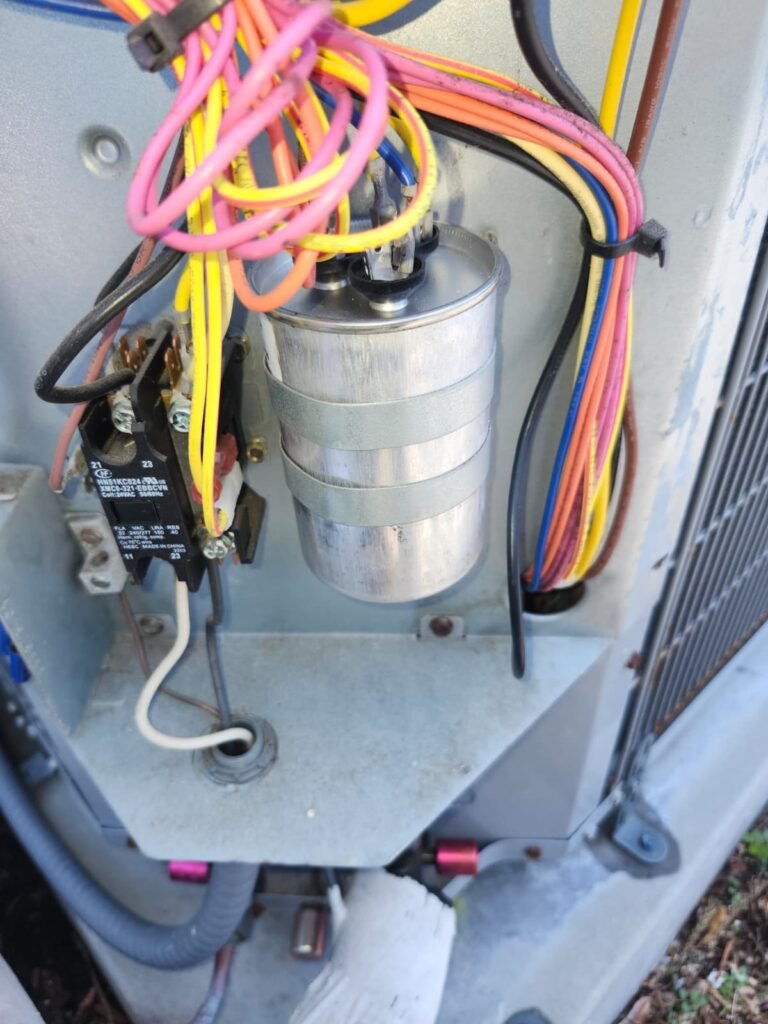
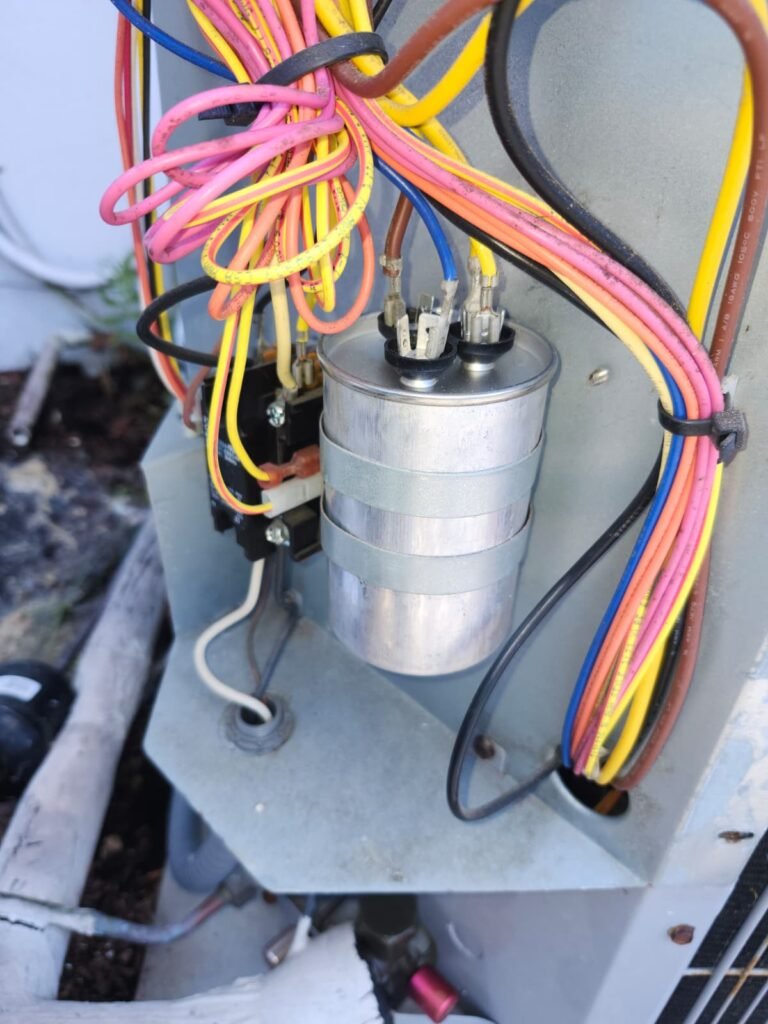
- Service performed: Capacitor replacement during a scheduled maintenance visit
- Neighborhood or street: Flamingo Drive
- Technician: Jandiel
- Cause: Capacitor tested outside its normal operating range
- What was done: Removed the weak capacitor and installed a new capacitor
- Parts replaced: Capacitor
What causes capacitor failure on an AC system in Belleair
Heat and runtime are the biggest reasons capacitor failure shows up in coastal Florida AC systems. A capacitor stores and releases a quick burst of energy to help the motors start and run. Over time, that repeated cycle wears the component down. In Belleair, long cooling seasons, high outdoor temperatures, and constant demand all add stress. That is why air conditioner capacitor failure symptoms often appear during routine service before the homeowner notices a complete no-cool event.
On this visit, the issue was not a mystery noise or a refrigerant problem. Jandiel tested the capacitor directly and found it outside the acceptable range. That finding told us the part was weakening even though the system had not failed yet. This is one of the more useful insider lessons from a maintenance call: many emergency breakdowns start as a measurable electrical problem that can be caught early during air conditioning service.
Why an out-of-range capacitor is worth replacing before it quits
An out-of-range capacitor is a real failure warning, not a cosmetic note. Once that reading drifts beyond normal, the motors are no longer getting the steady support they were designed to receive. That can lead to hard starts, inconsistent operation, or a system that suddenly will not come on when the thermostat calls for cooling. Those are classic AC capacitor failure symptoms, and they often show up at the worst time because the part can decline quietly before it stops working altogether.
This is where proactive repair makes sense. We could see the failure mode developing, and the job notes confirmed there were no diagnostic limitations during the visit. In plain terms, the system gave us a clear answer. Replace the capacitor now, or risk an unexpected no-cooling call later. For homeowners comparing options for AC repair in Belleair, this is the kind of decision that keeps a simple maintenance visit from becoming a weekend emergency.
The capacitor replacement on this visit came to $254.15, parts and labor included.
Why the old-versus-new capacitor comparison mattered on Flamingo Drive
The most useful detail on this Belleair job was how clearly the replacement solved a measurable problem. We removed the old capacitor and installed a new one in its place, which is the right call when the existing part is already testing outside range. Homeowners often ask how to tell if a capacitor is bad, and the answer is not always visual. Sometimes there is obvious swelling or leakage, but many times the real proof comes from testing, not from appearance alone.
That is also why capacitor failure symptoms can be confusing. A weak capacitor can overlap with other complaints like ac blowing hot air, delayed starts, or intermittent cooling. Replacing the part only makes sense when the diagnostic path supports it. On this job, it did. The homeowner had a membership maintenance visit scheduled, Jandiel found the problem during testing, and the approval came through by text so the repair could be handled without another trip.
What this planned maintenance visit prevented
This Flamingo Drive call is a good example of why planned service catches issues that homeowners cannot easily see. Capacitors do not usually announce themselves with a dramatic warning. They drift. They weaken. Then one hot afternoon the outdoor unit or blower motor struggles to start. That is why motor run capacitor failure symptoms so often feel sudden from the homeowner side even though the part has been degrading for a while.
The contrarian point here is simple: not every AC repair starts with a broken system. Some of the best repairs happen before the breakdown. This visit was originally scheduled under the homeowner’s maintenance plan, not as an emergency. Because the capacitor was tested during that visit, we were able to fix a real electrical weakness before it became a loss-of-cooling problem. Homeowners who want to understand what this work typically costs can compare that context against a same-day no-cool situation, where the stress is usually higher even when the part itself is straightforward.
Pro tips for Belleair homeowners trying to prevent capacitor failure
Capacitor failure is common in Tampa Bay cooling systems, but a few habits help catch it earlier.
First, do not wait for a total shutdown before scheduling service. A capacitor can test weak before obvious air conditioner capacitor failure symptoms show up.
Second, keep up with maintenance during the long Florida cooling season. Electrical parts live harder lives when the system runs month after month with little downtime.
Third, pay attention to small changes like delayed starts, inconsistent cooling, or a unit that seems to struggle on the hottest afternoons. Those can point to motor capacitor failure symptoms.
Fourth, ask for testing, not guesswork. A capacitor should be replaced because the readings support it, not because someone wants to swap parts blindly.
Fifth, if your system starts showing related issues like ac short cycling, mention that during the visit. It helps narrow down whether the problem is electrical, airflow-related, or something else entirely.
Questions this Belleair capacitor replacement brings up
How long does a capacitor usually last?
An AC capacitor usually lasts several years, but Florida heat and long runtime can shorten that lifespan. In Belleair, systems often run hard for much of the year, which puts more stress on electrical components than in milder climates. On this job, the capacitor had not failed completely yet, but it had already drifted outside its normal operating range, which is exactly why routine testing matters.
What are two typical signs that a capacitor is bad or failing?
Two common signs are hard starting and a system that stops running consistently. Homeowners may notice the AC hesitating when it tries to come on, or they may only realize something is wrong when cooling becomes intermittent. On this Flamingo Drive visit, the best sign was not a dramatic symptom but the test result itself, which showed the capacitor was already out of range.
What happens if a capacitor fails?
If a capacitor fails, the motor it supports may not start or run properly. In an air conditioner, that can mean a no-cooling call, a fan that will not come on, or a system that shuts down unexpectedly. This Belleair maintenance visit prevented that outcome because the weak capacitor was replaced before the failure reached the point where the system stopped operating.
How do you tell if a capacitor is bad?
You tell if a capacitor is bad by testing it, not by guessing. Some failed capacitors show visible damage, but many do not. On this job, Jandiel verified the problem by measuring the capacitor and confirming it was outside its normal operating range. That direct diagnostic step is more reliable than waiting for a visible sign or a complete breakdown.
How can homeowners help prevent capacitor failure?
Homeowners help prevent surprise capacitor failure by scheduling regular maintenance and acting on weak-part findings before the system quits. You cannot stop electrical components from aging, but you can catch them earlier. This visit started as planned maintenance, which gave us the chance to find the problem in a controlled setting instead of during an urgent no-cool call in peak heat.
Schedule AC repair in Belleair, FL 33756
If your system is showing AC capacitor failure symptoms, or if you simply want a technician to test the electrical components before summer demand peaks, Home Therapist can help. We have served Tampa Bay since 2017, and our team brings licensed HVAC and plumbing experience to every call. Our HVAC license is CAC1819196, our plumbing license is CFC1431159, and we are proud to have earned 1,300-plus five-star reviews from local homeowners who want clear answers and solid work.
For homeowners in Belleair and the 33756 area, we focus on practical diagnostics, honest recommendations, and repairs that match what the system is actually doing. If the issue is a weak capacitor, we explain why. If it is something else, we explain that too. Call Home Therapist at (813) 343-2212 to schedule service. We offer FREE estimates and FREE diagnosis, and we are here to help with planned maintenance, capacitor replacement, and AC repair throughout our service area.


