

Failing Fan Capacitor and High Head Pressure: AC Repair in Tampa, FL 33607
A failing condenser fan motor capacitor was the reason this Ivy Street air conditioner in Tampa, FL 33607 kept running without cooling the home. Barbaro arrived for a free diagnosis after the homeowner reported that air was still coming from the vents, but it was not cold. The service report showed a condenser fan that was not operating, high-side pressure climbing above 370 psi, and a compressor beginning to overheat because the outdoor coil had no airflow. This AC repair centered on restoring condenser airflow before the compressor stayed in that hot, high-pressure condition any longer.
For pricing and same-day availability, see our AC repair in Tampa page.
- Service performed: free diagnostic visit, capacitor replacement, and condenser unit tune-up
- Location detail: Ivy Street in Tampa, FL 33607
- Technician: Barbaro
- Key finding: failing condenser fan motor capacitor stopped the condenser fan from operating
- System detail: approximately 6-year-old unit with a garage vertical air handler and outdoor ground-level condenser
- Homeowner situation: the home was purchased in January, and the homeowner did not know when preventive maintenance had last been completed
AC Repair in Tampa, FL 33607 Started With the Fan That Was Not Moving Heat
AC repair in Tampa, FL 33607 came down to one simple but critical fact: the outdoor condenser fan was not moving air across the condenser coil. The indoor side still had airflow at the vents, which can make a cooling problem feel confusing. The system may sound like it is running, and air may still move through the home, but the outdoor unit still has to reject heat to the outside air.
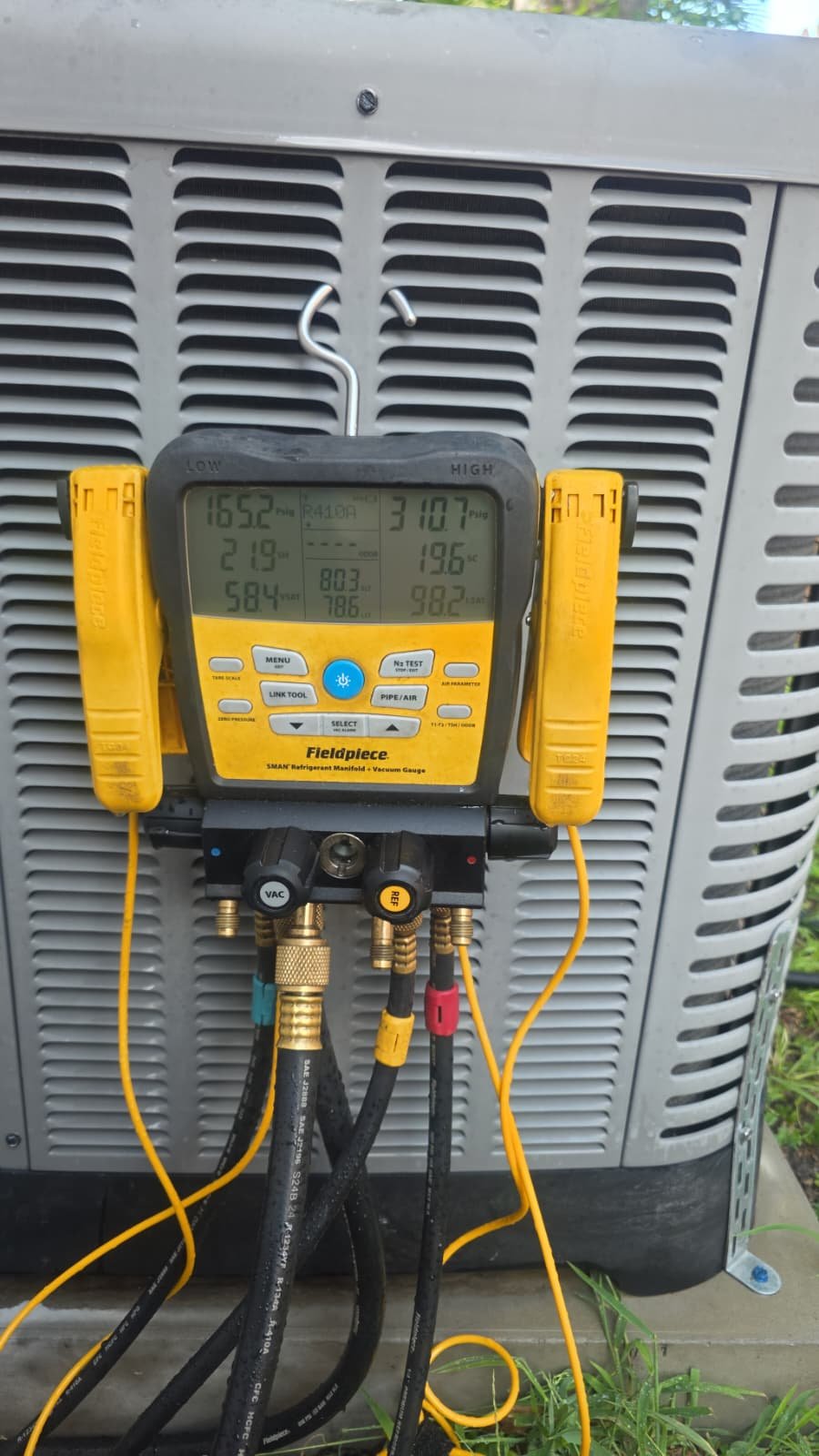
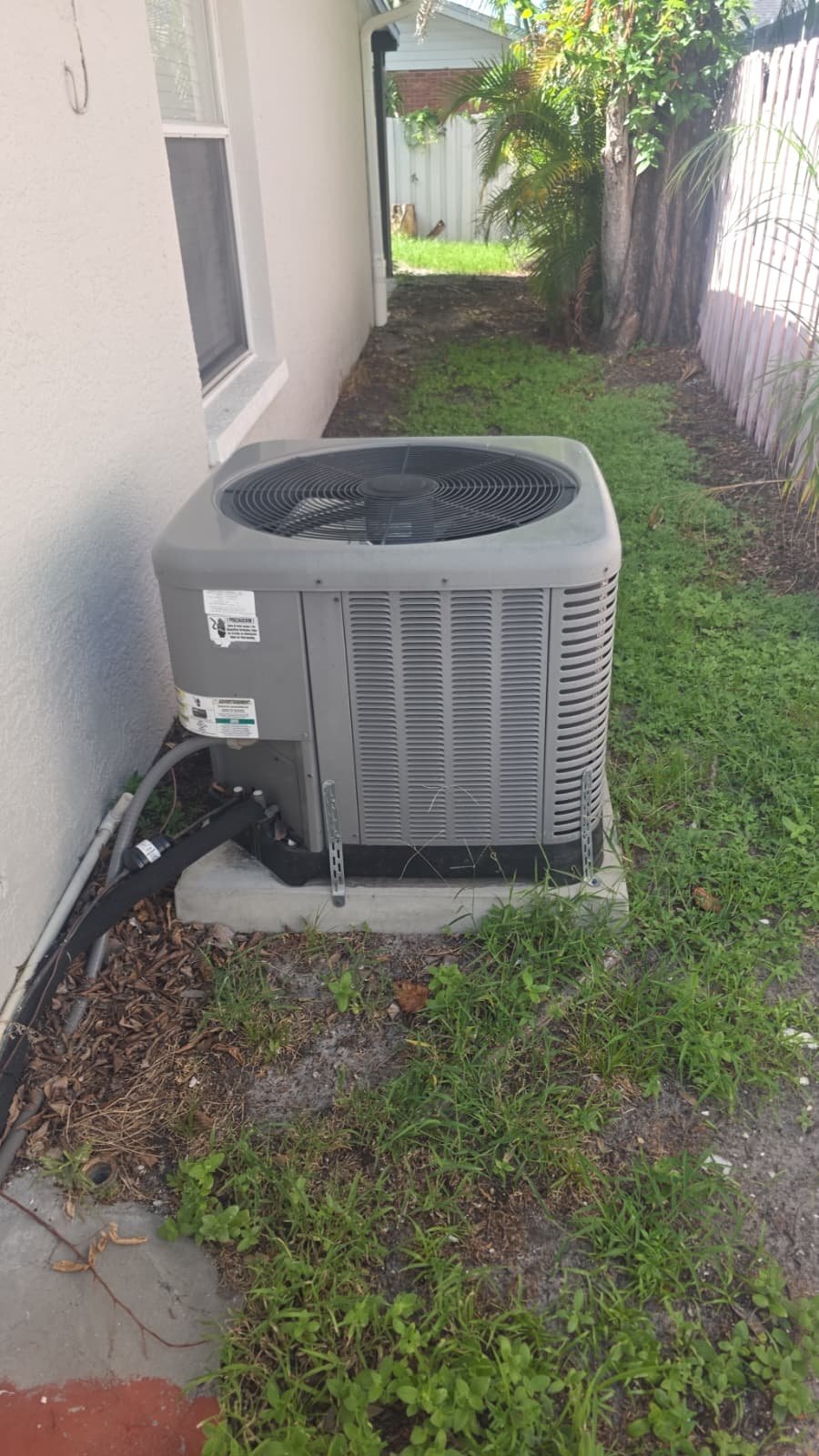
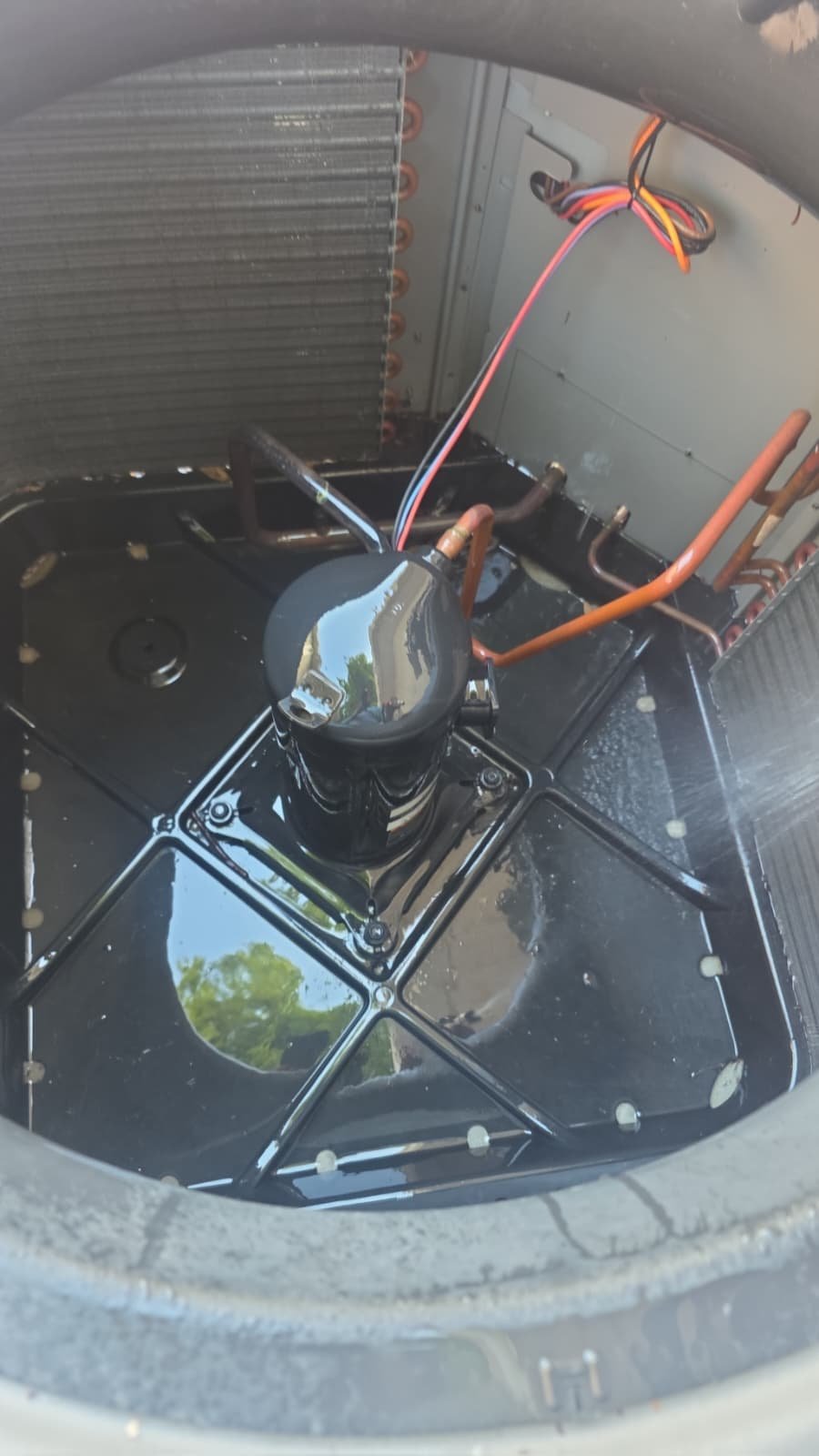
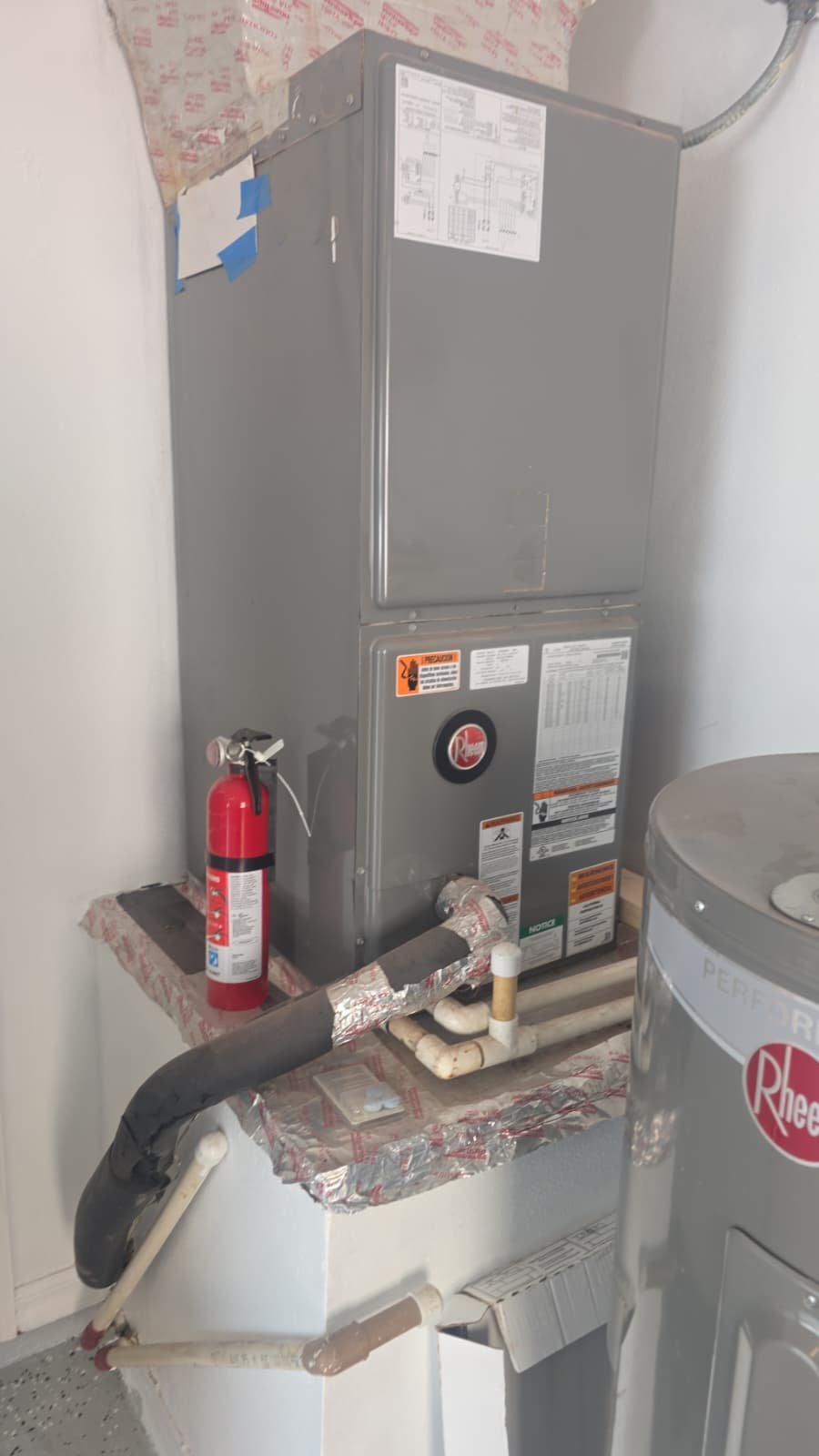
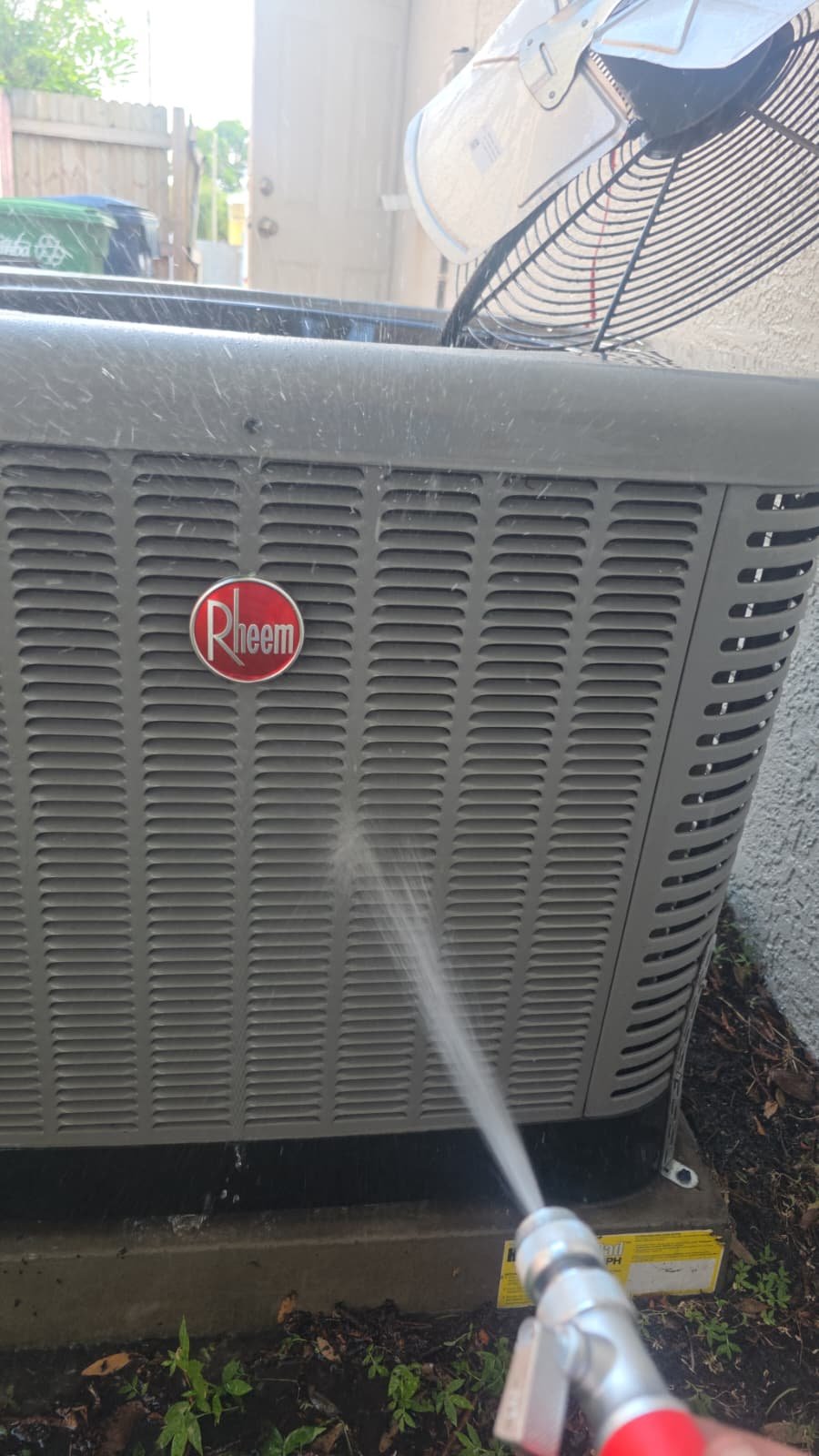
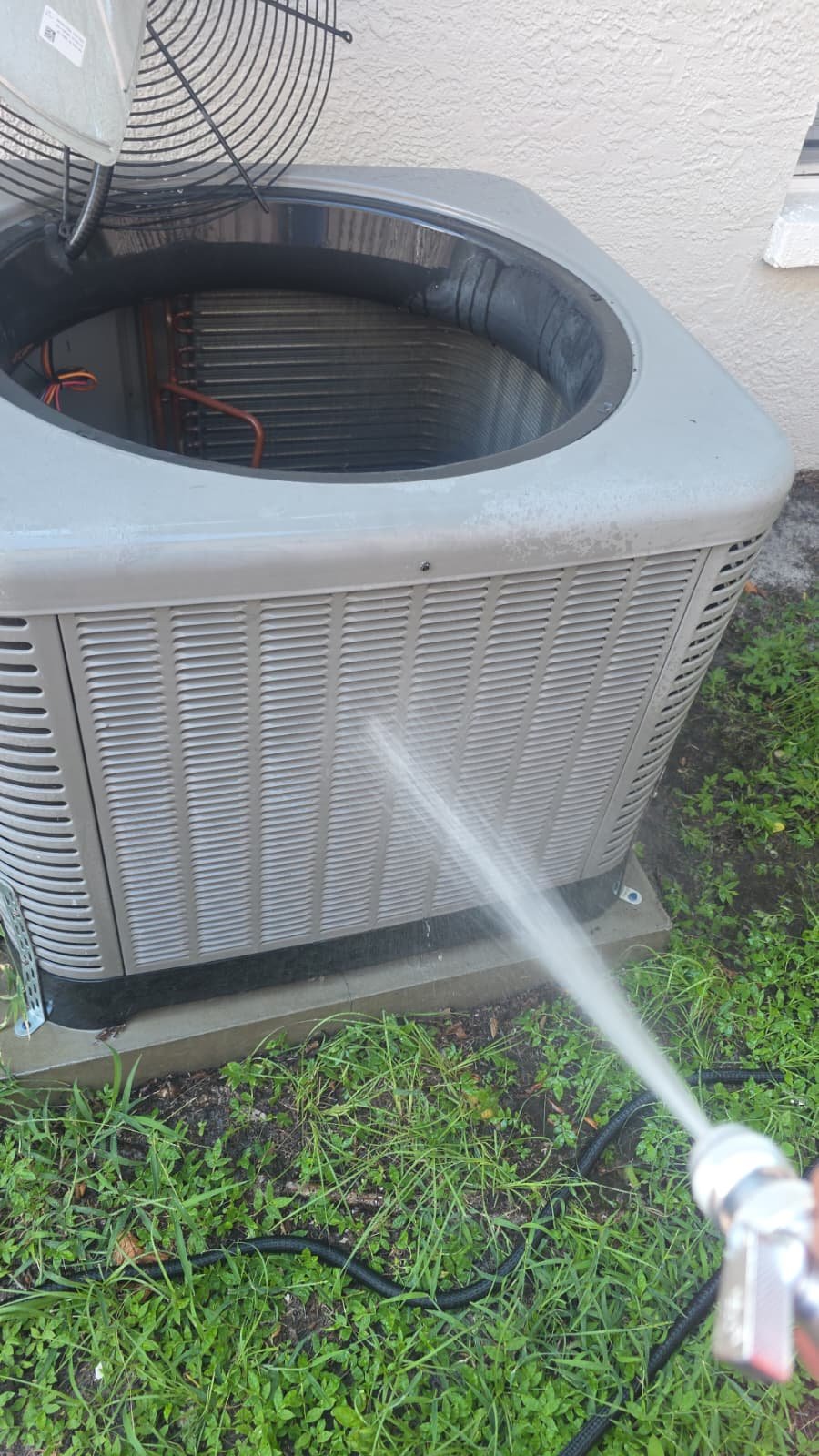
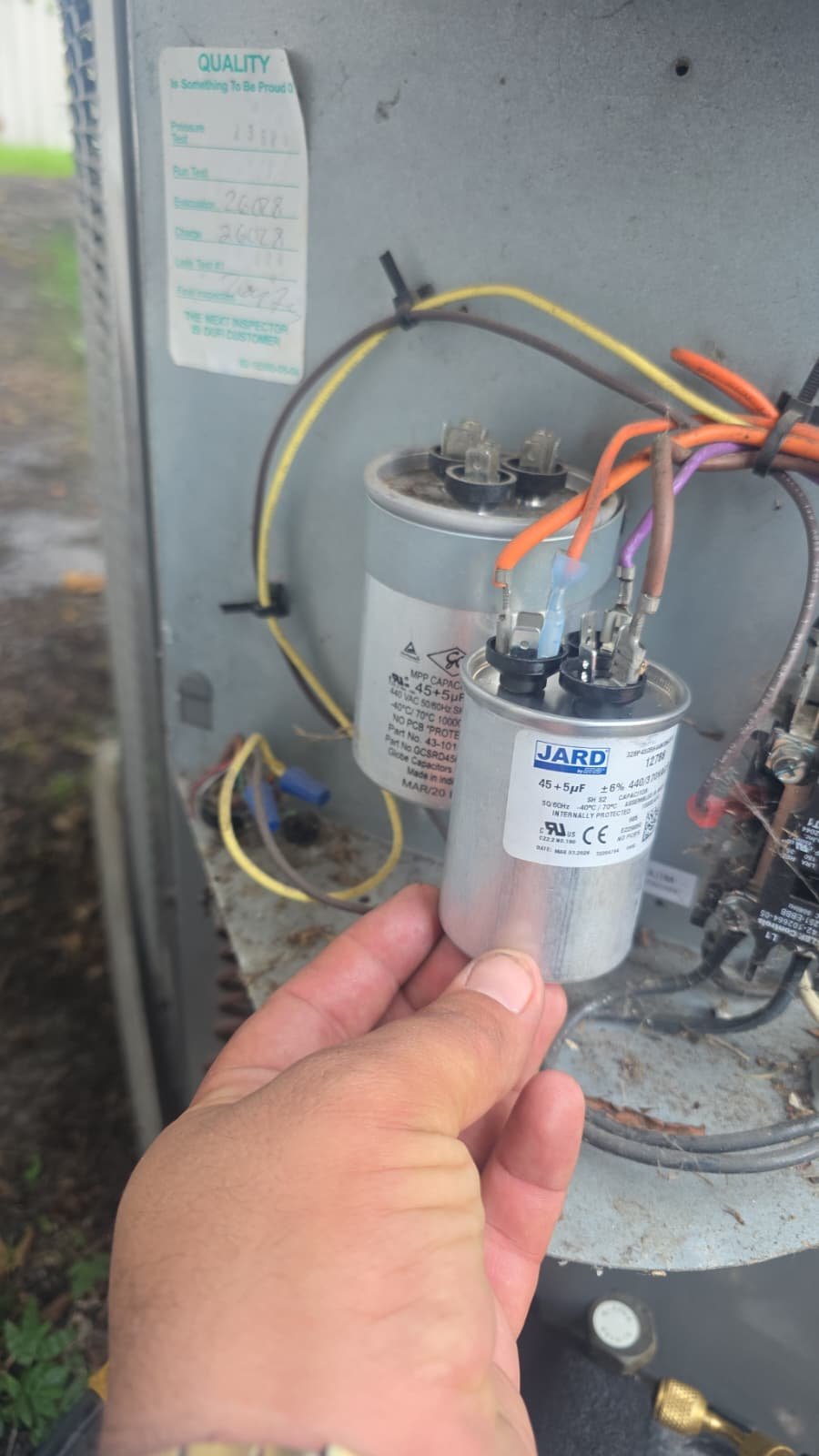
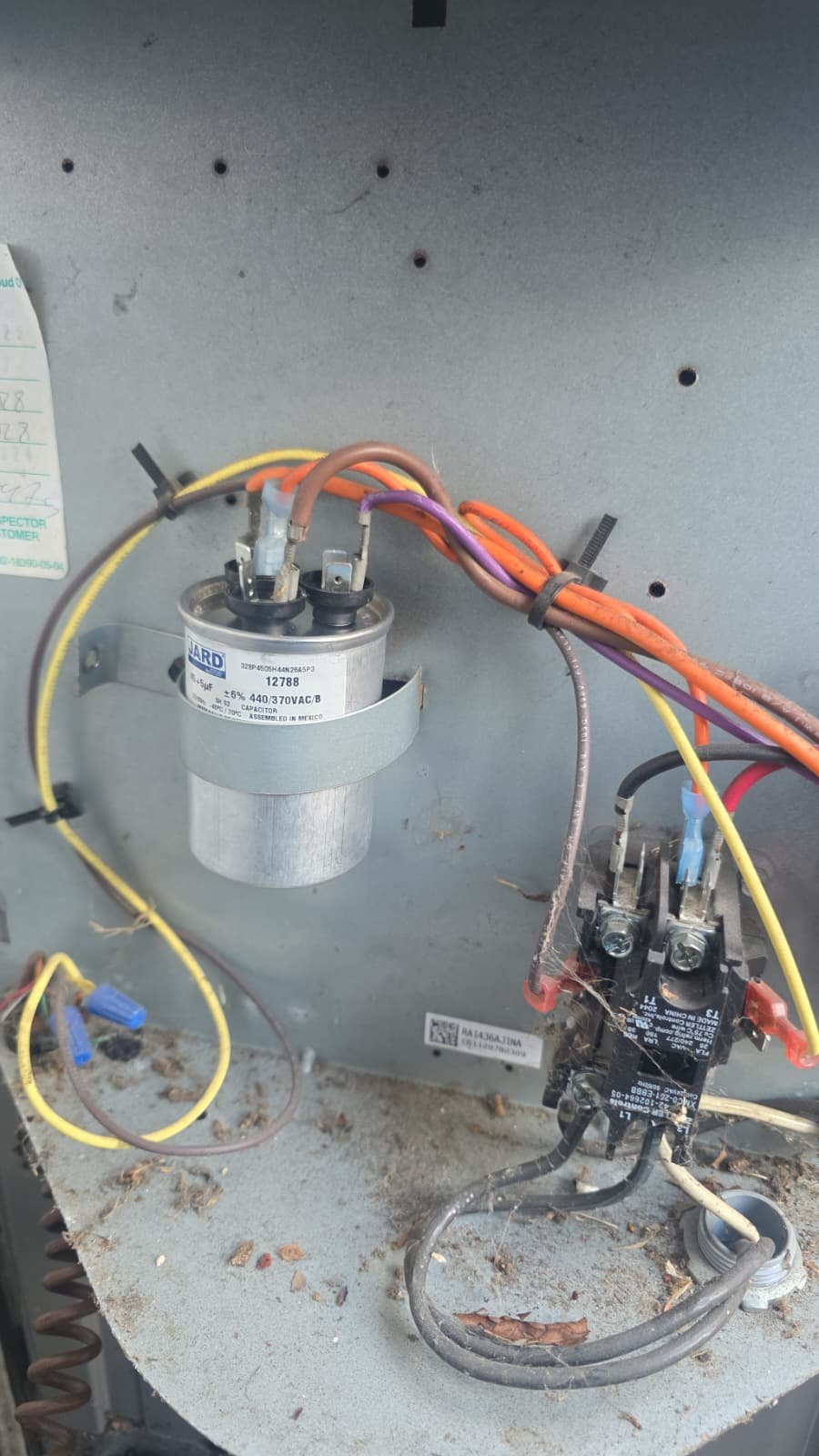
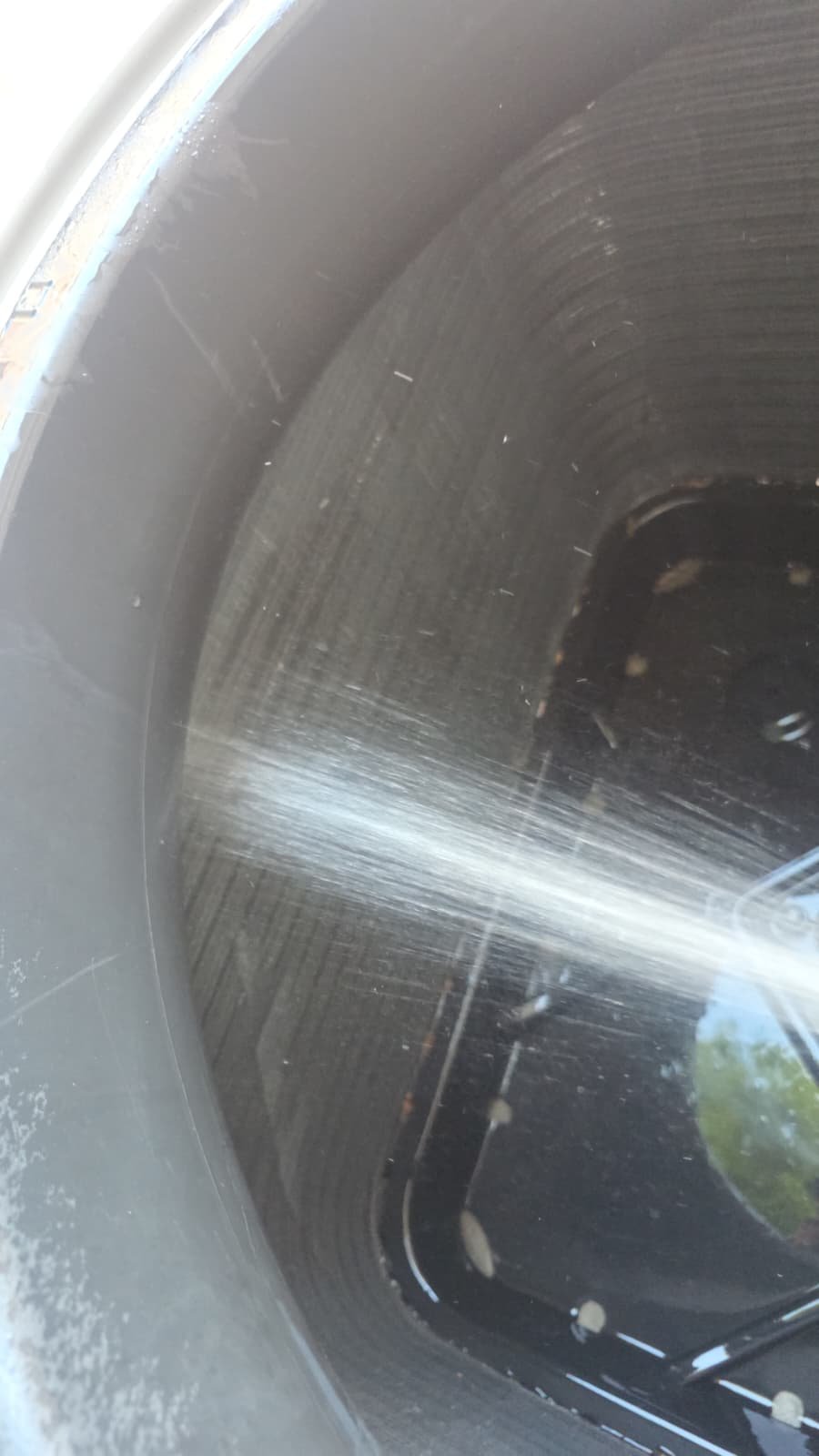
Barbaro confirmed that the condenser fan motor capacitor was failing. A capacitor is a small electrical component that gives a motor the electrical push it needs to start and keep running correctly. When the condenser fan motor does not get that support, the fan can slow, stall, or fail to run at all. On this Ivy Street call, that failure mattered because the condenser coil could not shed heat without fan airflow.
The pressure readings told the same story. The service report recorded a low-side pressure of 158 psi and a high-side pressure above 370 psi. Those numbers were consistent with a loss of condenser airflow, not a random guess at refrigerant charge. When the fan stopped moving outdoor air across the coil, heat stayed trapped in the refrigerant circuit. That pushed head pressure higher and placed extra heat load on the compressor.
This is where a careful diagnosis protects the homeowner from the wrong repair. A system that runs but does not cool can point to many possibilities, including a dirty coil, failed fan component, electrical issue, or refrigerant problem. In this case, the fan capacitor failure explained the symptom and the pressures. We did not need to turn a specific part failure into a bigger story than the data supported.
The Capacitor Replacement Restored the Part of the System That Protects the Compressor
The capacitor replacement on this job mattered because the compressor depends on the condenser fan to keep pressure and temperature under control. The compressor is the heart of the cooling system. It moves refrigerant through the circuit, but it also creates heat while doing that work. The outdoor fan and condenser coil are what help release that heat outdoors.
With the condenser fan not operating, the compressor was working under elevated head pressure. That is not a condition we ignore. It does not mean the compressor had already failed, and we did not present it that way. It means the system needed the condenser fan problem corrected first, then the compressor operation needed to be monitored after airflow came back.
Barbaro replaced the failing condenser fan motor capacitor with a new capacitor and completed the corrective maintenance needed for the outdoor unit. The line items on this visit included the free diagnosis, the capacitor replacement, and a condenser unit tune-up. Because this was a bundled multi-service visit rather than a single isolated line item, the combined invoice for the diagnostic, repair, and tune-up work came to $528.
That bundled context matters. A homeowner reading a repair story should not assume every capacitor replacement costs the same as a visit that also included condenser cleaning and tune-up work. Pricing depends on the exact scope, the condition of the system, and what else is completed during the same appointment. On this job, the scope included both the electrical correction and outdoor unit maintenance.
After the capacitor replacement, the next practical step was to confirm that airflow had returned and that the system could operate without the same high head pressure condition. We verified proper operation after the repair and used the tune-up portion of the visit to address the outdoor unit rather than stopping at the part swap.
Cleaning the Condenser Coil Was Part of the AC Repair Decision, Not an Add-On
Cleaning the condenser coil was part of this AC repair because the original failure created a heat rejection problem outside. The report called for the condenser unit to be cleaned and for coolant levels and pressure to be inspected. That made sense for this specific call because the symptom, pressures, and failed fan support all pointed toward the outdoor unit struggling to get rid of heat.
A condenser coil works like a radiator. Refrigerant brings heat from inside the home to the outdoor unit. The fan pulls outdoor air through the coil so that heat can leave the refrigerant and move into the outside air. In Tampa’s long cooling season, dust, yard debris, grass clippings, and humidity-driven buildup can reduce how well that coil breathes. When the fan capacitor fails at the same time, the system loses even more ability to reject heat.
The homeowner had bought the house in January and did not know when the last preventive maintenance had been completed before moving in. That detail shaped the visit. We were not just replacing a failed electrical component on a system with a known maintenance history. We were working on an approximately 6-year-old unit with an unknown maintenance timeline, a vertical air handler in the garage, and the condenser located outside at ground level.
That is the insider lesson from this Tampa call: when an AC is running but not cooling, the first answer is not always refrigerant. In many homes around 33607, a failed capacitor or blocked heat rejection path can look like a refrigerant complaint to the homeowner because the result feels the same inside. The vents blow air, but the air is not cool. The diagnostic sequence matters because it separates the symptom from the cause.
We also checked system pressures during the visit because pressure readings help confirm whether the repair path makes sense. A pressure check is not just a number on a gauge. It gives the technician a snapshot of how the refrigeration circuit is reacting under operating conditions. On this job, the high-side reading above 370 psi matched the condenser airflow problem found outside.
Pro Tips for Tampa Homes With a Running AC That Is Not Cooling
Do not judge the whole system by indoor airflow alone. This homeowner still had airflow from the vents, but the outdoor condenser fan was not doing its job. If the outdoor fan is not moving air, the home may still feel warm even though the indoor blower is running.
Watch the outdoor unit during the first few minutes of cooling. You do not need to open panels or touch electrical components. From a safe distance, listen for unusual hums and look to see whether the fan starts normally. If the fan does not run, schedule service instead of repeatedly cycling the thermostat.
Keep the condenser coil area clear in Tampa’s growing season. Grass, weeds, leaves, and storm debris can collect around ground-level condensers. The fan and coil need breathing room to reject heat, especially during humid months when the system runs for long stretches.
Ask for diagnosis before assuming refrigerant is the problem. Low cooling can come from airflow, electrical, control, coil, or refrigerant issues. On this Ivy Street visit, the pressure readings and fan behavior pointed to the capacitor and condenser airflow, not a first-step refrigerant top-off.
Do not skip maintenance just because the unit is only about 6 years old. A mid-life system can still develop small electrical failures and coil buildup. Preventive maintenance gives us a chance to catch those issues before they create uncomfortable cooling problems.
Questions From This Ivy Street Capacitor Replacement
Why was the AC running but not blowing cold air?
The indoor blower could still move air through the vents while the outdoor unit failed to reject heat. On this job, the condenser fan motor capacitor was failing, so the condenser fan was not operating properly. Without outdoor airflow across the condenser coil, refrigerant could not release heat efficiently. The result was airflow inside the home that did not feel cold.
What did the pressure readings mean on this Tampa AC repair?
The report recorded 158 psi on the low side and more than 370 psi on the high side. Those readings matched the condenser airflow failure found outside. When the condenser fan does not move air across the coil, heat stays in the system and head pressure rises. The readings helped confirm that the repair should focus on restoring condenser fan operation and cleaning the outdoor unit.
Why replace the capacitor instead of the condenser fan motor?
The diagnostic testing pointed to a failing condenser fan motor capacitor. A capacitor supports the motor electrically, so a failed or weak capacitor can prevent the fan from starting or running even when the motor itself has not been condemned. We replace the part supported by the findings. On this visit, the data supported capacitor replacement first, followed by operational monitoring after airflow returned.
Does an unknown maintenance history change the service approach?
Yes. The homeowner had purchased the house in January and did not know when preventive maintenance had last been completed. That made the condenser tune-up more relevant. We were not looking at a system with a documented recent cleaning. Cleaning the outdoor unit and checking pressure helped us address the actual cooling complaint while also resetting the maintenance baseline.
Should a homeowner keep running the AC when the outdoor fan is not working?
No. If the outdoor condenser fan is not running, the system can build excessive heat and head pressure. That can stress the compressor. The safest homeowner step is to turn the system off and schedule a diagnostic visit. You do not need to troubleshoot electrical parts yourself. A licensed technician can test the capacitor, fan operation, and pressure conditions safely.
Why Choose Home Therapist for Tampa AC Repair
Home Therapist is a licensed HVAC and plumbing company serving Tampa Bay since 2017, with HVAC license CAC1819196 and plumbing license CFC1431159. We lead with FREE estimates and FREE diagnosis because homeowners deserve a clear starting point before making repair decisions. Our team has earned 1,300+ five-star reviews, and local homeowners can also find us on Facebook reviews, Yelp, and Google Business Profile. For added trust, our company is listed with the Better Business Bureau and the Tampa Bay Chamber. We service every brand and base repair recommendations on what the system actually shows us.
Schedule AC Repair in Tampa, FL 33607
If your AC is running but not cooling in Tampa, FL 33607, Home Therapist can help you sort out the cause without pressure or guesswork. We provide FREE estimates and FREE diagnosis, then explain what we find in plain English. For AC repair, tune-ups, and cooling problems like a failed capacitor or outdoor fan issue, call (813) 343-2212 or visit Home Therapist Cooling, Heating, and Plumbing to schedule service.
The industry guidance behind this approach is set out in ACCA technical standards.


