

Second R410A Top-Off and a Bad Capacitor, AC Repair Tampa, FL 33624
How do you spell miscellaneous? M-i-s-c-e-l-l-a-n-e-o-u-s. On this AC repair call in Tampa, FL 33624, the “miscellaneous” line item was not the real issue. The real issue was an air conditioner that was low on refrigerant, needed 4 pounds of R410A, and also had a failed capacitor that had to be replaced to restore normal cooling.
David handled this call on Cypress Park Street in Tampa, FL 33624 after the homeowner reported that the AC was running but not cooling properly. Once he got into the system, the pattern became clearer. This was not a one-part repair. The system was low on refrigerant again, and a bad capacitor was also holding the equipment back. The homeowner had already needed refrigerant added before, which matters because repeat top-offs usually point to a leak that has not been corrected. In this case, the immediate goal was to get cooling back on while also being honest about what the repeat refrigerant loss means long term.
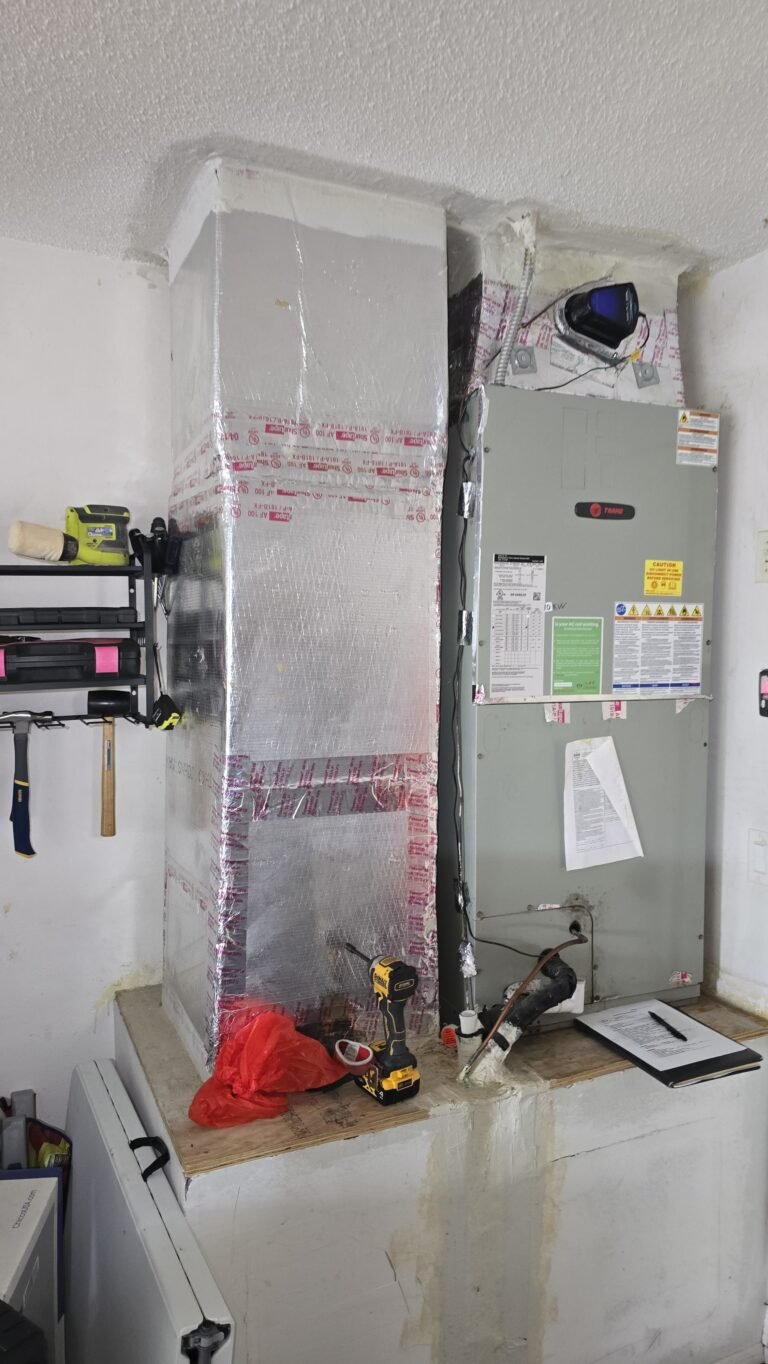
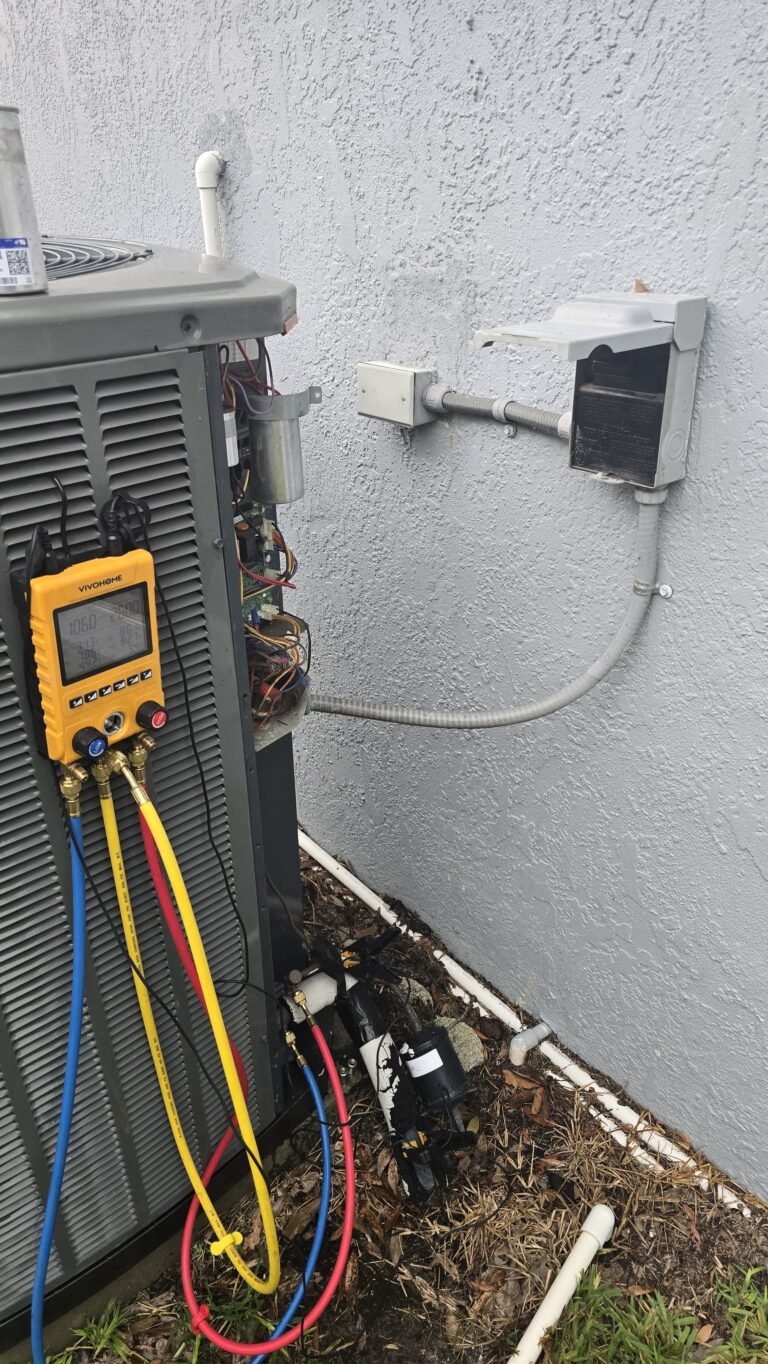
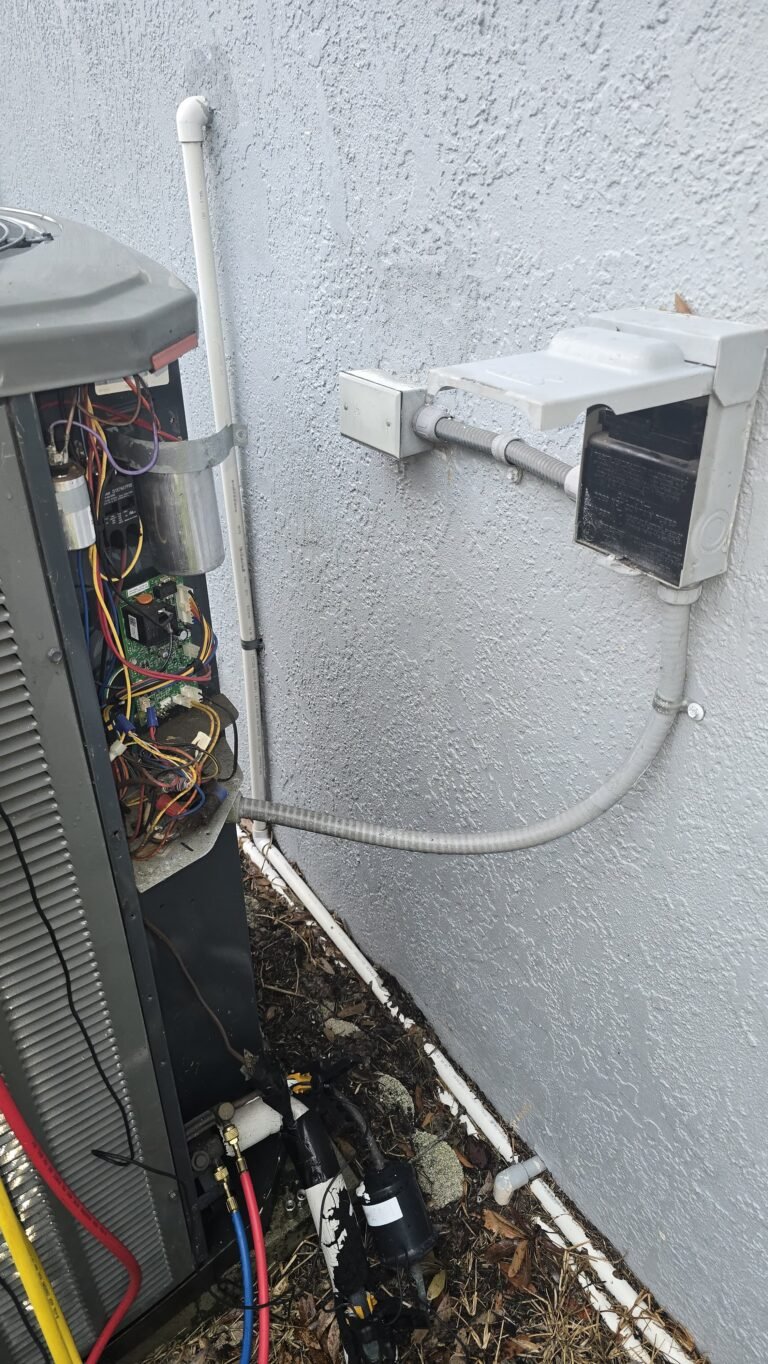
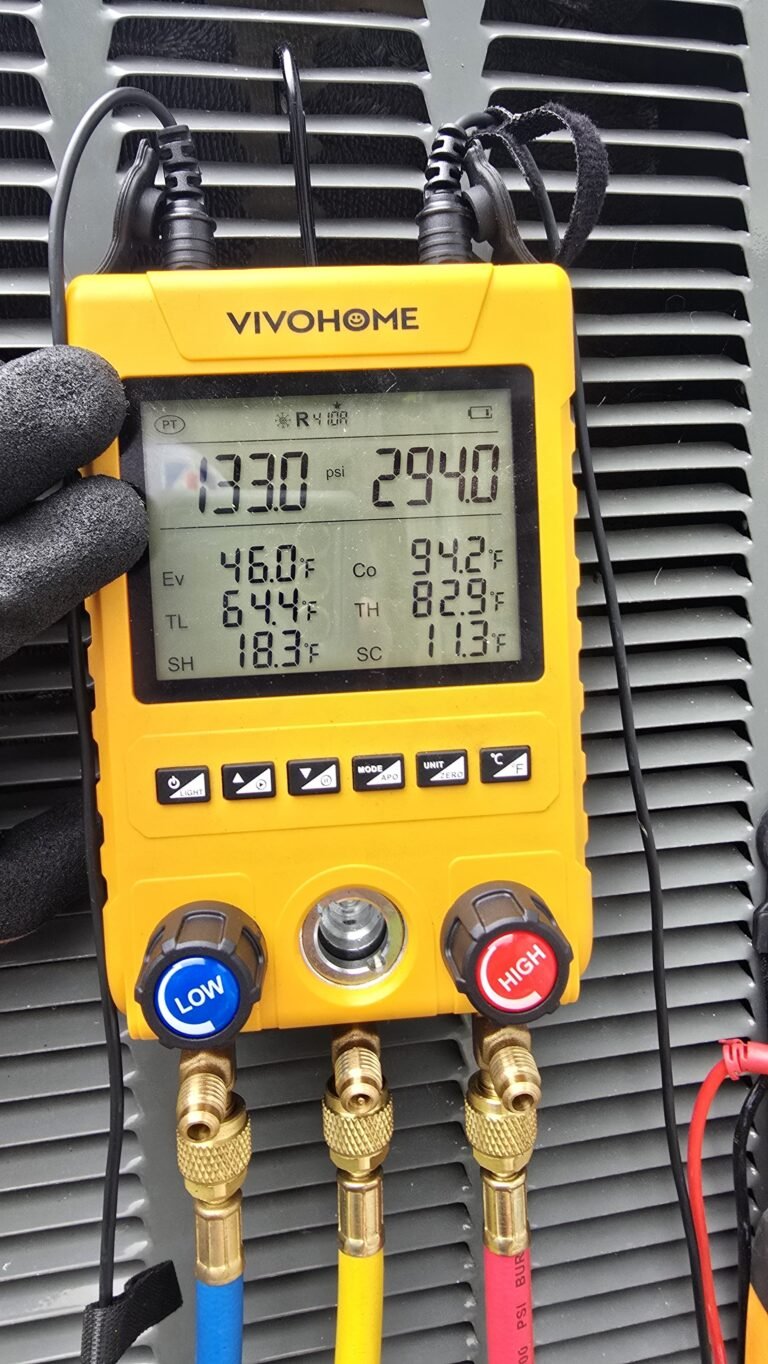
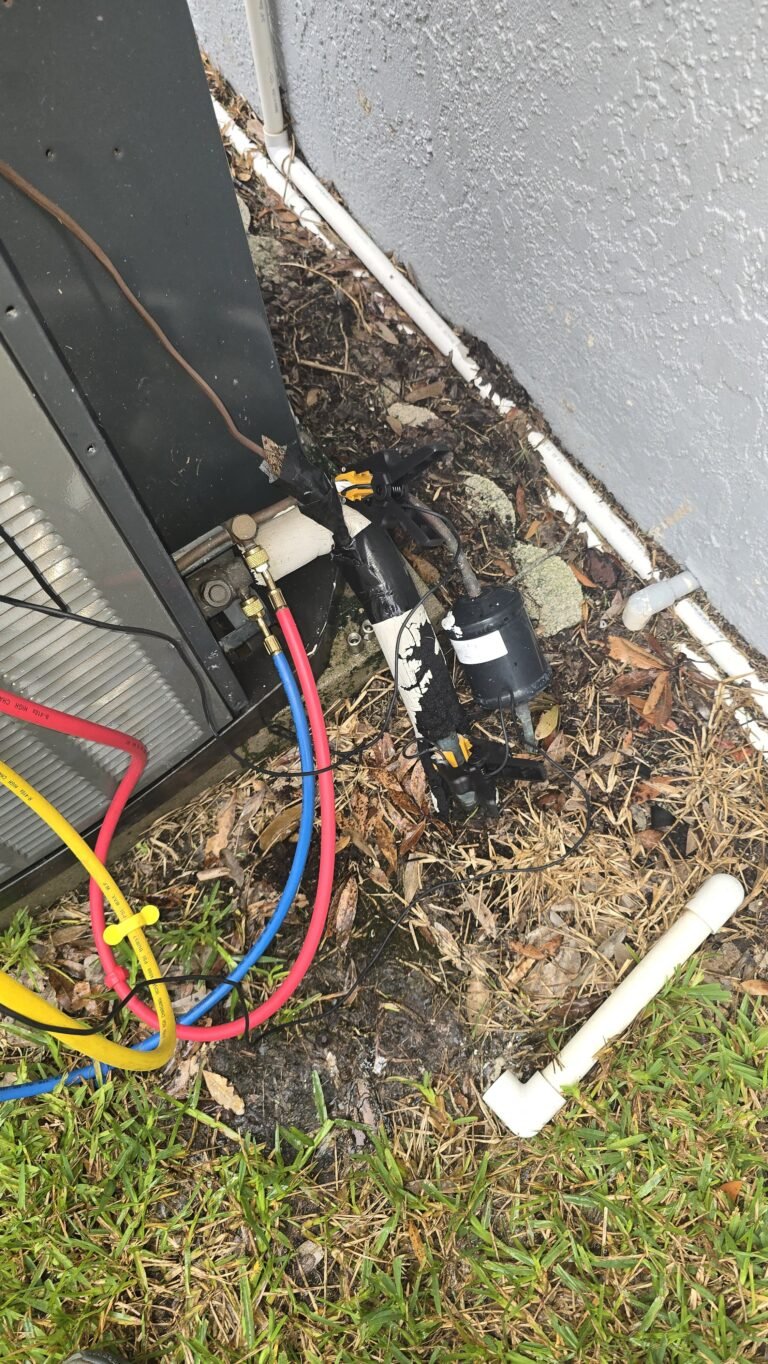
- Service performed: AC repair with capacitor replacement and refrigerant recharge
- Neighborhood or street: Cypress Park Street
- Technician: David
- Symptom: AC running but not cooling properly
- Cause: Low refrigerant and a failed capacitor
- What was done: Added 4 pounds of R410A and installed a new capacitor
Repeated refrigerant loss made this AC repair in Tampa more than a simple top-off
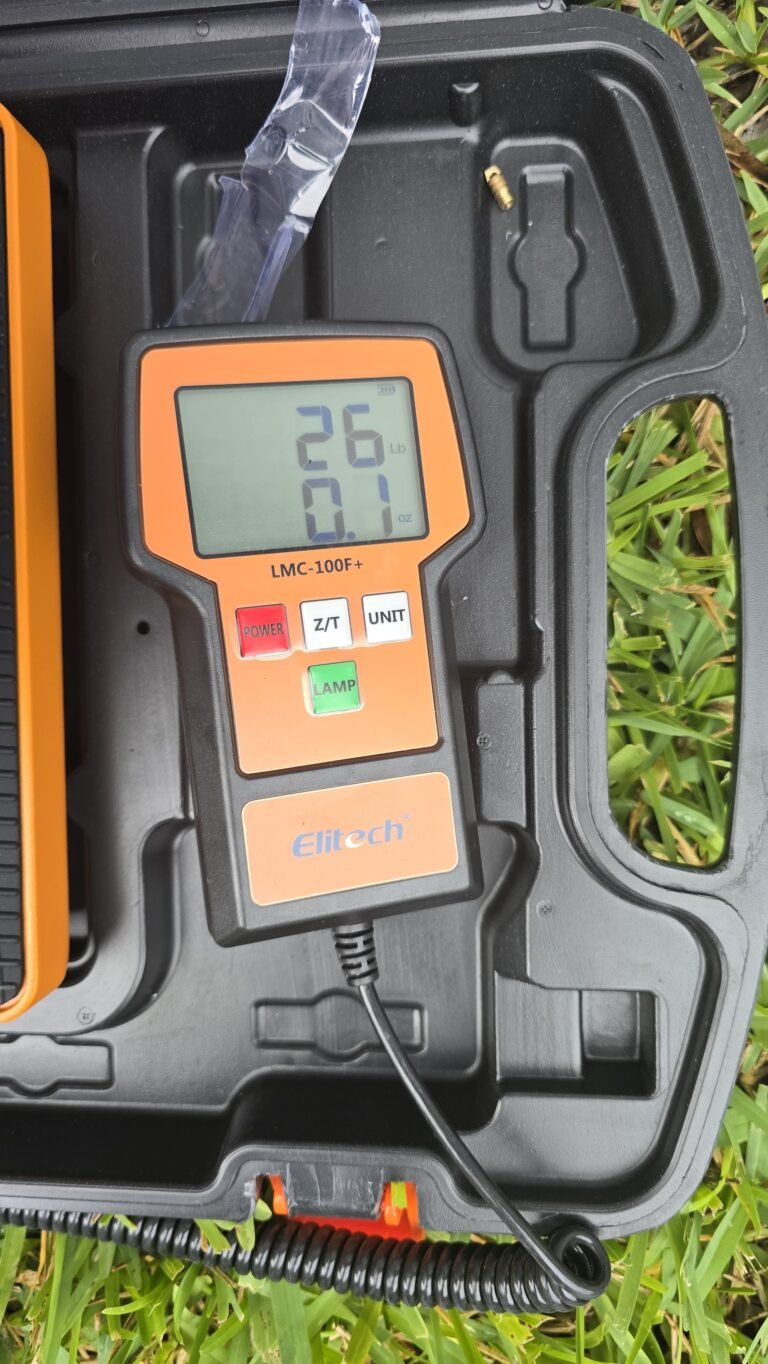
The most important fact on this job was not just that the system was low. It was that this was the second time the homeowner needed refrigerant added. That changes the conversation. A one-time recharge can sometimes buy time while a system is evaluated, but a second top-off strongly suggests an active leak somewhere in the refrigerant circuit. David confirmed the low charge, added 4 pounds of R410A to bring the system back toward normal operating temperatures, and made sure the home had cooling again. He also explained that adding refrigerant without finding and repairing the leak is a temporary measure, not a permanent solution.
That distinction matters in Tampa’s long cooling season. A system can seem fine right after a recharge, then start slipping again as refrigerant escapes. Homeowners often search for ac blowing hot air when the air coming from the vents stops feeling cold, but low refrigerant often starts earlier as weaker cooling, longer run times, or trouble keeping up in the afternoon heat.
The capacitor replacement mattered because weak electrical support can mimic bigger AC problems
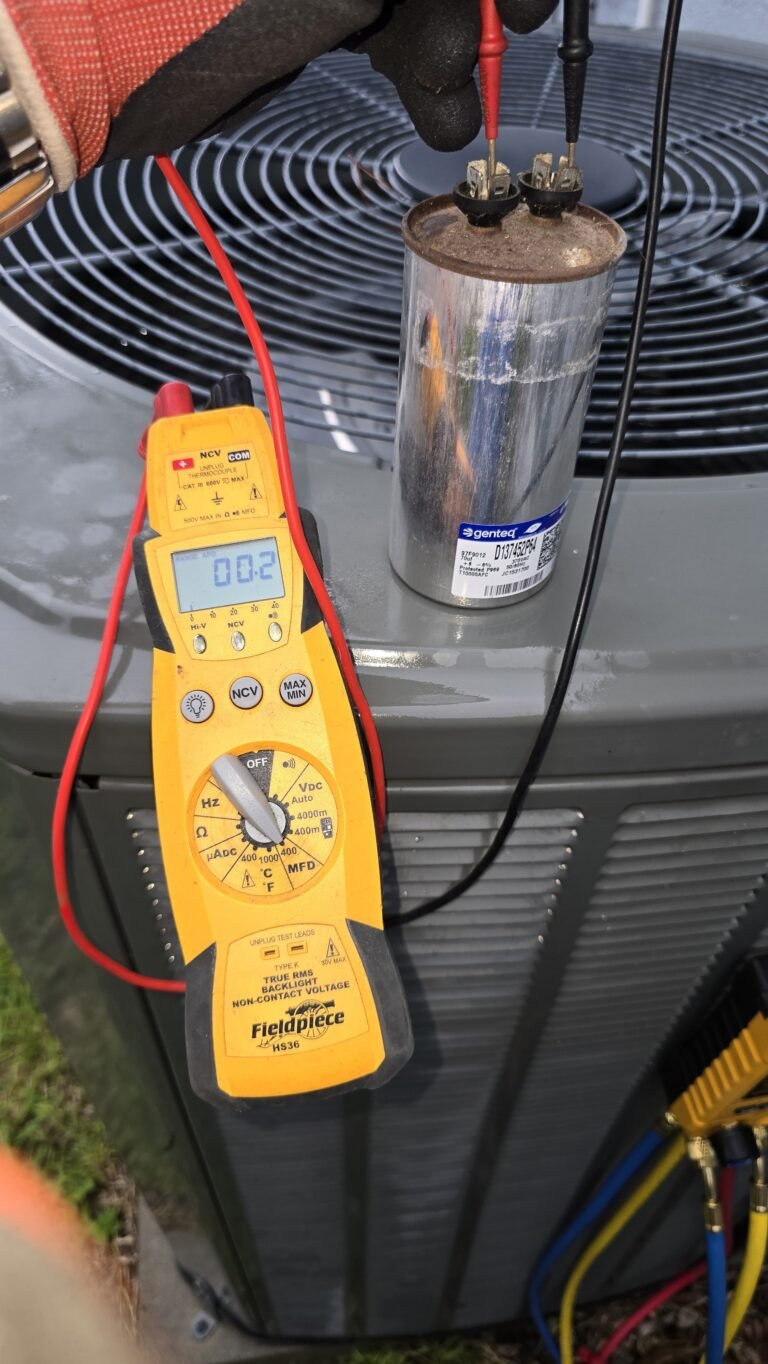
The second piece of this call was the new capacitor. A capacitor is the electrical component that helps motors start and run correctly. When it fails, the system may still come on in some form, but it will not perform the way it should. That can create confusing symptoms for the homeowner because “running” and “cooling” are not the same thing. David found that the capacitor was bad and replaced it, which removed one more obstacle to proper operation.
This is where experience matters. It would have been easy to focus only on the low refrigerant because that was the obvious cooling issue. But stopping there would have left a known bad electrical part in place. On many service calls in this ZIP code, homeowners assume every warm-air complaint is strictly a refrigerant problem. Sometimes it is not. In this case, both issues were real, and both needed attention on the same visit to give the system its best chance of cooling normally again.
Because this visit covered more than one item, the invoice was a combined total for the service call, the capacitor replacement, and the refrigerant added. The combined invoice came to $659.
Why we restored cooling first but still discussed replacement on this Tampa system
The honest recommendation on this job was not “just keep topping it off.” The honest recommendation was full system replacement because of the recurring refrigerant loss. That was based on the service history described in the job notes, not on sales pressure. If a system has already needed refrigerant added once and now needs another 4 pounds, the homeowner is usually better served by looking at the bigger picture. Continued recharges can stack up while the underlying leak keeps getting worse.
That does not mean every leaking system should be treated the same way. It means the decision should follow the pattern. Here, the pattern was repeat refrigerant loss plus a failed capacitor on the same call. Restoring cooling was still the right immediate step because the household needed relief now. But David also sent replacement estimates so the homeowner could compare short-term repair spending against a more permanent fix. For readers comparing options, our what this work typically costs page gives broader context on repair versus replacement decisions.
There is also a compliance side to this conversation. Refrigerant work has to be handled correctly, and leak-related decisions are part of a larger regulatory framework covered under EPA Section 608. For the homeowner, the practical takeaway is simpler: if refrigerant keeps disappearing, the system is telling you something.
What this Cypress Park Street call teaches about AC repair in Tampa
The insider lesson from this job is that repeat top-offs are usually more important than the first symptom the homeowner notices. “Running but not cooling” describes what the house feels like. It does not explain why. On Cypress Park Street, the why turned out to be a combination of low refrigerant and a failed capacitor, with the larger concern being that the refrigerant loss had happened before.
That is why we treat AC repair in Tampa as diagnosis first, repair second. Tampa homeowners deal with a long season of heat, humidity, and heavy runtime. Those conditions expose weak electrical parts and make refrigerant issues harder to ignore. If your system starts ac freezing up, blowing warm air, or running much longer than usual, the cause may be deeper than one thermostat adjustment or one quick recharge.
Pro Tips for Tampa homeowners dealing with repeat refrigerant top-offs
Repeated refrigerant loss is a pattern, not a maintenance item, and Tampa homeowners should treat it that way.
First, pay attention to whether the system has needed refrigerant before. The second recharge is often the point where a temporary workaround becomes a long-term cost problem.
Second, do not assume one symptom means one cause. This job needed both refrigerant and a capacitor. Electrical parts and cooling performance often overlap.
Third, keep notes from prior service visits. Knowing whether a top-off happened once or twice helps frame the next decision much faster.
Fourth, ask whether the repair restores operation or resolves the root cause. Both can be valid, but they are not the same thing.
Fifth, if you are evaluating replacement, use efficiency guidance from ENERGY STAR and compare that with how often your current system is needing refrigerant-related service.
Questions this Tampa AC repair call naturally raises
How do you spell miscellaneous?
Miscellaneous is spelled M-i-s-c-e-l-l-a-n-e-o-u-s. That question came up here because one line item on the job was labeled miscellaneous, but the actual AC repair issue in Tampa, FL 33624 was much more specific: the system was low on refrigerant, needed 4 pounds of R410A, and had a bad capacitor that David replaced during the same visit.
What does miscellaneous mean on an HVAC invoice?
Miscellaneous usually means a catch-all line item, not the main diagnosis. On this job, the meaningful details were in the actual work performed, not in the generic label. The homeowner’s real problem was an AC that ran without cooling properly, and the real findings were repeat refrigerant loss and a failed capacitor. That is why clear descriptions matter more than shorthand billing language.
Is adding refrigerant twice a sign of a leak?
Yes, needing refrigerant added a second time usually points to an underlying leak. That was the key concern on this Tampa call. David restored cooling by adding 4 pounds of R410A, but the repeat loss is what changed the recommendation from a simple recharge to discussing full system replacement. Refrigerant does not get used up like fuel, so repeated low-charge conditions need a bigger conversation.
Why replace the capacitor if the system was also low on refrigerant?
Because the capacitor and the refrigerant charge affect different parts of system performance. Low refrigerant reduces the system’s ability to move heat, while a bad capacitor can keep motors from starting or running correctly. On this call, both problems were present. Replacing only the capacitor would not have solved the cooling issue, and adding refrigerant alone would have left a failed electrical component in place.
Is a recharge enough to fix an AC that is running but not cooling?
No, a recharge is only enough if low refrigerant is the only problem and the leak issue has been addressed. This job is a good example of why that answer is not always simple. The system needed refrigerant to restore cooling, but it also needed a new capacitor, and the repeat top-off history pointed to a larger leak concern. A recharge can restore comfort, but it does not erase the reason the system went low.
Schedule AC repair in Tampa, FL 33624 with Home Therapist
When an AC is running but not cooling, the right next step is a real diagnosis, not guesswork. Home Therapist has served Tampa Bay since 2017, and our team brings licensed HVAC and plumbing expertise to every call. Our HVAC license is CAC1819196, our plumbing license is CFC1431159, and we have earned 1,300-plus five-star customer reviews by being direct about what we find and what it means. On jobs like this one in Tampa, FL 33624, that means restoring cooling when possible, explaining when a repair is temporary, and helping homeowners compare their next options clearly. If you are in our service area and need help with repeat refrigerant loss, a failed capacitor, or another cooling issue, call Home Therapist at (813) 343-2212. We offer FREE estimates and FREE diagnosis, and we service every brand across Tampa Bay.
More AC Repair Articles
- Miswired Float Switches Found Outside the Tune-Up: AC Maintenance in Tampa, FL 33634
- Why a Home Sale Plumbing Punch List Turned Into Toilet Repair in Tampa, FL 33612
- The Filter Dryer Decision Behind a Coil Job: AC Repair in Riverview, FL 33579
- When the Outdoor Unit Runs but No Air Comes Inside, Blower Motor Replacement Tampa
- AC Contactor vs Relay: How to Tell Which One Is Failing in Your Tampa AC


