

Role of Thermostats in HVAC – Maximizing Comfort and Savings
Every Tampa Bay homeowner knows the struggle of keeping cool when the Florida heat lingers in every room. Finding ways to lower your energy bills and stay comfortable can feel like a constant balancing act. The right thermostat not only helps regulate indoor temperatures but also delivers smarter control over your HVAC system, offering potential savings and consistent comfort. Discover how automated temperature adjustments and modern thermostat features can transform your home’s climate and efficiency.
Table of Contents
- What Thermostats Do in HVAC Systems
- Types of Thermostats and Their Key Differences
- How Thermostat Settings Impact Comfort and Energy Use
- Smart and Programmable Models for Modern Homes
- Common Thermostat Mistakes Tampa Bay Homeowners Make
Key Takeaways
| Point | Details |
|---|---|
| Thermostats are crucial for HVAC efficiency | They manage temperature by regulating heating and cooling systems, ensuring comfort while reducing energy waste. |
| Types of thermostats vary significantly | Choices range from mechanical to smart models, each catering to different needs for accuracy and convenience. |
| Optimal thermostat settings enhance comfort and savings | Adjusting thermostats strategically can reduce energy costs without sacrificing indoor comfort. |
| Avoid common mistakes for better performance | Proper placement and programming of thermostats can prevent inaccurate readings and enhance HVAC efficiency. |
What Thermostats Do in HVAC Systems
Thermostats are essential control devices that act as the central nervous system of your home’s heating and cooling infrastructure. These intelligent devices manage indoor temperature by continuously monitoring and regulating the operation of HVAC equipment. Automated temperature adjustments help maintain optimal comfort while preventing unnecessary energy consumption.
At their core, thermostats function through a sophisticated sensing and switching mechanism. They detect current room temperature and compare it against a user-defined setpoint, activating heating or cooling systems precisely when needed. This closed-loop control ensures consistent indoor climate by making real-time decisions about when to turn equipment on or off.
The functionality of thermostats extends beyond simple temperature management. Modern systems offer multiple critical capabilities:
- Programmable scheduling for automatic temperature shifts
- Separate heating and cooling setpoint configurations
- Energy usage tracking and efficiency monitoring
- Remote access and smart home integration
- Humidity and ventilation control
Temperature regulation happens through direct communication with HVAC components. When room temperature drops below the heating setpoint, the thermostat signals the furnace to activate. Conversely, when temperatures rise above the cooling threshold, it triggers the air conditioning system. Precise temperature maintenance can be achieved by even minor setpoint adjustments.
Pro tip: Adjusting your thermostat by just 2-3 degrees can generate significant energy savings without compromising home comfort.
Types of Thermostats and Their Key Differences
Thermostat technology has evolved significantly, offering homeowners multiple options to manage indoor climate effectively. Thermostat types range from basic manual models to sophisticated smart systems, each designed to meet different comfort and efficiency needs. Understanding these variations helps Tampa Bay homeowners make informed decisions about their home’s temperature control.
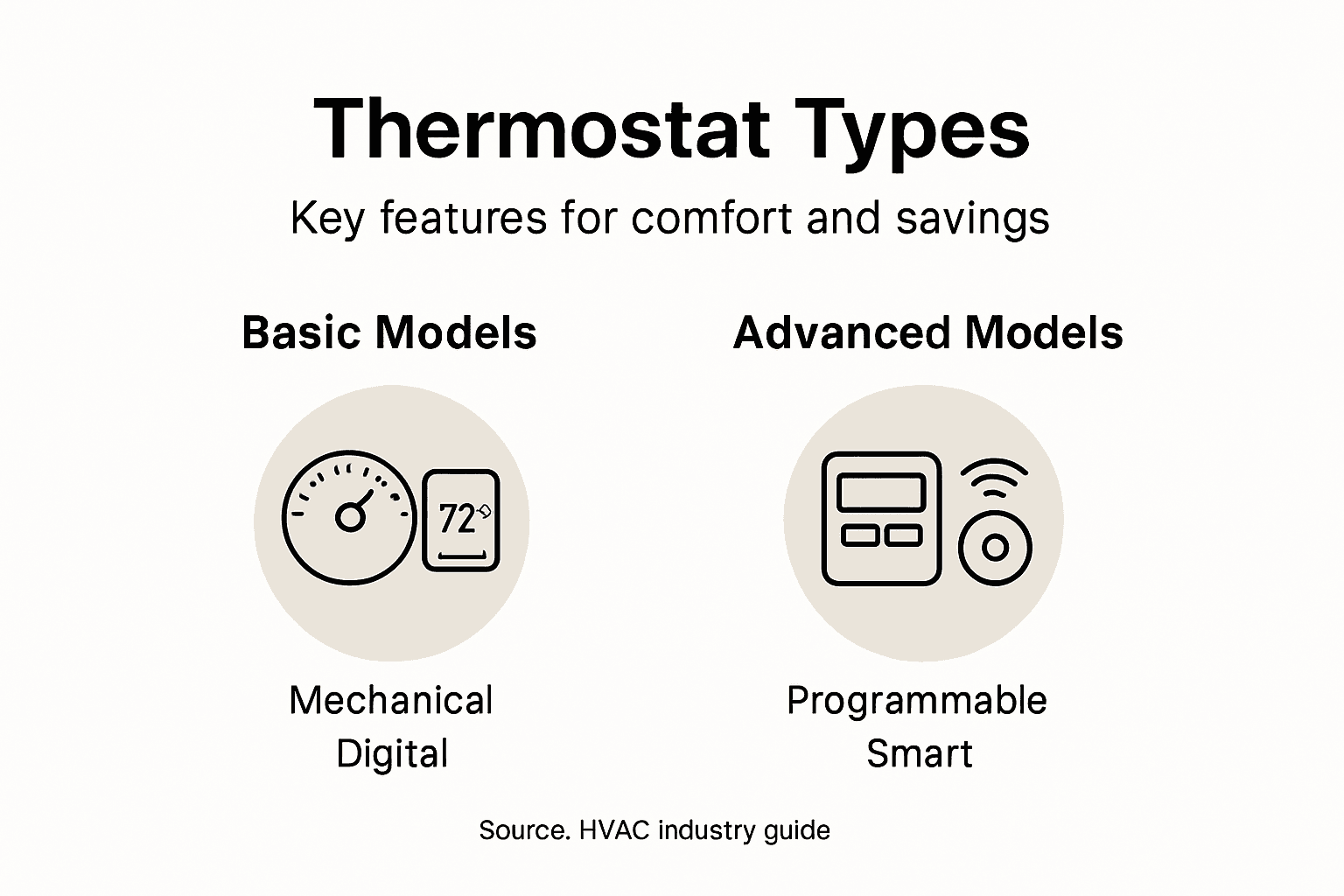
The primary categories of thermostats include mechanical, digital, programmable, and smart models, each with distinct technological capabilities and performance characteristics. Mechanical thermostats use traditional bimetallic strips that expand and contract with temperature changes, providing basic temperature regulation. Digital thermostats represent a significant upgrade, featuring electronic sensors and precise digital displays that offer more accurate temperature tracking.
Key thermostat types include:
- Mechanical Thermostats
- Lowest cost option
- Simple temperature control
- Less precise temperature management
- Digital Thermostats
- Electronic temperature sensing
- Clear numeric displays
- Improved accuracy
- Programmable Thermostats
- Preset temperature scheduling
- Energy-saving potential
- Customizable daily/weekly settings
- Smart Thermostats
- Wi-Fi connectivity
- Learning algorithms
- Remote smartphone control
- Advanced energy tracking
Programmable and smart thermostats offer the most advanced features, with digital temperature control enabling significant energy savings. Smart thermostats take efficiency further by learning household patterns, automatically adjusting temperatures and providing detailed energy consumption insights through smartphone apps.
Pro tip: Consider your specific household needs and budget when selecting a thermostat, prioritizing features that align with your comfort and energy-saving goals.
Here’s a side-by-side comparison of thermostat types and their suitability for different homeowner needs:
| Thermostat Type | Best For | Typical Features | Upgrade Recommendation |
|---|---|---|---|
| Mechanical | Budget-conscious, basic homes | Manual operation, simple settings | Often replaced for accuracy |
| Digital | Entry-level upgrades, precise control | Numeric displays, better sensing | Consider for improved comfort |
| Programmable | Busy households, energy savers | Scheduled adjustments, custom settings | Ideal for larger energy savings |
| Smart | Tech-savvy, efficiency focused | Remote access, learning algorithms | Best for modern lifestyles |
How Thermostat Settings Impact Comfort and Energy Use
Thermostat settings play a critical role in balancing home comfort and energy efficiency for Tampa Bay residents. Thermostat adjustments can significantly reduce annual heating and cooling costs while maintaining optimal indoor temperatures. Understanding how temperature settings influence both comfort and energy consumption is key to creating a more efficient home environment.
Multiple factors contribute to thermal comfort beyond simple temperature control. Occupant comfort depends on air temperature, humidity, air movement, and individual preferences. Precise thermostat management allows homeowners to fine-tune these environmental conditions, creating personalized comfort zones that adapt to daily living patterns.
Key strategies for optimizing thermostat settings include:
- Temperature Setback Techniques
- Lower temperatures during sleeping hours
- Reduce heating/cooling when home is unoccupied
- Potential annual savings up to 10%
- Seasonal Adjustment Recommendations
- Summer: Set higher temperatures
- Winter: Set lower temperatures
- Minimize temperature differences
- Comfort Zone Management
- Maintain consistent indoor temperatures
- Avoid extreme temperature fluctuations
- Use programmable features strategically
Homeowners can maximize energy efficiency by implementing smart temperature strategies. Avoid common misconceptions like believing that setting temperatures extremely high or low will heat or cool spaces faster. Instead, gradual, strategic adjustments provide better comfort and prevent unnecessary energy waste.
Pro tip: Experiment with your thermostat settings, reducing heating and cooling demands by just a few degrees to achieve significant energy savings without sacrificing personal comfort.
Smart and Programmable Models for Modern Homes
Smart thermostat technology represents a revolutionary approach to home climate control, offering Tampa Bay homeowners unprecedented convenience and energy efficiency. These advanced devices go far beyond traditional temperature management, integrating intelligent features that adapt to household patterns and optimize comfort while reducing energy consumption.
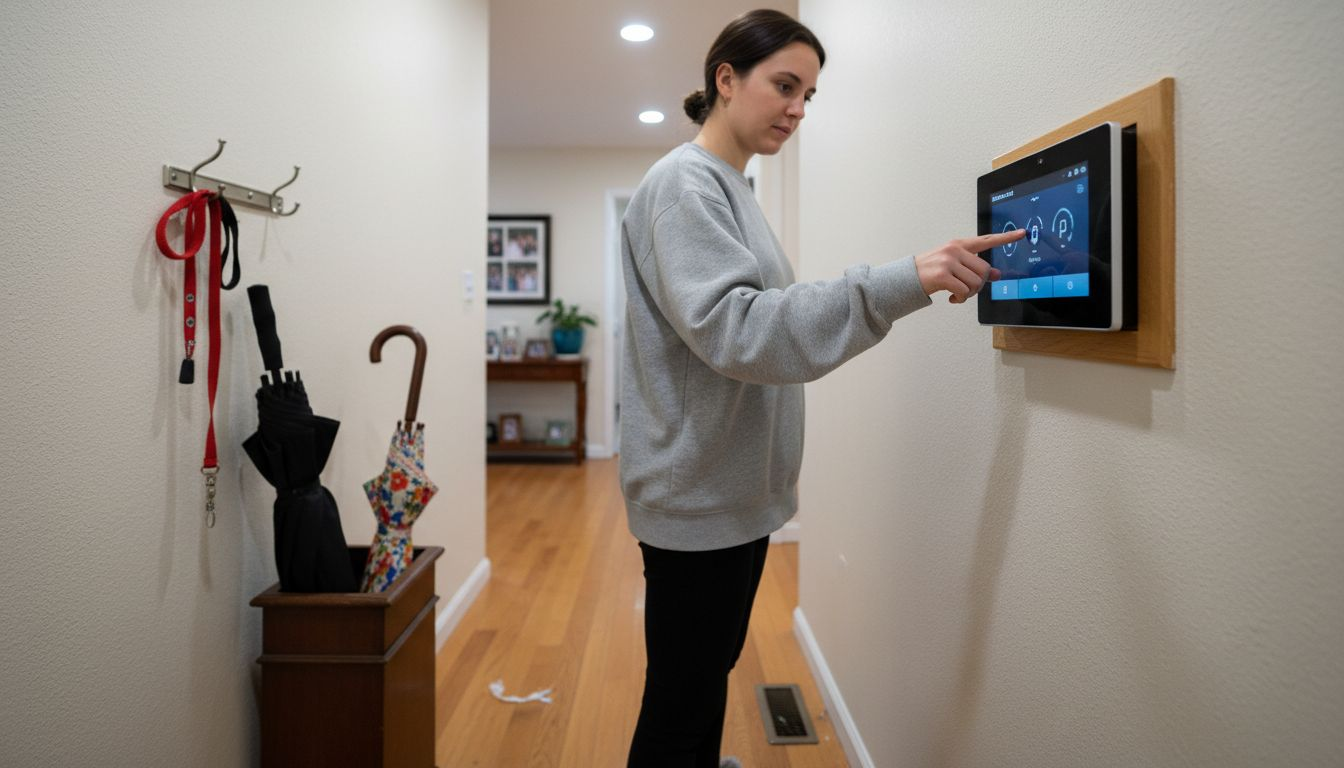
Modern smart thermostats use sophisticated technologies to provide comprehensive climate management. Automated temperature adjustments enable seamless transitions between different living scenarios, learning from user behaviors and automatically creating personalized comfort profiles. These intelligent systems can detect occupancy, adjust temperatures based on external weather conditions, and provide detailed energy consumption insights through user-friendly smartphone applications.
Key features of smart and programmable thermostats include:
- Adaptive Learning Capabilities
- Track household temperature preferences
- Create automatic scheduling patterns
- Adjust settings based on routine changes
- Remote Control Functionality
- Smartphone app integration
- Adjust temperatures from anywhere
- Monitor home climate in real-time
- Energy Efficiency Tools
- Detailed energy consumption reports
- Suggestions for optimization
- Geofencing for automatic adjustments
- Advanced Sensing Technologies
- Occupancy detection
- Weather-based temperature modifications
- Humidity and air quality monitoring
Unlike traditional programmable models, smart thermostats offer unparalleled flexibility and intelligence. They can automatically detect when residents are home or away, adjust temperatures to maximize comfort and efficiency, and provide granular insights into energy consumption patterns that empower homeowners to make informed decisions.
Pro tip: Invest in a smart thermostat with geofencing capabilities to automatically adjust your home’s temperature based on your smartphone’s location, ensuring optimal comfort and energy savings.
Common Thermostat Mistakes Tampa Bay Homeowners Make
Homeowners in the Tampa Bay area frequently make critical errors that compromise their home’s comfort and energy efficiency. Thermostat usage mistakes can lead to significant energy waste and unnecessary utility expenses. Understanding and avoiding these common pitfalls is essential for maintaining an optimal home climate while keeping energy costs under control.
One of the most prevalent issues is improper thermostat placement and programming. Incorrect thermostat positioning can dramatically impact home comfort and HVAC system performance. Thermostats placed near heat sources, air vents, windows, or in direct sunlight can provide false temperature readings, causing your system to work inefficiently and create uneven temperature distribution throughout your home.
Common thermostat mistakes include:
- Programming Errors
- Failing to create consistent schedules
- Not using setback temperatures
- Ignoring occupancy patterns
- Placement Misconceptions
- Installing near heat sources
- Positioning in drafty areas
- Blocking thermostat with furniture
- Temperature Setting Mistakes
- Extreme temperature adjustments
- Believing lower/higher settings cool/heat faster
- Constant temperature fluctuations
- Technology Underutilization
- Not upgrading from manual thermostats
- Ignoring smart thermostat features
- Failing to use remote access capabilities
Many Tampa Bay homeowners mistakenly believe that setting temperatures to extreme levels will accelerate heating or cooling. In reality, this approach only wastes energy and puts unnecessary strain on HVAC systems. Modern thermostats offer sophisticated features designed to optimize comfort and efficiency, but these benefits remain unrealized when homeowners continue using outdated approaches.
A quick reference chart showing how thermostat placement impacts system performance:
| Placement Location | Impact on Comfort | Effect on Energy Use | Common Mistake |
|---|---|---|---|
| Near heat sources | Causes inaccurate readings | Makes HVAC overwork | Positioned by lamps or ovens |
| In drafty areas | Fluctuating temperatures | Unnecessary cycling | Installed near exterior doors |
| In direct sunlight | False high readings | Higher cooling bills | Placed on sunny walls |
| Obstructed by furniture | Reduced airflow sensing | Poor system response | Hidden behind shelves |
Pro tip: Invest time in understanding your thermostat’s advanced features and create a customized schedule that matches your household’s actual living patterns.
Take Control of Your Home Comfort with Expert Thermostat Solutions
Struggling with inconsistent home temperatures or high energy bills caused by outdated or improperly set thermostats? Understanding the role thermostats play in your HVAC system is just the first step. Many Tampa Bay homeowners face challenges like inefficient thermostat placement, confusing programming, or missed opportunities to save energy. By leveraging programmable and smart thermostat technologies, you can achieve perfect temperature regulation while cutting down on costs and wear on your HVAC system.
Discover how professional thermostat installation, precise calibration, and customized scheduling can transform your daily comfort. At Home Therapist Cooling, Heating, and Plumbing, we specialize in helping you optimize your HVAC settings with cutting-edge solutions. Learn more about how our expert team addresses thermostat challenges in our HVAC Archives – Home Therapist Cooling, Heating, and Plumbing. Ready to make your home more comfortable and energy efficient starting today? Contact us now at https://callhometherapist.com and experience the difference of personalized climate control backed by trusted expertise.
Frequently Asked Questions
What is the primary function of a thermostat in an HVAC system?
Thermostats act as the control center for HVAC systems by monitoring indoor temperatures and regulating heating or cooling equipment to maintain a comfortable environment.
What are the different types of thermostats available?
The main types of thermostats include mechanical, digital, programmable, and smart models, each offering varying levels of temperature control and advanced features.
How can I optimize my thermostat settings for better energy efficiency?
To optimize energy efficiency, consider implementing temperature setbacks when you’re sleeping or away from home, adjust settings seasonally, and maintain consistent indoor temperatures to avoid extreme fluctuations.
What common mistakes should I avoid when using a thermostat?
Avoid placing thermostats near heat sources or drafts, making extreme temperature adjustments, and neglecting the advanced features of digital and smart thermostats that can enhance comfort and reduce energy waste.
About This Guide
Written and reviewed by the Home Therapist Cooling, Heating & Plumbing team, a family-owned Tampa Bay HVAC and plumbing company serving the area since 2011. Our licensed techs hold Florida HVAC license CAC1819196 and Plumbing license CFC1431159, with over 1,100 five-star reviews across Tampa, St. Petersburg, Clearwater, Wesley Chapel, Lutz, Riverview, Brandon, Valrico, Apollo Beach, Palm Harbor, Land O’ Lakes, Plant City, New Port Richey, and surrounding Tampa Bay zip codes.
Honest pricing:. Upfront quotes, no high-pressure sales, no surprise fees.
Questions about your home? Call (813) 343-2212 for a real tech, or request a callback. Available 7 days a week including evenings and weekends for emergencies.
Recommended
- Role of Heating Systems, Comfort and Efficiency at Home
- HVAC Retrofitting Explained: Enhancing Home Comfort – Home Therapist Cooling, Heating, and Plumbing
- Role of HVAC Technician: Responsibilities and Expertise – Home Therapist Cooling, Heating, and Plumbing
- 7 Essential HVAC Maintenance Checklist Tips for Homeowners – Home Therapist Cooling, Heating, and Plumbing
More Related Articles
- AC Maintenance Pinellas Park FL 33782: Visit #4 on a Dual-Unit Home With No Thermostat Access
- Visit 4 of the Premium Therapy Plan: AC Maintenance on Hound Chase Dr in Gibsonton, FL 33534
- 11 Supplies, 5 Returns, 1 Complete Overhaul: R6 Flex Ductwork Replacement on Oakland Dr, Tampa FL 33617
- Visit #4 With a Locked Door: Outdoor-Only AC Maintenance on 30th Ave N, St. Petersburg, FL 33710
- Air Conditioner Installation Repair Tampa FL Bay FL Services Review from Bonnie Wakefield


