

Why Replace Old Piping in Tampa Bay Homes in 2026
You’ve noticed rusty water trickling from your faucet or a mysterious damp spot spreading across your ceiling. These aren’t just minor annoyances. They’re warning signs that your home’s aging plumbing system is failing. Many Tampa Bay homes built before 1990 still rely on original piping that’s corroding from the inside out. The humid, salt-laden air accelerates deterioration, turning what seems like a small leak into a cascade of problems affecting your health, wallet, and property value. This guide reveals when replacement becomes essential and why upgrading now prevents catastrophic failures later.
Table of Contents
- Common Problems Caused By Old Piping In Tampa Bay Homes
- Comparing Old Piping Materials With Modern Alternatives
- How To Know When It’s Time To Replace Your Old Piping
- Benefits Of Replacing Old Piping For Tampa Bay Homeowners
- Explore Expert Plumbing Replacement Services In Tampa Bay
- Frequently Asked Questions
Key takeaways
| Point | Details |
|---|---|
| Old pipes create health hazards | Corroded piping leaches contaminants into drinking water and reduces quality |
| Replacement saves money long term | Modern materials eliminate frequent repairs and lower utility bills |
| Early detection prevents disasters | Recognizing warning signs stops minor issues from becoming structural damage |
| Modern materials outperform legacy pipes | PEX and copper resist Tampa’s climate better than galvanized steel |
| Home value increases with upgrades | Updated plumbing systems appeal to buyers and meet current codes |
Common problems caused by old piping in Tampa Bay homes
Legacy plumbing systems degrade silently until they fail spectacularly. Pipes installed decades ago weren’t designed for Tampa Bay’s unique environmental stresses. The combination of high humidity, salt air from the Gulf, and mineral-rich groundwater creates a perfect storm for accelerated corrosion. What starts as microscopic pitting evolves into pinhole leaks that spray water inside walls, rotting wood framing and fostering mold growth.
Old pipes often develop leaks and corrosion that compromise both water quality and structural integrity. Galvanized steel pipes, common in homes built before 1960, corrode from the inside out. As zinc coating wears away, iron pipes rust and narrow, restricting water flow. You’ll notice this as weak shower pressure or faucets that barely trickle.
Rust particles and sediment accumulate in corroded pipes, turning your water brown or orange. This discoloration isn’t just unsightly. It signals that metal particles are entering your drinking water, potentially exposing your family to lead, iron, and other contaminants. The metallic taste becomes impossible to ignore, and boiling water doesn’t remove these dissolved metals.
Reduced water pressure throughout your home often indicates multiple leak points. Each leak wastes gallons daily, inflating your water bill while you remain unaware. Tampa’s water contains minerals that accelerate scale buildup inside aging pipes, further restricting flow. When pressure drops suddenly, it’s usually because a pipe has failed completely somewhere in your system.
Ignoring these warning signs leads to expensive emergency repairs. A burst pipe can flood rooms in minutes, destroying flooring, drywall, and furniture. Water damage often exceeds $5,000 before you even address the plumbing failure itself. Mold remediation adds thousands more. Beyond financial costs, contaminated water poses genuine health risks, especially for children and elderly family members.
Common problems include:
- Persistent leaks that reappear after repairs
- Visible corrosion on exposed pipes
- Water stains on ceilings and walls
- Sewer gas odors from deteriorating drain lines
- Frequent clogs despite regular maintenance
Understanding why inspect plumbing pipes tampa becomes critical when these issues multiply. Professional inspection reveals hidden damage before catastrophic failure occurs.
Comparing old piping materials with modern alternatives
Tampa Bay homes built between 1950 and 1990 typically contain one of three problematic pipe materials. Galvanized steel was the standard for decades, prized for its initial strength but plagued by inevitable corrosion. Cast iron dominated drain and sewer lines, lasting longer than galvanized supply pipes but eventually cracking and developing root intrusions. Polybutylene appeared in the 1980s as a cheap alternative but proved so failure-prone that class action lawsuits followed.
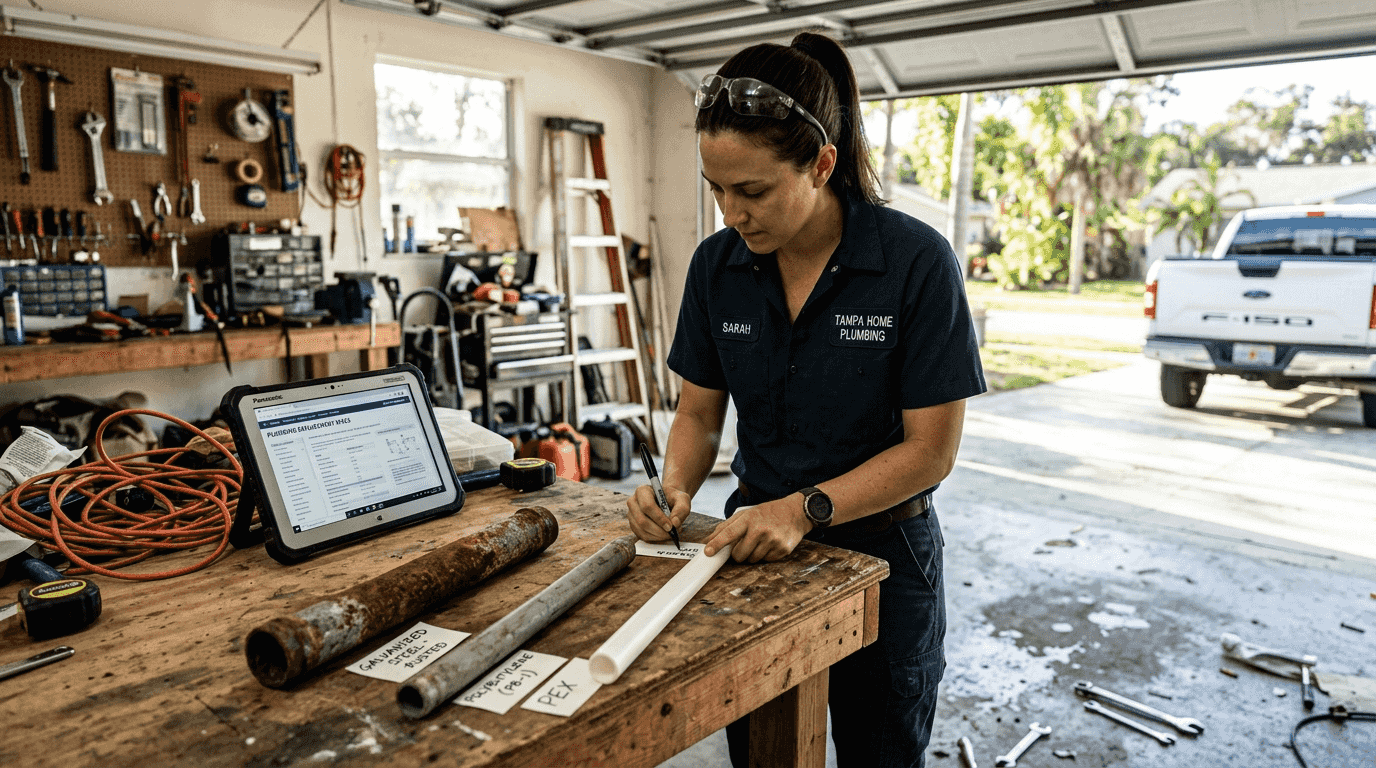
These legacy materials share common weaknesses that modern alternatives address. Galvanized pipes corrode internally, narrowing passages and contaminating water. Cast iron becomes brittle with age, cracking under ground settlement. Polybutylene reacts poorly with chlorine in municipal water, causing sudden ruptures. None were designed for Tampa’s aggressive environment where salt air and acidic soil accelerate deterioration.
Modern piping materials offer superior longevity and health safety compared to older pipe types. Cross-linked polyethylene (PEX) flexes without breaking, resists corrosion completely, and installs faster with fewer joints. Copper remains the gold standard for durability, lasting 50+ years while maintaining water purity. Chlorinated polyvinyl chloride (CPVC) provides a budget-friendly option that handles hot water without degrading.
| Material | Lifespan | Corrosion Resistance | Water Quality Impact | Cost |
|---|---|---|---|---|
| Galvanized Steel | 40-50 years | Poor, rusts internally | High contamination risk | Low initial |
| Cast Iron | 50-70 years | Moderate, cracks over time | Sediment buildup | Moderate |
| Polybutylene | 10-15 years | Poor, chlorine damage | Sudden failure risk | Very low |
| PEX | 50+ years | Excellent, no corrosion | Clean, no leaching | Moderate |
| Copper | 50-70 years | Excellent in most conditions | Superior purity | High |
| CPVC | 50+ years | Good, chlorine resistant | Clean, stable | Low to moderate |
Choosing replacement materials requires understanding Tampa Bay’s specific challenges. High chlorine levels in municipal water can stress certain plastics. Acidic soil conditions affect buried pipes differently than those in concrete slabs. UV exposure degrades some materials if pipes run through attics or exterior walls.
Pro Tip: Select pipes certified by NSF International for Tampa Bay’s humid, salty environment to ensure maximum performance and longevity.
PEX has gained popularity for repiping projects because installers can snake it through walls with minimal demolition. It expands slightly if water freezes, preventing burst pipes during rare cold snaps. Copper costs more upfront but delivers unmatched reliability and maintains home value. CPVC splits the difference, offering decent performance at reasonable prices.
Exploring plumbing installation options helps you understand installation methods and material choices. Getting new pipe estimates for plumbing services allows you to compare costs and benefits before committing to replacement.
Key material advantages:
- PEX installs quickly with fewer connections
- Copper resists bacteria growth naturally
- CPVC handles high temperatures reliably
- Modern materials don’t corrode or contaminate water
How to know when it’s time to replace your old piping
Recognizing warning signs early prevents emergency situations that force rushed decisions. Your plumbing system communicates its condition through observable symptoms. Frequent leaks that require repeated repairs indicate systemic failure rather than isolated problems. When you’re calling plumbers every few months, replacement becomes more economical than endless patches.
Discolored water signals internal pipe corrosion. Brown, yellow, or reddish tints mean rust particles are flowing through your system. This happens when protective coatings inside pipes wear away, exposing bare metal to water. The discoloration often appears first thing in the morning after water sits in pipes overnight, giving corrosion time to intensify.
Bad odors emanating from drains suggest deteriorating pipes releasing sewer gases. Properly functioning plumbing traps these gases, but cracks and corrosion create escape routes. A persistent rotten egg smell indicates hydrogen sulfide leaking from damaged sewer lines. Musty odors point to hidden leaks fostering mold growth inside walls.
Pressure issues throughout your home reveal restricted flow from buildup or leaks. When multiple fixtures lose pressure simultaneously, the problem exists in main supply lines rather than individual fixtures. Banging pipes (water hammer) indicate loose or corroded mounting brackets and deteriorating pipe integrity.
Recognizing early symptoms like leaks can prevent major plumbing failures that cost thousands in emergency repairs and water damage restoration.
Homeowners can perform basic inspections before calling professionals:
- Examine exposed pipes in basements, crawl spaces, and under sinks for visible corrosion, flaking, or discoloration
- Check water meter readings before and after a two-hour period with no water use to detect hidden leaks
- Test water pressure at multiple fixtures using a pressure gauge from hardware stores
- Inspect ceilings and walls for water stains, bubbling paint, or soft spots indicating hidden leaks
- Note any changes in water color, taste, or odor that develop over time
- Document the age of your home and research typical pipe materials used during construction
Pro Tip: Document all plumbing issues and repairs with photos and receipts before getting replacement quotes to help contractors assess scope accurately and provide precise estimates.
Severity assessment helps prioritize action. Active leaks causing visible damage require immediate attention. Reduced pressure and discolored water indicate advancing deterioration that needs addressing within months. Homes over 40 years old with original plumbing should schedule professional inspections even without obvious symptoms.
Understanding plumbing upgrades older Tampa homes need helps you plan proactively rather than reactively. Older homes benefit from comprehensive assessments that identify vulnerabilities before they become emergencies.
Benefits of replacing old piping for Tampa Bay homeowners
Upgrading your plumbing system delivers immediate and long-term advantages that extend beyond stopping leaks. Safer drinking water tops the list of benefits. Modern pipes don’t leach contaminants into your water supply. You’ll taste the difference immediately as metallic flavors disappear and clarity improves. Families with young children especially benefit from eliminating lead and rust exposure.
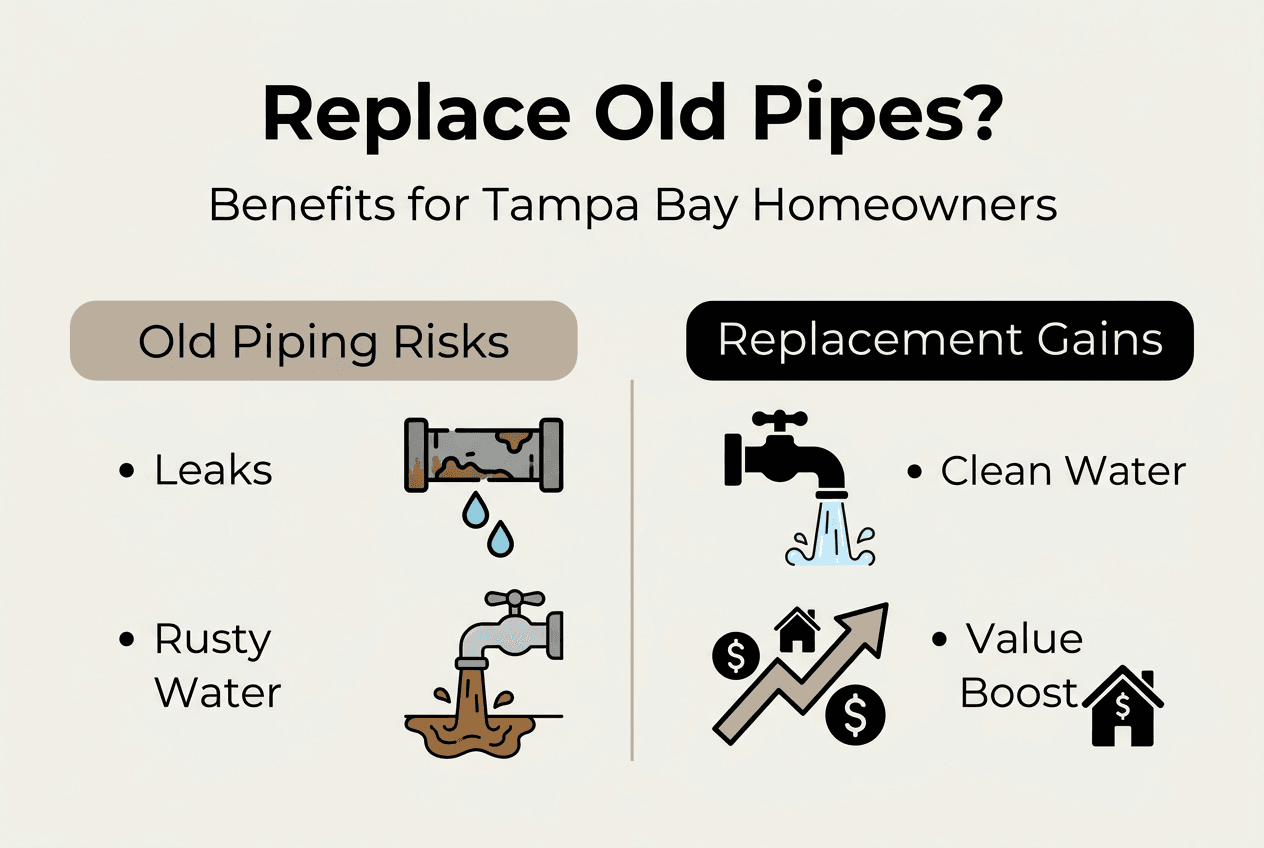
Water waste drops dramatically when you eliminate leaks. A single pinhole leak wastes 900 gallons monthly, adding $30 to $50 to utility bills. Multiple leaks compound this waste. New pipes installed properly don’t leak, cutting water bills by 20% to 40% in homes with significant existing leakage. Over a decade, these savings offset much of the replacement cost.
Property market appeal increases substantially with updated plumbing. Home inspectors flag aging pipes as major concerns, often derailing sales or forcing price reductions. Buyers recognize that purchasing a home with old plumbing means they’ll face replacement costs soon. Proactively replacing pipes before listing adds value and speeds sales. Appraisers note plumbing upgrades when determining home values.
Replacing outdated piping significantly improves water quality, reduces leaks, and increases home value while ensuring code compliance.
| Scenario | 5-Year Cost | 10-Year Cost | Water Savings | Home Value Impact |
|---|---|---|---|---|
| Keep old pipes with repairs | $4,500-$8,000 | $9,000-$15,000 | None | Negative $5,000-$10,000 |
| Replace with modern piping | $6,000-$12,000 | $6,000-$12,500 | $2,400-$4,800 | Positive $8,000-$15,000 |
Code compliance matters more than many homeowners realize. Tampa Bay municipalities update plumbing codes regularly to reflect safety standards and water conservation requirements. Older homes with legacy piping often violate current codes. While existing installations get grandfathered, any major renovation triggers requirements to bring plumbing up to code. Replacing pipes proactively avoids complications during future remodeling projects.
Lifestyle improvements include:
- Consistent water pressure throughout your home
- No more discolored water ruining laundry
- Elimination of musty odors from hidden leaks
- Peace of mind during vacations knowing pipes won’t burst
- Reduced maintenance calls and emergency repairs
Staying informed about plumbing trends 2025 home efficiency helps you incorporate water-saving technologies during replacement projects. Modern systems integrate smart leak detection and water monitoring that alert you to problems via smartphone apps.
Explore expert plumbing replacement services in Tampa Bay
Replacing your home’s plumbing system requires expertise that goes beyond basic repairs. Home Therapist brings decades of experience serving Tampa Bay homeowners facing aging pipe challenges. Our certified technicians understand how local climate and water conditions affect different pipe materials. We start with comprehensive inspections using camera technology to assess hidden damage without demolishing walls unnecessarily.
Customized solutions address your home’s specific configuration and budget. We explain options clearly, comparing materials and installation methods so you make informed decisions. Our repiping projects minimize disruption to your daily routine through efficient scheduling and careful protection of your belongings. Detailed repiping and plumbing service involvement explained on our website walks you through each project phase.
Advanced plumbing services leak inspection and diagnosis technology pinpoints problems accurately, ensuring we address all issues during replacement rather than discovering additional failures later. Our warranty coverage for plumbing services protects your investment with guarantees on materials and workmanship. Contact Home Therapist today for a consultation that starts your journey toward reliable, modern plumbing.
Frequently asked questions
How long do old pipes typically last before replacement is recommended?
Typical lifespan varies significantly by pipe material and local conditions. Copper pipes often last 50 to 70 years with proper water chemistry, while galvanized steel deteriorates within 40 to 50 years due to internal corrosion. Polybutylene fails much sooner, typically requiring replacement within 10 to 15 years. Tampa Bay’s humid climate and mineral-rich water accelerate deterioration, often shortening these estimates by 20% to 30%. Professional inspection after 30 years helps determine remaining service life regardless of material type.
What risks do old pipes pose to water quality in Tampa homes?
Corroded pipes release rust particles, lead, and other heavy metals into your water supply, affecting both taste and safety. Galvanized steel pipes leach zinc and iron as protective coatings deteriorate, creating metallic flavors and brown discoloration. Lead solder used in older copper installations dissolves into water, posing serious health risks especially for children and pregnant women. Bacterial growth thrives in corroded pipe interiors, further compromising water purity. These contaminants accumulate over time, making long-term exposure particularly concerning for families.
Can homeowners inspect pipes themselves before calling a plumber?
Homeowners can perform valuable preliminary inspections to identify obvious problems before professional assessment. Look for visible corrosion, water stains, and active leaks on exposed piping in basements, crawl spaces, and under sinks. Test water pressure at multiple fixtures and note any discoloration or odors when running taps. Check your water meter for movement during periods of no use to detect hidden leaks. However, most piping hides behind walls and underground, requiring professional camera inspection and pressure testing to assess true condition accurately.
What materials are recommended for replacing pipes in Tampa Bay homes?
PEX and copper piping are top recommendations due to their longevity and resistance to Tampa’s humid, salt-laden environment. PEX offers flexibility that simplifies installation through existing walls while resisting corrosion completely and handling minor freezing without bursting. Copper provides unmatched durability and naturally inhibits bacterial growth, maintaining water purity for decades. CPVC serves as a budget-friendly alternative that performs well in Tampa’s conditions. Choose materials certified by NSF International for drinking water contact and verify compatibility with your home’s specific water chemistry and installation requirements.
About This Guide
Written and reviewed by the Home Therapist Cooling, Heating & Plumbing team, a family-owned Tampa Bay HVAC and plumbing company serving the area since 2011. Our licensed techs hold Florida HVAC license CAC1819196 and Plumbing license CFC1431159, with over 1,100 five-star reviews across Tampa, St. Petersburg, Clearwater, Wesley Chapel, Lutz, Riverview, Brandon, Valrico, Apollo Beach, Palm Harbor, Land O’ Lakes, Plant City, New Port Richey, and surrounding Tampa Bay zip codes.
Honest pricing:. Upfront quotes, no high-pressure sales, no surprise fees.
Questions about your home? Call (813) 343-2212 for a real tech, or request a callback. Available 7 days a week including evenings and weekends for emergencies.
Recommended
- Plumbing upgrades for older Tampa homes: top options 2026
- Why Upgrade Plumbing System in Tampa Homes
- Full Pipe Replacement Service In Tampa, FL Home Therapist Cooling, Heating, and Plumbing
- Preventative plumbing tips for Tampa Bay homeowners 2026
- Can I Install Plumbing Into My Log Cabin – Log Cabin Kits To Buy Online
More Repiping Articles
- El Turco Ct Got a Full PEX-A Repipe: Whole-Home Water Supply Repipe and New Water Line Installation in Sun City Center, FL 33573
- Whole House Repipe vs Spot Repair in Tampa: When One Leak Means Replace the Pipes
- A Ruptured Copper Line on Attenbury Dr Fixed in 33 Minutes: Copper Line Repair in Tampa, FL 33615
- Whole Home Repiping Cost: What Actually Drives Your Tampa Bay Quote
- How Long Does a Repipe Take in Tampa, FL? Day-by-Day Timeline


