

The Outdoor Unit Stopped While the Indoor Fan Ran: AC Repair in Palm Harbor, FL 34684
The outdoor unit had stopped running at this Lomond Drive home in Palm Harbor, FL 34684, while the indoor unit was still operating. That combination matters because it points the diagnosis toward the outdoor electrical and starting circuit instead of assuming the whole air conditioning system has failed. Barbaro handled this AC repair for Home Therapist after the homeowner had already checked the breakers and thermostat and suspected the capacitor might be the issue. The system was about 9 years old, and our inspection confirmed that the run/start capacitor was defective and out of factory specification.
For pricing and same-day availability, see our AC repair in Palm Harbor page.
- Service performed: AC repair with capacitor replacement
- Location: Lomond Drive in Palm Harbor, FL 34684
- Technician: Barbaro
- Homeowner situation: indoor unit running, outdoor unit off, breakers not tripped, thermostat appearing normal
- Key finding: run/start capacitor tested defective and out of factory specification
- System age noted on the report: approximately 9 years
The failed capacitor explained why the outdoor unit stopped on this Palm Harbor AC repair
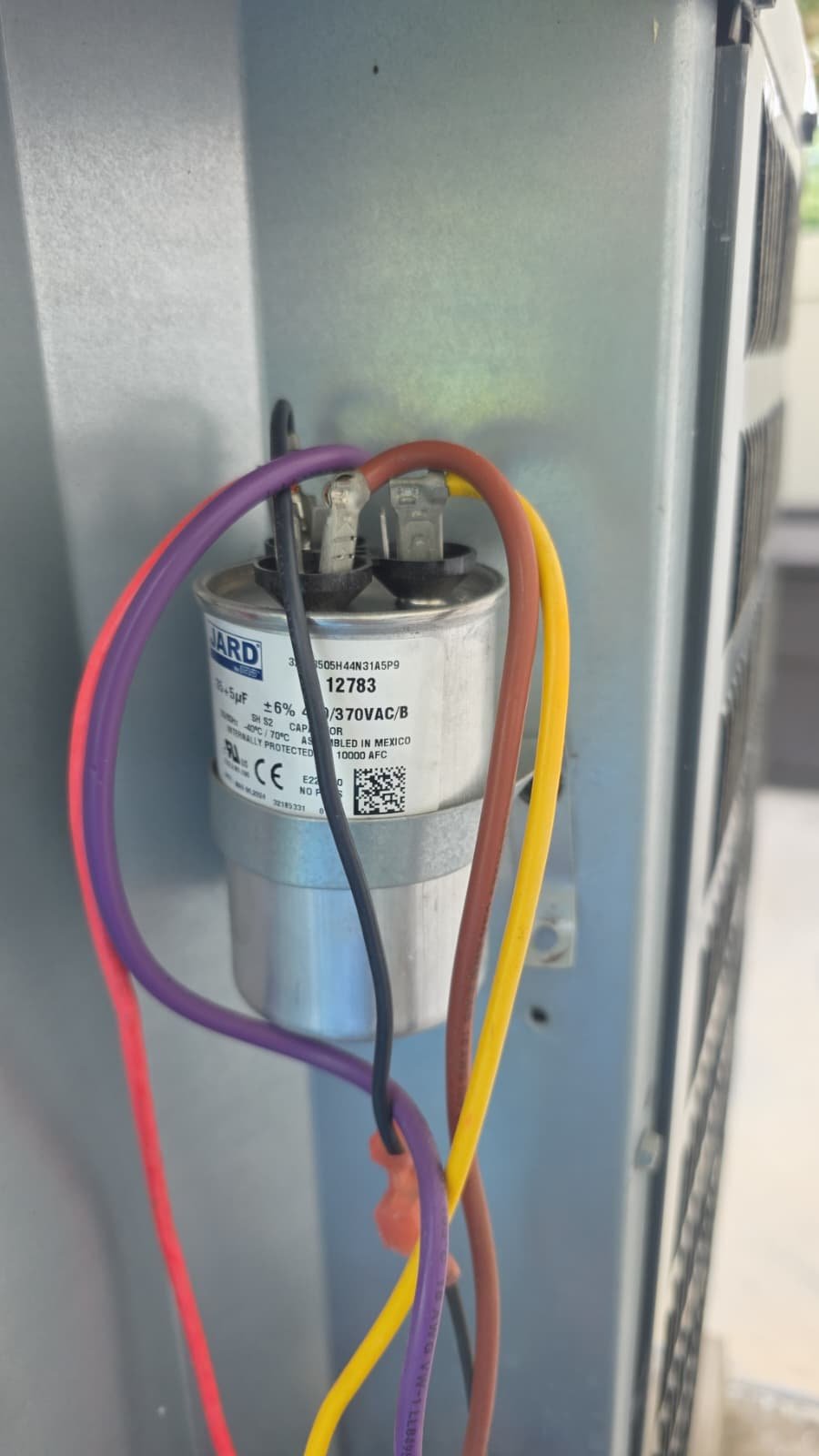
The run/start capacitor was the specific failed item on this Palm Harbor AC repair because it tested outside the required factory specification. A capacitor is a small electrical component, but it does a large job. It stores and releases a burst of electrical energy that helps motors start and continue running correctly. In an outdoor condenser, that matters for the compressor and fan motor operation.
.ht-grid { display: grid !important; grid-template-columns: repeat(3, 1fr) !important; gap: 8px !important; max-width: 960px !important; margin: 0 auto !important; }
.ht-figure { margin: 0 !important; padding: 0 !important; height: 155px !important; overflow: hidden !important; border-radius: 6px !important; }
.ht-figure img { width: 100% !important; height: 100% !important; object-fit: cover !important; display: block !important; }
@media (max-width: 900px) { .ht-grid { grid-template-columns: repeat(2, 1fr) !important; } }
@media (max-width: 640px) { .ht-grid { grid-template-columns: 1fr !important; } .ht-figure { height: 200px !important; } }
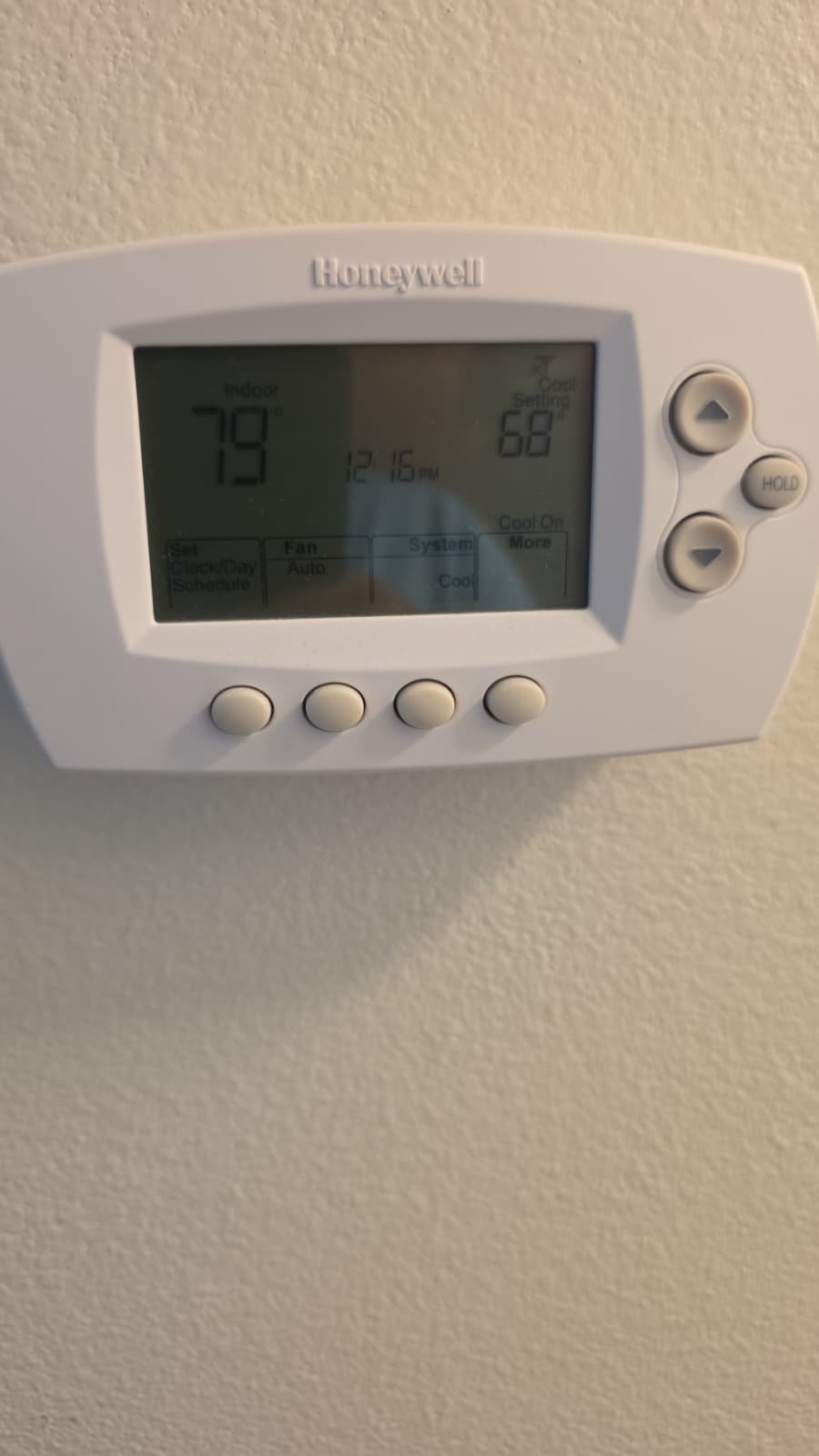
The homeowner’s description gave us a useful starting point. The indoor equipment was running, the outdoor unit had shut down, the breakers were not tripped, and the thermostat appeared to be working. When an indoor blower continues to run but the outdoor condenser does not, we do not jump straight to a refrigerant diagnosis or recommend major equipment replacement. We first verify the electrical components that allow the outdoor unit to start and stay on.
Barbaro tested the run/start capacitor and confirmed it was defective. That finding matched the symptom. If the capacitor cannot provide the correct electrical support, the outdoor unit may fail to start, start intermittently, or shut down while the indoor blower keeps moving air. To the homeowner, it can feel like the AC is running because air is coming from the vents. In reality, the system may only be circulating indoor air without the outdoor unit doing the heat removal.
That distinction is important in Florida homes. During a long cooling season, a system can run for many months with very little rest. Capacitors sit in hot outdoor cabinets and work every time the equipment cycles. Over time, heat and electrical stress can weaken them. On this Lomond Drive call, the test result made the decision clear. We replaced the defective capacitor with a new capacitor matching the required specifications, then verified system operation after the repair.
The homeowner’s breaker and thermostat checks helped narrow the diagnosis
The homeowner had already checked two common causes before we arrived in Palm Harbor, FL 34684: the breakers and the thermostat. That detail helped because it told us the problem was not simply an obvious tripped breaker or a thermostat set incorrectly. We still verify those items professionally during service, but the homeowner’s observation gave us a more focused picture of the failure.
The most useful clue was that the indoor unit was still running while the outdoor unit was off. Many people describe that as “the machine is not working,” which is accurate from a comfort standpoint, but it is not specific enough for a repair decision. The split symptom matters. The indoor blower and the outdoor condenser are separate assemblies that work together. If one runs and the other does not, the technician has to determine whether the issue is a control problem, an electrical component failure, a motor problem, or another outdoor-unit fault.
On this job, the capacitor test was the turning point. We could have spent time chasing broader possibilities first, but the data pointed to the part most likely to cause this specific symptom. That is the insider lesson from this call: when an outdoor unit stops but the indoor fan still runs, the right first question is not always “Is the AC low on refrigerant?” In many Tampa Bay area service calls, the better first check is whether the outdoor electrical starting components can still do their job.
This visit included the free diagnosis line item, the capacitor replacement, and the Premium Therapy Plan 2.0 discount shown on the work order. The combined invoice for the completed visit came to $251.10. We frame that as a combined visit total because more than one line item appeared on the job record, not as a universal price for every capacitor repair.
A 9-year-old system needs electrical components watched closely after this kind of repair
The system was approximately 9 years old, and that age shaped our recommendation after the repair. We did not tell the homeowner that the whole system had to be replaced. We did explain that electrical components deserve closer monitoring as equipment ages, especially capacitors, contactors, and motors.
A contactor is the electrical switch that allows high-voltage power to reach the outdoor unit when the thermostat calls for cooling. Motors keep the fan and air movement working. Capacitors support motor startup and operation. These components are separate parts, but they work together. When one weakens, it can create symptoms that look similar from inside the home: warm air, reduced cooling, short cycling, humming, or an outdoor unit that does not run.
For this Lomond Drive system, the failed capacitor was the confirmed defect. After installing the matching replacement capacitor, we verified operation rather than leaving after the part swap. That final check matters because a capacitor can be the failed part, but the technician still needs to confirm the outdoor unit responds properly after the repair. If the unit starts, runs, and operates as expected, the homeowner gets a clear answer instead of a guess.
Continued monitoring is not scare language. It is practical ownership advice for a 9-year-old AC system in Palm Harbor. Florida heat, humidity, and long run times place more stress on electrical parts than a shorter cooling season would. A maintenance visit gives a technician a chance to catch weak readings, worn contact points, or unusual motor behavior before the system fails during peak demand.
Pro Tips for Palm Harbor homeowners after a capacitor replacement
Listen for the difference between air movement and cooling. If the indoor fan runs but the home is not cooling, check whether the outdoor unit is running too. Air from the vents does not always mean the system is removing heat.
Do not keep forcing the system to run if the outdoor unit will not start. Repeated calls for cooling can put stress on electrical components. Set the thermostat to a safe setting and schedule a diagnosis instead of cycling the equipment over and over.
Keep the outdoor cabinet clear. Palm Harbor yards can grow quickly in humid weather. Give the condenser space to breathe so heat can leave the coil and electrical components are not sitting in extra trapped heat.
Use maintenance to track electrical wear, not just cleanliness. A good visit should include more than rinsing and looking. Electrical checks help identify weak capacitors, worn contactors, and motor concerns on aging systems.
Pay attention after storms and power interruptions. Tampa Bay weather can be rough on AC equipment. If the outdoor unit behaves differently after a storm, a diagnostic visit can separate a simple electrical issue from a larger repair.
Capacitor replacement questions from this Lomond Drive AC repair
Why did the indoor unit run if the outdoor unit had stopped?
The indoor blower and outdoor condenser do different jobs. The indoor blower can still move air through the ductwork even when the outdoor unit is not operating. When that happens, the home may feel like the AC is running, but the system is not removing heat properly. On this Palm Harbor call, that split symptom helped point the diagnosis toward the outdoor unit and its starting components.
How did we know the capacitor was the correct repair?
Barbaro tested the run/start capacitor and confirmed it was out of factory specification. That test result matched the homeowner’s report that the outdoor unit had stopped while the indoor side continued running. We replaced the defective capacitor with a new capacitor matching the required specifications, then verified the system operated after the repair. The repair decision came from testing, not guessing.
Does a failed capacitor mean the AC system needs replacement?
No. A failed capacitor by itself does not automatically mean the entire AC system needs replacement. On this job, the system was about 9 years old, so we recommended continued monitoring of electrical components. That is different from telling the homeowner to replace the equipment. The confirmed repair was the capacitor, and the system was operational after the work was completed.
Why do capacitors fail often in the Tampa Bay area?
Capacitors work in hot outdoor cabinets and help motors start through a long Florida cooling season. Heat, frequent cycling, and normal electrical wear can push them out of specification over time. Palm Harbor homes often rely on cooling for much of the year, so electrical parts see heavy use. Periodic maintenance helps catch weak components before they create a no-cool situation.
Why choose Home Therapist for Palm Harbor AC repair
Home Therapist serves Tampa Bay and surrounding Florida communities with licensed HVAC and plumbing service, including HVAC license CAC1819196 and plumbing license CFC1431159. We were founded in 2017 and have earned 1,300+ five-star reviews by giving homeowners clear findings, straightforward options, and repair decisions based on testing. You can learn more through our Home Therapist website, see our local business profile with the Tampa Bay Chamber of Commerce, and review our reputation through the Better Business Bureau. We also stay connected with homeowners on Facebook, Instagram, and YouTube.
Schedule AC repair in Palm Harbor, FL 34684
If your indoor fan is running but the outdoor unit has stopped, Home Therapist can help you sort out the problem without pressure or guesswork. We lead with FREE estimates and FREE diagnosis, then explain what we find in plain English. For AC repair in Palm Harbor, FL 34684, call Home Therapist Cooling, Heating, and Plumbing at (813) 343-2212. We service every brand and focus on the repair that the testing supports.
The industry guidance behind this approach is set out in ACCA technical standards.


