
Leaky Air Ducts in Carrollwood: What We Found in One Attic
Quick answer: Leaky air ducts happen when plenum connections, seams, or joints are not sealed with mastic or properly supported. On a recent Carrollwood call, our techs found a newly installed duct system with holes in the plenum, an unsealed duct core, and ductwork left hanging loose instead of being hung from the trusses, all of it leaking conditioned air straight into the attic and making the AC struggle to keep up.
On this page: What causes leaky air ducts · How can you tell if your air ducts are leaking · What we found on this Carrollwood call · How do you fix leaky ductwork · Can you seal air ducts yourself · How much does it cost to fix leaky ductwork · Why does poor duct installation cost you every month · What should Carrollwood homeowners do next · FAQ
What causes leaky air ducts?
Leaky air ducts almost always come down to bad connections, bad seals, or bad support, and in a lot of Tampa Bay attics we find all three at once.
Ductwork moves conditioned air from your AC to every room in the house. Every joint, every plenum connection, every place where flex duct meets metal is a potential leak point. When a system is installed correctly, those connections get sealed with mastic (a thick paint like sealant) or foil tape rated for duct use, and the duct runs get properly supported so they do not sag, kink, or pull apart over time.
When it is installed poorly, you get exactly what we found on a recent Carrollwood call: a plenum with holes in it, a duct core that was never sealed, and duct sections not hung from the trusses the way they should be. Every one of those gaps is conditioned air escaping into a 130 plus degree attic in the middle of a Florida summer instead of going into the living space.
Other common causes we see across Tampa Bay attics include:
- Old ductwork left in place after a new system goes in, creating confusion and sometimes airflow fighting itself
- Mastic or tape that has dried out and cracked after 10 to 15 years
- Flex duct that has been crushed by someone walking through the attic or storing boxes on it
- Rodents or pests chewing through duct material
- Cheap or rushed installations where the installer skipped sealing altogether
The end result is the same no matter the cause. Your AC runs longer, your electric bill goes up, and rooms far from the air handler never feel as cool as the rest of the house. If your ductwork is more than 10 years old or you have never had it inspected, it is worth a look before summer really hits.
| Location | Carrollwood, FL |
| Customer complaint | AC was not keeping up with the cooling load |
| Attic findings | Old ductwork left in place alongside a newly installed system |
| Plenum condition | Holes in the plenum leaking conditioned air into the attic |
| Duct core sealing | Not properly sealed, needed white mastic applied |
| Duct support | Ductwork not hung properly, should be supported from the trusses |
| Outcome | Free estimate given, new duct installation recommended |
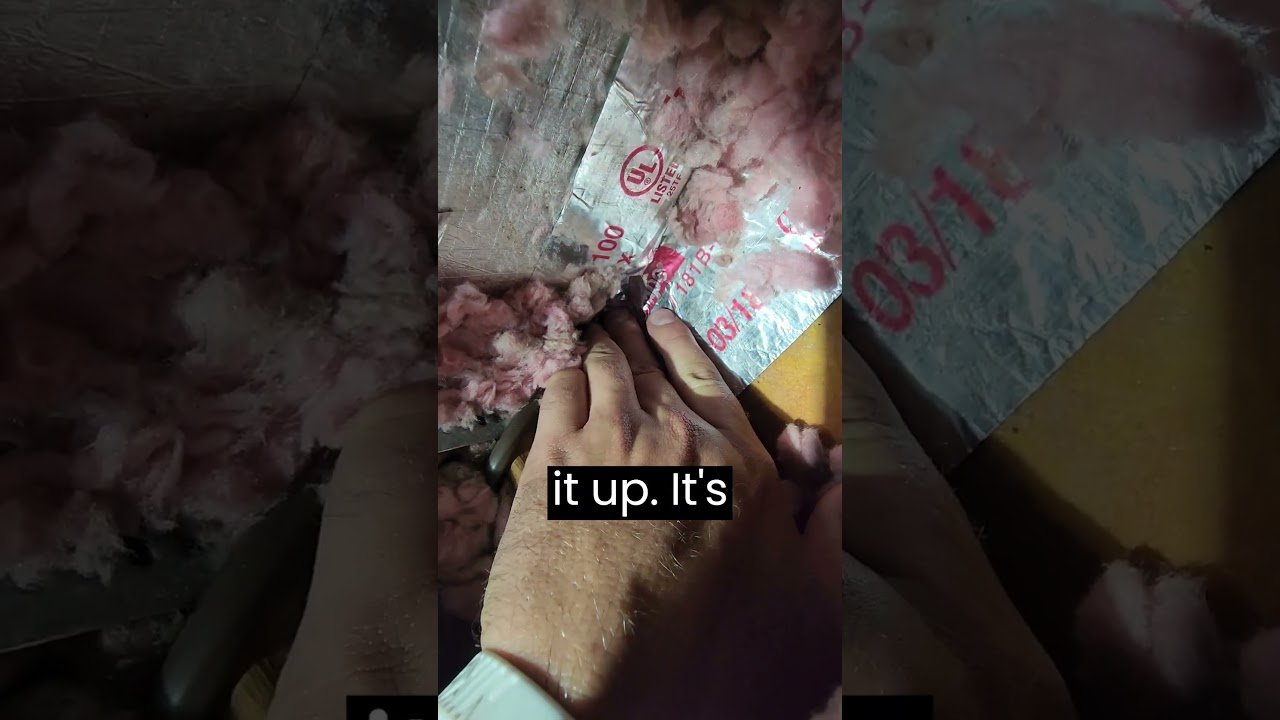
What the video shows
- 0:00 Tech heads into the Carrollwood attic to check the ductwork after an AC complaint
- 0:10 Old ductwork found still in place next to the newer installation
- 0:20 Plenum shown with holes leaking conditioned air into the attic
- 0:35 Duct core seams pointed out as unsealed, needing white mastic
- 0:45 Ductwork shown hanging loose instead of properly supported from the trusses
- 0:52 Tech explains the poor install will cost the homeowner in efficiency and likely need replacement
How can you tell if your air ducts are leaking?
The clearest signs are uneven cooling room to room, a hot attic that never seems to cool down, higher than normal electric bills, and a musty or dusty smell coming through your vents.
Most homeowners cannot see their ductwork because it is buried in the attic, so you are usually reading the symptoms rather than the leak itself. If one bedroom is always warmer than the rest of the house, or if your AC runs almost constantly but never quite catches up to the thermostat setting, leaky ducts are one of the first things a tech should check. That was exactly the complaint on our Carrollwood call. The homeowner said the AC was not keeping up with the cooling load, and once we got into the attic, the reason was obvious.
Some signs point straight to duct problems:
- Rooms at the far end of the house feel warmer than rooms near the air handler
- Your energy bill climbs even though you have not changed your thermostat habits
- You feel warm air coming from attic access panels or through can lights
- Ductwork you can see is visibly disconnected, crushed, or sagging
- Dust or a musty smell increases right when the AC kicks on
If you want to confirm it yourself before calling anyone, a flashlight check at the attic access point can show obvious problems like a duct that has come loose or a plenum with visible gaps. But most leaks are at seams and connections you cannot see without getting up into the attic and following every run, which is why we recommend a free inspection rather than guessing. On the Carrollwood job, the leaks were not subtle once we were up there, holes in the plenum and a duct core that had never been sealed, but a homeowner standing in the living room below would have no way to know that just from how the house felt.
| Likely cause | Telltale sign | Safe to DIY? |
|---|---|---|
| Plenum with holes or gaps | Visible openings at the main connection box in the attic | No, needs a licensed tech |
| Unsealed duct core seams | Air movement or coolness felt in the attic near the ducts | No, mastic application needs to be done correctly |
| Ductwork not hung from trusses | Duct runs sagging, resting on insulation, or lying flat | No, needs proper re-support |
| Old ductwork left in attic | Two sets of ducts, confusion about which is active | No, needs professional removal |
| Crushed or kinked flex duct | Visible dents or tight bends restricting airflow | No, replacement recommended |
| Dried out mastic or tape on older systems | Cracking or peeling sealant at joints | Minor spots only, otherwise call a pro |
| Rodent or pest damage to ductwork | Torn or chewed sections of flex duct | No, needs inspection and repair |
What we found on this Carrollwood call
We got a call from a homeowner in Carrollwood, Florida because her AC was not keeping up with the cooling load, and what we found in the attic explained the whole problem.
When we got up into the attic to check the ductwork, the first thing we noticed was that the old ductwork had never been removed. Whoever installed the new system just left the old runs up there and put in new ductwork alongside it, which right away told us this was not a careful installation.
Once we looked closer at the new ductwork, the problems kept stacking up. The plenum, which is the main box that connects the air handler to the duct runs, had holes in it. That means conditioned air the system worked to cool was leaking straight out into the attic instead of reaching the rooms of the house. The duct core itself was not properly sealed either. It needed white mastic applied to close up the seams, which is standard practice on any correct installation and should have been done the first time.
On top of that, the ductwork was not hung properly. In a correct install, duct runs get hung from the trusses to keep them straight, supported, and away from insulation and attic debris. This system was not hung the way it should have been, which adds stress on the connections and makes leaks and sagging more likely over time.
The homeowner had no idea any of this was going on. From inside the house, all she knew was the AC was struggling to keep the home cool. She had no way to see that the attic told a completely different story: a poor installation that was going to cost her in efficiency every single month and would likely need to be replaced again down the road if left as is.
We gave her a free estimate and recommended a proper new duct installation to replace what was up there, done right this time with sealed connections and correct support.
How do you fix leaky ductwork?
Fixing leaky ductwork means sealing every connection with mastic or mastic tape, replacing any crushed or damaged sections, and making sure the runs are properly supported, and in cases where the ductwork was installed poorly to begin with, a full replacement is often the more honest fix.
Small leaks at accessible joints can sometimes be sealed on the spot with mastic, which is a thick, paint like sealant that a technician brushes or trowels on over seams and connections. It holds up far better over time than duct tape, which despite the name is not rated for long term duct sealing and dries out and peels within a few years in a hot Florida attic.
For a plenum with actual holes in it, like what we found on the Carrollwood job, patching is sometimes possible depending on the size and location of the damage, but if the plenum was fabricated or installed poorly in general, patching one hole just means the next one shows up soon after. The bigger fix in that situation is replacing the plenum connection and resealing the whole system properly.
A proper fix generally includes:
- Sealing every seam and joint with mastic, not tape
- Replacing any crushed, torn, or disconnected sections of flex duct
- Hanging duct runs from the trusses so they stay straight and supported instead of resting on insulation or sagging under their own weight
- Removing old, abandoned ductwork instead of leaving it in the attic
- Pressure testing the system afterward to confirm the leaks are actually closed
When ductwork was installed poorly from the start, like the system we found in Carrollwood, patching individual leaks is really just delaying the inevitable. That system was already showing multiple failure points after presumably one installation, and the honest recommendation was a full duct replacement rather than chasing leaks one at a time for the next few years. That is why we walked the homeowner through a free estimate for new ductwork instead of just a patch job.
Can you seal air ducts yourself?
You can seal small, easily accessible duct leaks yourself with mastic sealant, but most of what causes real energy loss is in the attic at connections that are hard to reach, hard to inspect properly, and easy to make worse if you are not used to working around ductwork and insulation.
If you have a visible gap at an accessible register boot or a small seam you can safely reach, mastic sealant from a hardware store can work for a minor patch. Apply it in a solid layer over the seam, let it fully cure per the product instructions, and avoid regular duct tape, which is not built for this and fails within a couple of years in attic heat.
That said, there are real reasons most duct sealing is not a great DIY project:
- Attic access in Florida homes often means walking on trusses, and stepping through drywall or crushing insulation is a common and costly mistake
- Tampa Bay attics regularly hit well over 100 degrees, which makes working up there both uncomfortable and unsafe for long stretches
- Finding every leak point requires following the full duct run, not just checking the one spot you can see from the attic hatch
- A plenum with structural holes, like the one on our Carrollwood job, is not a simple mastic patch, it often needs proper fabrication or replacement
- Ductwork that is not hung correctly needs to be re-supported, which is a different job than sealing a seam
On the Carrollwood system, the homeowner had no visibility into any of these problems and no reasonable way to diagnose or fix them herself. This is exactly the kind of job where a free inspection from a licensed tech is worth it before you climb into the attic and start guessing. You will find out quickly whether you are dealing with a five minute mastic fix or a system that needs to be replaced.
How much does it cost to fix leaky ductwork?
Cost depends entirely on what is actually wrong, a small mastic seal job at one or two joints is a minor repair, while a poorly installed system like the one we found in Carrollwood, with a damaged plenum, unsealed core, and improperly supported runs, generally points toward full duct replacement rather than a patch.
We are not going to throw out a number that does not apply to your house, because duct problems vary so much from one attic to the next. A single loose connection is a different job than a plenum full of holes sitting next to abandoned old ductwork nobody removed. That is exactly why we start every call with a free diagnosis and a free estimate, so you know what you are actually dealing with before you agree to any work.
Generally speaking, factors that affect the cost of a duct repair or replacement include:
- How much of the duct system needs to be sealed versus replaced
- Whether the plenum itself is damaged or just the connections around it
- How much old, abandoned ductwork needs to be removed from the attic first
- The size of the home and the total length of duct runs
- Attic access and how difficult it is to work in that specific space
What we can tell you is that leaky ductwork costs you every month whether you fix it or not, just in a different way. A system leaking conditioned air into a hot attic makes your AC run longer to reach the same temperature, and that shows up on your electric bill month after month. On the Carrollwood job, the homeowner was already dealing with that inefficiency, and without a fix, the poor installation was headed toward needing a full replacement anyway once something eventually failed outright.
If you want an honest number for your own home, the fastest path is a free estimate. You can request one for duct sealing, repair, or full duct replacement through our Carrollwood air duct service page, and a licensed tech will walk your attic and tell you straight what you are actually looking at.
Why does poor duct installation cost you every month?
Poor duct installation costs you every month because your AC is conditioning air that never makes it to your living space, so the unit runs longer and harder to reach the same comfort level a properly sealed system would hit with less effort.
Think about what happens on a system like the one we found in Carrollwood. Air comes off the coil already cooled, and instead of traveling through sealed ductwork into the bedrooms and living room, a portion of it pours out through holes in the plenum and unsealed seams into the attic. In summer, a Tampa Bay attic can sit well over 100 degrees. That cooled air is now fighting against attic heat and just adding to the load instead of cooling the house. Meanwhile the thermostat inside is still reading warm, so the system keeps running, trying to make up the difference.
This shows up in a few predictable ways:
- Higher electric bills month after month, sometimes significantly higher
- Rooms that never quite reach the temperature you set on the thermostat
- An AC system that runs longer cycles and puts more wear on the compressor and blower motor over its lifespan
- Increased humidity indoors, since a system that never fully satisfies the thermostat also does not remove as much moisture from the air
It also compounds over time. A duct system with holes and unsupported runs tends to get worse, not better. Loose ductwork sags further, unsealed seams open wider, and what starts as a moderate leak becomes a bigger one. On the Carrollwood job, we told the homeowner plainly that leaving the system as is would keep costing her in efficiency every month and would likely mean replacing it again down the road anyway, so the smarter move was addressing it properly the first time rather than living with the inefficiency indefinitely.
If your energy bills have crept up without a clear reason and your AC seems to run constantly, leaky or poorly installed ductwork is one of the most common and most overlooked causes in Tampa Bay area homes.
What should Carrollwood homeowners do next?
Start with a free inspection of your attic ductwork, especially if your AC struggles to keep up with the heat, your bills have climbed, or you know your duct system is more than 10 to 15 years old.
The homeowner on this Carrollwood call did exactly the right thing. She noticed her AC was not keeping up and called before things got worse. Because we got into the attic quickly, we were able to identify a poorly installed duct system, holes in the plenum, an unsealed duct core, ductwork not hung properly, and old ductwork that had simply been left behind, before it turned into a bigger failure or a much higher repair bill.
If you are dealing with any of the following, it is worth getting a licensed tech into your attic:
- Rooms that stay warmer than the rest of the house no matter what you do with the thermostat
- Electric bills that have climbed without an obvious reason
- An AC system that runs almost constantly but never quite catches up
- A duct system you know was installed by someone else and have never had inspected
- Visible signs in the attic like sagging, disconnected, or crushed ductwork
We offer free diagnosis and free estimates on every service call, because duct problems vary so much house to house that guessing at a fix over the phone does not serve anyone well. A tech needs eyes on the actual attic, the actual plenum, and the actual duct runs before recommending sealing, repair, or full replacement.
If your home is in Carrollwood or anywhere else around Tampa Bay and something about your cooling has felt off, whether that is uneven temperatures, rising bills, or an AC that just will not keep up anymore, get it looked at before the next heat wave. You can request a free estimate through our Carrollwood air duct service page, and a licensed technician will walk your attic, show you exactly what is going on, and give you straight options, no guesswork, no pressure.
For general guidance that lines up with what we do on a service call, see the U.S. Department of Energy and ENERGY STAR maintenance guidance.
Frequently asked questions
What is mastic and why does it matter for ductwork?
Mastic is a thick, paint like sealant used to close seams and connections on ductwork, and unlike regular duct tape it holds up over years of heat exposure in a Florida attic instead of drying out and peeling.
Why was the ductwork in Carrollwood installed poorly?
On this job the plenum had holes, the duct core was never sealed with mastic, and the ductwork was not hung from the trusses the way it should have been, all signs of a rushed or careless installation.
Does leaky ductwork really affect my electric bill?
Yes, conditioned air leaking into a hot attic means your AC has to run longer to reach the same indoor temperature, which shows up directly as higher monthly electric costs.
Do you offer free estimates for duct repair in Carrollwood?
Yes, every service call includes free diagnosis and a free estimate, which is exactly what we gave the homeowner on this Carrollwood job before recommending new duct installation.
Want the raw footage and full transcript? Watch the original video and read the transcript.
Key takeaways
- An AC that cannot keep up with the heat is often a duct problem, not just an equipment problem, especially in attics with unsealed or unsupported ductwork.
- On this Carrollwood job, the plenum had holes, the duct core was never sealed with mastic, and the ductwork was not properly hung, all signs of a poor original installation.
- Old ductwork left in the attic alongside new installation is a red flag that the job was rushed or done carelessly.
- Leaky ducts cost homeowners in efficiency every single month even if the system has not failed outright yet.
- Free diagnosis and free estimates are the fastest way to know whether you need a simple mastic seal or a full duct replacement.
Need help in Carrollwood? See our air duct service in Carrollwood, or all of our air conditioning services across Tampa Bay.
Home Therapist Cooling, Heating, and Plumbing is the local Tampa Bay team for air duct service in Carrollwood and across the bay. We answer the phone fast, give FREE estimates and a FREE diagnosis on service calls, carry common parts on every van, and stand behind the work with real warranties. We service every brand and install Goodman and Daikin systems. Licensed HVAC CAC1819196 and plumbing CFC1431159.
Call (813) 343-2212 or book air duct service in Carrollwood.
More Ductwork & Airflow Articles
- 3 Return Drops Replaced with R6 Flex Ductwork on Greenwood Loop, Wesley Chapel, FL 33545
- How a Room-by-Room Attic Measurement Changed the Scope: Duct Work Replacement Design on Berea Dr, Odessa, FL 33556
- Mold in Air Ducts in Tampa: What Our Techs Actually Find
- AC Tune-Up and Ductwork Inspection on Blossom Ave: What Barbaro Found in Tampa, FL 33614


