

A Float Switch Matters More Than Most Goodman Installs in Riverview
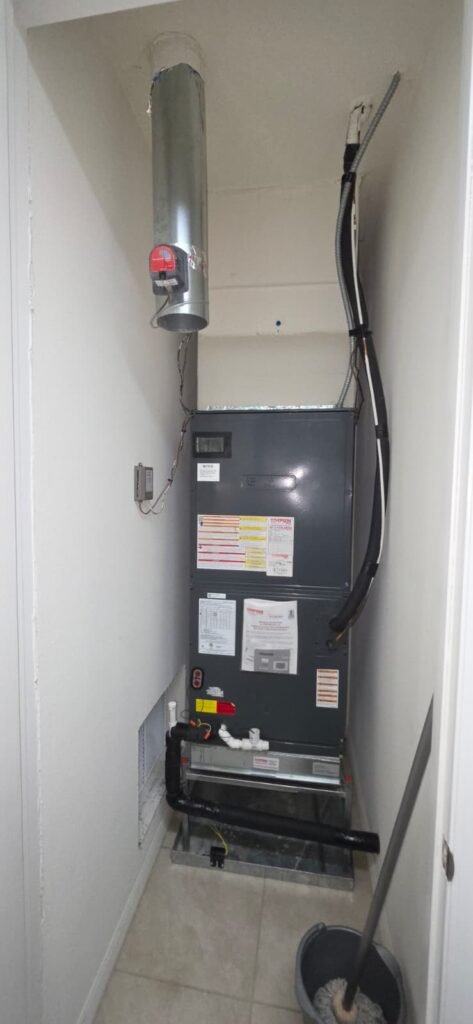
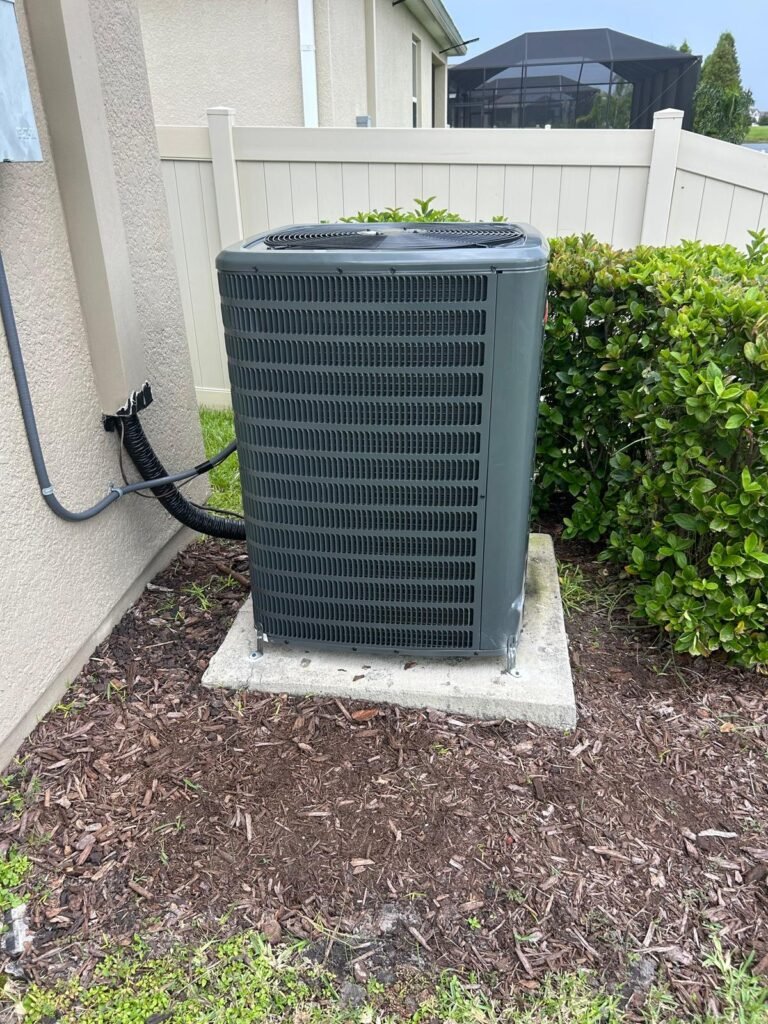
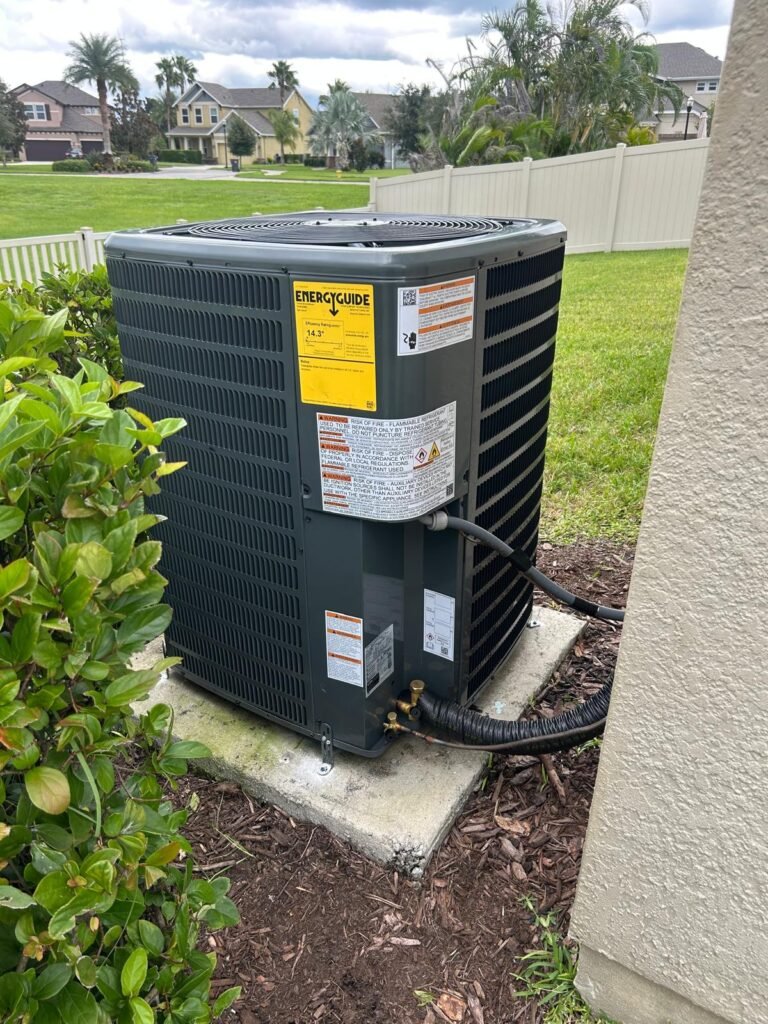
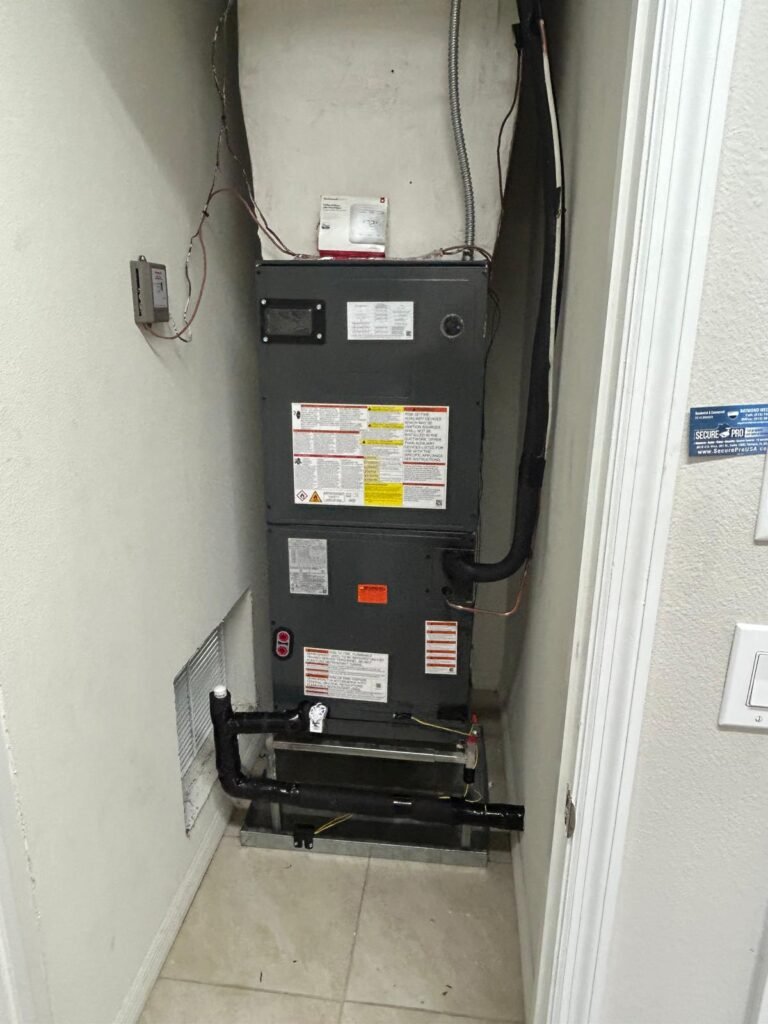
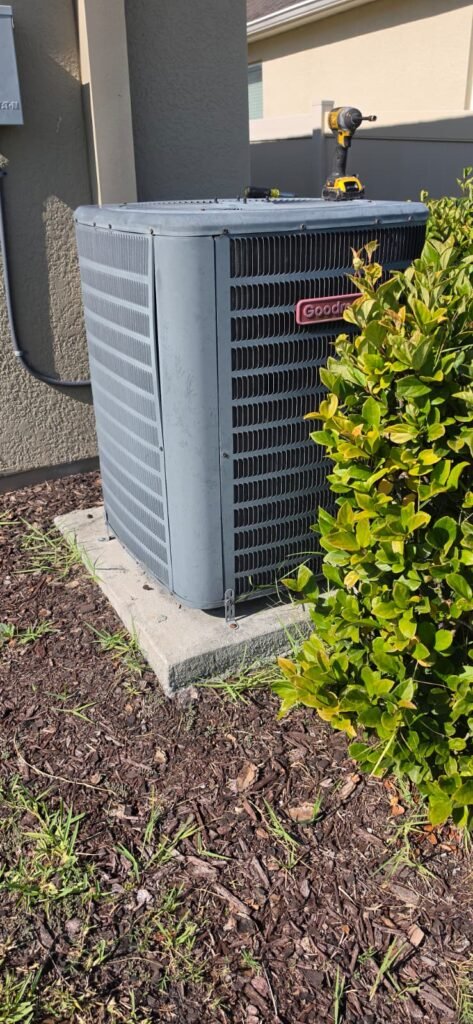
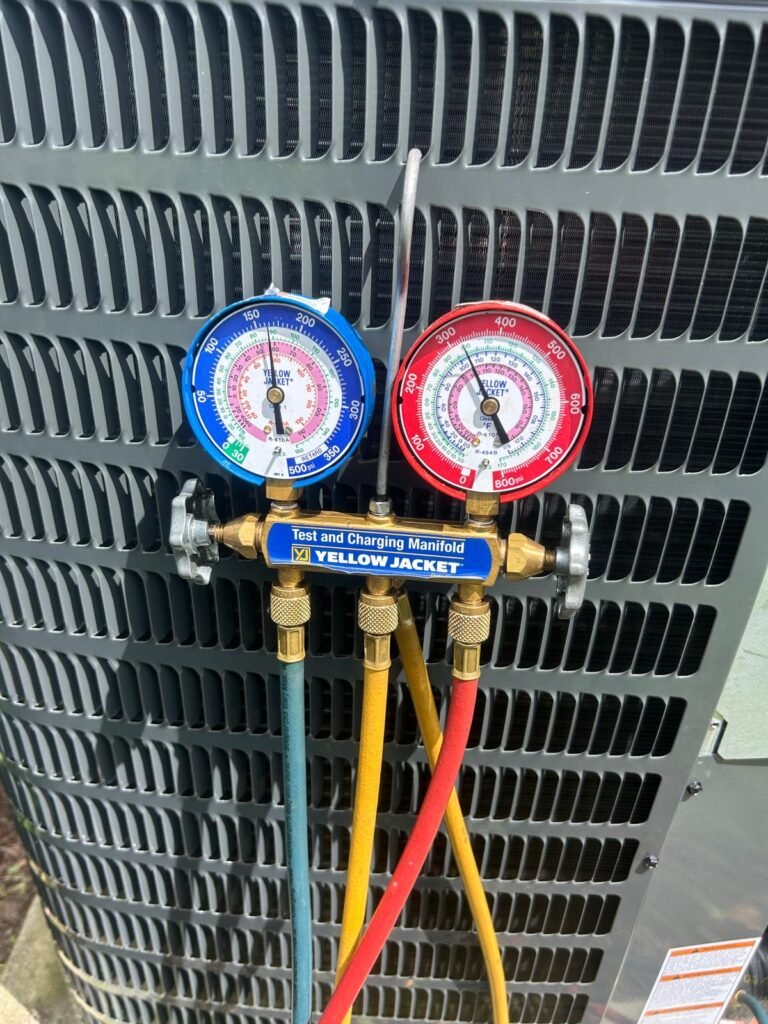
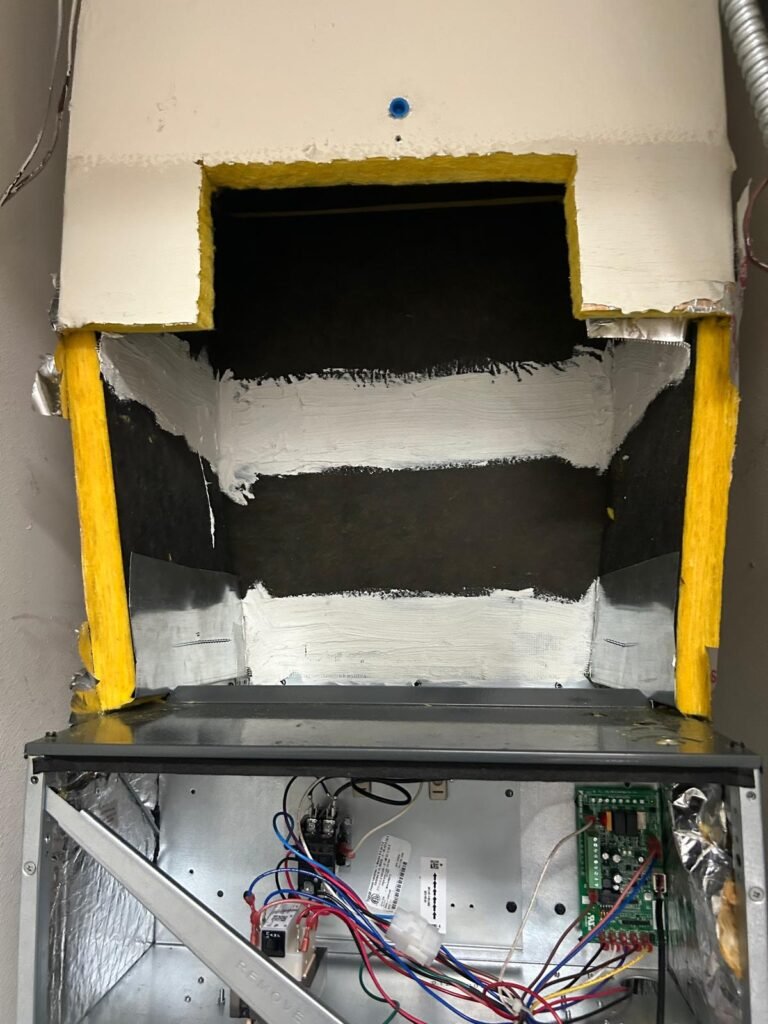
A Goodman float switch helps protect a new AC system by shutting it down if drain water rises where it should not. On this AC installation in Riverview, FL 33579, that safety device was included with a new 3 ton vertical split system to reduce the risk of water damage from a clogged or backed-up condensate line.
At this Greenchop Pl home in Riverview, Richard installed a Goodman Value Split 3 ton vertical system with several details that matter in Florida, especially the secondary safety drain pan and float switch. The homeowner was replacing equipment, but the part that stands out for long term protection was not the condenser size or the thermostat. It was the decision to build in water-leak protection from day one. That is a practical detail many homeowners do not ask about until a drain problem has already stained a ceiling or shut a system down in the middle of cooling season.
- Service performed: AC installation
- Neighborhood or street: Greenchop Pl
- Technician: Richard
- What was done: Installed a 3 ton vertical split system with float switch, drain pan, thermostat, pad, and tie-down kit
- Parts replaced: New condenser, vertical indoor equipment, secondary drain pan, float switch, thermostat
- System details: 3 ton capacity, 5 kW heater, 14.5 SEER2, R32 refrigerant
The Goodman float switch on this Riverview job adds real water-leak protection
The most useful detail on this installation was the Goodman float switch paired with a secondary drain pan. That combination gives the system a way to react before an overflow becomes a drywall or flooring problem. In plain language, the float switch is a safety shutoff. If water rises in the pan because the primary drain is not keeping up, the switch interrupts cooling operation so the homeowner gets a clear warning that something needs attention.
That matters in Tampa Bay because AC systems run hard for much of the year, and long cooling seasons mean a lot of condensation moving through the drain assembly. A homeowner may focus on tonnage or efficiency, but on a vertical system inside the home, drain protection is one of the smartest parts of the scope. This is also why our team does not treat accessories as throw-ins. The accessories often determine how well an installation holds up after the first summer.
This Greenchop Pl AC installation was built around Florida conditions, not just equipment size
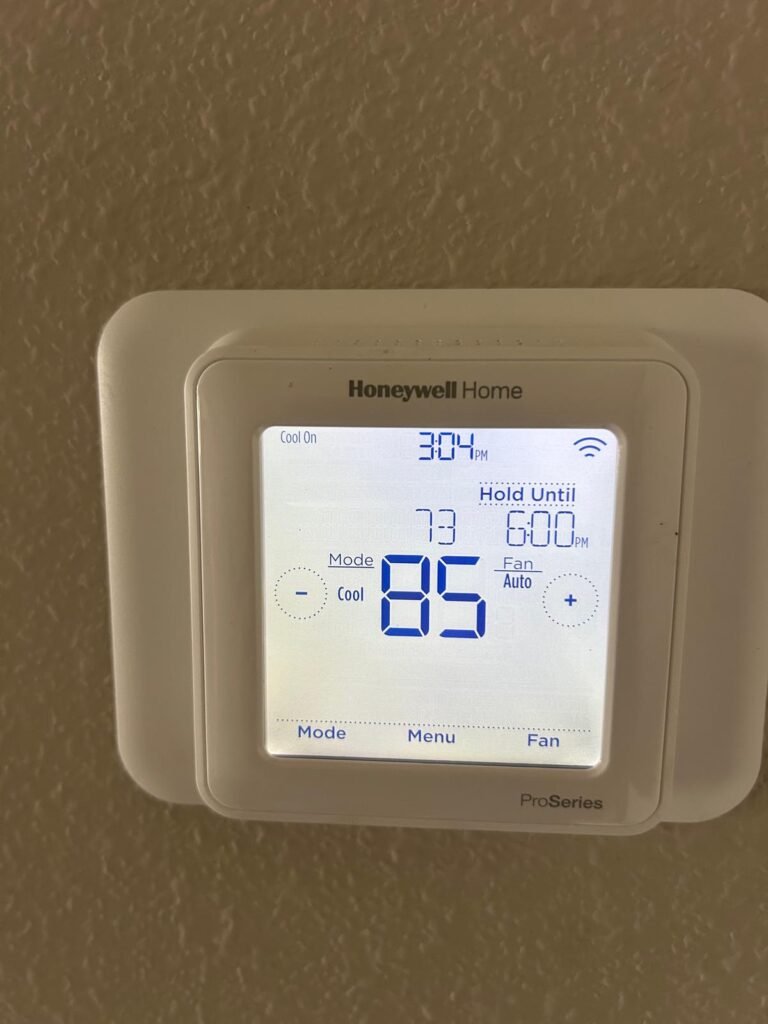
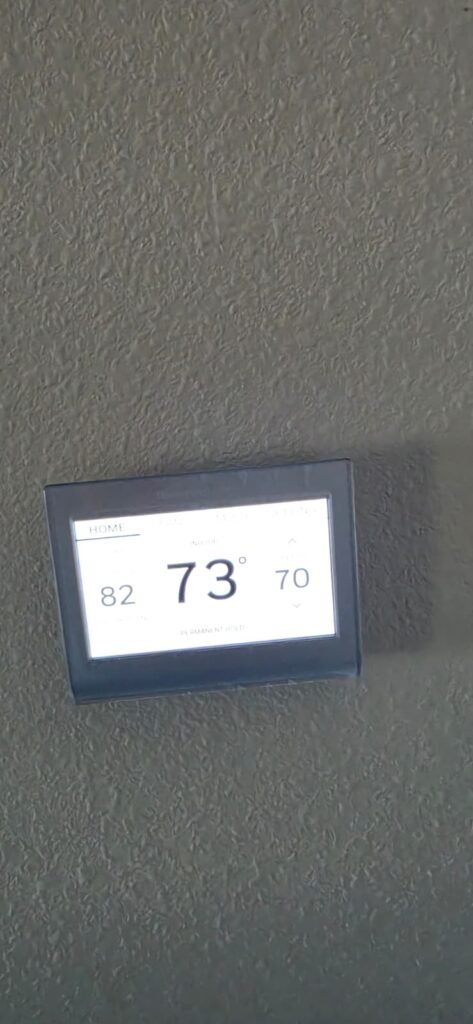
This was a 3 ton vertical split installation with a 5 kW heater, R32 refrigerant, and 14.5 SEER2 efficiency. Those are the headline specs, but the job also included a concrete pad, tie-down kit rated up to 150 mph, UV-protected copper insulation, locking safety caps, heat shields on returns and supplies, and a smart programmable thermostat. Each of those choices fits the reality of a Riverview installation more than a brochure does.
For example, UV protection matters because exposed insulation breaks down faster in Florida sun. Tie-down protection matters because storm preparation is part of responsible outdoor equipment installation here. A smart thermostat matters because efficiency on paper only becomes real savings when the system can be controlled well day to day. For homeowners comparing systems, this is the contrarian truth: the install details often tell you more about future performance than the cabinet label alone.
For broader coverage across Tampa Bay neighborhoods, our service area page shows where Home Therapist handles AC installation and follow-up service.
The line flush, sanitation, and safety accessories gave this new system a cleaner starting point
Another strong part of this job was the system flush and sanitation of the copper lines and drain line. On a replacement, that step matters because a new system should not inherit contamination or buildup from older components if it can be avoided. Clean line preparation helps the new equipment start from a better baseline, and drain sanitation supports the same goal on the moisture side of the system.
The visit also included a smart thermostat and locking caps on the condenser valves. Those may sound minor next to a full system installation, but they support daily operation and system protection. This was not a bare-minimum swap. It was a complete installation package with practical safeguards built in. The combined invoice for this installation came to $6,713.10, which covered the new equipment and the included installation materials and accessories completed on this visit.
Because the system uses R32 refrigerant, refrigerant handling still has to follow federal rules. The EPA Section 608 guidance explains the standards licensed contractors follow when working with refrigerants.
Why a vertical split system with a float switch fits many Riverview homes
A vertical split layout often makes sense when indoor space is narrow and the equipment needs to fit a tighter footprint. That was relevant on this job, where the indoor equipment was installed in a compact vertical position. In homes where access and layout matter, dimensions and serviceability can be just as important as raw capacity.
The float switch becomes even more important in that context. When indoor equipment sits in a finished part of the home or near materials that can be damaged by water, early shutoff protection is worth having. Many homeowners search for goodman float switch riverview after a drain problem has already happened. This job shows the better path, which is to include that protection during installation instead of treating it as an afterthought later.
Efficiency also played a role here. The system was listed at 14.5 SEER2, with a 15.2 SEER2 front return note in the product description. Homeowners who want to understand how central air efficiency is evaluated can review the U.S. Department of Energy guidance on central air conditioning.
Pro tips for Riverview homeowners with a new Goodman float switch
New equipment lasts longer when the protection details are understood and maintained. These are the practical habits we recommend after a job like this one.
- Check the drain line outlet periodically. If you stop seeing normal condensate discharge during heavy cooling, have the system inspected before water backs up.
- Do not bypass a float switch to keep the AC running. If it trips, it is reacting to a drainage issue that needs to be corrected.
- Keep the area around the outdoor unit clear. Airflow restrictions make any high-efficiency system work harder than it should.
- Use the programmable thermostat consistently. Better scheduling is one of the easiest ways to turn rated efficiency into real utility savings.
- Schedule maintenance before peak summer. In Tampa Bay, long run times make early seasonal checks more valuable than waiting for the hottest week of the year.
Questions homeowners ask after a Goodman float switch installation in Riverview
How do I know if my AC float switch is bad?
A bad float switch usually shows up as an AC that will not run even after the drain issue is corrected. The important first step is separating a failed switch from a switch doing its job. On this Riverview installation, the float switch was added as a protective device, so if it ever stops cooling, the drain condition should be checked first. If the drain is clear and the switch still will not reset or respond properly, then the switch itself may need testing.
Where is the float switch on a Goodman AC unit?
The float switch is usually installed at the drain safety point, often in the secondary pan or at the condensate drain assembly. On this Goodman installation, it was paired with the secondary safety drain pan so rising water could trigger a shutdown before overflow damage occurred. Exact placement depends on the equipment layout, but the purpose stays the same, which is to detect abnormal water buildup and stop operation.
How do I reset an AC float switch?
An AC float switch resets after the water condition causing it to trip is corrected. That means the real fix is usually clearing the drainage problem, drying the pan if needed, and then restoring operation once the switch drops back to normal position. A homeowner should not force or bypass the switch. On a new system like this one, a tripped switch is a sign to inspect the drain path, not a sign to defeat the safety.
What are possible reasons an HVAC system is not working?
An HVAC system can stop working for electrical, airflow, thermostat, drainage, or refrigerant-related reasons. In the context of this Riverview job, the installed float switch is a reminder that some no-cool calls are actually water management problems, not compressor failures. That is why diagnosis matters. A system that shuts down can be responding correctly to a clogged drain, a control issue, or a thermostat setting problem, and each one calls for a different fix.
Schedule AC installation and AC repair support in Riverview, FL 33579
Home Therapist handles AC installation, AC repair, and plumbing work across Tampa Bay with a focus on clear recommendations and careful workmanship. We have served local homeowners since 2017, we hold Florida HVAC license CAC1819196 and plumbing license CFC1431159, and we have earned 1,300 plus five-star reviews by staying specific about what a job needs and what it does not. If you are comparing system options, trying to understand whether a float switch should be part of the scope, or planning service for a home in Riverview, FL 33579, we are happy to walk it through in plain English. You can also read our customer reviews to see how homeowners describe working with Home Therapist. Call (813) 343-2212 to schedule with our team. We provide FREE estimates and FREE diagnosis, and we service every brand throughout the Riverview area.


