

Drain Trap Not Holding Water? How to Diagnose a Dry or Failing P-Trap in Tampa
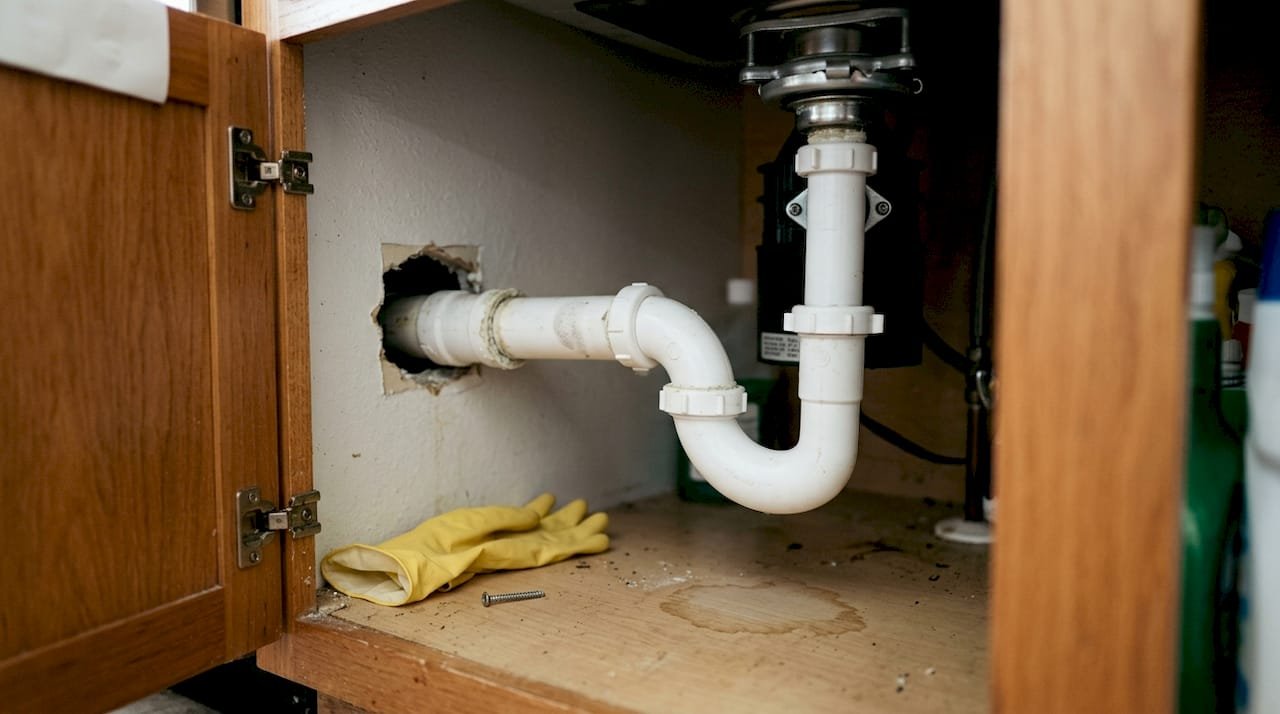
If your drain trap is not holding water, the curved pipe under the fixture has lost its seal through evaporation, siphoning, or a crack, and sewer gas can now rise into the room. A rarely used drain usually just needs water run through it. A drain that keeps losing its seal after you refill it points to a venting or S-trap problem that needs a real fix.

This page helps you tell which one you have. If you already smell sewer gas and want it traced now, start with our sewage smell in the house troubleshooting page or call (813) 343-2212 for a FREE estimate. FREE estimates and FREE diagnosis come standard on every service call.
Why is my drain trap not holding water?
The trap under every sink, tub, and shower holds a small pocket of water, usually two to four inches deep, and that water is the only thing blocking sewer gas from coming back up the pipe. When the trap goes dry, the barrier is gone. There are three common reasons it happens in Tampa homes.
The first is simple evaporation. A guest bath or laundry sink that sits unused loses its seal over a few weeks, and our heat speeds that up. The second is siphoning, where water rushing down a poorly vented line pulls the trap water out with it. The third is a crack or loose slip joint that lets the water drip away. Use the table to match your situation to the likely cause.
| What you notice | Most likely cause | First move |
|---|---|---|
| Smell only at a rarely used drain | Evaporated dry trap | Run water 30 seconds to refill |
| Seal disappears again days after refilling | Siphoning or venting fault | Have the vent and trap checked |
| Gurgle when another fixture drains | Vent blockage pulling the trap | Diagnose the vent stack |
| Damp cabinet or drip under the trap | Cracked trap or loose joint | Replace the trap or reseal |
| Old home, S-shaped trap under sink | Self-siphoning S-trap | Convert to a vented P-trap |
How do I know if it is a dry trap or a real problem?
Start with the cheapest test. Run water down the drain for about thirty seconds, then wait. If the smell goes away and stays away for a week or more, it was just an evaporated trap and you are done. Make a habit of running water through that fixture once a month.
If the odor comes back within a few days no matter how often you refill it, the trap is being emptied actively, not slowly. That points to one of two things in older Tampa Bay houses: an S-trap that siphons itself dry, or a vent line that is blocked or undersized. The EPA notes that sewer gas can carry hydrogen sulfide and methane, so a trap that will not stay sealed is a safety issue worth tracing, not living with.
A telltale clue is sound. If you hear a glug from one drain when a nearby toilet flushes or a tub empties, the system is pulling air through the trap because it cannot get it from the vent. That is the same root cause behind a gurgling drain, and it means the fix is upstream of the trap itself.
What can I fix myself, and what needs a plumber?
Refilling a dry trap is fully a do-it-yourself job, and so is pouring a little mineral oil into a drain you almost never use, which floats on top of the water and slows evaporation for weeks. Tightening a loose slip-joint nut by hand or swapping a cracked PVC P-trap is within reach if you are comfortable under the cabinet and can match the fitting size.
Call a pro when the seal keeps vanishing after you refill it, when you have an S-trap that needs converting to a properly vented P-trap, or when the smell persists with no obvious dry fixture. Those are venting and code questions, not parts you swap. The Florida Building Code governs plumbing vent and trap requirements, and getting a trap arm or vent wrong just moves the problem to another fixture.
When our techs come out, the first thing they do is figure out whether it is the trap or the vent, because replacing a trap on a siphoning line solves nothing. If the line itself is sludged and pulling air, that becomes a drain cleaning job; if a fixture trap is cracked, that is a quick swap. Either way you find out for free before any work is approved.
Which trap type matters for Tampa homes?
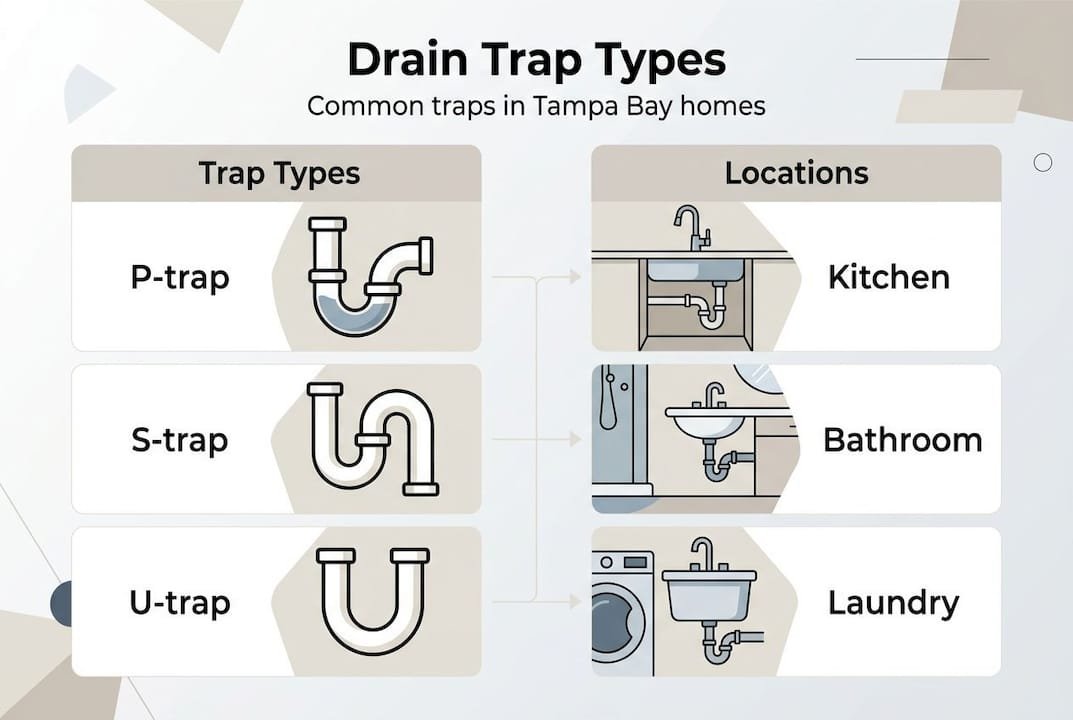
Most modern Tampa Bay homes use a P-trap, named for its shape, which connects to a wall drain and vents cleanly. It is the design current plumbing codes prefer because it resists siphoning. If your home was built before the 1970s, you may still have an S-trap, which drops straight through the floor and tends to siphon itself dry, which is exactly why newer construction does not allow it.
If you are remodeling and pulling a sink anyway, that is the moment to convert an old S-trap to a vented P-trap rather than patch around it. For the related condensate side of the house, a condensate drain from your AC has its own trap and its own clog habits, separate from your plumbing fixtures.
Key Takeaways
- The seal is the safety barrier: a drain trap not holding water lets sewer gas into the room.
- Test cheap first: run water 30 seconds; if the smell stays gone, it was just an evaporated dry trap.
- Recurring smell means a real fault: siphoning, a blocked vent, or an S-trap, not a quick refill.
- Listen for the glug: a gurgle when another fixture drains points to a venting problem upstream of the trap.
- S-traps siphon: older Tampa homes with S-traps should convert to vented P-traps during any remodel.
- Free to find out: FREE estimates and FREE diagnosis on every call; $279 is our labor on approved repair work only, never a fee just to diagnose.
Is a dry drain trap dangerous?
It can be. The water in the trap is the only barrier stopping sewer gases like hydrogen sulfide and methane from entering your home, and those can cause headaches and nausea at low levels. A trap that will not hold water should be refilled and, if the smell returns, diagnosed.
How do I refill a drain trap that lost its water?
Run water down the affected drain for about thirty seconds. That refreshes the two-to-four-inch seal in the curved pipe. For drains you rarely use, add a small amount of mineral oil afterward; it floats on the water and slows evaporation for several weeks.
Why does my drain trap keep going dry even after I refill it?
If the seal disappears again within days, the trap is being siphoned out, usually because of a blocked or undersized vent or an old self-siphoning S-trap. That is a venting and code issue best traced by a plumber rather than fixed by repeated refilling.
Does Home Therapist charge to diagnose a smelly or dry drain?
No. FREE estimates and FREE diagnosis come standard on service calls across Tampa Bay. Our $279 labor charge applies only to approved repair work you agree to, never to figuring out why the trap will not hold water.
Smell still there after refilling the trap? Call Home Therapist at (813) 343-2212 for a FREE estimate, or compare what a visit covers on our Tampa leak detection page.
More Drain Cleaning Articles
- 7-Minute Toilet Auger Unclog and Angle Valve Replacement on Quiet Waters Pl, Tampa, FL 33617
- Horizontal Primary Pan Replacement on N Albany Ave: AC Drainage Repair in Tampa, FL 33604
- How Much Does Drain Cleaning Cost in Tampa Bay? Real Job Prices
- Drain Cleaning and Leak Detection FAQ for Tampa Bay Homeowners
- Shower Drain Relocation in Tampa Bay: Cost, Process, and Pipe Layout


