
AC Running Constantly? Why Your Electric Bill Is High
Quick answer: If your AC in Tampa runs nonstop and your electric bill keeps climbing, low refrigerant and a dirty system are usually the reason. On one recent call, a technician found refrigerant pressures slightly low, coils packed with dirt and hair, and a nearly clogged drain line. After washing the coil, clearing the drain, and adding about a pound of refrigerant, the 15 year old system ran normally again, though its age and older refrigerant type mean replacement should be on the homeowner's radar soon.
On this page: Why does a dirty, low-refrigerant AC system spike your electric bill · What we found on this Tampa call · How does a dirty coil and a clogged drain line cause AC problems · Why was condensation forming under the AC vents · Is low refrigerant dangerous to ignore · How much does this kind of AC repair cost in Tampa · Should a 15 year old AC system with old refrigerant be replaced · How can Tampa homeowners prevent a runaway electric bill · FAQ
Why does a dirty, low-refrigerant AC system spike your electric bill?
When an air conditioner runs nonstop and the electric bill jumps at the same time, it almost always means the system is working far harder than it should to hit the temperature on the thermostat. In Tampa Bay, where outdoor temperatures and humidity sit high for most of the year, an AC system that is even a little bit out of tune has to run longer cycles just to keep up, and every extra minute of runtime costs money.
Two of the most common culprits are low refrigerant and a dirty system. Refrigerant is what actually carries heat out of your home. When the charge is low, even by a small amount, the system loses cooling capacity but the compressor still runs the same amount of electricity trying to reach the set temperature. That mismatch between effort and result is what drives the bill up.
Dirt is the other half of the problem. A condenser coil or evaporator coil covered in dust, pet hair, or grime cannot transfer heat efficiently. The system has to run longer to move the same amount of heat, which again means more electricity for less cooling. Add a partially clogged air filter or a dirty blower wheel and airflow drops even further, forcing the unit to work harder still.
Homeowners usually notice a few signs together: the AC seems to run almost continuously, rooms take longer to cool or never quite reach the set temperature, and the electric bill creeps up compared to the same month last year. None of that is normal, and none of it means you automatically need a new system. It usually means the system needs a real inspection: pressures checked, coils cleaned, drain line checked, and airflow tested.
That is exactly the kind of problem a free diagnostic call is built for. A technician hooks up gauges, checks the coils, and looks at airflow before recommending anything, so you know what is actually wrong before paying for a repair.
| Customer complaint | AC running nonstop, unusually high electric bill |
| Refrigerant pressure | Found slightly low on inspection |
| System condition | Very dirty coil, drain line almost clogged with dirt and hair |
| Secondary issue | Condensation forming under AC vents near glass windows and doors |
| Camera inspection | No holes or leaks found, vents sealed with mastic as a precaution |
| Repair performed | Coil washed with coil cleaner, about a pound of refrigerant added |
| System age | Approximately 15 years old, uses an older refrigerant type |
| Plan | Customer joined maintenance membership, follow up visit set for about 6 months |
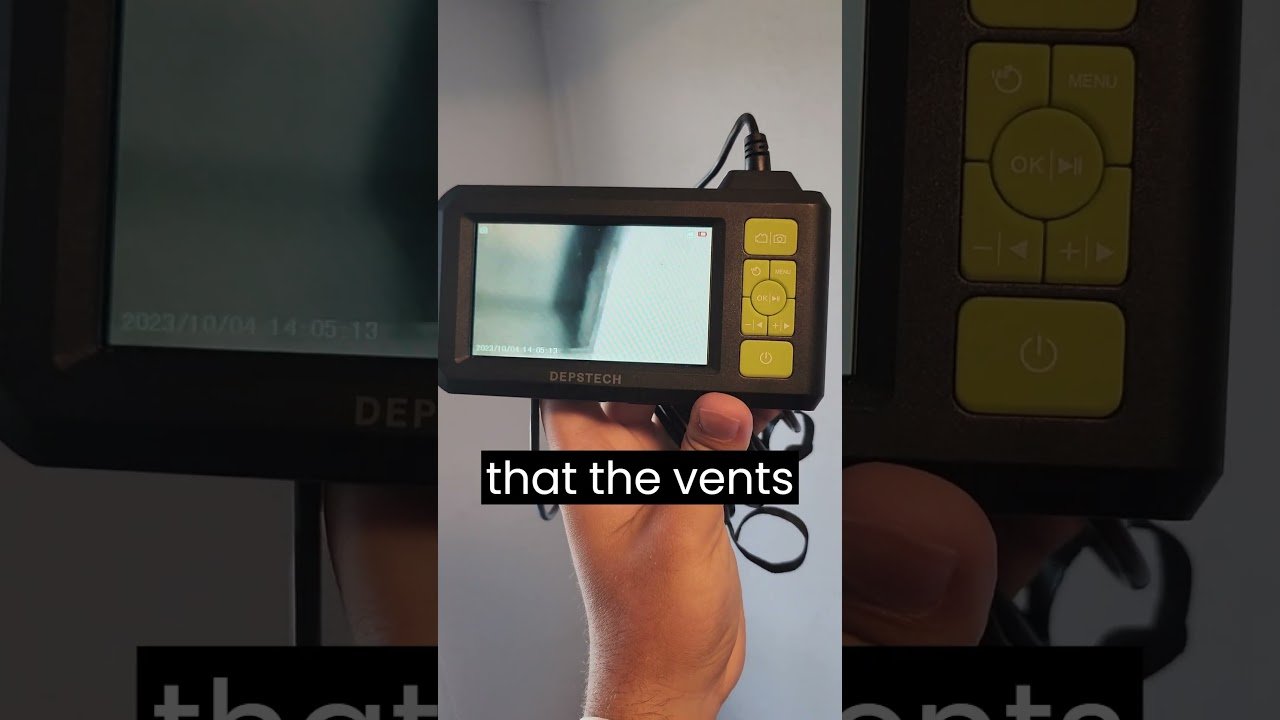
What the video shows
- 0:00 Customer's AC is running nonstop and the electric bill has spiked
- 0:12 Technician checks refrigerant pressure and finds it slightly low
- 0:20 Camera inspection shows vents sitting close to glass windows and doors
- 0:30 Vent connections sealed with mastic as a precaution
- 0:40 Coil found packed with dirt and hair, drain line almost clogged
- 0:50 Coil washed, about a pound of refrigerant added, system running great again
What we found on this Tampa call
This call came from a Tampa homeowner whose AC unit had been running nonstop, with an electric bill that had climbed noticeably higher than normal.
When our technician got out to the property and hooked up gauges, the first thing that stood out was that refrigerant pressures were running a little low. That alone explains part of the nonstop runtime, the system was trying to reach the thermostat setting without enough refrigerant to move heat efficiently. On top of that, the whole system was visibly dirty.
The homeowner also mentioned a second issue: condensation showing up under some of the AC vents inside the home. To rule out a duct leak or a hole in the line, we ran a camera through the ductwork. We did not find any holes or obvious damage. What we did find was that some of the vents sat very close to glass windows and doors. That kind of placement can cause localized condensation when warm, humid Tampa air meets a cold vent right next to glass. As a precaution we sealed those connections with mastic, even though we did not see a structural problem.
The homeowner decided to sign up for one of our maintenance plans, so we got to work on a full cleaning. Inside the system, the coils were packed with dirt and pet hair, and the condensate drain line was almost completely clogged. That combination alone will choke airflow and back up condensate, which contributes to both the high bill and the moisture the homeowner was seeing. We washed the coil with coil cleaner, cleared the drain line, and added about a pound of refrigerant to bring the charge back to where it needed to be.
After the cleaning and recharge, the system was running the way it should. One thing we flagged for the homeowner: the unit is about 15 years old and uses an older refrigerant type that is being phased out industry wide, so while it is running well now, it is worth starting to think about a replacement plan. Since the homeowner is on a maintenance membership, we will be back out in about 6 months to check on it again.
| Likely cause | Telltale sign | Safe to DIY? |
|---|---|---|
| Low refrigerant charge | System runs long cycles but home never feels cool enough | No, requires an EPA-licensed technician |
| Dirty condenser or evaporator coil | Coils caked with dirt, hair, or dust reduce heat transfer | Partial DIY on outdoor coil rinse, full cleaning best left to a tech |
| Clogged condensate drain line | Water stains or drips near vents, float switch trips | Some DIY with a vinegar flush, persistent clogs need a pro |
| Dirty or old air filter | Weak airflow from vents, system runs longer to reach set temp | Yes, homeowners can replace filters themselves |
| Vents placed near windows or exterior doors | Localized condensation or sweating around specific vents | No, needs inspection and sealing |
| Aging system or outdated refrigerant type | Frequent repairs, rising costs, refrigerant hard to source | No, replacement decision best made with a technician |
| Duct leaks pulling in hot attic air | Rooms far from the air handler stay warm despite AC running | No, needs professional duct sealing and testing |
How does a dirty coil and a clogged drain line cause AC problems?
A dirty coil blocks heat transfer and a clogged drain line backs up moisture inside the system, and together they were a big part of why this Tampa system was running nonstop.
The evaporator coil is where refrigerant absorbs heat from the air inside your home, and the condenser coil outside is where that heat gets released. Both rely on bare metal fins to transfer heat efficiently. When those fins get coated in dust, pet hair, or general grime, like what we found packed into this system, the coil acts more like an insulator than a heat exchanger. The compressor and blower still run the same amount, but they move less heat per minute, so the system has to run longer to reach the same result.
The condensate drain line is a separate but related problem. As the evaporator coil pulls moisture out of humid Tampa air, that water has to drain out through a small line, usually run to the outside or to a floor drain. In a humid climate like ours, that line is prone to collecting dirt, hair, and biological growth over time. On this call the drain line was almost completely clogged. A fully blocked line will trip a float switch and shut the system down entirely, or worse, back up and cause water damage inside the home.
Left unaddressed, a dirty coil and a clogged drain line feed into each other. Reduced airflow from a dirty coil can mean the coil runs colder than it should, which produces more condensate than the drain line can handle if it is already restricted. That is part of why we flush drain lines and wash coils together during a cleaning rather than treating them as separate jobs.
For homeowners, the practical takeaway is that a system does not have to have a broken part to run poorly. Sometimes it just needs to be cleaned properly, coil, drain line, and blower assembly included.
Why was condensation forming under the AC vents?
On this call, condensation under the vents was traced to duct placement close to glass windows and doors rather than any hole or leak in the ductwork.
Condensation happens whenever a cold surface meets warm, humid air. Tampa Bay air carries a lot of moisture most of the year, so any cold surface inside a wall or ceiling cavity, like a duct connection or a metal vent boot, can sweat if it sits near a warm surface such as a glass window or door. That temperature difference is enough to cause dripping even when the ductwork itself has no damage.
To check for a more serious cause, we ran a camera through the duct system looking for holes, disconnected joints, or torn insulation, any of which can pull in humid attic or crawlspace air and cause the same kind of dripping. In this case the camera did not turn up any holes or obvious damage. The vents in question were simply positioned close to glass, which is a common layout in Tampa area homes and not something a homeowner did wrong.
As a precaution, we sealed the duct connections near those vents with mastic. Mastic is a sealant used specifically on ductwork because it holds up to temperature swings and humidity better than tape, and it closes off small gaps where humid air could otherwise sneak in and condense against a cold surface.
If you are seeing water spots, drips, or staining around specific vents in your home, it is worth having a technician check both possibilities: an actual duct or coil leak, and simple condensation from vent placement. The fix is very different depending on which one it turns out to be, and a camera inspection is usually the fastest way to know for sure.
Is low refrigerant dangerous to ignore?
Running an AC system on low refrigerant for a long stretch is not immediately dangerous to people in the home, but it is hard on the equipment and it keeps costing you money every single day.
Refrigerant does not get used up the way fuel does. A system that is low on refrigerant almost always has a leak somewhere, even a small one, and running it in that condition for months at a time causes a few specific problems. The compressor, which is the most expensive part of the system, has to work harder to move heat with less refrigerant available. Over time that added strain shortens compressor life. Low refrigerant can also cause the evaporator coil to run too cold, which leads to ice forming on the coil and lines. If a system ices up and keeps running, that ice can eventually cause liquid refrigerant to return to the compressor, which is one of the more expensive ways to damage a unit.
There is also a code and safety angle. Refrigerant handling is regulated under EPA rules, and topping off a system without finding and addressing the underlying leak is a short term fix at best. On this call, the pressures were only a little low, so the technician cleaned the system, sealed a few connections with mastic, and added about a pound of refrigerant to bring the charge back to spec. That is a normal part of a tune up when a system is otherwise healthy.
The bigger warning sign is a system that needs refrigerant added every few months. That points to an active leak that needs to be found and repaired, not just topped off repeatedly. A licensed technician can pressure test the system and pinpoint where refrigerant is escaping rather than guessing.
How much does this kind of AC repair cost in Tampa?
Every diagnostic visit and estimate from Home Therapist Cooling, Heating, and Plumbing is free, so the only cost on a call like this is whatever repair the homeowner actually decides to move forward with.
Pricing on an AC repair like the one described here depends on a handful of factors: how much refrigerant the system needs, whether a coil cleaning is included, whether the drain line needs to be cleared, and whether any duct sealing work like the mastic application is needed. A system that just needs a coil wash and a small refrigerant top off is a very different price than one that needs a leak search, a new part, or a bigger repair. Because refrigerant pricing varies by type, systems using the older R-22 refrigerant typically cost more per pound to service than newer systems using current refrigerant, since R-22 has been phased out nationally and supply is limited.
This homeowner chose to join one of our maintenance membership plans at the time of the call. Members get their system checked and cleaned on a regular schedule, in this case a follow up visit was already scheduled for about 6 months out, and membership pricing is usually structured to make regular cleanings and priority scheduling more affordable over the life of the system compared to paying for one off service calls each time.
If your AC is running nonstop and your electric bill is climbing, the smartest first step is a free diagnostic visit rather than guessing at what needs fixing. A technician can put gauges on the system, check the coil condition, test the drain line, and give you real answers before any repair work starts. You can request that AC repair in Tampa and find out what is actually driving the bill up before spending anything.
Should a 15 year old AC system with old refrigerant be replaced?
A 15 year old system using an older refrigerant type is not an emergency to replace, but it is at the point where a homeowner should start planning for it rather than being surprised by it.
Most residential AC systems in Florida last somewhere in the range of 12 to 15 years, and that number can move depending on maintenance history, how hard the system runs, and salt air exposure near the coast. A system built around older refrigerant, commonly R-22, sits at a specific disadvantage right now because that refrigerant has been phased out of production for years. What is left on the market comes from reclaimed or stockpiled supply, so it costs noticeably more per pound than current refrigerant types, and it is not getting cheaper over time.
On this call, the system was cleaned, the drain line cleared, and about a pound of refrigerant added, and it is running well for now. That is a legitimate repair, not a stopgap. The point about age and refrigerant type is simply about planning ahead. As a system gets into its mid teens, the odds of needing a bigger repair, a compressor, a coil, or a refrigerant leak rise, and each of those repairs gets more expensive on an older system with harder to source refrigerant.
When homeowners do decide to replace a system, we install Goodman and Daikin equipment, both of which are supported for the residential AC systems we put in around Tampa Bay. There is no rush to replace a system that is still cooling properly and holding its charge after a cleaning, but it is worth having a conversation with a technician about a replacement budget and timeline before something fails on a 95 degree afternoon in July.
How can Tampa homeowners prevent a runaway electric bill?
Regular AC maintenance, twice a year in Florida’s climate, is the single biggest thing a homeowner can do to keep an AC system from running nonstop and driving up the electric bill.
Tampa Bay AC systems work close to year round, which means dirt, hair, and moisture build up faster here than in cooler climates. A system that only gets attention when something breaks is going to spend a lot of its life running less efficiently than it should, which shows up every month on the electric bill even before anything actually fails.
- Change or clean the air filter on a regular schedule, monthly for many households, since a dirty filter restricts airflow and forces the system to run longer.
- Have the condenser coil outside kept clear of grass clippings, leaves, and dirt, and avoid pressure washing it directly since that can bend the fins.
- Get the drain line flushed at least once or twice a year, since Florida humidity makes these lines prone to clogging with dirt and biological growth.
- Have refrigerant pressures checked during a tune up rather than waiting for the system to stop cooling well.
- Watch the electric bill month to month for unexplained jumps, since that is often the earliest sign of a system working harder than it should.
Joining a maintenance plan, like the one this Tampa homeowner signed up for during this call, is a practical way to stay ahead of these issues. Instead of waiting for a high bill or a condensation problem to prompt a service call, a technician checks the coils, drain line, refrigerant charge, and airflow on a set schedule, in this case with a follow up already booked for about 6 months out. That kind of regular attention is usually what keeps a 10 or 15 year old system running efficiently instead of quietly costing more every month.
If your system is already showing signs, running constantly, a climbing bill, or condensation you cannot explain, a free diagnostic visit is the fastest way to find out whether you are looking at a simple cleaning or something bigger.
For general guidance that lines up with what we do on a service call, see the U.S. Department of Energy and ENERGY STAR maintenance guidance.
Frequently asked questions
- Why is my AC making my power bill so high?
An AC drives up your electric bill when it runs longer than necessary to reach the set temperature. The most common causes are a dirty evaporator or condenser coil, low refrigerant charge, a clogged air filter, or an undersized system. Each forces the compressor to work harder and longer, consuming significantly more electricity per cooling cycle.
- Is it normal for AC to run 20 hours a day?
No. In Tampa Bay's heat and humidity, a properly sized and maintained AC should cycle on and off throughout the day, not run nearly continuously. Running 20 hours a day typically signals a dirty coil, low refrigerant, a failing capacitor, or a system that is undersized for the home. A free diagnosis can identify the exact cause.
- What should I keep my AC on to lower my bill?
Setting your thermostat to 78 degrees Fahrenheit when home and raising it a few degrees when away is the most effective single adjustment for lowering your bill. Keeping the fan set to AUTO rather than ON prevents the blower from running between cycles, which also reduces humidity buildup, a real concern in Tampa Bay's coastal climate. Call (813) 343-2212 for a free estimate.
Why is my AC running all the time but not cooling the house?
Usually a dirty coil, low refrigerant, or restricted airflow is forcing the compressor to run constantly without actually removing enough heat from the air.
Can low refrigerant really raise my electric bill?
Yes. A low charge makes the system run longer cycles for less cooling, and that extra runtime shows up directly on your electric bill.
How often should I get my AC system cleaned in Tampa?
Twice a year is typical in Florida's climate, since heat and humidity build up dirt and moisture problems faster than in cooler regions.
Is it normal for AC vents to sweat or drip condensation?
No, dripping vents usually point to either a duct issue or, as in this Tampa job, a vent positioned too close to a cold glass surface, and both should be checked.
Should I replace a 15 year old AC unit or keep repairing it?
A system that age using an older refrigerant type can still be repaired if it is running well, but it is a good time to start budgeting for a replacement conversation.
What does a free AC diagnosis actually check?
A technician checks refrigerant pressures, coil condition, the drain line, and overall airflow, and in some cases runs a camera through the ductwork before recommending any repair.
How much refrigerant does an AC system usually need?
It depends entirely on the system size and what the manufacturer specifies. On this job about a pound was needed to bring the charge back to spec after cleaning.
Will a dirty air filter cause my AC to run constantly?
Yes, a clogged filter restricts airflow across the coil, which forces the system to run longer to move the same amount of air through the home.
Want the raw footage and full transcript? Watch the original video and read the transcript.
Key takeaways
- A dirty coil and low refrigerant force an AC compressor to run far longer than normal, and that shows up directly on the electric bill
- Condensation under vents is not always a leak, sometimes it is duct placement too close to glass and can be sealed with mastic
- Clogged drain lines and coils packed with dirt and hair are common in Tampa Bay AC systems that skip regular cleaning
- A system around 15 years old using an older refrigerant type is a candidate for a real repair versus replace conversation
- A free diagnosis lets a technician find the actual cause before you pay for guesswork repairs
Related reading: AC maintenance in Tampa.
More of our own footage on this
We have filmed this problem on real Tampa Bay service calls more than once. Each clip below is a different house and a different fault.
- Watch: Should you run your AC for more than 20 hours a day?
- Watch: How to keep your AC running efficiently.
Need help in Tampa? See our AC repair in Tampa, or all of our air conditioning services across Tampa Bay.
Home Therapist Cooling, Heating, and Plumbing is the local Tampa Bay team for AC repair in Tampa and across the bay. We answer the phone fast, give FREE estimates and a FREE diagnosis on service calls, carry common parts on every van, and stand behind the work with real warranties. We service every brand and install Goodman and Daikin systems. Licensed HVAC CAC1819196 and plumbing CFC1431159.
Call (813) 343-2212 or book AC repair in Tampa.


