
AC Float Switch Installation in Tampa: What We Found
Quick answer: An AC float switch installation in Tampa is a quick, low cost repair that shuts the system off before a clogged condensate line can overflow. On a recent attic call in the Tampa Bay area, we found air handlers running with no float switch at all, plus a large gap letting hot attic air into the unit. We installed float switches on the units and flagged the hole for sealing to keep condensation and heat gain under control.
On this page: What is an AC float switch and what does it do · Is an AC float switch necessary for Florida attic units · What did we find on this Tampa Bay attic call · How much does it cost to install an AC float switch in Tampa · How do you wire a float switch · What causes an AC condensate drain line to clog in Tampa · What happens if you skip installing a float switch · Why choose Home Therapist for float switch installation in Tampa · FAQ
What is an AC float switch and what does it do?
An AC float switch is a small safety device that sits in the condensate drain pan or inline on the drain pipe, and its job is to shut your air conditioner off the moment water starts backing up instead of draining out normally.
Every AC system in Tampa pulls a lot of moisture out of the air, especially during our long, humid cooling season. That water collects in a drain pan under the evaporator coil and is supposed to flow out through a PVC drain line to the outside or to a floor drain. When that line gets clogged, the water has nowhere to go except back up into the pan, and eventually over the sides of it. A float switch has a small float inside a housing. As the water level rises, the float rises with it, and once it hits a certain point it interrupts either the low voltage control wire or the power to the unit, shutting the system down before the pan overflows.
There are two common types we see on service calls. One mounts directly in the drain pan itself and rests on the pan floor. The other is a smaller inline switch that threads into a tee fitting on the PVC drain line itself, usually near the air handler. Both do the same basic job, they just monitor water level in slightly different spots. As we mention on almost every attic call, these are cheap parts and quick to install, which is exactly why there is no good reason for a system, especially one sitting above a ceiling, to be running without one.
| Job type | Float switch installation on attic air handlers |
| Location | Hot attic space, Tampa Bay area |
| Condition found | No float switch installed on the units |
| Additional issue found | Large hole in attic letting in hot attic air |
| Repair performed | Installed float switches on the units |
| Recommendation given | Seal the hole letting in hot attic air |
| Purpose of repair | Shut the unit off automatically if the drain line clogs, preventing flooding |
| Time to complete | Fast, straightforward install |
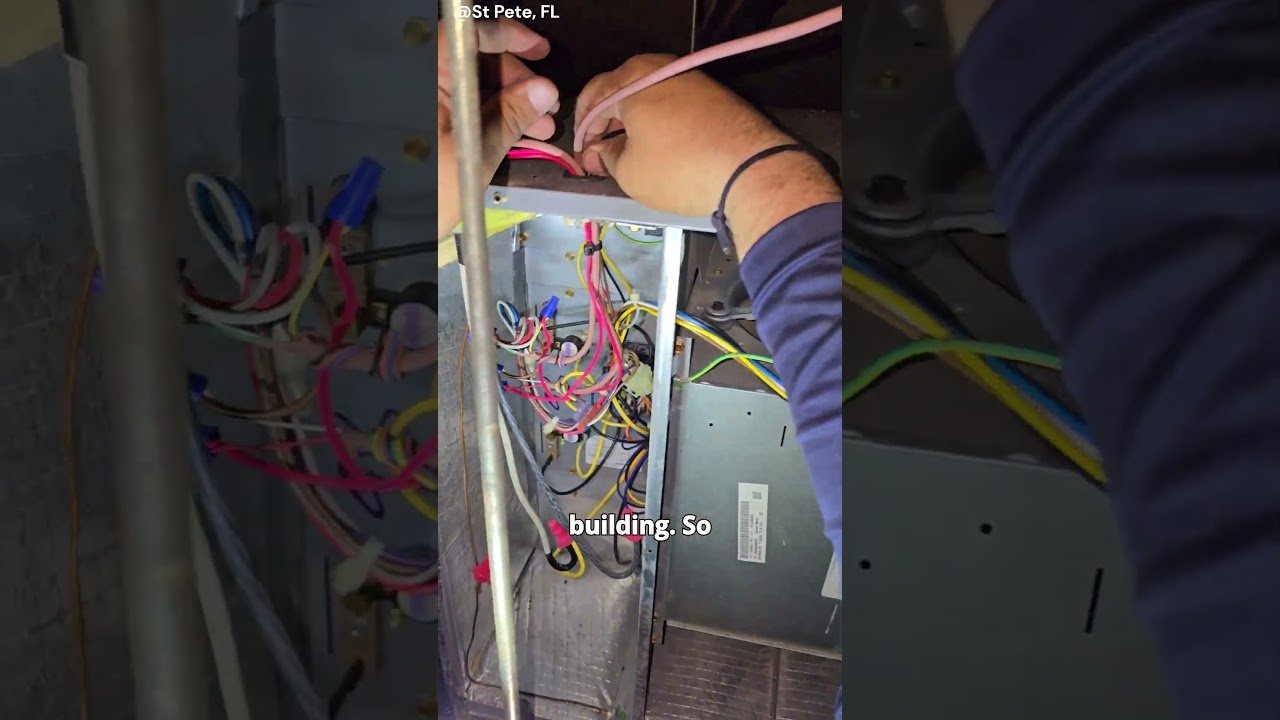
What the video shows
- 0:00 Tech enters a hot attic and notes a large hole pulling in hot attic air
- 0:12 Explains none of the units in this attic have a float switch installed
- 0:20 Walks through how a float switch works, floating up and cutting power when water rises
- 0:35 Notes float switches are cheap and easy to install, recommended on every attic air handler
- 0:45 Installation wraps up quickly and the tech heads to the next job
Is an AC float switch necessary for Florida attic units?
Yes, if your air handler sits in a Tampa Bay attic, a float switch is one of the cheapest insurance policies you can put on your system, because the alternative is water coming through your ceiling.
Florida homes push their AC systems hard for most of the year, which means a steady stream of condensate running through that drain line day after day. Combine that with attic heat, dust, and the algae and biofilm that naturally grow in a damp PVC line, and clogs are common, not rare. When an attic-mounted unit has no float switch and the line clogs, nobody finds out until water is dripping through the drywall below, and by then you are usually looking at ceiling repair, insulation replacement, and sometimes mold remediation on top of the AC repair itself.
Many jurisdictions in Florida require a secondary drain pan or a float switch, or both, on attic and closet air handler installs, precisely because of how much water these systems move and how much damage a leak can do inside a conditioned living space. Even so, we regularly find older installations, or systems that were swapped out without upgrading the safety devices, running with nothing in place. That was exactly the situation on this job. The units in that attic had no float switch protecting them at all, which meant a simple drain clog could have flooded the ceiling below with zero warning to the family living there.
Our take as licensed techs is simple: if your air handler is anywhere above a finished ceiling, a float switch should not be optional.
| Likely cause | Telltale sign | Safe to DIY? |
|---|---|---|
| Algae or biofilm buildup in the drain line | Slow drip or musty smell near the air handler | No, needs a professional flush |
| No float switch ever installed | Older or DIY system with no safety device on the pan | No, licensed install recommended |
| Sagging or poorly sloped drain line | Water backs up instead of draining freely | No |
| Clogged P-trap on the drain line | Water pooling in the pan, switch trips off | No, requires access and tools |
| Dirty air filter freezing the coil | Ice on the coil, sudden water when it melts | Yes, homeowner can change the filter |
| Open gap or hole near the air handler | Excess heat and humidity around the unit | No, needs professional sealing |
| No secondary pan on an attic install | Older system installed without backup protection | No |
What did we find on this Tampa Bay attic call?
On this job we walked into a very hot attic and found two problems worth fixing, a missing safety device on the air handlers and a hole letting hot attic air straight into the system area.
The first thing that stood out was a fairly large opening near the equipment that was pulling in hot air straight from the attic space. That kind of gap adds heat load and moisture stress right where you do not want it, close to the coil and drain pan, so we flagged it to be sealed up as part of getting this system running the way it should.
The bigger issue was that none of the units in that attic had a float switch installed. That meant if the drain line ever clogged, and in a hot, humid attic that is a matter of when rather than if, the condensate would have nowhere to go but up and over the pan. From there it is a straight shot down into the ceiling below, which can mean soaked insulation, stained drywall, and a much bigger repair bill than the one we were there for.
We installed float switches on the units so that if a clog ever does form, the system shuts itself off automatically instead of continuing to run and add more condensation to standing water. That is the whole point of the device, it interrupts power to the unit the moment the float rises, stopping the problem before it becomes a flooded ceiling. The install itself was straightforward and fast. We were in, wired up, tested, and on to the next call within a short window, which is typical for this kind of repair when the attic access is workable.
How much does it cost to install an AC float switch in Tampa?
A float switch is one of the more affordable repairs you can add to an AC system, since the part itself is inexpensive and the labor to wire it in is quick for a licensed tech.
As a general rule across the industry, float switches are a low cost component, and most of what you pay for is the labor to access the drain pan or line, mount the switch, and wire it into the control circuit correctly. When a tech is already at the air handler for a maintenance visit or another repair, adding a float switch is often bundled in with very little extra time, which is part of why we recommend it whenever we are already up in the attic working on a system.
Pricing does shift a bit depending on attic access, whether the switch is being added to an existing drain pan versus installed inline on the PVC, and whether the unit needs any additional drain line cleaning at the same time. A unit with a badly clogged or poorly sloped line may need more than just the switch itself to actually solve the underlying overflow risk.
We always start with a free diagnosis and a free estimate on service calls, so before anything gets installed you know exactly what is being recommended and why, whether that is a single float switch, a full drain line cleaning, or both. Given how much a ceiling repair costs compared to a float switch, this is one of those repairs where the upfront cost is small next to what it protects against.
If your Tampa Bay system does not have one, or you are not sure, our AC repair Tampa team can check it during a routine visit.
How do you wire a float switch?
A float switch is wired in series with the low voltage control wire that tells your air conditioner to run, so when the float rises and the switch opens, it breaks that circuit and shuts the unit down.
In a typical setup, the switch is a normally closed device, meaning current flows through it under normal conditions. That switch gets spliced into the R or Y wire between the thermostat and the outdoor unit’s contactor, or sometimes wired directly into the air handler’s control board depending on the equipment and how the tech chooses to install it. When water rises and lifts the float, the internal contacts open, the circuit breaks, and the system stops calling for cooling. No cooling means no more condensate being produced, which stops the clog from getting any worse while the drain issue gets sorted out.
Some installs use the float switch to cut power to the whole unit rather than just the control signal, and some homes have both a primary switch in the main pan and a second one on a secondary pan or pan under the unit as a backup layer of protection. The exact wiring point depends on the make and model of the air handler and the layout of the drain system.
This is not a job we would recommend as a DIY project even though the part itself is simple. Getting the polarity and wiring point wrong can leave you with a switch that looks installed but never actually breaks the circuit, which defeats the entire purpose of having one. It also touches your low voltage control wiring, so a mistake there can affect how your thermostat and system communicate. Having a licensed tech wire it in during a service visit means it is tested on the spot, by lifting the float manually and confirming the unit actually shuts off, before anyone leaves the job.
What causes an AC condensate drain line to clog in Tampa?
Most drain line clogs in Tampa Bay come down to algae, dust, and biofilm building up inside the PVC over time, especially in a system that runs long hours in our heat and humidity.
Condensate lines are damp almost constantly during cooling season, and that moist, dark environment is exactly what algae and mold like to grow in. Add in dust and debris that gets pulled through the system, plus insects that sometimes find their way into an open drain line, and you have a recipe for a slow buildup that eventually blocks water flow completely. A line that was not sloped correctly during installation, or one that sags over time as it is supported through an attic, makes the problem worse because water sits instead of draining freely.
Here are the common culprits we see on Tampa Bay service calls:
- Algae and biofilm buildup inside the PVC drain line
- Dust and debris collecting at low points or fittings
- A sagging or improperly sloped drain line that traps water
- A dirty air filter causing the coil to freeze, then melt and overwhelm the pan
- A missing or clogged P-trap on the drain line
- No secondary pan or float switch on older or DIY installs
A dirty filter is worth calling out on its own, because it is one of the most common causes we see that has nothing to do with the drain line itself. When airflow across the coil is restricted, the coil can ice over. When that ice melts, it produces more water than the pan and drain line are built to handle at once, which can trigger a float switch even on a system with a perfectly clear drain. Changing filters on a regular schedule, generally every one to three months depending on the filter type and household, is one of the simplest things a homeowner can do to reduce how often this happens.
What happens if you skip installing a float switch?
Skipping a float switch means the first sign of a drain clog is often water coming through your ceiling, not a warning light or a shut down system.
Without a float switch, a clogged drain line has no way to stop the air conditioner from continuing to run. The unit keeps cooling, keeps producing condensate, and that water keeps backing up in the pan with nothing to intervene. Eventually it spills over the edge. If the air handler is in an attic, like the units on this Tampa Bay call, that water lands directly on top of the ceiling drywall below. By the time a family notices a stain or a sag in the ceiling, water has often been sitting and soaking insulation and drywall for a while already.
That kind of damage tends to snowball. What starts as a condensate overflow can turn into a full ceiling repair, insulation replacement, drywall patching and repainting, and in humid Florida attics, sometimes mold remediation on top of it. None of that is cheap compared to the cost of the float switch that would have prevented it. It can also complicate insurance claims, since sudden water damage from a maintenance issue is not always treated the same as damage from a covered peril.
The attic conditions we found on this job made the risk even higher. A hole letting hot attic air into the system area adds heat and moisture stress to a unit that was already running without any drain safety device. That combination is exactly the kind of setup that turns a routine clog into a real repair bill. Installing the float switch closes that gap immediately, and sealing up the hole helps keep the whole system running in a more stable environment going forward.
Why choose Home Therapist for float switch installation in Tampa?
We are a licensed, family-owned HVAC and plumbing company based in the Tampa Bay area, and float switch installation is exactly the kind of straightforward, high value repair we build our reputation on.
Home Therapist Cooling, Heating, and Plumbing has been serving Tampa Bay families since 2017, holding HVAC license CAC1819196 and plumbing license CFC1431159. Owner Richard Morales is a licensed technician himself, which means the standards set for every truck in the fleet come from someone who still does the work. The company has built up more than 1,100 five star reviews from homeowners across the area, largely from doing basic things right, showing up, diagnosing the actual problem, and fixing it without upselling work that is not needed.
Every service call starts with a free diagnosis and a free estimate, so if you are not sure whether your attic air handler has a float switch, or you want one added as extra protection, there is no cost just to have a licensed tech look at it and tell you what they find. On installs, we work with Goodman and Daikin AC equipment, and Rheem water heaters and water softeners along with Halo systems, but we service every brand of AC and plumbing equipment out there, so an existing system from another manufacturer is not a problem for a repair like this one.
If your Tampa Bay home has an attic mounted air handler and you are not sure whether it has this kind of safety device, or you want a second opinion after finding one missing during a home inspection, our AC repair Tampa team can take a look, explain what is there, and give you a straightforward recommendation on the spot.
For general guidance that lines up with what we do on a service call, see the U.S. Department of Energy and ENERGY STAR maintenance guidance.
Frequently asked questions
Is an AC float switch necessary?
For any air handler in an attic or above a finished ceiling, yes. It is a low cost device that shuts the system off before a clogged drain line can overflow and cause ceiling or drywall damage.
How much to install an AC float switch?
The part itself is inexpensive and labor is usually quick for a licensed tech, so it is one of the more affordable AC repairs available. Exact cost depends on attic access and whether the drain line also needs cleaning, and we always give a free estimate before any work starts.
What does a float switch do on an AC unit?
It sits in the condensate pan or drain line and monitors water level. If the drain clogs and water starts rising, the float switch interrupts power to the unit so it stops running and stops producing more condensate before the pan overflows.
What happens if my AC drain line clogs and I have no float switch?
The unit keeps running and producing condensate with nowhere for it to go, so water eventually spills over the pan. If the unit is in an attic, that water lands directly on the ceiling below.
Can I clean my own condensate drain line?
Basic filter changes and keeping the area around the drain access clear are fine for a homeowner. Actually flushing a clogged line or adding a float switch involves the electrical control circuit and is best left to a licensed tech.
How often should I have my AC drain line checked in Tampa?
Given how much condensate Florida systems produce, having the drain line and float switch checked during a seasonal maintenance visit, generally once or twice a year, catches most clogs before they become a problem.
Want the raw footage and full transcript? Watch the original video and read the transcript.
Key takeaways
- A float switch is a cheap, simple device that shuts your AC off before a clogged drain line can overflow into your ceiling.
- On this Tampa Bay attic call, the units had no float switch at all, which meant zero warning if the drain ever clogged.
- Wiring a float switch into the low voltage control circuit correctly matters, this is not a good DIY project even though the part itself is inexpensive.
- Sealing gaps that let hot attic air into the system area, like the one found on this job, helps reduce heat and moisture stress on the whole unit.
- Free diagnosis and free estimates mean there is no cost to find out whether your attic air handler already has this protection.
Related reading: what a clogged AC drain line looks like.
More of our own footage on this
We have filmed this problem on real Tampa Bay service calls more than once. Each clip below is a different house and a different fault.
Need help in Tampa? See our AC repair in Tampa, or all of our air conditioning services across Tampa Bay.
Home Therapist Cooling, Heating, and Plumbing is the local Tampa Bay team for AC repair in Tampa and across the bay. We answer the phone fast, give FREE estimates and a FREE diagnosis on service calls, carry common parts on every van, and stand behind the work with real warranties. We service every brand and install Goodman and Daikin systems. Licensed HVAC CAC1819196 and plumbing CFC1431159.
Call (813) 343-2212 or book AC repair in Tampa.


