

HVAC Emergency Shutdown Steps for Tampa Bay Homeowners
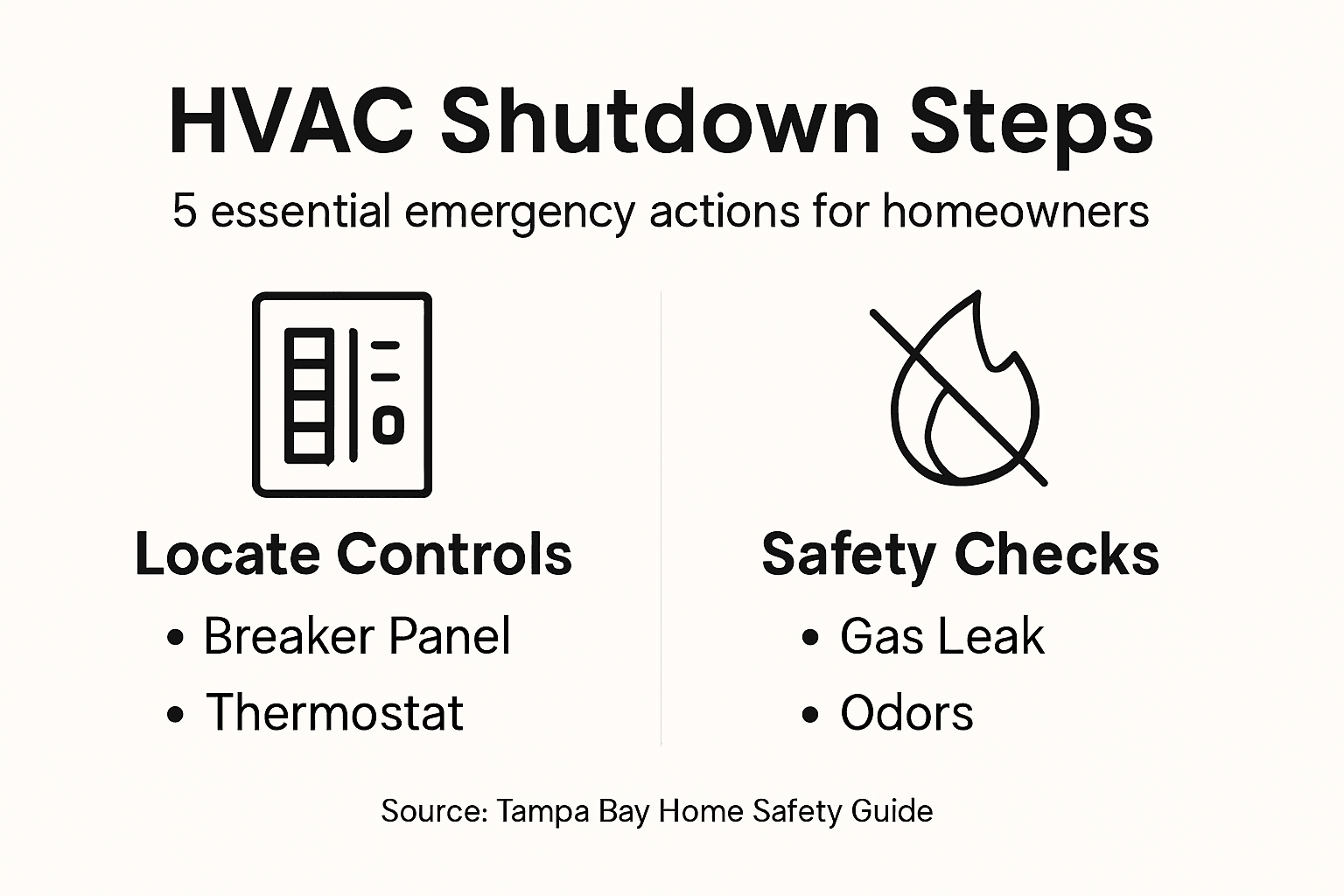
Sudden HVAC problems can disrupt the comfort, and safety, of Tampa Bay homes when you least expect it. In a real emergency, knowing where to find your system’s main power controls makes all the difference for preventing hazards or costly damage. This guide lays out practical steps any homeowner can follow to shut down their HVAC system quickly and confidently, giving you peace of mind until professional help arrives.
Table of Contents
- Step 1: Prepare By Locating All Main Power Controls
- Step 2: Turn Off The HVAC System Using The Thermostat
- Step 3: Cut Power At The Circuit Breaker Panel
- Step 4: Check For Gas Leaks Or Unusual Odors
- Step 5: Confirm System Shutdown And Ensure Safety
Quick Summary
| Key Point | Explanation |
|---|---|
| 1. Identify HVAC Power Controls | Know the locations of your circuit breaker panel, main disconnect switch, and thermostat for quick access in emergencies. |
| 2. Shut Down the Thermostat First | Turn off the HVAC system through the thermostat to prevent potential risks and electrical complications during emergencies. |
| 3. Cut Power at Circuit Breaker | Switch off the HVAC circuit breakers in the electrical panel for complete electrical disconnection during emergencies. |
| 4. Check for Gas Leaks | After shutting down the system, look for signs of gas leaks, such as unusual odors or sounds, to ensure safety. |
| 5. Confirm Full System Shutdown | Verify that the system is completely off by checking the thermostat, circuit breakers, and listening for sounds. |
Step 1: Prepare by locating all main power controls
Safety starts with knowing exactly where your HVAC system’s power controls are located. In an emergency, you’ll need quick access to disconnect the system and prevent potential damage or hazards. Understanding primary control locations is crucial for Tampa Bay homeowners who want to protect their cooling and heating systems.
Begin by identifying the main electrical components responsible for your HVAC system’s power. Your primary targets are:
- Circuit breaker panel in the main electrical box
- Main disconnect switch near the outdoor HVAC unit
- Interior control panel typically located in garage or utility room
- Thermostat mounted on an interior wall
Carefully map out these power controls before an emergency strikes. Take a few minutes to walk through your home and visually confirm each control point’s exact location. Proper emergency shutdown preparation requires knowing precisely where to cut power quickly and safely.
Here’s a quick reference for HVAC power control locations and their access tips:
| Control Location | Typical Placement | Quick Access Tip |
|---|---|---|
| Circuit breaker panel | Main electrical box | Mark panel with HVAC label |
| Main disconnect switch | Near outdoor HVAC unit | Keep area clear of obstacles |
| Interior control panel | Garage or utility room | Install clear signage |
| Thermostat | Interior hallway or wall | Ensure unobstructed visibility |
Pro tip: Create a simple, laminated emergency control location map and keep it near your primary electrical panel for quick reference during stressful situations.
Step 2: Turn off the HVAC system using the thermostat
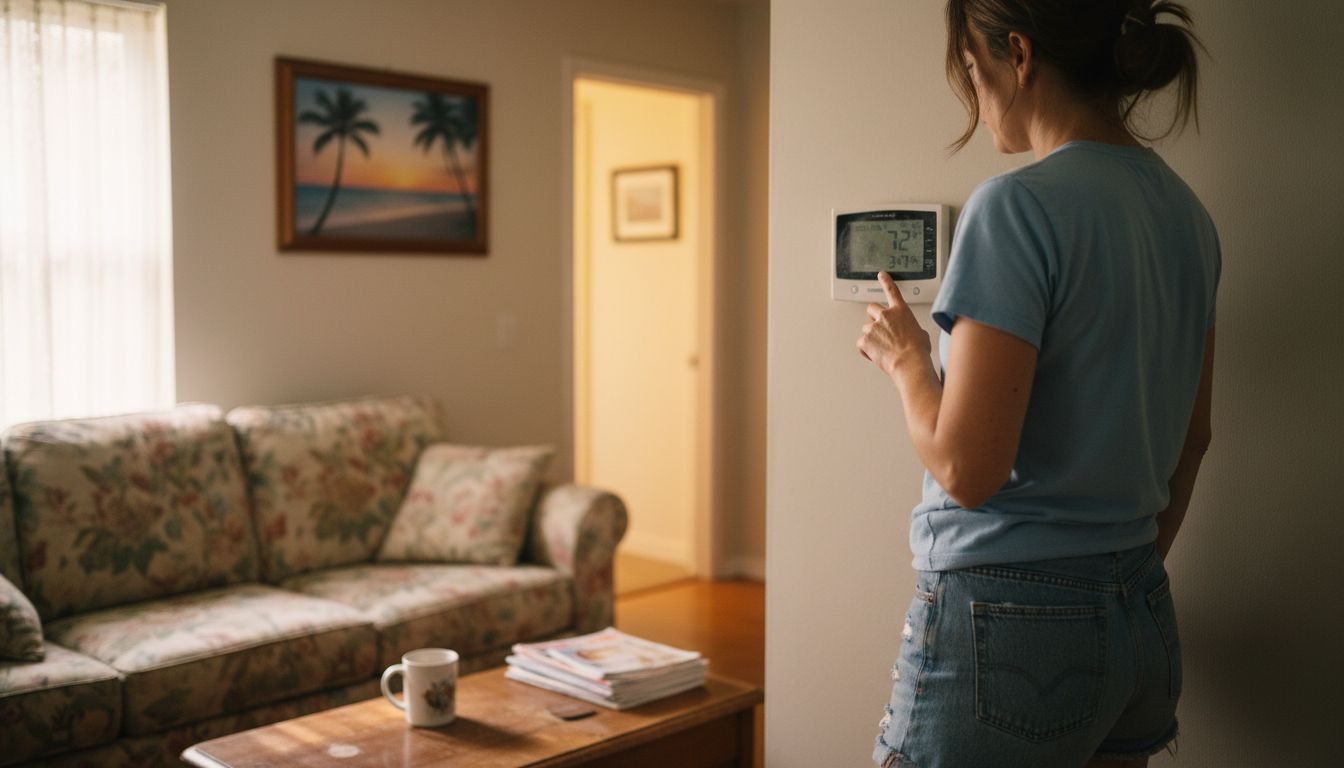
During an HVAC emergency, shutting down your system quickly and correctly is crucial to prevent potential damage. Stopping system operation at the thermostat is your first defensive action to minimize risks and electrical complications.
To turn off your HVAC system effectively, follow these specific steps:
- Locate your home’s primary thermostat
- Check the current system mode (cooling or heating)
- Switch the system control to the off position
- Verify the system has stopped running
Most modern thermostats offer multiple shutdown options. Thermostat control methods typically include switching both heating and cooling functions to off, which halts all system cycles and prevents unnecessary electrical draw.
Quickly turning off your thermostat can prevent potential system damage and reduce the risk of electrical surges during an emergency.
Pro tip: If your thermostat has a programmable or smart feature, manually override any scheduled heating or cooling cycles to ensure complete system shutdown.
Step 3: Cut power at the circuit breaker panel
Cutting power at the circuit breaker panel is a critical safety step during an HVAC emergency that prevents potential electrical risks. Hazardous energy isolation requires careful and deliberate action to ensure complete system shutdown.
Follow these systematic steps to safely cut power:
- Locate the main electrical panel in your home
- Open the panel cover carefully
- Identify the specific circuit breakers for your HVAC system
- Switch those breakers to the off position
Your circuit breakers are typically labeled, but if they aren’t, look for breakers near the top of the panel or marked with HVAC or air conditioning identifiers. Circuit breaker shutdown procedures recommend using lockout devices to prevent accidental re-energization during maintenance.
This table outlines differences between shutting down your HVAC via thermostat versus circuit breaker:
| Method | Speed of Shutdown | Electrical Isolation Level |
|---|---|---|
| Thermostat shutdown | Immediate | System remains powered, not in use |
| Circuit breaker switch | Few seconds | Complete electrical disconnection |
Proper circuit breaker shutdown protects your equipment and prevents potential electrical hazards during emergency situations.
Pro tip: Consider using a flashlight or headlamp when working near the electrical panel to ensure clear visibility and safe navigation.
Step 4: Check for gas leaks or unusual odors
After shutting down your HVAC system, carefully assessing your environment for potential gas leaks or suspicious smells is crucial for ensuring your family’s safety. Natural gas safety protocols recommend immediate action when detecting any unusual odors.
Know how to recognize potential gas leak indicators:
- Rotten egg smell (added to natural gas)
- Hissing sounds near gas lines
- Dead vegetation around gas line areas
- Visible dirt or dust blowing from ground or connection points
Indoor air quality assessment suggests that identifying odor sources quickly can prevent potential hazards. If you detect a strong gas smell, follow these immediate steps:
- Do not turn on any electrical devices
- Avoid creating sparks
- Open windows if possible
- Evacuate the area immediately
- Call emergency services from a safe location
Rapid identification and response to gas leaks can prevent potentially dangerous situations and protect your home and family.
Pro tip: Install battery-powered carbon monoxide and natural gas detectors to provide an additional layer of safety monitoring in your home.
Step 5: Confirm system shutdown and ensure safety
After completing the emergency shutdown process, a thorough safety verification is essential to prevent potential risks or unexpected system reactivation. System safety protocols require comprehensive checks to confirm complete power isolation and system inactivity.
Perform these critical safety verification steps:
- Check thermostat display to confirm it is completely off
- Inspect circuit breaker panel to verify HVAC switches are fully disconnected
- Listen for any unusual sounds from HVAC equipment
- Verify no indicator lights are active on system components
Emergency system shutdown verification recommends multiple confirmation methods to ensure complete system deactivation. Use both visual and tactile checks to validate the shutdown:
- Touch system components to check for unexpected heat
- Confirm no mechanical movement or vibration
- Double-check all power sources are disconnected
- Ensure no residual electrical signals remain
Complete system shutdown requires meticulous verification to prevent potential safety hazards or unintended reactivation.
Pro tip: Take a quick smartphone photo of your circuit breaker panel after shutdown to document the exact switch positions for future reference.
Stay Safe and Prepared with Expert HVAC Support in Tampa Bay
Facing an HVAC emergency can be overwhelming, especially when you need to act fast to protect your home and family. This article highlights critical steps like locating power controls, shutting down your system safely at the thermostat and circuit breaker, and checking for gas leaks. These actions are vital but not always easy to execute under pressure. If you want peace of mind knowing your HVAC system is professionally maintained and emergency-ready, Home Therapist Cooling, Heating, and Plumbing has you covered. Our certified technicians specialize in prompt, reliable service tailored to Tampa Bay homeowners who prioritize safety and comfort.
Explore real situations where expert intervention made all the difference in our Case Studies Archives – Home Therapist Cooling, Heating, and Plumbing. For in-depth solutions and ongoing support, visit our HVAC Archives – Home Therapist Cooling, Heating, and Plumbing. Don’t wait for an emergency to strike. Call (813) 343-2212 at Home Therapist to secure reliable HVAC service that keeps your home safe year-round.
Frequently Asked Questions
- What counts as an HVAC emergency?
An HVAC emergency is any failure that creates an immediate safety risk or causes rapid property damage: a refrigerant leak with a chemical smell, electrical burning odors from the air handler, a frozen evaporator coil flooding the drain pan, or complete cooling loss during Tampa Bay's extreme summer heat and humidity. Home Therapist has completed 305 jobs in Tampa and offers free diagnosis on every visit.
- Is no AC considered an emergency in Florida?
Yes. Florida health and housing standards recognize that a total loss of air conditioning during peak summer heat can create dangerous indoor conditions, especially for elderly residents, young children, and anyone with a medical condition. In Tampa Bay's high-humidity climate, indoor temperatures can rise to unsafe levels within hours of an AC failure, making prompt repair critical rather than optional.
- Is it okay to turn off HVAC for a week?
Turning off your HVAC for a week in Tampa Bay is risky. Without cooling and dehumidification, indoor humidity can spike rapidly in Florida's climate, promoting mold growth on walls, ductwork, and furniture within days. If you must shut the system down, set the thermostat to a high but active setpoint rather than fully off, and inspect the system before restarting it after any extended shutdown.
- What is the $5000 rule for HVAC?
There is no official industry or Florida code rule called the "$5000 rule." The phrase is informal shorthand some contractors use to suggest comparing repair cost against system age: if the repair estimate multiplied by the system's age in years exceeds a self-set threshold, replacement may be more cost-effective. Home Therapist provides free estimates so you can compare repair versus replacement costs with no obligation before deciding.
What should I do first during an HVAC emergency?
Start by quickly locating all main power controls for your HVAC system. Identify the circuit breaker panel, main disconnect switch, interior control panel, and thermostat to ensure you can cut power safely and swiftly.
How can I turn off my HVAC system using the thermostat?
To turn off your HVAC system, locate your thermostat and switch it to the off position. This action immediately halts system operation and reduces electrical risks during an emergency.
How do I safely cut power at the circuit breaker panel?
Begin by locating your home’s main electrical panel and opening the cover carefully. Identify the breakers related to your HVAC system and switch them to the off position to ensure complete electrical disconnection.
What signs indicate a gas leak after shutting down my HVAC system?
Be alert for a rotten egg smell, hissing sounds near gas lines, or visible dirt blowing from ground connections. If you detect any of these signs, evacuate the area immediately and call emergency services from a safe location.
How can I confirm that my HVAC system is completely shut down?
Check the thermostat display to ensure it is off, inspect the circuit breaker panel for disconnected switches, and listen for any unusual sounds. Confirm that there are no active indicator lights on system components to ensure complete shutdown.
What additional safety measures can I take during an HVAC emergency?
Consider installing battery-powered carbon monoxide and natural gas detectors for added safety. Regularly check these devices to ensure they are functioning properly, which can help protect your home and family from potential hazards.
About This Guide
Written and reviewed by the Home Therapist Cooling, Heating & Plumbing team, a family-owned Tampa Bay HVAC and plumbing company serving the area since 2011. Our licensed techs hold Florida HVAC license CAC1819196 and Plumbing license CFC1431159, with over 1,100 five-star reviews across Tampa, St. Petersburg, Clearwater, Wesley Chapel, Lutz, Riverview, Brandon, Valrico, Apollo Beach, Palm Harbor, Land O’ Lakes, Plant City, New Port Richey, and surrounding Tampa Bay zip codes.
Honest pricing:. Upfront quotes, no high-pressure sales, no surprise fees.
Questions about your home? Call (813) 343-2212 for a real tech, or request a callback. Available 7 days a week including evenings and weekends for emergencies.
Recommended
- Role of Emergency HVAC Services: Complete Guide – Home Therapist Cooling, Heating, and Plumbing
- Emergent Plumbing Repairs: Why Fast Action Matters
- Heating System Repair Process: Step-by-Step for Homeowners
- Emergency Heating Repair Tampa: Fast Solutions – Home Therapist Cooling, Heating, and Plumbing
- Prach v radiátoroch znižuje efektivitu kúrenia: Ako ho odstrániť
More Related Articles
- Clogged Drain Line Risk Found During AC Maintenance on Astorwood Pl: Condensate Flush in Riverview, FL 33579
- Visit #3 Elite Therapy Plan on Herchel Dr: AC Running Strong but Ductwork Needs Attention in Tampa, FL 33617
- Dirty Blower Wheel and Organic Growth Found During AC Tune-Up on Lake Palm Dr, Lutz, FL 33549
- 6-Minute Capacitor Catch on Autumn Falls Lane: AC Tune-Up and Capacitor Replacement in Plant City, FL 33567
- Air Conditioner Installation Repair Tampa FL Bay FL Services Review from Bonnie Wakefield


