
How to Install an Ecobee Thermostat in Tampa Homes
Quick answer: Installing an Ecobee in Tampa means shutting off power at the breaker, pulling the old thermostat, confirming you have a common wire, matching R, G, Y, O/B and C terminals, then letting the Ecobee's pro setup walk you through fan type and heat pump settings. On this job the old T4 was already wired with a common wire, so no adapter was needed, which made the swap cleaner and more reliable long term.
On this page: Can you install an Ecobee thermostat yourself · What wires are needed for an Ecobee thermostat · How do I know if my Ecobee is wired correctly · What did our Tampa tech show during this real Ecobee install · How much does it cost to have an Ecobee thermostat installed · What common wiring mistakes cause Ecobee installation problems · Should you use the Ecobee's common wire adapter instead of running a new wire · What happens after the Ecobee is wired and powered on · FAQ
Can you install an Ecobee thermostat yourself?
Yes, a handy homeowner can install an Ecobee, and the thermostat is built to make it easier than most smart thermostats on the market. But easy is not the same as foolproof, and the two places people get stuck are the common wire and matching the reversing valve wiring on a heat pump.
On the job we filmed, the tech started the same way every install should start, by cutting power at the breaker rather than just switching the thermostat off. He confirmed the old thermostat went dark when the breaker was cut, which told him it was being fed directly by the air handler through a common wire. That is a good sign, because Ecobee thermostats need a common wire to run continuously. Without one, the thermostat pulls power in short bursts through the other wires, and that can drain the system or cause the screen to flicker and reset.
Ecobee ships a small adapter in the box that lets you fake a common wire using five wires that get reduced down to four at the equipment side. It works, but as our tech pointed out, it is one more component that can fail, and when it fails it can take the thermostat down with it. If the wire is already there, or if running one is simple, that is always the better long term fix.
The other spot where DIY installs go wrong is Florida’s heat pump systems. Straight cool systems and heat pump systems wire differently at the O and B terminal, and picking the wrong mode during setup can make the system run backwards, blowing warm air when it should be cooling. If your home has a heat pump, gas furnace, or anything other than a simple single stage cool system, it is worth getting a free diagnosis first so nothing gets misconfigured. Home Therapist offers free estimates and free diagnosis on thermostat and full system calls across Tampa Bay, so you are not guessing at wiring before you buy the thermostat.
| Old thermostat removed | Honeywell T4 |
| New thermostat installed | Ecobee (Live model shown) |
| Common wire | Present, thermostat was fed directly, no adapter needed |
| System type | Single stage, heat pump with reversing valve |
| Back plate | Installed, used for wall coverage and built in level |
| Wiring used | Red R, Green G, Yellow Y1, Orange O/B, Blue C |
| Setup mode chosen | Professional installer path |
| Wi-Fi connection method | Manual network selection with password entry |
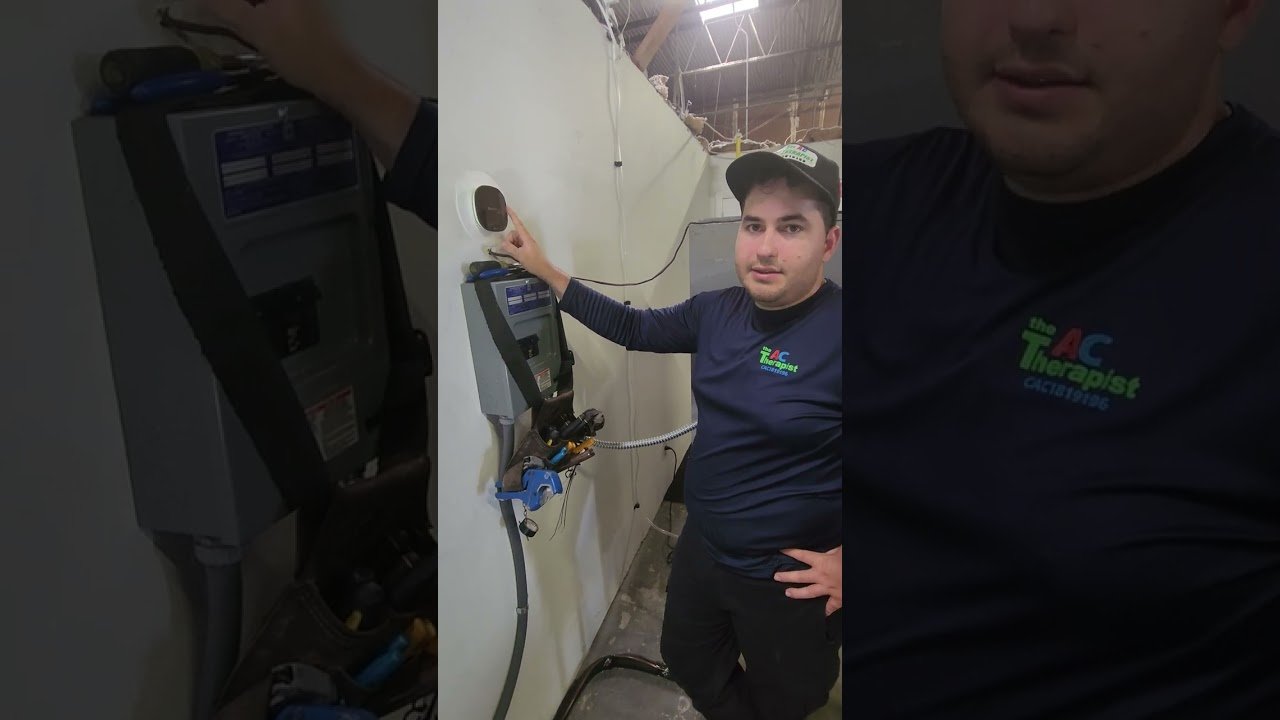
What the video shows
- 0:00 Power cut at the breaker, old T4 thermostat removed from the wall
- 3:00 Wires pulled from the terminal block, common wire confirmed present
- 7:00 Ecobee box opened, back plate and common wire adapter shown
- 11:00 Back plate leveled and mounted, wiring connected by color and code
- 15:00 Power restored, professional setup path chosen, wire detection confirmed
- 19:00 Heat pump settings configured, Wi-Fi connected manually
- 23:00 Full menu tour, schedule, sensors, and vacation mode explained
What wires are needed for an Ecobee thermostat?
A standard Ecobee install uses five wire positions, R, C, G, Y, and O/B, and most Tampa Bay homes already have all of them run to the old thermostat location.
On this job the wiring broke down like this once the old thermostat was pulled:
- Red wire, R, power from the transformer
- Green wire, G, controls the indoor blower fan
- Yellow wire, Y1, calls for cooling, with Y2 available on two stage systems
- Orange wire, O/B, controls the reversing valve on a heat pump
- Blue wire, C, the common wire that keeps the thermostat continuously powered
The tech pulled each wire out one at a time using pliers to keep from crowding the terminal block, and made a point of checking that the exposed wire ends were not bent or frayed before reconnecting them. A bent or damaged wire tip is a small thing, but it is one of the more common reasons a smart thermostat loses connection intermittently after install, so if the end looks rough, snip it back and strip a fresh section before you push it into the new terminal.
One detail worth knowing before you buy anything, Ecobee thermostats do not have separate wiring zones for different equipment types the way some basic thermostats do. Every wire lands on the same terminal regardless of whether the home runs a heat pump, straight cool with gas heat, or anything else. The thermostat figures out what kind of system you have based on which wires are actually connected, and it double checks that with you during setup. If your home is missing the common wire and the adapter is not appealing to you, that is a good reason to have a technician run a new thermostat wire rather than rely on the workaround long term.
| Likely cause | Telltale sign | Safe to DIY? |
|---|---|---|
| Missing common wire | Thermostat needs the included adapter or won't hold power reliably | Only if running new wire is simple, otherwise call a tech |
| R and RC terminal confusion | Thermostat flags a wire on one terminal but not the other during setup | Better confirmed by a licensed tech |
| Bent or frayed wire ends | Intermittent resets or dropped connection after install | Yes, trim and re-strip the wire |
| Wrong reversing valve setting on a heat pump | System heats when it should cool or vice versa | No, needs a licensed tech |
| Common wire adapter failure | Thermostat loses power intermittently over time | No, better to have wiring corrected |
| Back plate not leveled or anchored | Thermostat sits crooked or works loose from the wall | Yes, with a level and wall anchors |
| Wrong fan or equipment type selected | Fan runs constantly or system short cycles | Better confirmed by a licensed tech |
How do I know if my Ecobee is wired correctly?
The Ecobee tells you directly during setup, because it detects which terminals actually have a wire connected and asks you to confirm each one before it finishes configuring itself.
In the pro setup shown on this job, the thermostat’s screen highlighted the terminals in white where it actually sensed a live wire, RC, G, Y1, and O/B in this case, and asked the installer to confirm that matched what was really connected. It also flagged that it saw a wire on the RC terminal but not on the separate R terminal, and asked for confirmation that was correct, which it was for this system. That kind of built in check is one of the reasons Ecobee has become popular with techs, it catches a mismatched wire before the system ever gets powered up wrong.
From there the thermostat asks a series of plain language questions rather than expecting the installer to already know the terminology. It asks what kind of fan setup you have, single or two speed versus multi speed. It asks how the reversing valve is energized, since some heat pump brands, most notably Rheem, energize the valve on heat instead of cool, which is the opposite of most other equipment. It asks whether to allow the heat pump and any auxiliary heat to run at the same time, and whether to set a minimum outdoor temperature that disables the compressor in very cold weather. Most heat pumps already have their own internal freeze protection, so on this job the tech left that setting disabled.
If you are doing this yourself and none of these questions are ringing a bell, or the thermostat is flagging a wire it does not recognize, that is the signal to stop and call a licensed tech rather than guess. Misconfiguring the reversing valve setting in particular can leave a heat pump blowing the wrong temperature air for weeks before anyone notices the utility bill jump.
What did our Tampa tech show during this real Ecobee install?
Our technician filmed a full Ecobee swap start to finish, replacing an older Honeywell T4 with a new Ecobee, and walked through every decision a homeowner would actually face during the job.
He started by killing power at the breaker rather than trusting the thermostat’s own switch, then pulled the old T4 off the wall carefully so the wires did not get yanked out of the drywall behind it. He removed each wire from the terminal block one at a time using pliers, since the terminals were tightly spaced, and confirmed the old thermostat had gone completely dark when the breaker cut, which told him the common wire was already present and doing its job.
Opening the Ecobee box, he pointed out the parts inside: the thermostat face, the wired back plate, and the adapter kit for homes without a common wire. Since this home already had a common wire, he skipped the adapter entirely, noting on camera that he avoids using it when possible because it is one more part that can fail and take the thermostat with it. He installed the optional back plate, which he uses by default because it covers any paint marks left by the old thermostat and, on the Ecobee, has a built in bubble level that made it simple to mount it straight into the drywall, anchored with wall plugs for a firm hold.
Wiring went in by color and by code, red to R, green to G, yellow to Y1, orange to O/B, and blue to C, following the labels printed right on the terminal block. Once power was restored, he chose the professional installer setup path rather than the homeowner path, confirmed the detected wiring, set the fan to single speed, configured the heat pump’s reversing valve to energize on cool, and left the compressor’s low temperature cutoff disabled since the outdoor unit already handles that. He connected to Wi-Fi manually by selecting the network and typing the password rather than using phone based pairing, then finished by giving the homeowner a full tour of the schedule, sensors, humidity reading, and vacation mode settings directly on the thermostat screen.
How much does it cost to have an Ecobee thermostat installed?
Thermostat installation cost mostly comes down to two things, whether the wiring is already set up correctly, and how much time it takes to get the system fully configured for your specific equipment.
A straightforward swap, like the one filmed on this job, where a common wire already exists and the system is a single stage setup, is a quicker visit than a home missing a common wire, running a two stage system, or pairing the thermostat with a heat pump that needs the reversing valve, auxiliary heat, and low temperature settings all configured correctly. Homes with plaster walls, older wiring that needs to be extended, or a back plate that needs new anchor points also add time to the visit.
Beyond labor, the thermostat itself is a real cost factor. Ecobee sells several tiers, and as the tech noted on camera, the install and programming steps are close to 95 percent identical across the lineup, the difference is mostly in the extras each model includes, like remote sensors or a built in speaker. A homeowner buying the thermostat separately should factor that into the total cost of the visit.
Because Home Therapist offers free estimates and free diagnosis on thermostat calls, the right move if you are not sure what your home needs is to have a licensed tech look at the existing wiring first, rather than buying a thermostat and hoping it fits. If a full system inspection turns up other issues while a tech is already at the equipment, whether that is an aging condenser, a heat pump that is not switching modes correctly, or ductwork that is undercutting the new thermostat’s efficiency, it is worth getting that looked at during the same visit. You can see the AC systems Home Therapist installs and services on our air conditioning page.
What common wiring mistakes cause Ecobee installation problems?
Most Ecobee problems trace back to one of a handful of wiring issues, and almost all of them show up during the thermostat’s own wire detection screen if you know what to look for.
The most common issue in Florida is a missing common wire. Older homes and some builder grade thermostat wiring runs were installed with only four wires, skipping the common since older mechanical thermostats did not need one. Without it, the Ecobee either will not power on reliably or has to rely on the included adapter, which our tech specifically avoids using when there is any other option, since it introduces another failure point.
Another frequent issue is confusing the R and RC terminals. On this job the thermostat detected a wire on RC but not the separate R terminal, and asked the installer to confirm that was intentional. On some systems both terminals are jumped together, and removing that jumper without realizing it can cut power to either the heating or cooling side of the system.
Bent or frayed wire ends are a smaller but real problem. A wire tip that is bent over or worn from a previous connection does not always seat fully in the push in terminal, which can cause an intermittent connection that shows up as random thermostat resets or a dropped Wi-Fi connection weeks later.
- Missing common wire, thermostat needs the adapter or a new wire run, not a simple DIY fix if running new wire is not feasible
- R and RC confusion, can cut power to heat or cool unexpectedly, best confirmed by a tech
- Bent or damaged wire ends, causes intermittent resets, easy DIY fix if caught early
- Wrong reversing valve setting on a heat pump, causes the system to heat and cool backwards, requires a licensed tech to correct
- Loose or unanchored back plate, thermostat sits crooked or works loose over time, easy DIY fix with a level and wall anchors
Should you use the Ecobee's common wire adapter instead of running a new wire?
Not if you have a better option, the adapter works but our tech recommends running a real common wire whenever it is practical rather than relying on the adapter long term.
The adapter that ships in the Ecobee box takes five wires connected to the thermostat and effectively reduces them to four at the equipment side, allowing the thermostat to draw power without a dedicated common wire. It is genuinely useful technology for homes where running new wire is difficult, expensive, or requires opening up finished walls. But as our technician put it while demonstrating it on camera, it is another component sitting in the wiring path, and if it fails, it can take the thermostat down with it.
The better long term move, when the wire run is short or accessible, like through an attic, a crawlspace, or an unfinished wall cavity, is to just pull a new common wire alongside the existing thermostat cable. It is more work up front, but it removes a point of failure and keeps the installation as close as possible to how the manufacturer designed it to run.
If your home’s wiring is buried in finished walls with no easy access, the adapter is a reasonable solution and plenty of homes run on it without issue. The main thing is knowing it is there, understanding it is a workaround and not the ideal setup, and not being surprised if a thermostat that relies on the adapter needs troubleshooting down the road that a directly wired thermostat would not need. A tech doing a free diagnosis on your system can tell you in a few minutes whether running new wire is realistic for your home or whether the adapter is genuinely the better option.
What happens after the Ecobee is wired and powered on?
Once power is restored, the Ecobee walks the installer through a full setup process on its touchscreen, confirming wiring, equipment type, and network connection before it ever starts running the system.
The first screen asks whether you are setting the thermostat up as a homeowner or as a professional, and a licensed tech always chooses the professional path since it gives access to equipment level settings a homeowner setup skips. From there the thermostat displays the wires it actually detected, highlighted directly on the screen, and asks for confirmation that the wiring is correct before moving forward.
Next comes a run of plain language equipment questions, fan type, how the reversing valve is energized, whether to allow heat pump and auxiliary heat to run together, and whether to set a minimum outdoor compressor temperature. The thermostat then asks what kind of heating equipment the home has, and since Ecobee’s options are largely furnace or boiler based, a heat pump system gets set to the furnace option as the closest match, which our tech pointed out is simply how the setup flow is built.
After equipment settings, the thermostat moves into Wi-Fi setup. Our tech chose to select the network manually and type the password directly rather than using a phone based pairing shortcut, just to be certain the connection was solid. Once connected, the thermostat generates a code that links it to the homeowner’s Ecobee app account, which is why it helps to have the homeowner create their account and have their phone ready before this step.
From there, the thermostat is fully live, showing indoor temperature and humidity, giving access to schedules, remote sensor pairing, vacation mode, and system status, all of which are easier to manage from the phone app than from the wall unit itself once the initial setup is done.
For general guidance that lines up with what we do on a service call, see the U.S. Department of Energy and ENERGY STAR maintenance guidance.
Frequently asked questions
Can you install an Ecobee yourself?
Yes, if your home already has a common wire and a straightforward system, a handy homeowner can do it. Heat pumps, missing common wires, or two stage systems are where it pays to have a licensed tech confirm the wiring first.
Does an Ecobee thermostat need a C wire to work?
It runs best with one. Without a common wire, Ecobee provides an adapter workaround, but our techs recommend running an actual common wire whenever it is practical instead of relying on the adapter long term.
Can an Ecobee thermostat work with a heat pump?
Yes, Ecobee thermostats handle heat pump systems including the reversing valve, auxiliary heat, and compressor low temperature settings, all configured during the setup screens after the wiring is connected.
What is the difference between homeowner and professional install mode on an Ecobee?
The professional setup path unlocks equipment level configuration options, like reversing valve energization and auxiliary heat behavior, that the homeowner setup path simplifies or skips.
Want the raw footage and full transcript? Watch the original video and read the transcript.
Key takeaways
- Always cut power at the breaker before removing a thermostat, not just the thermostat's own switch
- A common wire makes an Ecobee install more reliable long term than relying on the included adapter
- The Ecobee auto detects connected wires and asks you to confirm them, which catches most wiring mistakes before the system powers up
- Heat pump systems need extra settings configured correctly, including the reversing valve, or the system can run backwards
- Home Therapist offers free estimates and free diagnosis on thermostat calls across Tampa Bay before any wiring work begins
Need help in Tampa? See our thermostat installation in Tampa, or all of our air conditioning services across Tampa Bay.
Home Therapist Cooling, Heating, and Plumbing is the local Tampa Bay team for thermostat installation in Tampa and across the bay. We answer the phone fast, give FREE estimates and a FREE diagnosis on service calls, carry common parts on every van, and stand behind the work with real warranties. We service every brand and install Goodman and Daikin systems. Licensed HVAC CAC1819196 and plumbing CFC1431159.
Call (813) 343-2212 or book thermostat installation in Tampa.


