
Reviewed by Richard Morales, Co-Owner & FL Class B Air Conditioning Contractor (FL license CAC1819196)
If you’ve ever looked at your air conditioning unit and wondered about the small gray box mounted next to it, you’re not alone. That box is likely your AC disconnect switch, and yes, your unit absolutely needs one.
How to Shut Off Your AC at the Disconnect
Set the thermostat to OFF first. Then find the gray metal box on the wall next to the outdoor unit and lift the cover. What you do next depends on the type of switch inside:
- Pull-out disconnect: grab the handle and pull the block straight out. Power to the outdoor unit is now off. Many blocks are printed ON and OFF, and putting the block back in the OFF position keeps the power off.
- Lever or breaker disconnect: move the lever or breaker to OFF.
- Fused disconnect: it works like a pull-out, but the block or the box holds fuses. If the breaker in your panel is on and the outdoor unit still will not run, a blown fuse here is a common reason.
To turn it back on, put the block back in the ON way (or move the lever to ON), close the cover, wait about five minutes, and then set the thermostat back to cool. The outdoor disconnect only cuts power to the outdoor unit. The indoor air handler has its own switch or breaker, usually at the unit or in your electrical panel.
Safety note: the wires feeding the top of the box stay live even when the switch is off. Do not open the inner panel or touch the terminals. If the box is rusted, melted, or buzzing, leave it alone and call us. We diagnose it for FREE.
At Home Therapist Cooling, Heating, and Plumbing, we often get questions about what disconnect switches do, why they matter, and whether they’re really required. The short answer is yes: an AC disconnect switch is not only important for safety, but it’s also required by national electrical code.
Let’s break down why it matters and what you need to know as a homeowner.
What Is a Disconnect Switch and What Does It Do?
An AC disconnect switch is a safety device that allows you, or a technician, to cut power to your air conditioner quickly and easily. It’s usually mounted on the outside of your home, close to the AC unit.
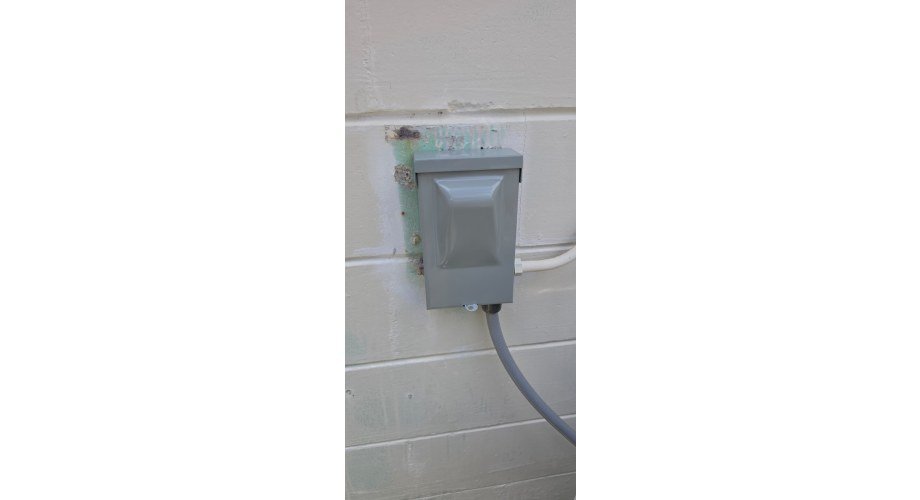
When someone needs to service the unit or respond to an emergency, the disconnect switch lets them turn off the power without having to go inside and flip breakers. This small piece of equipment helps protect technicians, homeowners, and the system itself from electrical hazards.
Disconnect switches can be either pull-out (where you remove a tab to stop power) or breaker-style (which flip like a typical breaker). Either type works as long as it cuts the power completely and is installed correctly.
Why Is It So Important to Have One?
There are two big reasons your AC needs a disconnect switch: safety and legal compliance.
Safety: Air conditioners run on high-voltage power. Servicing or inspecting the system while it’s still powered can be dangerous, even deadly. A disconnect switch ensures that the unit can be safely turned off before anyone starts working on it.
Code Compliance: According to the National Electrical Code (NEC), all fixed electrical appliances, including AC units, must have a disconnecting means within sight of the equipment. That means the switch must be nearby and easily accessible so it can be used without delay.
Without a disconnect switch, you’re not only risking injury or damage, but you’re also likely out of compliance with building codes.
Where Should a Disconnect Switch Be Installed?
The NEC requires the switch to be within sight of the AC unit and easily accessible. That means no climbing over bushes or moving heavy furniture to reach it.
If a disconnect switch can’t be placed within view because of layout or design constraints, a lockable switch is allowed. This means a technician can safely lock the power in the off position while working.
What Kind of Disconnect Switch Does Your System Need?
There are two main types of disconnect switches used with air conditioners:
Non-Fusible Disconnect Switch
This is the simpler and more common type. It doesn’t contain a fuse and only provides an on/off function. Most modern AC units already have built-in overload protection, so this type is often all you need.Fusible Disconnect Switch
This switch contains fuses that blow if there’s too much current. It adds an extra layer of protection, especially for older systems that might not have built-in safety features. It’s more expensive but sometimes required depending on the setup.
Whether you need a fusible or non-fusible switch depends on your system. A licensed HVAC technician can inspect your unit and determine the safest and most code-compliant option.
How Much Does It Cost to Install One?
What you pay depends on the type of switch, the wire size your unit needs, and whether the whip (the flexible conduit that runs to the unit) is worn out too. The switch itself is an inexpensive part, often $15 to $60. We diagnose for FREE and give you a written quote before any work starts, so you see the full price first.
Keep in mind that improper installation can create more problems than it solves. This is why hiring a licensed HVAC or electrical professional is the safest and most reliable option.
How Do You Know If the Switch Is On or Off?
It depends on the type:
With a pull-out switch, if the tab is removed, the unit is off. If the tab is inserted, the unit is on. Some pull-out types can be reinserted upside-down to prevent power from flowing, this is a safety feature.

Inside an AC disconnect box in Tampa, FL 33606. With a breaker-style switch, “on” means the lever is fully in the up or left position. “Off” means it’s down or to the right.
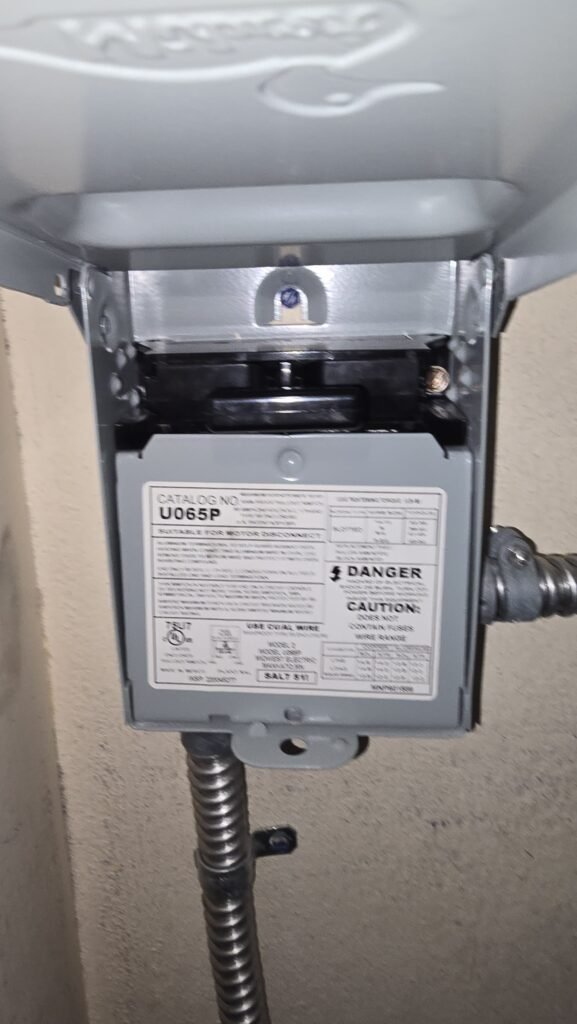
If you’re ever unsure about the status of your disconnect, don’t guess. Call a professional who can safely check and explain how it works.
Do Indoor Units (Air Handlers) Also Need Disconnects?
Yes. The NEC requires a disconnect for both the outdoor unit and the air handler (the indoor part of your system). It can be a switch near the air handler or a labeled circuit breaker if it’s nearby and easy to access.
This allows safe shutdown of either component during maintenance or emergencies, giving service technicians peace of mind when working on the system.
Can You Add a Surge Protector to the Disconnect?
Yes, and it’s actually a great idea.
A surge protector connected to your AC disconnect switch can shield your HVAC system from power surges caused by lightning or utility issues. These surges can damage sensitive parts in your system, leading to costly repairs or full replacements.
Installing a surge protector doesn’t replace the need for a disconnect, but it adds an extra layer of protection. It’s a smart upgrade, especially in areas prone to storms or power outages.
How Is a Disconnect Switch Installed?
Here’s a general overview of the installation process, which should always be handled by a licensed technician:
Choose a spot within 6 feet of the AC unit
Shut off the main power supply
Mount the disconnect box securely to the wall
Route the power wires to and from the disconnect
Connect the wiring properly to the load and line terminals
Install and test the switch to ensure proper function
Restore power and verify everything works safely
This job involves working with high voltage, so it’s best left to professionals who understand the safety codes and electrical standards.
What Tampa Bay customers say
“My outside unit stopped working over the weekend. I called Home Therapist on a Sunday and was able to book an appointment for the next day;not needing to leave a message and wait for a call back was very refreshing. Roberto came on time. He was very thorough and quick. He did the repair , educated me on some recommendations but never pressured me to do more . Companys number stored . Any future AC issues , I’ll be calling them again.”
“They have been amazing from the quote to the installation. They were able to accommodate us last minute. Made all the updates needed and in less than 5hrs we had a new HVAC unit installed. We'll be using them for all of our upgrades”
4.8 from 1,397 reviews · Read more reviews
AC Disconnect Questions We Get in Tampa Bay
What is an AC disconnect?
An AC disconnect is the switch box on the wall next to your outdoor unit. It lets a technician or homeowner cut power to the condenser right at the unit instead of walking to the breaker panel. It is a safety shutoff, not a thermostat, so it should stay ON during normal use.
Does a mini split need a disconnect?
Yes. A ductless mini split outdoor unit follows the same National Electrical Code rules as central air (NEC Article 440): it needs a disconnect within sight of the unit that is easy to reach. Most installs use a small non-fused disconnect on the wall beside the outdoor unit.
What type of disconnect does a 5-ton AC need?
Size it to the nameplate on the outdoor unit, not to the tonnage. The nameplate lists the minimum circuit ampacity and the maximum overcurrent protection. Most residential condensers up to 5 tons use a 60-amp, 240-volt disconnect. If the nameplate lists a maximum fuse size only (not “fuse or HACR breaker”), the unit has to be protected by fuses, so a fused disconnect is the usual answer.
When is a disconnect required by code?
Every air conditioner and heat pump outdoor unit needs a disconnect that is within sight of the equipment and readily accessible. Under the NEC, “within sight” means visible from the unit and no more than 50 feet away. The indoor air handler needs its own disconnecting means too, either a switch at the unit or a breaker that is within sight or can be locked off. Florida adopts the NEC through the Florida Building Code, so a condenser installed without a disconnect will not pass inspection in Hillsborough, Pinellas, or Pasco County.
Is the AC disconnect the same as the breaker?
No. The breaker in your electrical panel protects the circuit. The disconnect at the unit is a local shutoff so the unit can be worked on safely. Your system needs both.
Final Thoughts: Disconnect Switches Keep Systems Safe and Code-Compliant
While it might seem like a small part, the AC disconnect switch plays a major role in protecting your home, your equipment, and anyone servicing the unit. It’s not just a helpful tool, it’s a required safety feature under national electrical code.
From choosing the right type to installing it in the right location, every step needs to be handled with care. And if you want added protection, a surge protector is a great upgrade to consider alongside your disconnect.
At Home Therapist Cooling, Heating, and Plumbing, we help homeowners understand their systems and stay code-compliant. Whether you’re upgrading an old unit or installing something new, we’ll make sure every part, including the disconnect switch, is done right.
When to call a licensed technician: If you spot a cracked disconnect housing, visible arcing marks, or a breaker that will not stay reset after shutoff, those are warning signs worth a professional look before you replace the switch in isolation. Our technicians carry NEC 440-compliant fused and non-fused disconnects on every truck and verify that the disconnect is correctly sized, within line-of-sight of the unit, and code-ready during every AC installation in Tampa. Mini-split and ductless systems follow the same NEC 440 disconnect requirements as central air, see our ductless mini-split service page for what a proper code-compliant installation includes. Licensed CAC1819196, (813) 343-2212.
More AC Repair Articles
- AC Contactor Replacement Cost in Riverview, FL: What Barbaro Found on Zackary Cir
- Why AC Float Switches Matter for Your HVAC System’s Safety
- AC Frozen Coils in Tampa: Why It Happens and How to Fix It Fast
- Clogged AC Drain Line in Clearwater Fixed with Nitrogen Flush: Paragon Cir W, FL 33755
- Dead Blower Motor on Bitter Orange Ave: 220V Universal Motor + Disconnect Switch Replacement in Tampa, FL 33625
Do AC Units Need A Disconnect Switch For Safety And Code: Common Questions
What is the NEC code for AC disconnect?
The NEC requires a readily accessible disconnect within sight of the outdoor AC unit, typically within 50 feet. Florida adopts the NEC with state amendments, so your disconnect must be visible from the unit and lockable. Home Therapist (CAC1819196) provides free estimates and ensures every install meets current Florida code.
How do I reset an AC disconnect?
To reset an AC disconnect, switch it fully off, wait 30 seconds, then switch it back on. If your system still does not start, the disconnect may have a blown fuse or a tripped breaker inside. Call Home Therapist at (813) 343-2212 for free same-day diagnosis before replacing any components.
Does an AC disconnect need to be fused?
Not always. Fused disconnects are required when the unit's nameplate specifies a maximum fuse size and the breaker alone does not provide adequate protection. Non-fused disconnects are acceptable in many residential installs. Home Therapist offers free estimates and confirms the correct disconnect type for every Goodman or Daikin system we install.
Do you need a disconnect for a mini split?
Yes. Florida code requires a disconnect for mini split outdoor units just as it does for traditional AC systems. The disconnect must be within sight of the condenser and accessible. Home Therapist (CAC1819196) includes proper disconnect installation with every mini split job and provides free estimates upfront.
Do mini splits require a disconnect?
Yes, mini split outdoor units require a dedicated disconnect switch per NEC and Florida electrical code. This protects technicians during service and is required for a passing inspection. Home Therapist installs compliant disconnects on every mini split and offers free estimates so there are no surprises on your final bill.
Can you run Romex to an AC disconnect?
Yes, Romex (NM-B cable) can feed an AC disconnect, but only if it runs inside a conduit once it exits the structure. In Tampa's humid, salt-air environment, exposed Romex degrades quickly outdoors, so local electricians almost always transition to weatherproof conduit at the exterior wall.
Can an AC disconnect be behind the unit?
No, an AC disconnect must be within sight of the unit and readily accessible, per NEC requirements. Placing it directly behind the condenser blocks access and fails inspection. Tampa inspectors routinely flag this, so Home Therapist always positions disconnects on an adjacent wall within clear line of sight.
Where is the HVAC emergency overflow shut off switch?
The overflow (float) safety switch is typically located in the condensate drain pan or on the primary drain line near the air handler, often inside the air handler cabinet. In Tampa Bay homes, high humidity makes this switch critical. It cuts power when the drain pan fills, preventing ceiling water damage.
How do I reset the safety switch on my AC unit?
Clear the clogged condensate drain first, then press the small reset button on the float switch, usually a red or black button on the switch body. Once the pan is empty and the blockage is cleared, the system should restart. Home Therapist offers same-day service and FREE diagnosis if the issue persists. Call (813) 343-2212.