
AC Condenser Fan Motor Replacement Cost in Tampa
Quick answer: In Tampa, AC condenser fan motor replacement typically runs a few hundred dollars for the motor and capacitor plus labor, with most jobs done in under two hours. On a recent Tampa call in the Lago Fredda area, a mismatched capacitor had blown the fan motor less than a year after installation. Home Therapist replaced the motor and capacitor in about one hour and restored cooling the same visit, with a free diagnosis before any work began.
On this page: What does the condenser fan motor actually do · What we found on this Tampa call · How do I know if my AC condenser fan motor is bad · How much does condenser fan motor replacement cost in Tampa · How long do AC condenser fan motors last · Can I replace a condenser fan motor myself · What causes a condenser fan motor to fail · Who should you call for condenser fan motor replacement in Tampa · FAQ
What does the condenser fan motor actually do?
The condenser fan motor spins the blade on top of your outdoor unit so air moves across the condenser coil and carries away the heat your system pulled out of the house.
Every central AC system has two main jobs happening at once outside. The compressor squeezes refrigerant into a hot, high-pressure gas, and the condenser fan pulls ambient air through the coil fins to cool that gas back down into a liquid. If the fan stops spinning, that heat has nowhere to go. The compressor keeps running and keeps building pressure and heat, but the coil can’t shed it fast enough.
You will usually hear the compressor still humming inside the outdoor cabinet, but the top of the unit will be dead quiet. No moving blade, no airflow coming off the top. Inside the house, the air handler may still blow air through the vents for a while, but it will not be cold because the whole refrigeration cycle depends on that outdoor heat exchange working correctly.
Left alone, a dead condenser fan motor does not just mean warm air. The compressor can overheat and trip on its internal protector, or worse, take permanent damage from running hot with no way to reject heat. That is why a no-cool call with the outdoor fan not spinning gets treated as urgent, not just annoying.
The motor itself is a fairly simple part. It has a shaft that the fan blade mounts to, windings that create the magnetic field to spin it, and it works together with a run capacitor that gives the motor the extra electrical push it needs to start and keep spinning at the correct speed. That capacitor pairing matters a lot, and it is exactly what went wrong on the Tampa job below.
Most residential condenser fan motors are rated in horsepower, typically between 1/6 and 1/2 horsepower for the split systems common in Tampa Bay homes, and they are matched to a specific microfarad rating on the capacitor. Get that mismatch wrong, even by a little, and the motor is working outside its design and will not last long.
| Location | Lago Fredda area, Tampa |
| Reported issue | System running but not cooling |
| Diagnosis | Condenser fan motor failed, outdoor fan not spinning |
| Root cause found | Oversized capacitor installed that did not match the motor's rating |
| System age at failure | Less than one year since installation |
| Parts replaced | Condenser fan motor and matching capacitor |
| Labor time | About one hour |
| Outcome | Cooling restored same visit |
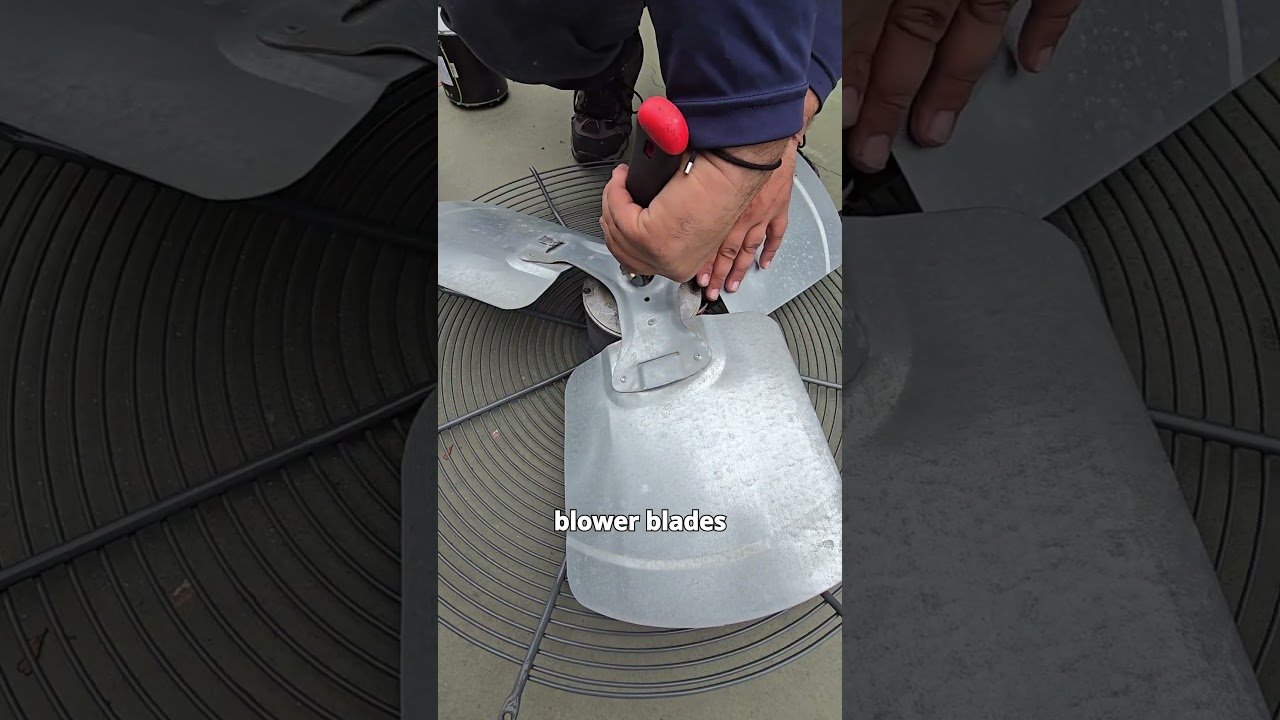
What the video shows
- 0:00 Arriving at a Tampa cooling call, condenser fan motor found not running
- 0:10 Diagnosis reveals an oversized capacitor installed for the motor
- 0:20 Homeowner approves free estimate, tech grabs a stocked replacement motor from the van
- 0:30 Seized fan blades worked loose without damage, old and new motor compared
- 0:40 Motor reinstalled with correct ground and directional wiring, blade spins freely
- 0:50 New matching capacitor installed, system restored to cooling in about an hour
What we found on this Tampa call
We got called to a home in the Lago Fredda area of Tampa for a no cooling complaint, and the outdoor fan motor was dead before we even opened the panel.
As soon as we powered the system on for the diagnostic, it was obvious. The compressor was trying to run, but the condenser fan blade was not turning at all. Once we pulled the access panel, the reason was clear right away. Whoever had installed the system previously had put in a capacitor that was rated bigger than what that motor was built to handle. Feeding a motor more capacitance than it is rated for pushes it to run hotter and harder than it should, and over time that cooks the windings. In this case it did not take long at all. The system was less than a year old and the motor was already burned out.
We walked the homeowner through what we found, gave a free estimate on the spot, and they gave us the go ahead to fix it right then. Because our vans carry a stocked inventory of common condenser fan motors, we did not need to schedule a second trip or wait on a part to ship in. We went out to the van and grabbed a replacement.
The fan blades were seized onto the old motor shaft from corrosion and heat, so those took a little extra effort to work free, but they came off clean without any damage to the blades themselves. Once the old motor was out, we compared it side by side with the new one to confirm the shaft length, mount pattern, and rotation direction all matched before installing.
Reassembly involves getting the wiring right, the ground wire first, then the directional leads. On most condenser fan motors you can actually reverse the rotation direction by swapping which lead connects where, which matters because blowing air the wrong direction across the coil kills efficiency. We spun the blade by hand to confirm it moved freely with no wobble or drag, mounted it back in the cabinet, and installed a new capacitor sized correctly for this motor, not oversized like the original.
Start to finish, the whole repair took about one hour, and the homeowner had cold air blowing again before we left. That is the kind of job where the root cause matters as much as the fix. Replacing the motor without correcting the capacitor mismatch would have just set up the same failure again. If your system is doing something similar, our Tampa AC repair team can run the same free diagnosis on your unit.
| Likely cause | Telltale sign | Safe to DIY? |
|---|---|---|
| Mismatched or oversized capacitor | Motor runs hot, fails early, or hums without spinning | No, requires electrical discharge and correct capacitor matching |
| Worn bearings from age | Fan spins slowly, wobbles, or makes grinding noise | No, requires motor removal and reinstallation |
| Electrical surge or lightning strike | Sudden failure after a storm, tripped breaker | No, involves electrical diagnosis |
| Dirt or debris restricting the fan | Fan struggles to start or runs unevenly | Basic exterior cleaning is DIY friendly, motor work is not |
| Corrosion on motor housing or blade mount | Seized fan blade, visible rust on outdoor unit | No, risk of damaging blades or wiring |
| Failing contactor causing overheating | Unit short cycles or clicks repeatedly before stopping | No, requires electrical testing |
How do I know if my AC condenser fan motor is bad?
The clearest sign is a compressor that hums and runs while the outdoor fan blade sits completely still, but there are a few other signs worth checking before you call anyone out.
Homeowners usually notice the system blowing air indoors that just is not cold, sometimes room temperature or barely cool. That is because the compressor is still working but the outdoor coil cannot reject heat without airflow moving across it. Given enough time running that way, the whole system can trip off on a high pressure or high temperature safety switch, or a breaker can trip from the compressor drawing excessive current while overheated.
- Outdoor fan blade not spinning while you hear a hum or buzz from the unit
- Fan spinning very slowly, wobbling, or struggling to start on its own
- Warm air coming from your vents even though the system is running
- A burning or hot electrical smell near the outdoor unit
- The outdoor unit shutting off after running for a short while, then restarting later
- Visible bulging, leaking, or swelling on the capacitor near the motor
- Grinding, squealing, or rattling coming from the top of the outdoor cabinet
One thing to be careful of, a bad capacitor and a bad motor can look almost identical from the outside. Both can leave you with a fan that will not spin and a compressor that hums by itself. Sometimes giving the fan blade a gentle push with a stick while the system is on will get it spinning if the capacitor is weak but the motor is still good, though we never recommend doing that with your hand near a live outdoor unit. If a push gets it going, that points toward the capacitor. If it does not spin at all or spins and immediately stalls, the motor itself is more likely the failure.
Either way, this is exactly what a proper diagnostic is for. We check capacitor microfarad rating against what the motor calls for, check amp draw on the motor, and check the wiring before recommending a repair, which is what caught the mismatched capacitor on the Tampa job above.
How much does condenser fan motor replacement cost in Tampa?
Across the industry, condenser fan motor replacement generally runs a few hundred dollars in parts plus a straightforward labor charge, since most jobs like the one above take about an hour once the tech is on site with the right motor.
The total depends on a handful of factors. Motor horsepower and speed rating matter, a larger 1/3 or 1/2 horsepower motor typically costs more than a smaller 1/6 horsepower unit. Whether it is a single shaft or double shaft motor, the mounting style, and whether it needs a matching capacitor replaced at the same time all factor in. On the job above, both the motor and capacitor were replaced together, which is generally the right move any time a capacitor mismatch caused the failure, since reusing the wrong capacitor would just burn out the new motor again.
Accessibility plays a role too. If the fan blades are seized or corroded onto the shaft like they were on this call, or if the outdoor unit is in a tight side yard or behind landscaping, that adds a little time. Ours came free without damage, but that is not always the case on older units that have sat exposed to Florida humidity and salt air for years.
A few things that can push cost up:
- Higher horsepower or variable speed motors used on higher efficiency systems
- Needing a specialty capacitor alongside the motor
- Corrosion making the fan blade or motor mount harder to remove
- After hours or emergency scheduling during peak summer heat
We always start with a free estimate and free diagnosis before any work happens, so you know the exact cost for your specific motor and system before agreeing to anything. That estimate is what let the homeowner on this call make a quick decision and get their air back on the same visit instead of waiting around comparing guesses.
How long do AC condenser fan motors last?
A properly matched condenser fan motor generally lasts somewhere in the 10 to 15 year range under normal Tampa Bay conditions, but electrical problems or the wrong capacitor can cut that down to almost nothing.
That lifespan assumes a few things are true, correct capacitor rating matched to the motor, reasonably clean coil and fan blade so the motor is not straining against dirt buildup, stable voltage, and a system that is not short cycling constantly. Tampa’s heat and humidity do put extra strain on outdoor equipment compared to milder climates, since the motor is working harder for more months of the year and dealing with more moisture and salt air exposure depending on how close a home is to the coast.
The job above is a good example of how fast a motor can fail when something is wrong from the start. That system was less than a year old, well outside the range you would expect from normal wear, because the fan motor was paired with an oversized capacitor from day one of installation. Feeding a motor more electrical push than it is rated for is a lot like constantly overworking any mechanical part, it simply is not built to handle it and the windings degrade far faster than they should.
Other things that shorten a motor’s life besides a bad capacitor pairing include running with a dirty or clogged condenser coil, which makes the motor work harder to push air through, bearing wear from age and heat cycling, and power surges from Florida’s frequent lightning storms. Any of these can take years off a motor that would otherwise easily make it into its second decade of service.
If your outdoor unit is much older, say 12 years or more, and the fan motor fails, it is often worth asking your tech whether the rest of the system is aging out too, rather than just fixing the one component. But on a newer system like the one on this call, replacing just the failed part with the correctly rated capacitor was the right call, since the rest of the equipment had plenty of life left.
Can I replace a condenser fan motor myself?
It is technically possible for someone comfortable with electrical work, but we generally do not recommend it, and a few things on this exact job show why.
The outdoor unit runs on 208 to 240 volt power, and capacitors can hold a dangerous electrical charge even after the system is switched off, which is why proper discharge procedure matters before touching anything inside the panel. Beyond the safety issue, there is also the matching problem that caused this whole call in the first place. Getting the motor’s horsepower, shaft type, rotation direction, and RPM rating wrong, or pairing it with an incorrectly sized capacitor, can either damage the new motor quickly or leave the system running inefficiently even if it seems to work at first.
On this Tampa job, the fan blades were also seized in place, and working them loose without bending or cracking the blade takes some care. A bent or unbalanced blade after reinstalling can cause vibration that eventually damages the new motor’s bearings anyway.
There is also the wiring itself. Swapping the directional leads changes which way the fan spins, and installing it backward means the fan pulls air the wrong direction through the coil, which hurts cooling performance even though the motor is technically running. Getting the ground wire and lead wires correctly matched to the new motor’s wiring diagram, which is not always identical to the old motor even on a like for like replacement, takes some familiarity with how these units are built.
A few reasons homeowners tend to call a licensed tech for this one:
- Live electrical components and capacitor discharge risk
- Matching motor specs and capacitor rating correctly to avoid a repeat failure
- Correct rotation direction and wiring for full cooling performance
- Warranty coverage on parts often requires professional installation
Home Therapter Cooling, Heating, and Plumbing carries stocked motors on our service vans specifically so these repairs can happen same visit, with a licensed technician handling the electrical work under our HVAC license.
What causes a condenser fan motor to fail?
The most common causes are a mismatched or failing capacitor, normal age related wear, electrical surges, and dirt or debris interfering with the fan.
A capacitor mismatch was the culprit on the Tampa call detailed above, and it is more common than a lot of homeowners realize, especially when a system has been serviced or installed by someone who grabbed whatever capacitor was on the truck instead of checking the motor’s actual rating. Too much capacitance pushes the motor to run outside its designed electrical range, generating extra heat inside the windings every time it cycles on, and that heat is what eventually kills it.
Age and normal wear are the other big factor. Bearings inside the motor wear down over years of constant cycling through Tampa’s long cooling season, and eventually the shaft starts to bind or wobble, drawing more current and running hotter until it fails.
Florida’s weather brings its own set of problems. Lightning strikes and power surges during our frequent summer storms can damage motor windings even when the strike does not hit the house directly, just from the surge traveling through the electrical panel. Heavy rain and high humidity also promote corrosion on motor housings and fan blade mounts over time, which is part of why the fan blades on the Tampa job were seized in place even though the system itself was fairly new.
- Oversized or mismatched capacitor forcing the motor outside its rated range
- Worn bearings from age and normal cycling
- Electrical surges from lightning or grid fluctuations
- Dirt, leaves, or debris restricting the fan blade or clogging the coil
- Corrosion on the motor housing or blade mount from humidity exposure
- A failing contactor causing the unit to short cycle and overheat components
This is exactly why a proper diagnostic checks more than just the motor itself. On this job, replacing the motor alone without correcting the capacitor would have set the new motor up to fail again on a similar timeline.
Who should you call for condenser fan motor replacement in Tampa?
Call a licensed HVAC contractor who stocks common parts on the truck and gives you a free diagnosis before charging you for anything, which is exactly how this Tampa job was handled.
Home Therapist Cooling, Heating, and Plumbing has been a family owned company serving Tampa Bay since 2017, holding HVAC license CAC1819196 and plumbing license CFC1431159. Owner Richard Morales is a licensed technician himself, and the company has built up more than 1,100 five star reviews from homeowners across the area.
What made a difference on this particular call was having the right part already on the van. A condenser fan motor failure is not something you want to wait days on in Tampa’s summer heat, and because our techs carry stocked inventory of common motors, we were able to give a free estimate, get approval, and complete the repair in about an hour on the same visit. No second trip, no waiting on a part to ship, no extra day without cooling.
We also do not just swap the failed part and move on. Finding the oversized capacitor behind this motor failure meant fixing the actual root cause instead of setting the homeowner up for the exact same repair again in another year. That kind of thorough diagnostic is standard on every AC service call we run, whether it is a dead fan motor, a capacitor issue, a refrigerant problem, or anything else keeping a system from cooling properly.
A few things to look for when choosing who works on your AC:
- Free diagnosis and free estimate before any repair work begins
- Licensed and insured, with the license numbers available to verify
- Stocked service vehicles that can often complete common repairs same visit
- Willingness to explain the root cause, not just replace the failed part
If your outdoor unit is humming but the fan is not spinning, or your system is blowing warm air, our Tampa AC repair team can get a technician out for a free diagnosis and walk you through exactly what is going on before any work starts.
For general guidance that lines up with what we do on a service call, see the U.S. Department of Energy and ENERGY STAR maintenance guidance.
Frequently asked questions
Is it cheaper to repair or replace a fan motor?
Replacing just the failed condenser fan motor and matching capacitor is almost always cheaper than replacing the whole outdoor unit, and it is a same visit repair in most cases when the correct motor is in stock.
What does a free AC diagnosis include in Tampa?
A free diagnosis includes checking the outdoor unit, testing the capacitor and motor, and confirming the root cause before giving you an estimate, exactly what identified the oversized capacitor on this job.
Can a bad capacitor be mistaken for a bad fan motor?
Yes, both can leave the outdoor fan not spinning while the compressor hums, which is why a proper diagnostic checks the capacitor's rating against the motor before recommending a replacement.
Why did the condenser fan motor fail so soon after installation?
On this Tampa job, the installer had used a capacitor rated higher than the motor was built for, which overworked the motor's windings and burned it out in less than a year.
Want the raw footage and full transcript? Watch the original video and read the transcript.
Key takeaways
- A humming outdoor unit with a fan blade that will not spin usually means a bad capacitor or a bad condenser fan motor, and only a diagnostic can tell you which.
- On this Tampa call, an oversized capacitor from a previous installation burned out the fan motor in under a year, showing why matching parts correctly matters as much as the repair itself.
- Stocked service vans let common condenser fan motor replacements finish in about an hour on the same visit instead of waiting for parts.
- DIY replacement carries real electrical risk and a high chance of repeat failure if the motor, capacitor, or wiring direction is not matched correctly.
- Always get a free diagnosis and free estimate before agreeing to any AC repair so you know the actual cause, not just the symptom.
Related reading: AC repair in Tampa.
More of our own footage on this
We have filmed this problem on real Tampa Bay service calls more than once. Each clip below is a different house and a different fault.
- Watch: Condenser Fan Motor Replacement In Wesley Chapel by Home Therapist Cooling, Heating, and Plumbing
- Watch: Broken Condenser Fan Blade Replacement
Need help in Tampa? See our AC repair in Tampa, or all of our air conditioning services across Tampa Bay.
Home Therapist Cooling, Heating, and Plumbing is the local Tampa Bay team for AC repair in Tampa and across the bay. We answer the phone fast, give FREE estimates and a FREE diagnosis on service calls, carry common parts on every van, and stand behind the work with real warranties. We service every brand and install Goodman and Daikin systems. Licensed HVAC CAC1819196 and plumbing CFC1431159.
Call (813) 343-2212 or book AC repair in Tampa.


