

What Size AC Do I Need for a Tampa House? A Sizing Decision Guide
If you are asking what size AC do I need for a Tampa house, the short answer is roughly one ton of cooling per 500 to 600 square feet, but the honest answer is that a square-footage rule alone gets it wrong in our humid climate. A proper Manual J load calculation, which accounts for insulation, windows, ductwork, and sun exposure, is the only way to size an air conditioner correctly. Guessing usually means oversizing, and an oversized unit short-cycles, leaves your home clammy, and wears out early.
What size AC do I need for my square footage?
Square footage gives you a ballpark, not a final number. Tampa Bay homes built in different decades have very different insulation, window, and duct quality, so two houses of the same size can need different tonnage. Use this chart as a starting point only, then confirm with a load calculation.
| Home Size (sq ft) | Typical Tonnage (Tampa Bay) | BTU Range |
|---|---|---|
| 1,000 – 1,200 | 2 tons | 24,000 BTU |
| 1,300 – 1,600 | 2.5 – 3 tons | 30,000 – 36,000 BTU |
| 1,700 – 2,100 | 3 – 3.5 tons | 36,000 – 42,000 BTU |
| 2,200 – 2,700 | 4 tons | 48,000 BTU |
| 2,800 – 3,400 | 5 tons | 60,000 BTU |
One ton equals 12,000 BTU per hour of heat removal. In Tampa, where cooling runs nearly year round, sizing this correctly matters more than almost anywhere else in the country. When we quote a replacement, we treat this chart as the conversation starter and the load calculation as the decision maker. Curious where the chart leads for your home? Our AC installation team in Tampa can walk a real number with you for FREE.
Why does Tampa humidity change the answer?
An air conditioner does two jobs: it lowers temperature and it pulls moisture out of the air. In our climate the second job is just as important as the first. An AC only removes humidity while it is actively running, during what techs call the long run cycle.
An oversized unit cools the thermostat reading fast, then shuts off before it has wrung enough moisture from the air. The result is a house that feels cold and damp at the same time, the classic Florida clammy feeling. That is why bigger is not better here. A right-sized system runs longer, gentler cycles that dehumidify properly. If your current home already feels sticky, that is often a sizing or airflow problem, and it shows up in related symptoms like an AC that smells musty from moisture sitting in the system.
The U.S. Department of Energy notes that properly sized, high-efficiency cooling equipment is one of the biggest levers homeowners have for comfort and energy savings, and that improper sizing undercuts both.
What is a Manual J load calculation and do I need one?
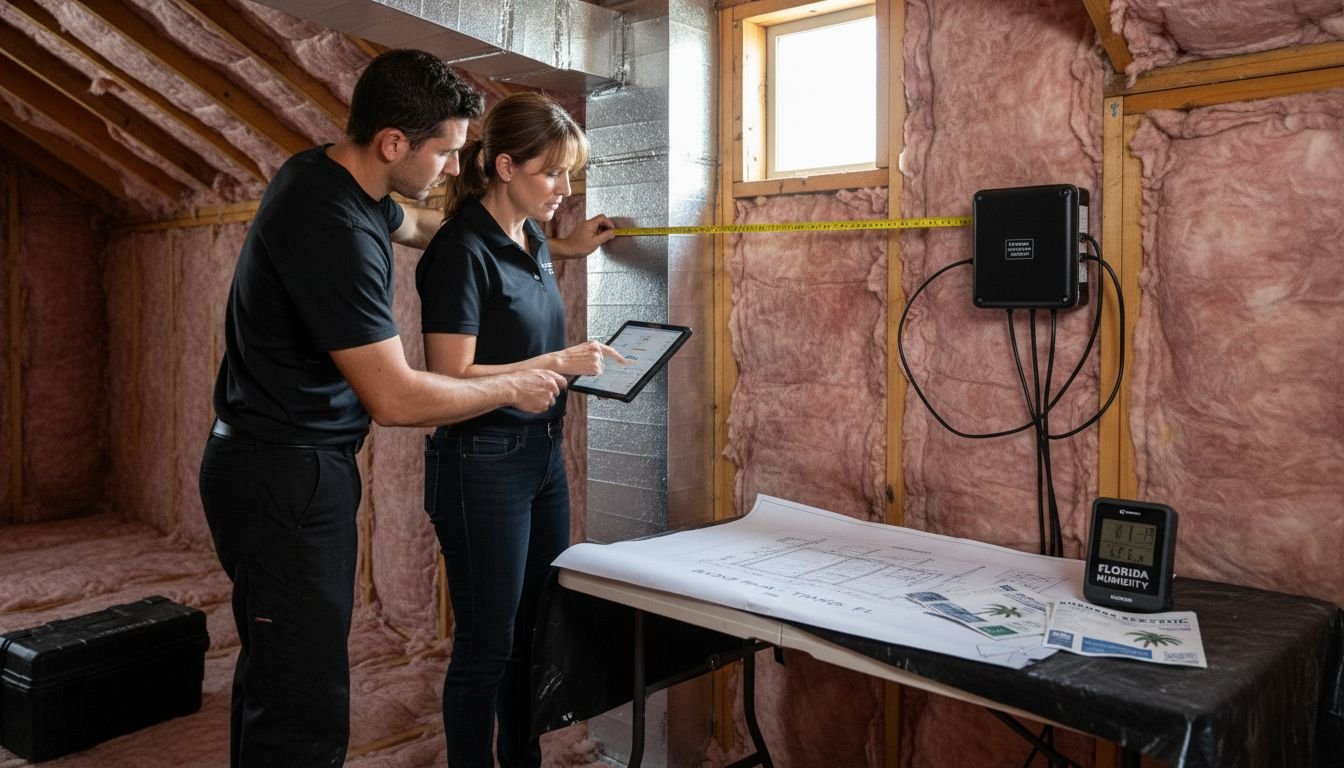
Manual J is the industry-standard method, published by the Air Conditioning Contractors of America (ACCA), for calculating exactly how much heating and cooling a specific home needs. A good contractor measures your square footage, then layers in the details that a chart ignores:
- Insulation levels in the attic and walls
- Number, size, type, and orientation of windows
- Ceiling height and home layout
- Sun exposure and shade
- Ductwork condition and leakage
- Number of people who live there
Florida ranch homes from the 1970s and 1980s with single-pane windows and thin attic insulation often need more tonnage than their footprint suggests. A tightly built newer home in Wesley Chapel or a remodeled bungalow with new windows may need less. Skipping the load calculation is the single most common reason Tampa homes end up with the wrong-size system. When you are deciding between equipment too, our Goodman vs Daikin comparison for Tampa homes pairs naturally with a load calculation: get the size right first, then pick the brand and tier.
What happens if my AC is the wrong size?
Both directions cause real problems, and they cost you money long before the unit dies.
Too big: short cycling (turning on and off rapidly), poor humidity removal, uneven temperatures, higher upfront cost, and faster wear on the compressor. Short cycling is so common that we wrote a full breakdown of AC short cycling in Tampa and how to fix it before it causes damage.
Too small: the system runs constantly trying to reach the set temperature, never quite catches up on the hottest days, drives up your electric bill, and burns out early from overwork. The Department of Energy estimates poorly installed or mismatched systems can lose a meaningful share of their rated efficiency, which on a Tampa cooling bill adds up fast over a season.
If your existing unit is more than 12 to 15 years old and struggling, sizing is worth revisiting as part of the replace decision. Our repair vs replace AC decision guide for Tampa helps you weigh whether a tired system is worth keeping at all.
Should I pick a higher SEER or a different system?
Once the size is settled, two more decisions shape your final pick. First, efficiency: a higher SEER2 rating costs more up front but lowers your monthly bill, and the payback math is different in a climate that cools nearly all year. We break the trade-offs down in our SEER 14 vs 16 vs 20 guide for Tampa. Second, system type: most Tampa homes use central ducted AC, but additions, garages, and homes without ducts can be better served by ductless. Compare the two in our central AC vs ductless mini-split breakdown. Sizing comes first because it sets the tonnage; efficiency and system type refine the choice from there.
Key Takeaways
- A rough rule is one ton per 500 to 600 square feet, but it is only a starting point, not a final answer.
- A Manual J load calculation from ACCA is the correct way to answer what size AC you need.
- Oversizing is the most common Tampa mistake: it short-cycles and leaves your home humid.
- Undersizing runs constantly, raises bills, and shortens the unit’s life.
- Get the size right first, then choose SEER level and system type.
- Home Therapist provides FREE estimates and FREE diagnosis on every visit; $279 is our labor on approved repair work only.
Sources: ENERGY STAR, ACCA.
What size AC do I need for a 1,500 square foot Tampa home?
A 1,500 square foot home in Tampa typically lands around 2.5 to 3 tons (30,000 to 36,000 BTU), but insulation, windows, and ductwork can shift that. We confirm with a Manual J load calculation before quoting.
Is a bigger AC unit better for hot Florida weather?
No. A bigger unit cools the air fast but shuts off before it removes enough humidity, leaving your home cold and clammy. A right-sized unit runs longer cycles that dehumidify properly, which matters most in Tampa.
How much does it cost to replace an AC in Tampa?
Cost depends on tonnage, efficiency (SEER2), and the equipment tier you choose. We install Goodman and Daikin systems and give a FREE upfront estimate with no high-pressure sales, so you see the real number before deciding.
Do I really need a Manual J calculation or can I just match my old unit?
Matching the old unit only works if the old unit was sized correctly, which is often not the case. If your home feels humid, has hot rooms, or the old system short-cycled, a fresh load calculation is the right move.
More Related Articles
- How Often Should You Service Your AC in Florida? the Ultimate Guide for Tampa Bay Homeowners
- Why Your AC Is Not Cooling All Rooms Equally in Tampa Bay: Diagnose and Fix Uneven Temperatures
- HVAC Replacement Checklist for Tampa Homeowners
- HVAC Maintenance Checklist Tampa: DIY vs Licensed Tech Tasks
- Air Conditioner Installation Repair Tampa FL Bay FL Services Review from Bonnie Wakefield


