

Why One Room Stays Warm: Worn Blower Belt Found During AC Maintenance in Palm Harbor, FL 34684
One room in a Palm Harbor, FL 34684 home was consistently not getting enough cool air, no matter how long the AC ran. During a Premium Quarterly Service Agreement visit, our technician opened the air handler blower compartment and found the answer immediately: a blower belt that was extremely worn and loose. On a belt-driven system, a slipping belt is the direct link between the motor and the airflow your home receives. A loose or degraded belt reduces blower speed, and the rooms farthest from the air handler feel it first. The 12-year-old air handler coil also showed rust — a sign that system-age monitoring belongs in the conversation. FREE estimates and FREE diagnosis. Call (813) 343-2212.


- Key Takeaways
- A worn or loose blower belt reduces blower wheel speed, directly cutting airflow — rooms at the end of long duct runs feel the shortage first.
- Squealing, chirping, or a softer-than-normal whoosh from vents are early warning sounds that a blower belt is wearing.
- Replacing the blower belt restores the intended relationship between motor speed and blower output — in many homes, this single step resolves uneven comfort.
- A 12-year-old air handler with a rusting coil in Palm Harbor’s coastal climate warrants ongoing monitoring; the thermostat setting on this visit prevented full condenser testing, but system age is a planning factor.
- The $279 applies to approved repair work only — FREE diagnosis first, price agreed before we start.
Why Does a Worn Blower Belt Cause Uneven Cooling in One Room?
In a belt-driven blower system, the belt connects the motor shaft to the blower wheel the same way a bicycle chain connects the pedals to the rear wheel. The motor provides the power; the belt transfers it to the blower, which pushes conditioned air through the ductwork. When the belt is worn, glazed, or loose, it slips on the pulleys instead of gripping. The blower wheel spins slower than the motor intends. Less air moves through the ducts.
The effect is not uniform across the home. Rooms closest to the air handler still receive reasonable airflow because the duct runs are short. Rooms at the far end of the duct network — especially those on longer runs or at the end of branch takeoffs — get the last fraction of available airflow. When belt slip reduces total airflow by 20 to 30 percent, those distant rooms may receive almost none.
According to the U.S. Department of Energy, reduced airflow is one of the primary efficiency and comfort problems in residential central air conditioning, and it can be caused by belt wear, dirty filters, or duct restrictions — all of which are detectable during a professional maintenance visit.
What the Technician Found on This Palm Harbor, FL Maintenance Visit
The homeowner reported that one area of the home had been getting little to no airflow from the AC. This was not a new problem — it had been ongoing. The homeowner was on a Premium Quarterly Service Agreement, so they had a structured visit with a technician who could investigate the complaint alongside the routine maintenance steps.
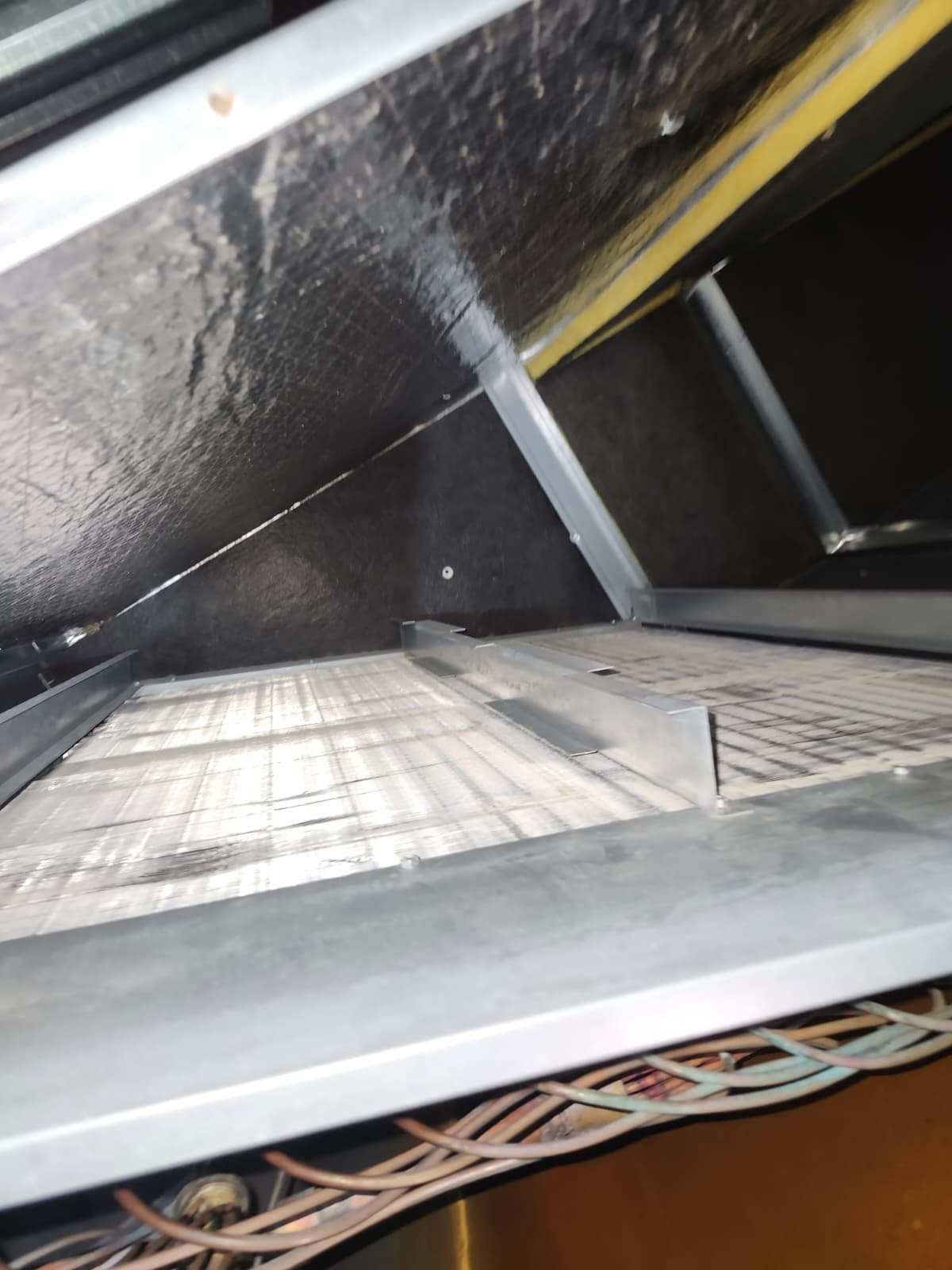
Blower compartment inspection: severely worn and loose belt
When the technician opened the blower compartment on the approximately 12-year-old air handler, the belt condition was immediately apparent. It was extremely worn and loose. A belt in this state has several visible signs: glazed or polished contact surfaces where it has been slipping, possible cracking along the belt body, and measurably excessive slack when tension is checked. A properly tensioned belt deflects about half an inch under moderate thumb pressure at the midpoint of the longest span; this belt deflected substantially more, indicating significant tension loss.
This belt could not reliably transfer full motor power to the blower wheel. The result the homeowner experienced — insufficient airflow to one part of the home — was a direct consequence of this mechanical degradation.
Air handler coil: rust noted on a 12-year system
The technician also inspected the evaporator coil and air handler cabinet. Rust was present on the coil surface and cabinet. In Palm Harbor, FL 34684, where coastal humidity is high and salt-bearing air is never far away, steel surfaces on older air handlers begin showing surface corrosion at the 10 to 12 year mark. Surface rust on a coil does not immediately mean refrigerant loss or coil failure, but it indicates that the system is in the age range where repair-versus-replace planning becomes practical.
The technician documented the rust finding for future monitoring and discussed system age with the homeowner — not as a pressure tactic, but as context. A homeowner who knows their 12-year system has a rusting coil is in a better position to make a calm, informed decision about repair scope versus replacement planning than one who finds out after a coil leak in August.
Outdoor condenser: limited testing due to thermostat setting
The thermostat was set not to cool below 70 degrees Fahrenheit. Because the system shut off before reaching extended cooling demand, a full diagnostic on the outdoor condenser was not possible. The technician respected the homeowner’s thermostat settings and worked within that limit. The primary investigation focused on what was clearly verifiable: the blower belt condition, which explained the homeowner’s reported airflow problem directly.
Standard maintenance steps completed
The Premium Quarterly Service Agreement maintenance steps were completed alongside the blower investigation. This included checking and servicing the air handler, inspecting electrical connections, reviewing filter condition, and confirming thermostat operation. The routine maintenance work proceeded normally; the blower belt was the significant finding that required a specific recommendation.
| Inspection Item | Condition Found | Recommendation |
|---|---|---|
| Blower belt | Extremely worn and loose — slipping condition | Replace immediately; restore full blower speed and airflow |
| Evaporator coil | Rust present; approximately 12-year-old system | Monitor at future visits; begin replacement planning |
| Outdoor condenser | Limited testing (thermostat set to 70 degree minimum) | Full diagnostic recommended if airflow issues continue after belt replacement |
| Electrical connections | Inspected | No deficiencies noted |
| Air filters | Inspected; routine status | Replace on schedule |
How Belt Replacement Restores Comfort in a Palm Harbor Home
Replacing the blower belt and setting correct tension restores the mechanical link between motor speed and blower output. When the belt grips firmly instead of slipping, the blower wheel spins at its designed RPM. Airflow through the ductwork returns to its designed volume. The distant rooms that were receiving inadequate air now receive their share of the conditioned output.
This is the most direct fix for the symptom the homeowner reported. Belt replacement is a straightforward repair once access to the blower compartment is gained. The work includes removing the worn belt, inspecting the pulleys for wear or alignment issues, installing a correctly sized replacement belt, and setting proper tension — then cycling the system to confirm normal airflow and check for unusual sounds.
In many homes with belt-driven blowers, this single step produces a noticeable improvement in comfort within the first cooling cycle after the repair. If airflow is still uneven after belt replacement, the next diagnostic steps would address duct leaks, crushed duct sections, or closed and blocked registers. Our air duct repair service addresses those secondary causes across Tampa Bay.
What to Watch for Between AC Maintenance Visits in Palm Harbor, FL
- Listen for belt-wear sounds. Squealing or chirping from the air handler on startup is often a slipping belt. A belt that is starting to crack may make a flapping sound. Do not wait for the sound to stop — when it stops, the belt may have broken entirely.
- Notice which rooms warm up fastest on hot days. If one room consistently underperforms, it is worth noting which direction that room is relative to the air handler. Rooms at the far end of long duct runs are the first to show belt slip symptoms.
- Change filters on schedule — or more often. In Palm Harbor’s pollen and dust environment, a clogged filter can create the same low-airflow symptom as a worn belt. If the belt is replaced and airflow is still weak, the filter is the next thing to check.
- Plan for replacement if the system is 12+ years old. A repair that costs $279 on a system approaching the end of its service life is still a reasonable investment if the compressor and refrigerant circuit are sound. But having a replacement quote in hand — which we provide FREE — lets you make a calm decision rather than a forced one.
- Keep the area around the air handler accessible. The blower compartment needs to be reachable by a technician. If storage or construction has restricted access, clearing it before a maintenance visit means we can complete the full inspection without a return trip.
For Palm Harbor AC service options, see our AC maintenance Palm Harbor and AC repair Palm Harbor pages. For replacement planning, our AC replacement Palm Harbor page covers the options we install, including Goodman and Daikin systems. For homeowners planning a full tune-up, our AC tune-up service and maintenance plan options are a good starting point.
Sources: ENERGY STAR.
FAQ: Worn Blower Belt and Uneven Airflow, Palm Harbor FL 34684
Can a worn blower belt really cause just one room to get no air?
Yes. A slipping or degraded blower belt reduces total airflow through the duct system. Rooms that are farthest from the air handler, at the end of long duct runs, or served by branch takeoffs with lower static pressure receive the smallest fraction of total airflow. When the belt is slipping and total output drops, those rooms go from receiving less air to receiving almost none. Replacing the belt restores total airflow, and those distant rooms get their share back.
What does a worn blower belt look, feel, and sound like?
Visually: glazed or polished contact surfaces, possible surface cracking, and excessive slack when tension is checked. Audibly: squealing or chirping on startup, sometimes a light slapping sound during operation. If the belt breaks, there is sudden silence from the air handler blower — the motor still runs, but no air moves. On the Palm Harbor home in this case, the worn-and-loose condition was immediately apparent when the blower compartment was opened.
Is $279 the cost to replace a blower belt?
$279 is our minimum on approved repair work. The actual cost of a blower belt replacement depends on belt size and total access time. We always give you the price before starting any repair. FREE diagnosis is included on every service call — there is no charge just for our technician to identify the problem and explain your options.
Does rust on the AC coil mean I need to replace it now?
Not automatically. Surface rust on an evaporator coil in a 12-year Palm Harbor system indicates age and moisture exposure — normal for our coastal climate. It becomes a planning factor when combined with other signs of age (worn belt, multiple repair needs) or when the rust progresses to pitting that can lead to refrigerant leaks. We document coil condition at each visit so we can track whether the rust is stable or progressing.
Why couldn’t the outdoor condenser be fully tested?
The thermostat was set not to cool below 70 degrees Fahrenheit, which prevented the system from running under extended cooling demand during the visit. We do not override homeowner thermostat settings. The blower belt inspection addressed the homeowner’s reported symptom directly, and we recommended a follow-up full diagnostic if airflow issues continued after the belt was replaced.
How do I know whether to repair or replace a 12-year-old AC in Palm Harbor?
The key variables are: compressor and refrigerant circuit condition, repair cost relative to replacement cost, and how many more repairs are likely in the next two to three years. A worn blower belt on an otherwise sound system is a reasonable repair. A worn belt plus a failing coil plus a compressor starting to show strain tips the balance toward replacement. We provide FREE replacement estimates so you have the numbers to compare. We install Goodman and Daikin systems and can walk you through options during the same service visit.
Home Therapist Cooling, Heating, and Plumbing serves Palm Harbor, FL 34684 and surrounding Tampa Bay communities. HVAC license CAC1819196. Plumbing license CFC1431159. 1,100+ five-star reviews. Call (813) 343-2212. FREE estimates and FREE diagnosis on every service call.
Related services: air duct repair Tampa Bay, AC blower cleaning service, emergency AC repair Palm Harbor.
More AC Maintenance Articles
- Creating Clean, Safe Access to Hidden Home Systems in Wesley Chapel, FL
- Quarterly Commercial AC Maintenance for a Medical Office in Brandon, FL
- Why Visit 3 of an HVAC Maintenance Plan Tells You More Than Visit 1: Barbaro’s December Check on W Watrous Ave, Tampa, FL 33629
- Maintaining Two Central AC Systems in One Visit: Elite Plan Tune-Up on W Watrous Ave, Tampa, FL 33629
- Blower Motor Dead, Float Switch Gone, Drain Line Cracked: Alejandro Restores a Rooftop HVAC System on Johns Rd, Tampa FL 33634


