

Air balancing: boost HVAC efficiency and comfort
TL;DR:
- Poor air balance causes uneven temperatures and inefficient HVAC operation in homes.
- Professional air balancing ensures each room receives proper airflow, improving comfort and reducing costs.
- Regular re-evaluation is necessary after home changes to maintain optimal airflow and system performance.
If one room in your Tampa Bay home feels like a sauna while another stays uncomfortably cold, you’re not alone. Uneven temperatures and stuffy air are among the most common complaints we hear from homeowners across the area. The problem usually isn’t a broken thermostat or a failing unit. It’s poor air balance. In this article, we’ll explain exactly what air balancing is, why it matters so much in our Florida climate, how to spot the warning signs, and what a professional balancing service actually looks like from start to finish.
Table of Contents
- What is air balancing? Basic definition and core principles
- Why air balancing matters for Tampa Bay homeowners
- Common causes of poor air balance and how to spot them
- What happens during professional air balancing
- Most homeowners miss this about air balancing
- Next steps: Get real comfort through air balancing
- Frequently asked questions
Key Takeaways
| Point | Details |
|---|---|
| Defines air balancing | Air balancing is the adjustment of your HVAC system to ensure every room gets the right airflow for comfort and efficiency. |
| Key homeowner benefits | Proper balancing can reduce energy costs, extend equipment life, and eliminate hot or cold spots in your home. |
| Recognize imbalance symptoms | Uneven temperatures, dust, and high bills signal that your HVAC airflow may be unbalanced. |
| Professional process explained | Certified technicians use specialized tools and standards to test and adjust your HVAC system for peak performance. |
| DIY has limits | Small fixes help, but only a professional can deliver lasting, accurate air balance throughout your whole home. |
What is air balancing? Basic definition and core principles
Air balancing is the process of measuring and adjusting the airflow delivered to every room in your home so each space gets the right amount of conditioned air. Think of your HVAC system like a circulatory system. If blood doesn’t flow evenly to every part of the body, some areas suffer. The same is true for your home. When airflow is out of balance, some rooms get too much and others get too little, regardless of how powerful your system is.
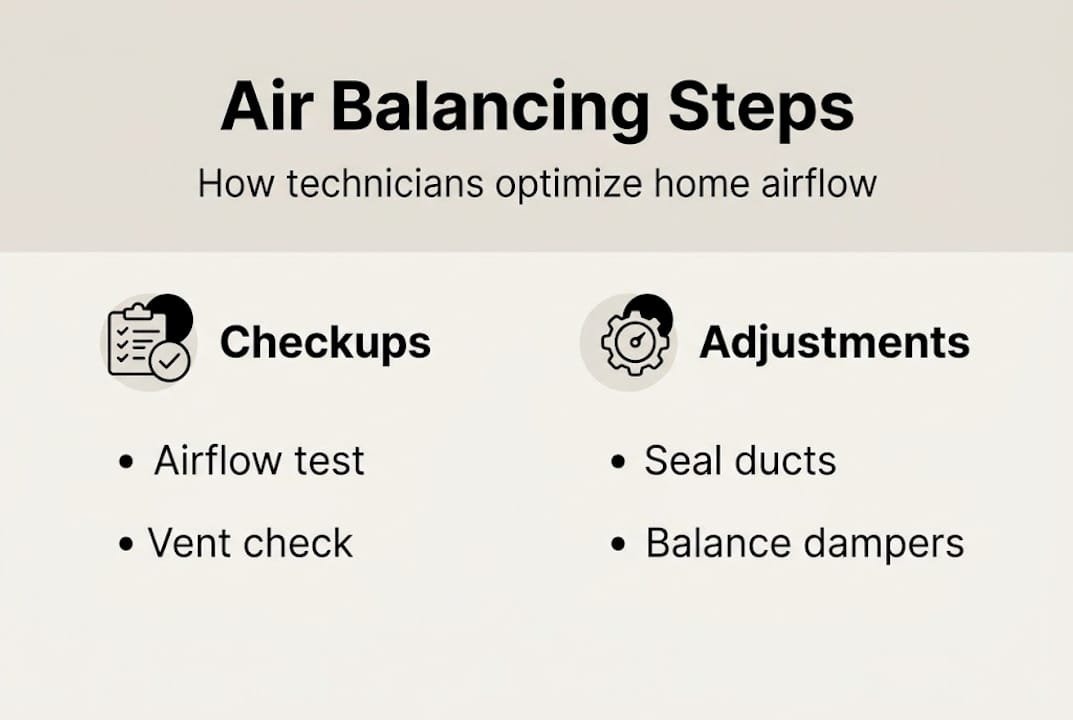
A professional air balancing technician uses calibrated instruments to measure airflow at every supply and return vent. They record the actual cubic feet per minute (cfm) of air coming out of each register, then compare those numbers to the system’s original design specifications. From there, they adjust dampers, registers, and system settings to bring everything into alignment.
Industry organizations like ASHRAE, NEBB, TABB, and AABC set the standard for how close measured airflow should be to design airflow. According to these airflow tolerance standards, acceptable tolerances are typically within ±10% of the design cfm for each terminal (register or grille). That’s a tight target, and it requires professional-grade equipment and training to hit.
Here’s a simple example of what balanced versus imbalanced airflow looks like in a typical home:
| Room | Design cfm | Measured cfm (balanced) | Measured cfm (imbalanced) |
|---|---|---|---|
| Living room | 200 | 198 | 145 |
| Master bedroom | 150 | 153 | 210 |
| Guest bedroom | 100 | 99 | 60 |
| Kitchen | 120 | 118 | 170 |
As you can see, an imbalanced system throws the airflow wildly off target, which directly explains why some rooms feel perfect while others feel miserable.
Understanding HVAC airflow basics helps clarify why this matters beyond comfort alone. Proper air balance also:
- Reduces strain on your HVAC equipment
- Lowers your monthly energy bills
- Extends the life of your system
- Improves indoor air quality
- Prevents moisture and humidity issues
“Achieving airflow within ±10% of design cfm at every terminal is the professional standard that separates a truly balanced system from one that just runs.”
Why air balancing matters for Tampa Bay homeowners
Tampa Bay’s climate is brutal on HVAC systems. We’re talking about months of intense heat, high humidity, and cooling loads that push systems to their limits almost year-round. In that environment, even a slightly imbalanced system can cost you real money and real comfort every single day.
Many homeowners assume that air balancing is only for large commercial buildings. That’s a myth. While certified TAB firms are required for code compliance in commercial projects, residential homes gain just as much from professional balancing in terms of efficiency, comfort, and lower operating costs. The difference is that homeowners rarely ask for it.
When your system is properly balanced, conditioned air reaches every room as designed. Your thermostat can do its job accurately. Your equipment doesn’t run longer than it needs to because one zone is always fighting to catch up. The benefits of HVAC service go well beyond just keeping the unit running. Air balancing is one of the highest-value steps you can take.
In Tampa Bay specifically, humidity control is just as important as temperature control. An imbalanced system often leaves certain rooms with excess moisture, which encourages mold growth and worsens allergy symptoms. Getting airflow right helps your system dehumidify the entire home evenly, not just the zones closest to the air handler.
Pro Tip: Schedule regular AC maintenance alongside any air balancing service. Clean coils and fresh filters mean your technician is measuring true system performance, not a system hampered by buildup.
Here’s a quick look at what balanced airflow delivers for Tampa Bay homeowners:
- Even temperatures in every room, not just near the thermostat
- Less dust circulating through the home
- Fewer repairs caused by the system overworking
- Longer equipment life due to reduced strain
- Better indoor air quality with consistent filtration
- Lower energy bills from more efficient operation
Common causes of poor air balance and how to spot them
Before calling a technician, it helps to know what you’re dealing with. Poor air balance usually shows up in a few obvious ways: one bedroom is always too warm at night, the kitchen never cools down, or your energy bills keep climbing even though nothing seems to have changed.
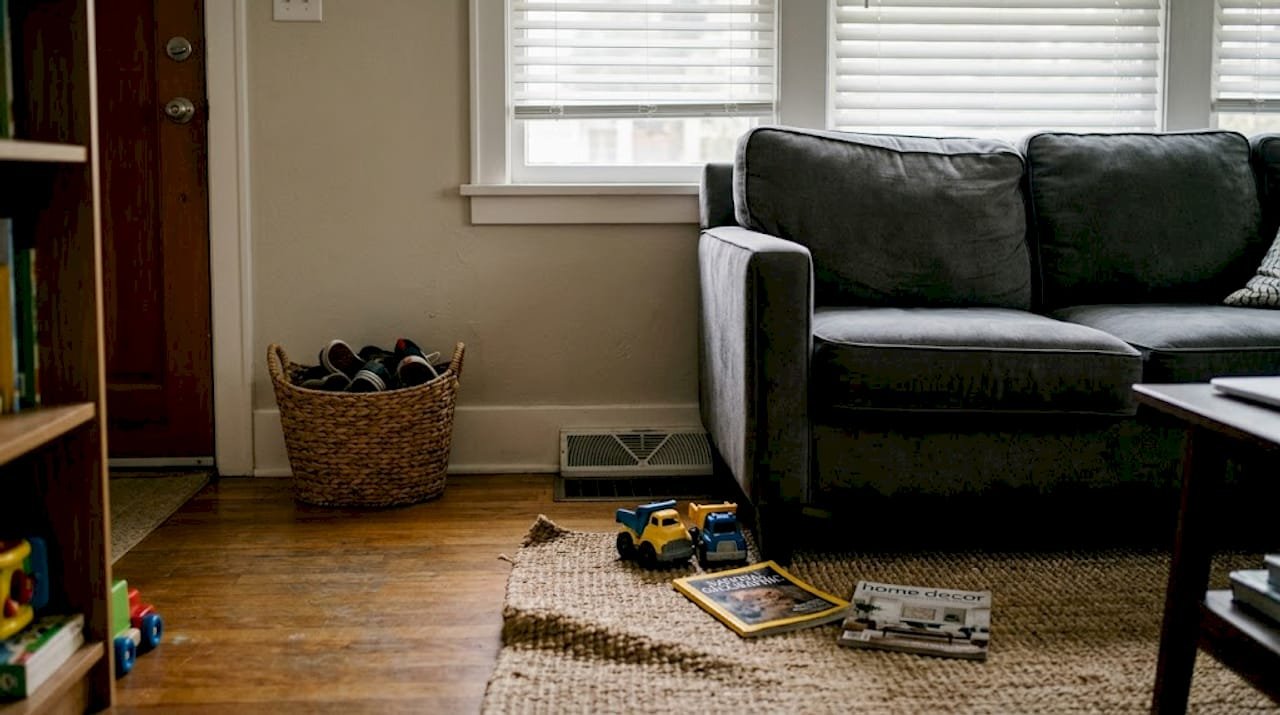
Some causes are simple. Blocked or closed vents are a common culprit. Furniture placed in front of a supply register can choke airflow to an entire room. Dirty ducts and clogged filters reduce the volume of air the system can move. Equipment that was incorrectly sized during installation will never perform as expected.
Other causes are less obvious. Leaky or poorly sealed ducts can dump conditioned air into your attic instead of your living room, wasting energy and starving certain zones. High-MERV filters, the kind marketed for better allergen capture, actually increase static pressure inside the duct system. That extra resistance reduces airflow across the board and can quietly throw your whole system out of balance without any obvious warning signs.
Pro Tip: Walk through your home on a hot afternoon and hold your hand near each supply vent. If some vents push noticeably stronger air than others, that’s a red flag worth investigating.
Here’s a list of common causes to watch for:
- Blocked or closed registers in unused rooms
- Dirty air filters restricting system airflow
- Duct leaks losing conditioned air before it reaches rooms
- Debris buildup inside ducts reducing flow volume
- Undersized or oversized equipment creating uneven distribution
- High-MERV filters adding more static pressure than the system can handle
- Poorly adjusted dampers from the original installation
Ignoring these problems doesn’t just hurt your comfort. It accelerates wear on your blower motor, compressor, and other components, turning a balancing issue into a much bigger repair bill.
What happens during professional air balancing
Knowing the causes is useful, but understanding what a professional actually does during a balancing service helps you know what you’re paying for. It’s not a quick visit. A thorough air balancing job on a typical Tampa Bay home can take several hours.
Here’s how the process typically unfolds:
- Baseline measurement: The technician measures existing airflow at every supply and return vent using a calibrated flow hood or anemometer.
- System performance check: They verify that the air handler, fan speed, and duct static pressure are operating within design specs.
- Comparison to design: Measured cfm values are compared against the system’s original design documents or calculated targets.
- Adjustments: Dampers inside the ductwork and register grilles are adjusted to redirect airflow where it’s needed.
- Re-testing: After every adjustment, airflow is measured again to confirm the change achieved the desired result.
- Final documentation: A written report records all measurements, adjustments, and final readings for your records.
Here’s a before-and-after look at what proper balancing can deliver:
| Factor | Before balancing | After balancing |
|---|---|---|
| Room temperature variation | Up to 8°F difference | Within 2°F across rooms |
| Monthly energy use | Higher due to longer run times | Reduced with efficient distribution |
| System run time | Extended to compensate for imbalance | Shorter, meeting demand faster |
| Indoor humidity | Uneven, damp spots possible | Controlled across all zones |
One important nuance: tight tolerance standards like ±10% per ASHRAE 62.1/62.2 require re-measurement any time the system is changed. If you install a new filter, add a room, or modify ductwork, the balance should be rechecked. If you’re evaluating finding the right HVAC system for a new install or looking at a multi-system home balance, this process becomes even more critical.
Most homeowners miss this about air balancing
Here’s something most articles won’t tell you: air balancing isn’t a one-time fix. It’s something your home needs revisited after almost any significant change, and those changes happen more often than you’d think.
Moving a large bookcase in front of a return vent. Switching to a higher-rated filter. Replacing a ceiling vent grille with a decorative one that has smaller openings. Each of these seems trivial. But over time, these small changes stack up. We’ve seen homes where comfort had been slowly declining for three or four years, and the root cause was a series of minor adjustments nobody connected to the HVAC system.
A DIY duct cleaning or a standard tune-up inspection won’t catch this. Neither will a thermostat upgrade or a new filter. Only a technician with the right instruments can measure what’s actually happening at each vent and trace the problem back to its source. We think of air balancing as the diagnostic layer that sits above all other HVAC maintenance. Without it, you’re guessing.
Next steps: Get real comfort through air balancing
If anything in this article sounded familiar, your home is probably overdue for a professional air balancing check. Tampa Bay homeowners deal with some of the toughest cooling demands in the country, and a properly balanced system is one of the most effective ways to protect your comfort and your equipment investment.
At Home Therapist Cooling, Heating, and Plumbing, our certified technicians bring the tools and experience to balance any residential system, whether you’re dealing with hot bedrooms, high bills, or persistent humidity. Learn more about our professional HVAC services, walk through our HVAC troubleshooting guide if you want to dig deeper, or explore how HVAC retrofitting in Tampa might support a more permanent fix. We’re here when you’re ready.
Frequently asked questions
- How to balance air pressure in a house?
To balance air pressure in a house, a licensed HVAC technician measures airflow at every supply and return register, then adjusts dampers inside the ductwork to equalize pressure across all rooms. In Tampa Bay homes, high humidity and long cooling seasons make proper balance critical: unbalanced pressure forces conditioned air out through gaps, raises energy bills, and creates hot or stuffy rooms. Home Therapist provides a free diagnosis on every visit to identify pressure imbalances, then calibrates your system so every room receives its designed airflow. Call (813) 343-2212 to schedule.
How can I tell if my home needs air balancing?
If you notice uneven room temperatures, weak airflow at certain vents, or unusual dust buildup, your system is likely out of balance. Debris and pressure issues are among the most common triggers that go unnoticed for months.
Is air balancing a DIY project or do I need a pro?
This one requires a pro. Certified TAB professionals use calibrated instruments to measure airflow accurately, something no standard homeowner toolkit can replicate, and their adjustments are verified against industry standards.
How often should air balancing be done?
Air balancing should be scheduled after any major renovation, a new HVAC install, or when comfort complaints return. Because tight tolerances require re-measurement after system changes, even a filter upgrade can be a trigger.
What is the main difference between air balancing and duct cleaning?
Air balancing adjusts how much air flows to each room for comfort and efficiency, while duct cleaning removes the physical debris that restricts flow and affects indoor air quality. Both matter, but they solve different problems.
Recommended
- HVAC Zoning Dampers: Boost Comfort and Efficiency
- Home Automation HVAC: Creating Comfort and Efficiency
- HVAC Retrofitting Explained: Enhancing Home Comfort Home Therapist Cooling, Heating, and Plumbing
- HVAC Energy Recovery: Boosting Tampa Bay Home Efficiency
More Related Articles
- Top 6 Best Home Ventilation Systems 2026
- AC Capacitor Replacement Riverview FL: Why Barbaro Spent 5 Hours on Cedarfield Dr
- Air duct sealing: improve home air quality by 20%
- R-454B Refrigerant Phaseout: What Tampa Homeowners Need to Know in 2026
- Air Conditioner Installation Repair Tampa FL Bay FL Services Review from Bonnie Wakefield


