
Signs of a Bad AC Compressor: A Tampa Tech Explains
Quick answer: In Tampa, the clearest signs of a bad AC compressor are warm air from the vents, a breaker that keeps tripping, loud humming or clicking at the outdoor unit, and a system that struggles to start on hot afternoons. Home Therapist techs often install a compressor overhaul kit, capacitor, hard start kit, and surge protector, to ease the load on a stressed compressor and help it survive Florida's heat and storm season.
On this page: What are the signs of a bad AC compressor · What we found on this Tampa call · Will AC still run with a bad compressor · What's the average cost to replace an AC compressor · How do I know if my AC compressor coil is bad · What is the 3 minute rule for AC · What causes an AC compressor to fail early in Tampa · How can Tampa homeowners protect their AC compressor · FAQ
What are the signs of a bad AC compressor?
The clearest signs of a bad AC compressor are warm air blowing from your vents, a system that trips the breaker repeatedly, loud noises coming from the outdoor unit, and a compressor that hesitates or struggles before it kicks on.
The compressor sits inside the outdoor condenser unit and its job is simple but critical: it compresses refrigerant and pushes it through the system so heat exchange can happen. When it starts to fail, you will usually notice the effects inside the house before you ever look at the unit outside. Rooms stay warm even though the system is running, and your energy bill creeps up because the compressor is working harder for less cooling.
Here is what we tell Tampa homeowners to watch for:
- Warm or lukewarm air coming from the supply vents even though the thermostat says the system is cooling
- The outdoor unit humming but the fan not spinning, or the whole unit going silent when it should be running
- A hard clicking or clunking sound when the system tries to start
- The breaker tripping repeatedly, especially in the afternoon heat
- Ice forming on the copper refrigerant lines near the outdoor unit
- A noticeable spike in your electric bill with no change in habits
- The system short cycling, turning on and off in quick bursts instead of running a full cycle
Any one of these on its own does not always mean the compressor is toast, a bad capacitor or a clogged coil can mimic some of these symptoms. That is exactly why a proper diagnosis matters instead of guessing. Home Therapist offers free diagnosis and free estimates on AC service calls across Tampa Bay, so there is no cost to find out whether you are looking at a simple capacitor swap or a compressor on its way out. If you are noticing more than one of these signs at once, especially warm air combined with breaker trips, it is worth having a licensed tech look at it before the next heat wave pushes the system past its limit.
| Component discussed | AC compressor |
| Location | Outdoor condenser unit |
| Compressor function | Compresses and circulates refrigerant for heat exchange |
| Protective kit used | Compressor overhaul kit |
| Kit part 1 | New capacitor, gives startup boost |
| Kit part 2 | Hard start kit, reduces startup stress |
| Kit part 3 | Surge protector, guards against power surges |
| Service area | Tampa Bay |
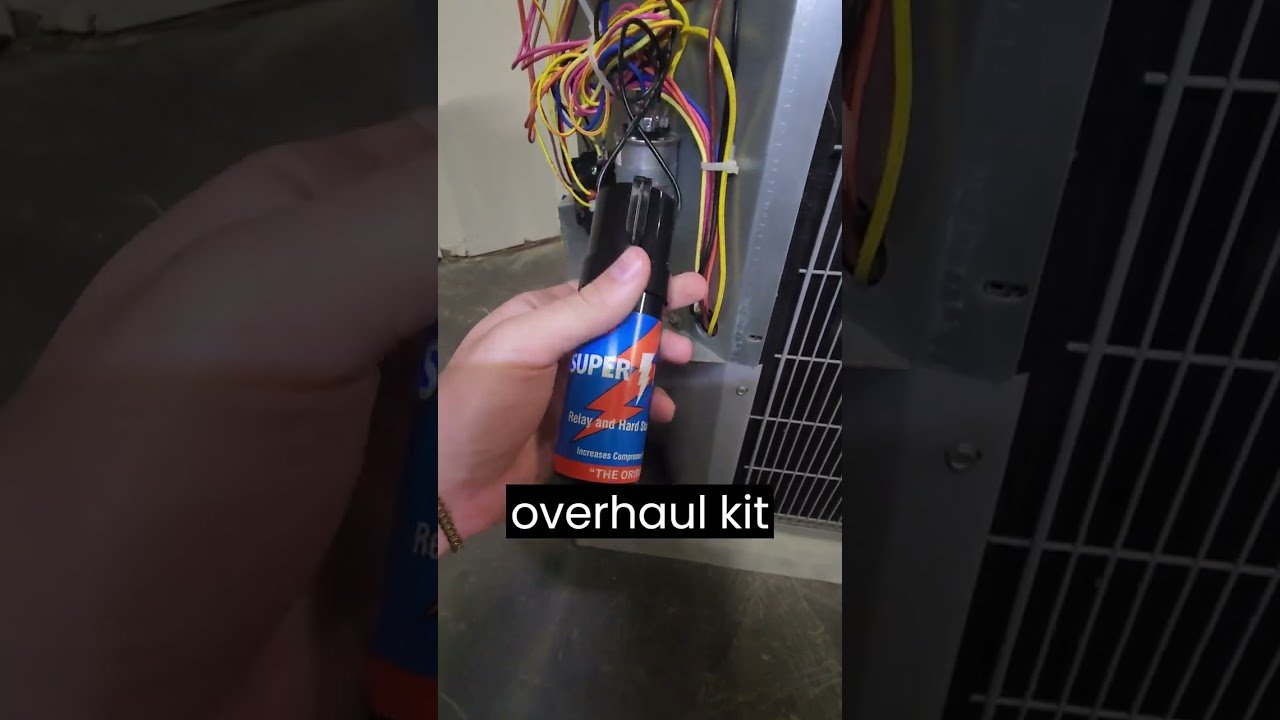
What the video shows
- 0:00 Tech introduces the AC compressor as the heart of the system
- 0:10 Explains compressor sits in the outdoor unit
- 0:20 Compressor compresses and circulates refrigerant for heat exchange
- 0:30 Introduces the compressor overhaul kit as protection
- 0:40 Breaks down the capacitor, hard start kit, and surge protector
- 0:50 Wraps up on keeping the compressor running reliably
What we found on this Tampa call
On this Tampa job, our tech walked the homeowner through exactly what a compressor does and why it needs protection, standing right at the outdoor unit where the compressor lives.
The compressor is often called the heart of the AC system, and for good reason. It compresses refrigerant and circulates it through the coils, driving the entire heat exchange process that pulls warm air out of your home and sends cool air back in. Everything else in the system, the coils, the blower, the thermostat, exists to support that one job. When the compressor is stressed or aging, the rest of the system cannot make up for it.
To protect the compressor on this call, our tech installed what we call a compressor overhaul kit. It is three parts working together:
- A new capacitor, which gives the compressor the boost of energy it needs to start up
- A hard start kit, which reduces the electrical stress on the compressor every time it kicks on
- A surge protector, which shields the compressor from power surges, something Tampa homeowners deal with constantly during summer storm season
Each of these pieces addresses a different point of failure. A weak capacitor forces the compressor to strain on every startup, which is one of the most common ways a compressor gets damaged over time. A hard start kit takes some of that load off, especially useful on older units or systems running in extreme heat. And with Florida’s frequent lightning and grid fluctuations, a surge protector is cheap insurance against a compressor getting fried in a single storm.
This kind of proactive work is often less expensive than waiting for a full compressor failure, and it is the kind of job our techs do every week across Tampa Bay, from Carrollwood to South Tampa. If your system is getting close to needing this kind of protection, or you are just not sure, a free diagnosis will tell you where things stand.
| Likely cause | Telltale sign | Safe to DIY? |
|---|---|---|
| Weak or failing capacitor | Humming, clicking, or system won't start | No, electrical component under charge |
| No hard start protection on older unit | Compressor hesitates or struggles to start in heat | No |
| Power surge from storms | Breaker trips or unit stops working suddenly | No |
| Low refrigerant charge | Warm air, ice on the lines, hissing sound | No, requires licensed handling |
| Dirty or blocked condenser coil | Weak cooling, unit running constantly | Partial, homeowner can gently clear debris around unit |
| Worn electrical wiring or contactor | Burning smell, repeated breaker trips | No |
| Burned out compressor motor windings | Loud grinding or humming, system trips on overload | No |
Will AC still run with a bad compressor?
Yes, an AC system will often still run with a bad compressor, but it will not cool properly and the problem usually gets worse fast.
A failing compressor does not always shut the whole system down immediately. In a lot of cases the blower fan keeps blowing, the thermostat still shows the system as running, and air is still coming out of the vents, it just is not cold. That is because the compressor’s job is to pressurize refrigerant so heat exchange can happen. If it is weak, damaged, or losing its charge, refrigerant still moves through the system, just not efficiently enough to actually cool the air.
There are a few different stages homeowners typically notice:
- Early stage: the system takes longer to cool the house, or never quite reaches the set temperature on the hottest days
- Mid stage: the compressor short cycles, turning off and on more frequently than normal, and you may hear humming or clicking as it struggles to start
- Late stage: the compressor trips the breaker, refuses to start at all, or the outdoor unit goes completely silent while the indoor blower keeps running
Running the system in this condition is not free of risk. A struggling compressor draws more current trying to start, which stresses the electrical components around it and can damage the capacitor, the hard start components, or even trip breakers repeatedly. In humid Tampa summers, a system that is not properly dehumidifying because the compressor is weak can also lead to indoor humidity problems, which is its own headache.
If your AC is technically running but not cooling like it used to, do not wait for it to fail completely. A free diagnosis from Home Therapist will confirm whether the compressor itself is the issue or whether it is something more affordable, like a capacitor, a contactor, or a refrigerant leak. Continuing to run a system with a failing compressor rarely saves money in the long run.
What's the average cost to replace an AC compressor?
Replacing just the compressor typically costs between roughly 1,200 and 2,800 dollars nationally in parts and labor, though the right fix depends on the age and condition of the rest of the system.
That range is general industry knowledge and can shift based on the size of your system, the type of refrigerant it uses, and whether the compressor is still under manufacturer warranty. Compressors are one of the more expensive individual components in an AC system because they are complex, sealed units and the labor to access and swap one is not quick.
Here is where it gets important for Tampa homeowners specifically. If your system is more than 10 to 12 years old, most techs, including ours, will walk you through whether replacing just the compressor actually makes sense. An older system often has an aging coil, an outdated refrigerant type, and lower efficiency ratings across the board. Spending on a compressor alone in that situation can mean paying a large repair bill on a unit that may need full replacement within a year or two anyway. On a newer system, replacing the compressor is usually the right call and can add years of service life.
A few things that affect the actual number on your invoice:
- Whether the compressor is still covered under a manufacturer parts warranty, which can significantly lower the cost
- The refrigerant type your system uses, older R-22 systems can cost more to service
- Access to the outdoor unit and any additional repairs needed at the same time, like a damaged contactor or capacitor
- Whether protective components like a hard start kit or surge protector are added at the same time to protect the new compressor
The only way to get a real number for your specific home is a free, in person diagnosis. Home Therapist does not charge for the estimate or the diagnosis on AC service calls in Tampa Bay, so you get an honest number before agreeing to any work.
How do I know if my AC compressor coil is bad?
A bad AC coil usually shows up as ice buildup on the refrigerant lines, weak or warm airflow, a hissing or bubbling sound, or visibly dirty and corroded coil fins.
It helps to clarify terms here because homeowners often use compressor coil and condenser coil interchangeably. The condenser coil sits right next to the compressor in the outdoor unit, and the two work as a team, the compressor pressurizes refrigerant and the coil releases heat as air passes over it. When people ask about a bad compressor coil, they are usually asking about problems with this outdoor coil, which directly affects how hard the compressor has to work.
Signs the coil is the problem, or is dragging the compressor down with it, include:
- Ice or frost forming on the copper lines or the coil itself, even in Florida’s summer heat
- A hissing or bubbling sound near the outdoor unit, which can point to a refrigerant leak at the coil
- Visibly dirty, bent, or corroded coil fins covered in dust, grass clippings, or salt air residue common near Tampa Bay’s coastline
- Reduced airflow and weak cooling despite the compressor and fan both running
- The system running constantly without ever reaching the set temperature
A dirty or damaged coil forces the compressor to work harder to move heat, running hotter and under more strain than it should. Over time that extra strain is exactly the kind of thing that shortens a compressor’s life. This is one reason we recommend homeowners keep the area around the outdoor unit clear of grass clippings, leaves, and mulch, and have the coil professionally cleaned as part of routine maintenance rather than waiting until cooling performance drops.
If you are seeing ice, hissing, or a coil that looks caked in debris, do not wait. A free diagnosis will tell you whether you are looking at a simple coil cleaning or a bigger issue affecting the compressor itself.
What is the 3 minute rule for AC?
The 3 minute rule refers to waiting at least 3 to 5 minutes after an AC system shuts off before turning it back on, giving the compressor time to equalize pressure and rest before restarting.
Here is why this matters. When a compressor shuts down, the refrigerant pressure inside the system is still high on one side and low on the other. It takes a few minutes for that pressure to equalize. If you restart the system too soon, the compressor has to fight against that unequal pressure to start up again, which draws a big surge of current and puts extra mechanical stress on the compressor motor and windings.
Do this enough times, power outages, breaker trips, someone flipping the thermostat on and off, and you are chipping away at the compressor’s lifespan every single time. In Tampa, this comes up a lot during storm season when the power blinks or a breaker trips from a surge, and homeowners understandably want the AC back on right away in the middle of a Florida summer. The safer move is to wait those few minutes.
This is also exactly why components like a hard start kit matter. A hard start kit is designed to reduce the electrical stress on the compressor at the moment of startup, which is the most demanding instant in the whole cooling cycle. Pairing that with a surge protector helps guard against the kind of sudden power event that causes a rushed restart in the first place. These are the same components included in the compressor overhaul kit our techs use on service calls across Tampa Bay.
If your thermostat has a built in delay feature, use it, most modern thermostats and some outdoor unit controls already build in a short delay to protect the compressor automatically. If yours does not, just get in the habit of waiting a few minutes after any shutdown, planned or unplanned, before restarting the system.
What causes an AC compressor to fail early in Tampa?
The most common causes of early compressor failure in Tampa are electrical stress from bad capacitors, power surges from summer storms, dirty condenser coils, low refrigerant, and running an oversized cooling load in extreme heat and humidity.
Tampa Bay is a tough environment for outdoor AC equipment. Between the heat, the humidity, the salt air near the coast, and near daily thunderstorms in the summer, compressors here work harder and face more electrical risk than in a lot of other parts of the country. That is why we see certain failure patterns repeat on service calls all over the area.
Common causes include:
- A weak or failing capacitor forcing the compressor to strain on every startup
- Power surges from lightning strikes and grid fluctuations during storm season
- Dirty or blocked condenser coils making the compressor work harder to reject heat
- Low refrigerant from a slow leak, causing the compressor to run hotter than it should
- Dirty air filters and blocked return air restricting airflow across the whole system
- An undersized or oversized system for the home, causing the compressor to short cycle or run nonstop
- Simple age, most compressors are built to last 10 to 15 years with proper maintenance, and older units are naturally more prone to failure
Notice how many of these are preventable or catchable early. A capacitor is a relatively small part, but a failing one is one of the single most common reasons a compressor burns out prematurely, because every failed or struggling startup adds wear. Regular maintenance catches a weak capacitor before it takes the compressor down with it, and it is one of the cheapest problems to fix if caught early versus one of the most expensive once it causes compressor damage.
Storm related power surges are another big one specific to this region. A single surge can be enough to damage a compressor that was otherwise healthy, which is why surge protection is worth considering even on a newer system.
How can Tampa homeowners protect their AC compressor?
The best ways to protect an AC compressor in Tampa are regular maintenance, keeping the outdoor coil clean, having a healthy capacitor, and adding surge protection ahead of storm season.
Most compressor failures we see are not random, they build up over time from small stresses that add up. The good news is that most of these are preventable with the right upkeep and a few affordable protective components.
- Schedule a seasonal AC tune up so a tech can check refrigerant charge, electrical connections, and capacitor health before summer heat pushes the system to its limit
- Keep the outdoor unit clear of grass clippings, leaves, and debris, and have the condenser coil professionally cleaned periodically
- Change your air filter regularly, a clogged filter restricts airflow and makes the whole system, compressor included, work harder than it needs to
- Consider a hard start kit, which reduces the electrical stress on the compressor every time it starts up, especially valuable on older systems
- Add a surge protector ahead of Florida’s storm season, since power surges are one of the more common and preventable causes of compressor damage in this region
- Do not ignore early warning signs like warm air, unusual noise, or a tripping breaker, catching a weak capacitor or dirty coil early is far cheaper than replacing a compressor
This is exactly what our compressor overhaul kit is built around, a new capacitor, a hard start kit, and a surge protector working together to give the compressor an easier startup every time and a shield against the power events that are so common here. It is a proactive fix rather than a reactive one, and it is often installed during a routine service call rather than after a breakdown.
If you want to know where your system stands before summer really turns up the heat, Home Therapist offers free estimates and free diagnosis on AC service calls throughout Tampa Bay. A licensed tech can check the capacitor, the coil, and the compressor itself and tell you honestly whether you need a small fix now or should start planning for something bigger down the road. You can find more on our AC repair services in Tampa and schedule a visit anytime.
For general guidance that lines up with what we do on a service call, see the U.S. Department of Energy and ENERGY STAR maintenance guidance.
Frequently asked questions
What are the earliest signs of a bad AC compressor?
Warm air from the vents, a humming or clicking outdoor unit, and a breaker that trips more than usual are typically the earliest signs of a struggling compressor.
Can a bad AC compressor be repaired instead of replaced?
Sometimes what looks like a compressor problem is actually a bad capacitor, a dirty coil, or low refrigerant, all of which are repairable. A licensed tech needs to check before assuming full replacement is necessary.
How long should an AC compressor last?
Most compressors are built to last 10 to 15 years with regular maintenance, though Tampa's heat, humidity, and storm related power surges can shorten that lifespan without proper protection.
Does a surge protector actually help protect the compressor?
Yes, power surges from lightning and grid fluctuations are a common cause of compressor damage in Florida, and a surge protector is a low cost way to guard against it.
Want the raw footage and full transcript? Watch the original video and read the transcript.
Key takeaways
- Warm air, breaker trips, and humming or clicking at the outdoor unit are the main warning signs of a failing compressor
- The compressor and condenser coil work as a team, a dirty coil can make a healthy compressor work harder and fail sooner
- Waiting a few minutes before restarting the AC after any shutdown protects the compressor from startup stress
- A capacitor, hard start kit, and surge protector working together can extend a compressor's life, especially in storm prone Tampa Bay
- Home Therapist offers free diagnosis and free estimates on AC service calls, so you know what you're dealing with before paying for repairs
Related reading: what a compressor replacement actually cost on a real Brandon job.
More of our own footage on this
We have filmed this problem on real Tampa Bay service calls more than once. Each clip below is a different house and a different fault.
Need help in Tampa? See our AC repair in Tampa, or all of our air conditioning services across Tampa Bay.
Home Therapist Cooling, Heating, and Plumbing is the local Tampa Bay team for AC repair in Tampa and across the bay. We answer the phone fast, give FREE estimates and a FREE diagnosis on service calls, carry common parts on every van, and stand behind the work with real warranties. We service every brand and install Goodman and Daikin systems. Licensed HVAC CAC1819196 and plumbing CFC1431159.
Call (813) 343-2212 or book AC repair in Tampa.


