
AC Compressor Replacement Cost in Brandon, FL
Quick answer: AC compressor replacement cost depends on unit size, refrigerant type, and access, and can range from around 1,500 dollars for a small residential system up into the thousands for a commercial rooftop unit. On a recent Brandon call, our techs hauled a nearly 100 pound compressor to a rooftop unit at a busy medical office, purged the lines with nitrogen, installed a new filter drier, pulled a vacuum, and recharged with R410A. Home Therapist offers free estimates and free diagnosis on every AC repair call in Brandon.
On this page: What does AC compressor replacement cost in Brandon · What we found on this Brandon call · How do I tell if my AC compressor is bad · Is it worth replacing an AC compressor · What is the $5000 AC rule · What is the lifespan of an AC compressor · What causes a compressor to fail in Tampa Bay heat · What should you do if your AC compressor fails · FAQ
What does AC compressor replacement cost in Brandon?
AC compressor replacement cost varies a lot depending on whether you have a residential split system or a commercial rooftop unit, what refrigerant it uses, and how hard the compressor is to access. Home Therapist offers free diagnosis and free estimates on every AC repair call in Brandon, so you get a real number for your specific system before any work starts, not a guess over the phone.
As a general rule across the HVAC industry, residential compressor replacement often falls somewhere in the range of 1,500 to 2,800 dollars for parts and labor on a typical home system, depending on tonnage, whether the unit is still under a manufacturer warranty on the compressor itself, and whether R410A or older R22 refrigerant is involved. R22 systems cost noticeably more to service because that refrigerant has been phased out and is far more expensive per pound than R410A.
Commercial rooftop units, like the one we worked on in Brandon, are a different animal. These units often run two compressors on separate circuits so the building always has some cooling even if one side goes down. The compressors themselves are larger and heavier, sometimes close to 100 pounds each, and getting a new one up to a roof and set in place takes more labor and often extra hands or equipment compared to a home condenser sitting on a pad in the side yard.
Other factors that move the price include how much refrigerant the system needs, whether the line set needs a new filter drier and nitrogen purge to clear out old oil and debris, and whether there is any accessibility issue like a steep roof or a unit tucked into a tight mechanical space. If you are trying to decide whether to repair or replace, our AC repair in Brandon team can give you a straight answer after a free diagnostic visit, including whether the compressor is even the right part to blame in the first place.
| Location | Brandon, FL, My Doctor Medical Group offices |
| Unit type | Commercial rooftop AC unit with two compressor circuits |
| Failed part | First stage circuit compressor |
| New compressor weight | Close to 100 pounds |
| Line set service | Nitrogen purge to clear oil and debris |
| Parts replaced | New filter drier and new compressor |
| Refrigerant used | R410A |
| Final check | Leak check, vacuum pull, recharge, system confirmed cooling |
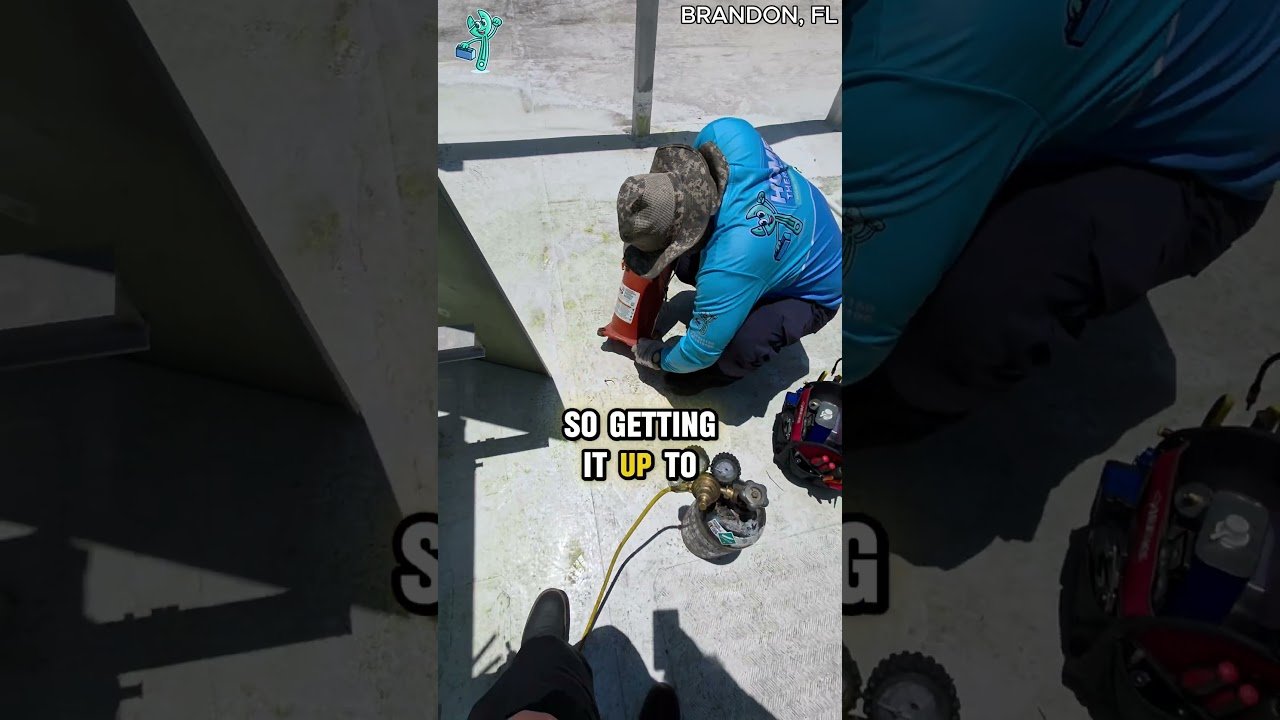
What the video shows
- 0:00 Tech introduces the job at My Doctor Medical Group in Brandon, a rooftop unit with a dead compressor
- 0:07 Explains the unit runs two compressors, and the first stage circuit is the one that failed
- 0:15 New compressor, close to 100 pounds, gets hauled up to the roof
- 0:22 Old compressor pulled, copper lines purged with nitrogen to clear oil and debris
- 0:30 New filter drier installed and new compressor soldered into place
- 0:38 Leak check, vacuum pull, and recharge with R410A refrigerant, system confirmed cooling
What we found on this Brandon call
We were called out to the My Doctor Medical Group offices in Brandon, one of the busier medical clinics in the area, for a rooftop AC unit that had a compressor down. This particular unit runs two compressors on two separate circuits, which is common on commercial rooftop packages so the building keeps some cooling capacity even during a repair. The compressor that failed was on the first stage circuit, meaning it is the one that kicks on first every time the system calls for cooling, so it does the most cycling and takes the most wear.
The new compressor weighed close to 100 pounds, and getting that up to the roof was the hardest part of the whole job physically. Once it was up there, our tech pulled the failed compressor and then ran nitrogen through the copper line set to blow out any oil residue or debris left behind from the old compressor. That step matters because leftover contamination in the lines can shorten the life of a brand new compressor fast.
From there we installed a new filter drier, which is a standard replacement any time a compressor comes out, since the old drier has already done its job of catching moisture and acid and needs to be swapped rather than reused. The new compressor was set in place and all the joints were soldered in. Before closing the system back up, we checked every joint for leaks, pulled a deep vacuum to remove any moisture and air from the lines, and then recharged the system with R410A refrigerant to the correct level.
By the time we wrapped up, the unit was cooling properly and the clinic was back to full capacity on both circuits. Jobs like this are exactly why we say get a free diagnosis first. A rooftop compressor failure can look identical to a bad capacitor or a refrigerant leak from the ground, and the only way to know for sure is to get eyes and gauges on the actual unit.
| Likely cause | Telltale sign | Safe to DIY? |
|---|---|---|
| Failed capacitor or contactor causing hard starts | Humming or clicking outdoor unit that will not start | No |
| Low refrigerant from a slow leak | Warm air from vents, ice on lines | No |
| Dirty or blocked condenser coil | Weak airflow, unit running longer than usual | Partial, gentle rinse only |
| Electrical surge damage | Sudden failure after a storm | No |
| Age and accumulated run hours | Unit is 10 to 15 years old or more | No |
| Contaminated line set from prior repair | Repeat compressor failures on same unit | No |
| Uneven wear on first stage compressor in dual circuit systems | One circuit fails while the other keeps running | No |
How do I tell if my AC compressor is bad?
The most reliable signs of a bad AC compressor are a unit that hums or clicks but will not start, a breaker that keeps tripping, warm air blowing from the vents, and a noticeably higher electric bill. None of these signs are 100 percent proof on their own, which is why a proper diagnosis matters before anyone tells you it is definitely the compressor.
Here are the signs we look for on a service call:
- Outdoor unit humming or buzzing but the fan and compressor do not actually turn on, often a hard start or capacitor issue rather than the compressor itself
- Breaker tripping repeatedly when the AC tries to start, which can point to a compressor drawing too much amperage
- Warm or barely cool air coming from the vents even though the system is running
- Ice building up on the refrigerant lines or indoor coil, which usually points to low refrigerant or airflow problems rather than the compressor
- Loud grinding, knocking, or rattling noise coming from the outdoor unit
- A refrigerant leak that has gone unaddressed long enough to starve the compressor of lubricant and cause internal damage
- Higher than normal electric bills as a struggling compressor works harder to do the same job
On rooftop commercial systems with two compressor circuits, like the unit we worked on in Brandon, a single bad compressor often shows up as the building only cooling partway or one zone running warmer than the rest, since the healthy circuit is still carrying part of the load. That can make the problem harder to spot from inside the building, which is another reason to have a tech get on the roof and check both circuits directly with gauges rather than guessing based on comfort complaints alone. If you are in Brandon and seeing any of these signs, our team offers free diagnosis to confirm whether it is actually the compressor or something cheaper to fix.
Is it worth replacing an AC compressor?
Replacing a compressor is usually worth it when the rest of the system is in good shape and the unit is not too old, but it can make more sense to replace the whole system when the compressor failure lines up with an aging unit or an outdated refrigerant type. There is no single answer that fits every home or every building, which is why we walk through the numbers with the homeowner or property manager before recommending anything.
Things that push toward repair rather than full replacement include a unit under 10 years old, a compressor still under manufacturer parts warranty, and a system using current R410A refrigerant that is otherwise running well. In those cases, swapping the compressor and getting the system back to full charge, like we did on the Brandon rooftop unit, gets years more life out of equipment that still has plenty left in it.
Things that push toward full replacement include a unit already in the 12 to 15 year range or older, a system still running on phased out R22 refrigerant, repeated repairs on the same unit over the past couple of years, or a compressor failure combined with other aging components like a weak condenser fan motor or a coil with corrosion. In those situations, putting a new compressor into an otherwise tired system can mean paying twice, once now and again soon after for the next failure.
For residential replacements, Home Therapist installs Goodman and Daikin systems, both solid, widely available brands backed by manufacturer warranties. We service all brands for repair work, including the compressor swap style job shown on this Brandon call, but when a full system replacement makes more financial sense, we will tell you that directly instead of pushing a repair that will not hold up. Either way, the first step is the same, a free diagnosis to see exactly what shape your system is actually in.
What is the $5000 AC rule?
The 5000 dollar rule is a simple guideline HVAC techs use to help homeowners decide between repairing and replacing an AC system, and it works by multiplying the age of the unit in years by the estimated repair cost in dollars. If that number comes out above 5000, the rule of thumb says replacement is usually the smarter financial move, and if it comes out below 5000, repair is generally worth it.
For example, a 6 year old system with a 700 dollar repair estimate comes out to 4,200, which falls under the threshold and points toward repair. A 14 year old system with a 500 dollar repair estimate comes out to 7,000, which points toward replacement even though the repair itself is cheap, because the age of the unit means more failures are likely coming soon anyway.
This rule is a general industry guideline, not a strict formula, and it does not account for everything. It does not factor in whether your system uses R410A or the older, more expensive R22 refrigerant, whether you have a working warranty still in place, how well the unit has been maintained, or whether a specific part failure is a one off issue versus a sign of broader wear across the system. A compressor swap on a well maintained, newer unit, like the rooftop job in Brandon, can make total sense even on a system worth thousands of dollars, because the rest of the equipment is healthy and the compressor is really the only thing that failed.
The best use of the 5000 dollar rule is as a starting point for a conversation with your technician, not a final answer on its own. When we do a free diagnosis, we will walk you through where your specific system lands using this kind of math, along with the other real world factors the rule leaves out, so you can make the call with actual numbers instead of guesswork.
What is the lifespan of an AC compressor?
Most residential AC compressors last somewhere between 10 and 15 years under normal use, and commercial rooftop compressors can vary depending on how many hours a year they run and how well the system has been maintained. A compressor is the heart of the system, so its lifespan is closely tied to how consistently the rest of the unit has been kept in good shape.
Factors that shorten compressor life include running low on refrigerant for extended periods, which starves the compressor of the lubricant that travels with the refrigerant oil, electrical issues like a failing capacitor that force the compressor to hard start repeatedly, dirty condenser coils that make the compressor work harder to reject heat, and contamination in the line set from a prior failure that was not properly flushed out.
In Tampa Bay specifically, compressors tend to work harder and longer hours than in milder climates because the cooling season runs most of the year here rather than just a few summer months. That extra run time adds up over the years. Salt air in areas closer to the coast can also accelerate corrosion on outdoor components, though Brandon sits further inland than the immediate coastline, which helps somewhat compared to units right on the water.
On commercial rooftop systems with dual compressor circuits, like the unit we worked on in Brandon, the first stage compressor typically accumulates more run hours over time than the second stage, since it kicks on first for every cooling call and the second only engages when more capacity is needed. That uneven wear is exactly why the first stage compressor is often the one that fails first, which lined up with what we found on that job.
Regular maintenance, including coil cleaning, refrigerant level checks, and electrical component testing, is the single biggest thing a homeowner or building owner can do to get a compressor to the far end of its expected lifespan rather than the near end.
What causes a compressor to fail in Tampa Bay heat?
Compressors in Tampa Bay tend to fail from a combination of heavy run time, electrical component wear, refrigerant issues, and dirty coils, all of which are made worse by our long, hot, and humid cooling season. Understanding the common causes helps homeowners catch a problem early instead of waiting for a full failure.
Here are the causes we see most often on service calls:
- Failed capacitor or contactor causing the compressor to hard start over and over, which stresses the internal windings over time
- Low refrigerant charge from a slow leak, which causes the compressor to run hotter and lose lubrication
- Dirty or blocked condenser coil restricting airflow, forcing the compressor to work harder to move the same amount of heat
- Electrical surges or power fluctuations common during Florida thunderstorm season
- Age and accumulated run hours, especially on first stage compressors in dual circuit commercial systems that cycle on with every call
- Contamination in the refrigerant lines from a prior repair that was not properly flushed with nitrogen
- Simple age and wear on a unit that has already passed the 10 to 15 year mark
Tampa Bay’s climate is tough on AC equipment generally. The cooling season is essentially year round, which means far more total run hours per year than a system in a cooler climate would ever see. Humidity also means systems are constantly pulling moisture out of the air on top of cooling it, adding to the workload. On commercial rooftop units sitting exposed to direct sun and heat all day, like the one at the medical clinic in Brandon, that heat load is even more intense than a shaded residential condenser at ground level, which is one reason commercial compressors can see more stress over their working life. Keeping coils clean, checking refrigerant levels annually, and having electrical components like capacitors tested before they fail outright are the best defenses against an unexpected compressor failure in this climate.
What should you do if your AC compressor fails?
If you suspect your compressor has failed, the right move is to shut the system down if it is short cycling or tripping breakers, then call for a professional diagnosis rather than assuming the worst or attempting a repair yourself. Compressor work involves refrigerant handling, soldering, and electrical work that requires an EPA certified technician and, in Florida, a licensed HVAC contractor.
Home Therapist Cooling, Heating, and Plumbing is a family owned company that has been serving Tampa Bay since 2017, holding HVAC license CAC1819196 and plumbing license CFC1431159, with owner Richard Morales working as a licensed technician on the team. We have earned over 1,100 five star reviews from homeowners and businesses across the area, including commercial clients like the medical clinic in Brandon featured in this compressor replacement.
When you call us for a suspected compressor issue, here is what to expect:
- Free diagnosis to confirm whether the compressor, a capacitor, a refrigerant leak, or something else entirely is the actual problem
- Free estimate with clear pricing before any repair or replacement work begins
- A straight answer on repair versus replacement based on your system’s age, refrigerant type, and condition, not a sales pitch
- Proper procedure on any compressor swap, including nitrogen purging the line set, a new filter drier, leak checks, a full vacuum, and correct refrigerant recharge, the same steps used on the Brandon rooftop job
Whether you are dealing with a residential split system at home or a commercial rooftop package at a business, do not wait once you notice warning signs like tripped breakers, warm air, or unusual noises. A compressor that is struggling but not fully dead can sometimes be caught before it fails completely, saving you an emergency repair during the worst part of a Florida summer. Reach out to our AC repair in Brandon team any time you notice these symptoms, and we will get a technician out to look at the actual equipment rather than guessing over the phone.
For general guidance that lines up with what we do on a service call, see the U.S. Department of Energy and ENERGY STAR maintenance guidance.
Frequently asked questions
How much does AC compressor replacement cost?
Residential compressor replacement typically runs in the range of 1,500 to 2,800 dollars depending on unit size, refrigerant type, and warranty coverage, while commercial rooftop compressor jobs generally cost more due to larger equipment and roof access. Home Therapist offers free estimates so you get an exact number for your specific system.
Can a bad compressor be repaired instead of replaced?
No, a failed compressor itself cannot be repaired internally, it has to be replaced as a whole unit, but issues that mimic compressor failure, like a bad capacitor or low refrigerant, can sometimes be fixed for much less. That is why a free diagnosis matters before assuming the compressor is the problem.
Why did a compressor fail on a rooftop unit with two compressors?
On dual circuit rooftop units, the first stage compressor kicks on with every cooling call while the second only engages under higher demand, so the first stage builds up more run hours and tends to wear out first. That uneven load is a normal design tradeoff, not a defect.
Do you need a licensed technician to replace an AC compressor?
Yes, compressor replacement involves refrigerant recovery and recharge, soldering, and electrical work that legally requires an EPA certified technician and a licensed HVAC contractor in Florida. Home Therapist holds HVAC license CAC1819196 and has licensed techs, including owner Richard Morales, handling this kind of work.
Want the raw footage and full transcript? Watch the original video and read the transcript.
Key takeaways
- AC compressor replacement cost depends heavily on unit size, refrigerant type, and whether it is a residential or commercial system, so get a free diagnosis before assuming a number.
- On the Brandon rooftop job, a nearly 100 pound compressor was replaced on a dual circuit unit, with a nitrogen purge, new filter drier, vacuum, and R410A recharge, the correct procedure any time a compressor comes out.
- The 5000 dollar rule, multiplying unit age by repair cost, is a useful starting point for the repair versus replace decision but should not be the only factor.
- Most compressors last 10 to 15 years, and Tampa Bay's long cooling season plus heavy commercial run hours can push that timeline in either direction depending on maintenance.
- Home Therapist offers free diagnosis and free estimates on every AC repair call in Brandon, backed by licensed techs and over 1,100 five star reviews.
Need help in Brandon? See our AC repair in Brandon, or all of our air conditioning services across Tampa Bay.
Home Therapist Cooling, Heating, and Plumbing is the local Tampa Bay team for AC repair in Brandon and across the bay. We answer the phone fast, give FREE estimates and a FREE diagnosis on service calls, carry common parts on every van, and stand behind the work with real warranties. We service every brand and install Goodman and Daikin systems. Licensed HVAC CAC1819196 and plumbing CFC1431159.
Call (813) 343-2212 or book AC repair in Brandon.


