

Why Choose Energy Efficient HVAC Systems in Tampa
Electric bills in Tampa often climb far higher than the American national average during hot summers. For homeowners, the difference between traditional and energy efficient HVAC systems can mean hundreds of dollars saved every year and a more comfortable home. Modern technology now delivers smarter cooling and heating while cutting energy consumption. This guide reveals how strategic upgrades can lower costs and create healthier indoor spaces for Tampa Bay families.
Table of Contents
- What Makes An HVAC System Energy Efficient
- Types Of Energy Efficient HVAC Technologies
- Key Features And New Innovations In 2026
- How Energy Efficient HVAC Reduces Costs
- Comparing Upfront Costs With Long-Term Savings
- Environmental Impact And Home Comfort Benefits
Key Takeaways
| Point | Details |
|---|---|
| Energy Efficiency | Energy efficient HVAC systems significantly reduce utility costs by optimizing performance and minimizing energy consumption. |
| Smart Technology | Advanced features like smart thermostats and variable speed compressors enable precise temperature control and enhanced comfort levels. |
| Long-Term Savings | Although initial costs may be higher, energy efficient systems lead to substantial long-term savings through reduced energy bills and lower maintenance expenses. |
| Environmental Benefits | These systems reduce carbon footprints while improving indoor air quality and creating healthier living environments. |
What Makes an HVAC System Energy Efficient
An energy efficient HVAC system transforms how Tampa homeowners manage indoor comfort while significantly reducing utility costs. These advanced systems go far beyond traditional heating and cooling approaches, incorporating sophisticated technologies that optimize performance and minimize energy consumption. Energy efficient equipment strategically uses less electricity while delivering superior temperature control and air quality.
Key characteristics of energy efficient HVAC systems include multiple advanced features:
- High-efficiency equipment with superior performance ratings
- Advanced compressor and motor technologies
- Enhanced heat exchange mechanisms
- Precise temperature and humidity control
- Smart thermostat integration
- Improved airflow and ventilation designs
The core difference between standard and energy efficient systems lies in their technological sophistication. Modern systems use programmable thermostats that learn occupant behavior and automatically adjust heating and cooling cycles. These intelligent systems can reduce energy waste by maintaining optimal temperatures only when needed, dramatically cutting electricity consumption compared to traditional constantly running units.
Here’s a comparison of standard versus energy efficient HVAC systems to clarify their benefits:
| Aspect | Standard HVAC Systems | Energy Efficient HVAC Systems |
|---|---|---|
| Technology Level | Basic controls, static output | Smart controls, adaptive output |
| Utility Cost Impact | High monthly bills | Lower long-term expenses |
| Comfort Consistency | Temperature swings common | Stable, precise comfort levels |
| Maintenance Frequency | More frequent repairs | Reduced maintenance needs |
| Environmental Impact | Higher emissions | Lower carbon footprint |
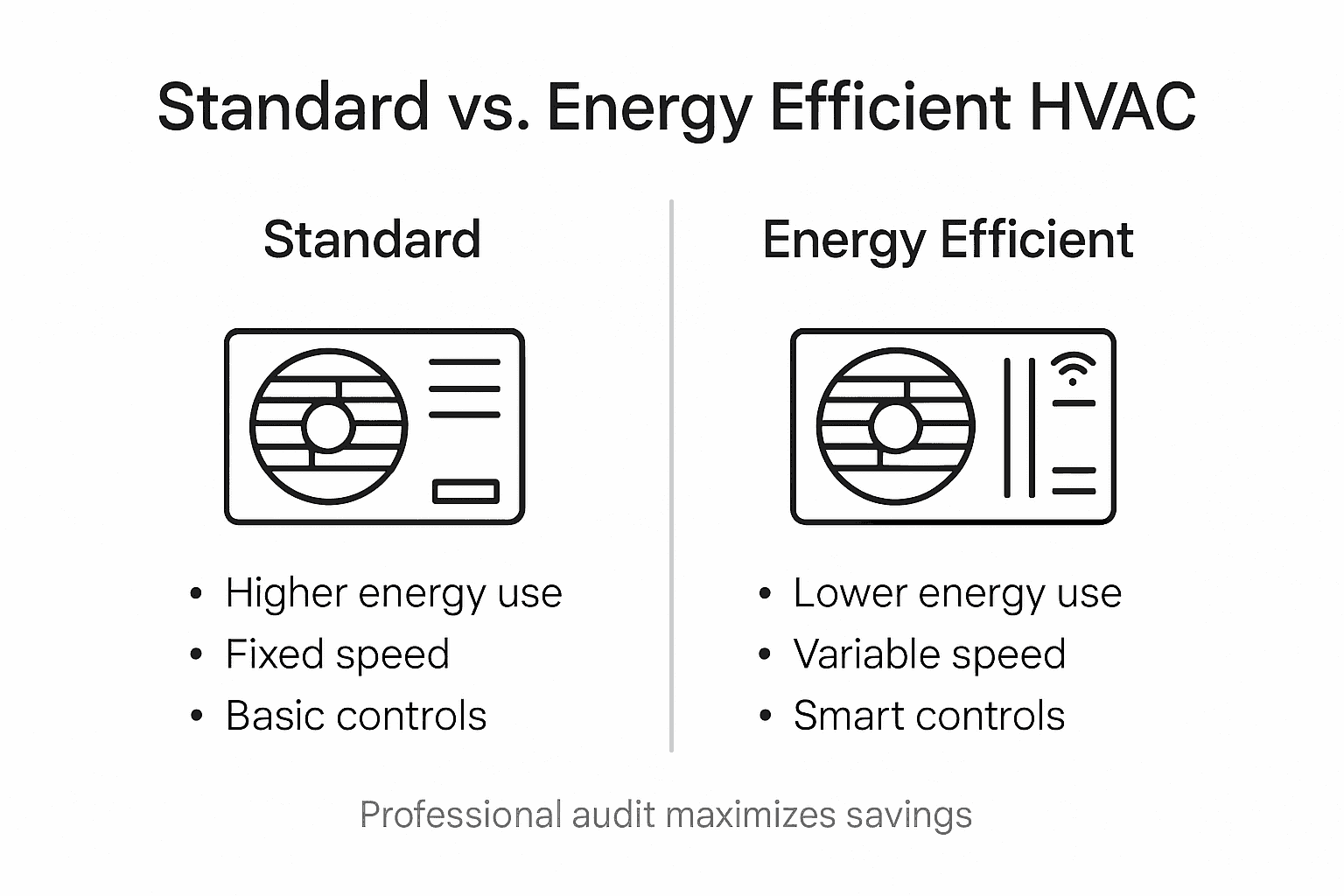
Pro tip: Invest in a professional home energy audit to precisely understand your specific HVAC efficiency opportunities and potential savings.
Types of Energy Efficient HVAC Technologies
Modern HVAC technologies have revolutionized home comfort in Tampa, offering sophisticated solutions that dramatically reduce energy consumption. Seasonal Energy Efficiency Ratio (SEER) ratings provide homeowners a critical benchmark for evaluating system performance, with higher ratings indicating more advanced energy-saving technologies.
Key energy efficient HVAC technologies include:
- Variable Speed Compressors: Adjust cooling output precisely
- Heat Pumps: Transfer heat instead of generating it
- Smart Thermostats: Optimize temperature based on occupancy
- Advanced Refrigerant Systems: Minimize environmental impact
- Zoned Cooling Technologies: Control temperatures in different home areas
Intelligent HVAC systems now use advanced sensor technologies and smart vents to create unprecedented efficiency. These systems can detect occupancy, learn household temperature preferences, and automatically adjust cooling and heating cycles to minimize wasted energy. By using targeted cooling and heating strategies, modern systems can reduce electricity consumption by up to 40% compared to traditional HVAC equipment.
Pro tip: When selecting an energy efficient HVAC system, always compare SEER ratings and ask your technician about potential energy savings specific to your Tampa home’s layout and usage patterns.
Key Features and New Innovations in 2026
The landscape of HVAC technologies is transforming dramatically, with cutting-edge innovations promising unprecedented energy efficiency for Tampa homeowners. Emerging technologies are driving a fundamental shift toward more intelligent, responsive, and environmentally conscious heating and cooling systems that go far beyond traditional approaches.

Key innovations expected in 2026 include:
For a quick overview, here’s a summary of 2026 HVAC innovations and their unique advantages:
| Innovation | Key Advantage |
|---|---|
| Variable Refrigerant Flow | Custom climate zones per room |
| Energy Recovery Ventilators | Reuses home thermal energy |
| AI-Powered Smart Controls | Learns and predicts usage patterns |
| Electrification Technologies | Minimizes fossil fuel reliance |
| Advanced Heat Pump Systems | Superior energy transfer rates |
- Variable Refrigerant Flow (VRF): Advanced temperature zone control
- Energy Recovery Ventilators: Reclaim and reuse thermal energy
- AI-Powered Smart Controls: Predictive performance optimization
- Electrification Technologies: Reduce carbon footprint
- Advanced Heat Pump Systems: Maximize energy transfer efficiency
Smart HVAC systems with integrated sensors and vents are becoming increasingly sophisticated, capable of learning individual household patterns and creating personalized comfort zones. These intelligent systems can now detect occupancy in real-time, adjust temperatures dynamically, and minimize energy waste by conditioning only the spaces actively being used, representing a quantum leap in home climate management technology.
Pro tip: Consider scheduling a consultation with an HVAC professional who specializes in emerging technologies to understand how these 2026 innovations could specifically benefit your Tampa home’s unique configuration and energy needs.
How Energy Efficient HVAC Reduces Costs
Energy efficient HVAC systems represent a strategic investment for Tampa homeowners seeking significant long-term financial savings. Programmable thermostats are a cornerstone of cost reduction, enabling precise temperature management that dramatically lowers monthly utility expenses by preventing unnecessary heating and cooling cycles.
Key mechanisms of cost reduction include:
- Intelligent Temperature Scheduling: Automatically adjust settings based on occupancy
- Zonal Climate Control: Heat or cool only occupied spaces
- Advanced Sensor Technologies: Detect real-time environmental changes
- Optimized Runtime Management: Minimize unnecessary system operation
- Performance Tracking: Provide detailed energy consumption insights
High efficiency heat pump technologies further enhance cost savings by operating with exceptional efficiency during low-demand periods. These systems maintain consistent home comfort while consuming significantly less energy compared to traditional HVAC equipment, resulting in substantial reductions in monthly utility bills. By intelligently adapting to environmental conditions and household patterns, modern energy efficient systems can potentially reduce cooling and heating expenses by 30-50% annually.
Pro tip: Request a professional energy audit to precisely identify your home’s unique efficiency opportunities and calculate potential cost savings from upgrading to an energy efficient HVAC system.
Comparing Upfront Costs With Long-Term Savings
Investing in an energy efficient HVAC system requires careful financial analysis that goes beyond initial purchase price. Total cost of ownership calculations reveal that higher upfront investments can translate into substantial long-term financial benefits for Tampa homeowners.
Key financial considerations include:
- Initial Equipment Cost: Higher for advanced technologies
- Energy Consumption Savings: Significant monthly utility reductions
- Maintenance Expense: Lower due to advanced system design
- Equipment Lifespan: Extended operational efficiency
- Property Value Impact: Potential increase in home resale value
Energy efficient building technologies demonstrate that strategic investments in high-performance HVAC systems can yield remarkable financial returns. While premium systems might cost 20-30% more initially, they typically generate cumulative savings that offset the higher purchase price within 3-5 years. These systems not only reduce monthly utility expenses but also provide improved comfort, lower maintenance costs, and contribute to a more sustainable home environment.
Pro tip: Request detailed cost-comparison projections from your HVAC professional that outline potential energy savings and payback periods specific to your Tampa home’s unique configuration.
Environmental Impact and Home Comfort Benefits
Energy efficient HVAC systems represent a transformative approach to home comfort that extends far beyond temperature control. Advanced indoor air quality technologies filter out pollutants, balance humidity, and create healthier living environments while simultaneously reducing environmental strain through decreased energy consumption.
Key environmental and comfort benefits include:
- Enhanced Air Purification: Remove allergens and airborne contaminants
- Precise Humidity Control: Prevent mold and maintain optimal moisture levels
- Reduced Carbon Footprint: Lower greenhouse gas emissions
- Stable Temperature Management: Consistent comfort across living spaces
- Noise Reduction: Quieter system operation compared to traditional units
Renewable energy integration and energy efficiency strategies demonstrate how modern HVAC systems contribute to broader environmental sustainability goals. These intelligent systems not only minimize fossil fuel consumption but also create more comfortable living spaces by maintaining precise temperature and humidity levels. By adapting to occupant needs and environmental conditions, they represent a holistic approach to home comfort that balances personal well-being with ecological responsibility.
Pro tip: Consider scheduling a professional indoor air quality assessment to understand how an energy efficient HVAC system can specifically improve your home’s environmental performance and comfort.
Experience True Comfort with Energy Efficient HVAC Solutions in Tampa
If you are struggling with high utility bills or inconsistent home temperatures, upgrading to an energy efficient HVAC system is the smart choice for Tampa homeowners. These advanced systems use smart thermostats, variable speed compressors, and zoned climate control to deliver precise comfort while significantly lowering energy use. At Home Therapist Cooling, Heating, and Plumbing, our certified technicians specialize in installing and maintaining these state-of-the-art HVAC solutions designed to maximize your energy savings and improve indoor air quality.
Don’t wait to enhance your home comfort and reduce monthly expenses. Visit Home Therapist Cooling, Heating, and Plumbing today to schedule a professional consultation. Learn how our expert team can custom design an energy efficient HVAC system tailored to your Tampa home. Take the first step toward a healthier, more comfortable living environment and start saving on your energy costs now with reliable HVAC services from a trusted family-owned business.
Frequently Asked Questions
What are the benefits of energy efficient HVAC systems?
Energy efficient HVAC systems provide several benefits, including lower utility bills, improved indoor air quality, consistent temperature control, and reduced environmental impact through lower carbon emissions.
How do I know if my HVAC system is energy efficient?
You can assess your HVAC system’s efficiency by checking its Seasonal Energy Efficiency Ratio (SEER) rating, looking for advanced features like smart thermostats, and evaluating its overall performance compared to industry standards.
What technologies make HVAC systems energy efficient?
Key technologies include variable speed compressors, heat pumps, advanced sensor technologies, smart thermostats, and energy recovery ventilators, all contributing to reduced energy consumption and improved climate control.
How can an energy efficient HVAC system reduce my costs?
Energy efficient HVAC systems reduce costs through intelligent temperature scheduling, zonal climate control, optimized runtime management, and significant energy consumption savings, leading to lower monthly utility bills.
About This Guide
Written and reviewed by the Home Therapist Cooling, Heating & Plumbing team, a family-owned Tampa Bay HVAC and plumbing company serving the area since 2011. Our licensed techs hold Florida HVAC license CAC1819196 and Plumbing license CFC1431159, with over 1,100 five-star reviews across Tampa, St. Petersburg, Clearwater, Wesley Chapel, Lutz, Riverview, Brandon, Valrico, Apollo Beach, Palm Harbor, Land O’ Lakes, Plant City, New Port Richey, and surrounding Tampa Bay zip codes.
Honest pricing:. Upfront quotes, no high-pressure sales, no surprise fees.
Questions about your home? Call (813) 343-2212 for a real tech, or request a callback. Available 7 days a week including evenings and weekends for emergencies.
Recommended
- Why Upgrade HVAC System: Complete Tampa Bay Guide – Home Therapist Cooling, Heating, and Plumbing
- How to Choose HVAC System for Tampa Bay Homes Easily – Home Therapist Cooling, Heating, and Plumbing
- 6 Types of HVAC Systems Every Tampa Bay Homeowner Should Know – Home Therapist Cooling, Heating, and Plumbing
- 7 Steps to a Complete HVAC Replacement Checklist for Homeowners – Home Therapist Cooling, Heating, and Plumbing
More Related Articles
- Daikin Heat Pump Installation in Tampa, FL 33606: 2.5-Ton R32 System on S Westland Ave, New Year’s Eve 2025
- New Year’s Eve Mini Split Install on 49th St N: 1-Ton Daizuki Heat Pump + Electrical Circuit in St. Petersburg, FL 33710
- Prepping HVAC for Summer: Homeowner’s Full Checklist
- What Is HVAC Short Cycling and Its Impact
- Air Conditioner Installation Repair Tampa FL Bay FL Services Review from Bonnie Wakefield


