

When the AC Fan Stops Spinning, Capacitor Failure Is Often the Reason in Tampa
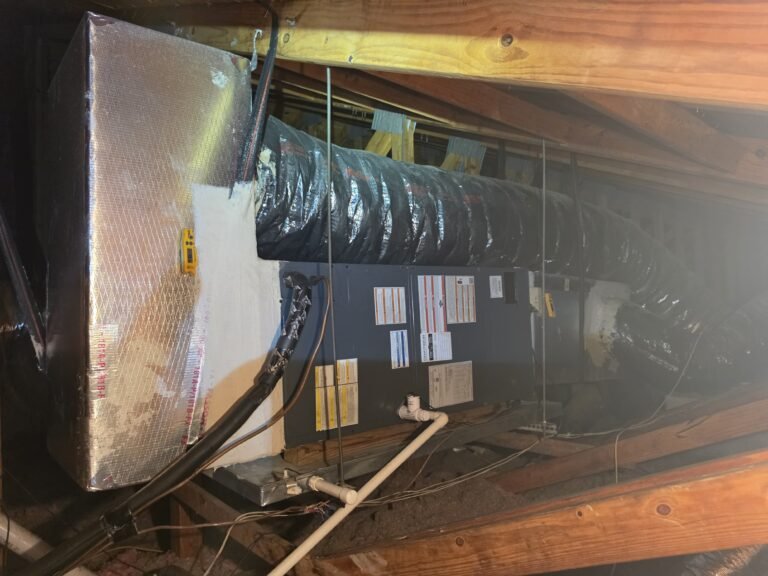
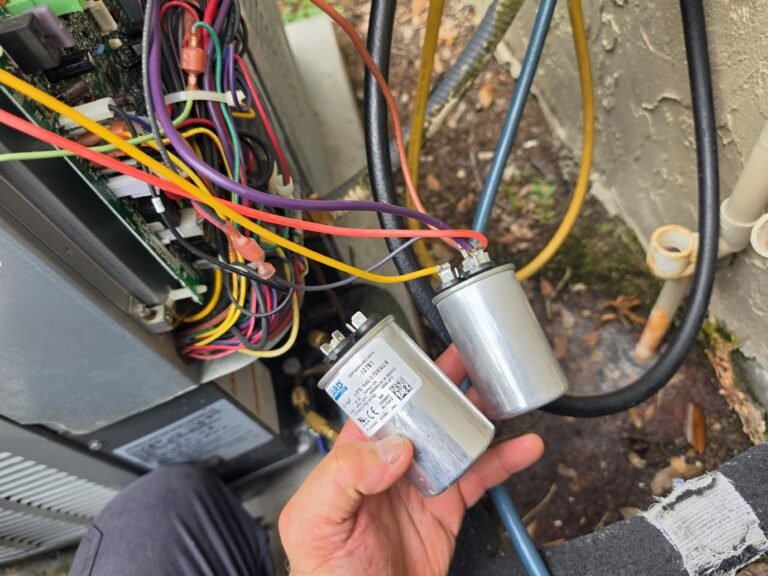
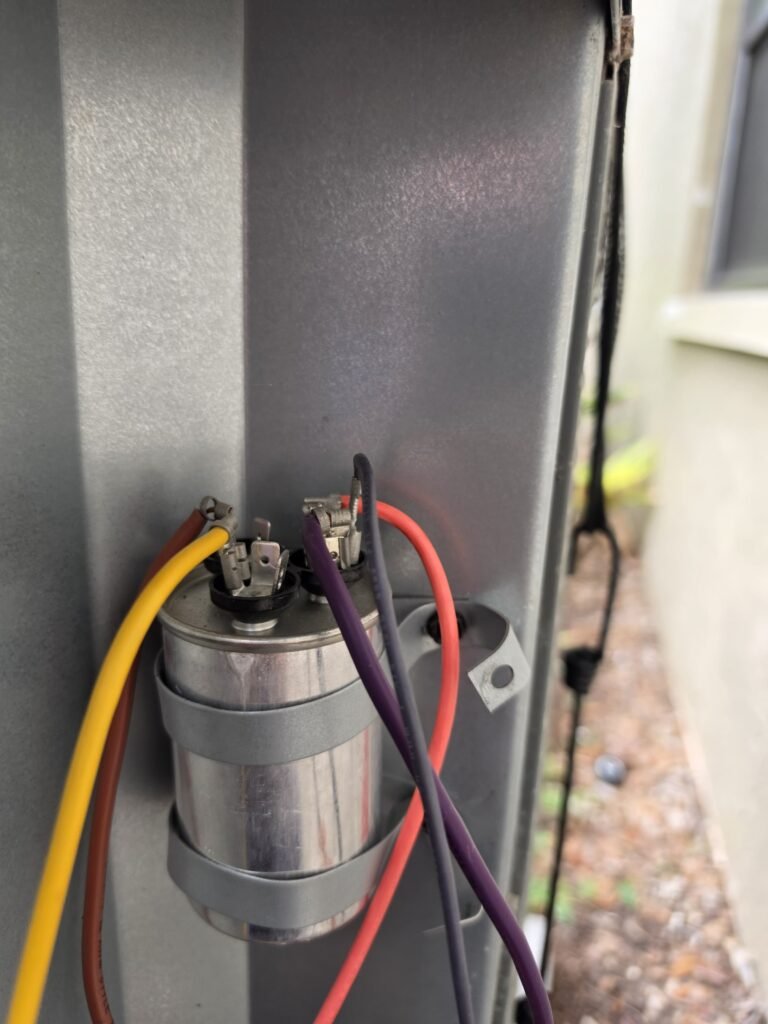
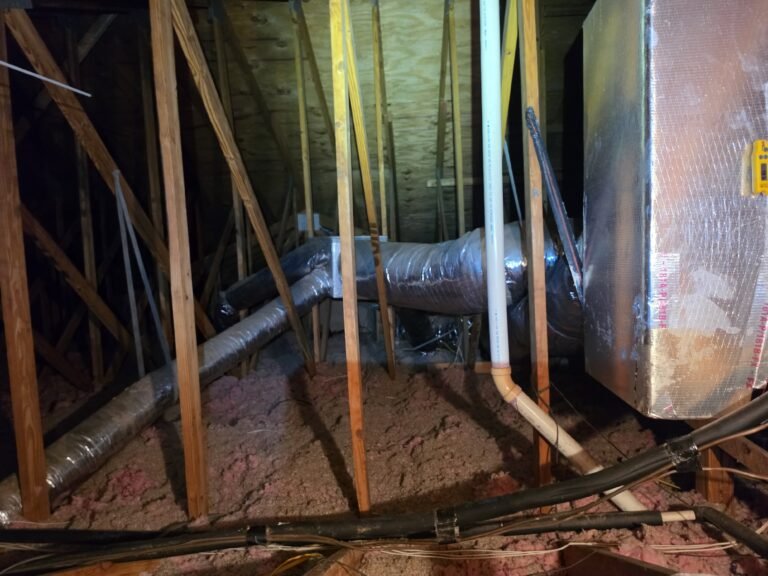
Capacitor failure often explains an outdoor AC fan that will not spin and a home that stalls around 75 degrees. In this AC repair in Tampa, the failed capacitor kept the outdoor unit from shedding heat, and replacing it restored normal cooling while also revealing early wear in the fan motor.
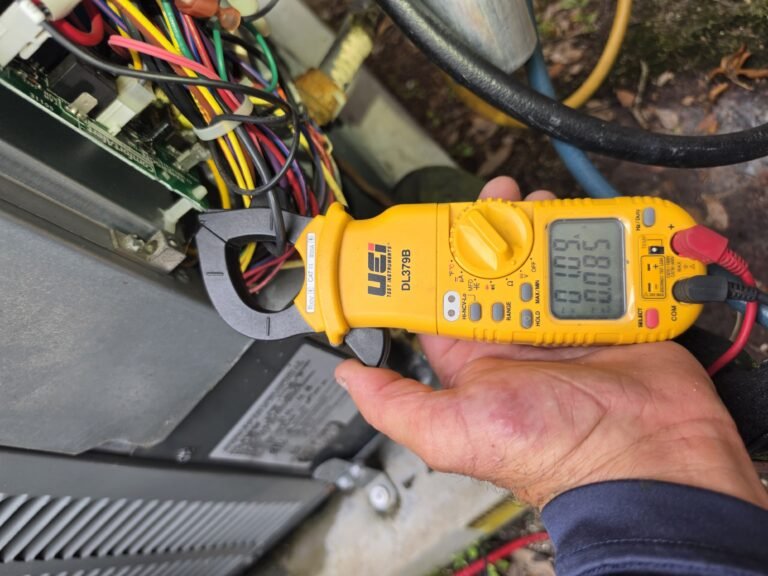
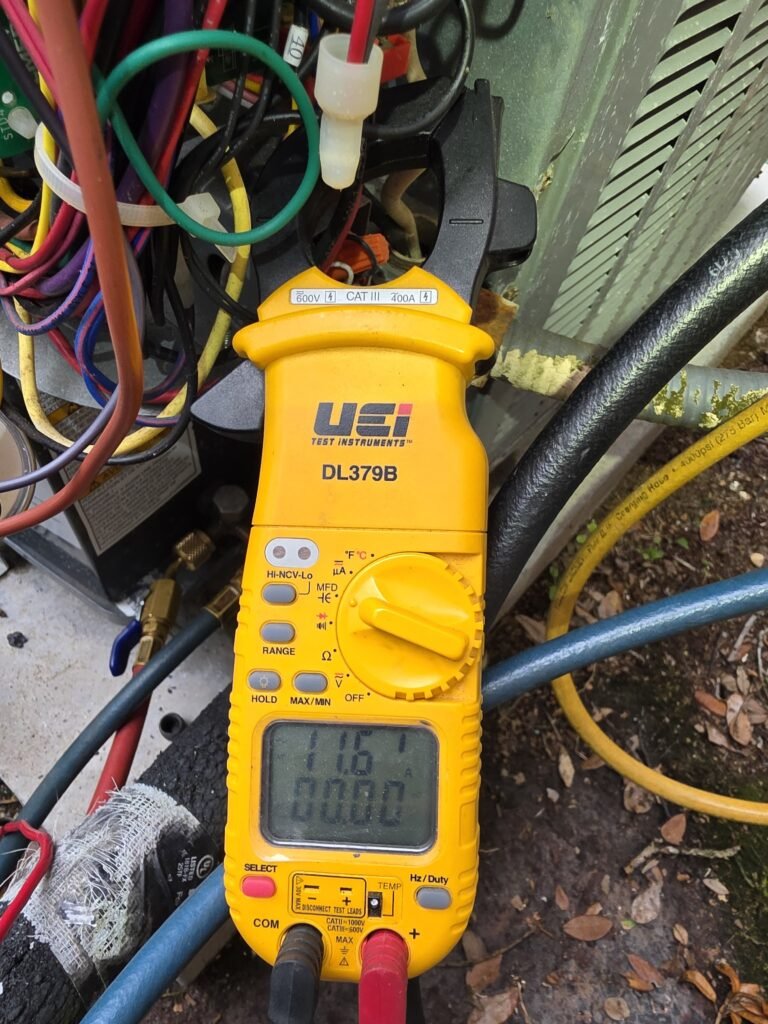
On Barrowe Dr in Tampa, FL 33624, Aridel responded to a no-cooling call after the homeowner noticed the temperature would not drop below 75 and the outdoor fan had stopped completely. The equipment on this repair was an Amana system, and the symptom pointed us straight to the outdoor section. Once Aridel checked the unit, he confirmed the capacitor had failed. He also found a second issue worth noting: the outdoor fan motor was drawing higher current than it should, which is a common warning sign on an older Florida system that has spent years running through long cooling seasons.
- Service performed: Cooling and heating repair, capacitor replacement, and refrigerant added
- Neighborhood or street: Barrowe Dr
- Technician: Aridel
- Symptom: Home would not cool below 75 degrees, outdoor fan not spinning
- Cause: Failed capacitor in the outdoor unit
- What was done: Replaced the capacitor and verified operation after service
- Parts replaced: Capacitor
- System age: About 10 to 11 years
Capacitor failure was the main reason this Tampa AC stopped cooling
A failed capacitor can stop an outdoor fan even when the thermostat is still calling for cooling. That matters because the condenser fan has one job: move heat out of the system. If the fan cannot start, the air conditioner may run poorly, struggle to lower indoor temperature, or shut down before the house ever reaches the set point.
That matched what the homeowner described on this call. The thermostat was set to 73, but the house would not get below 75. After checking outside, the homeowner saw the fan was not moving and shut the system off instead of forcing it to keep trying. That was the right move. Running an AC with a failed start component can add stress to the rest of the outdoor unit. For homeowners searching for ac blowing hot air symptoms, this is one of the first failure patterns we look for during AC repair in Tampa.
The bigger clue on Barrowe Dr was the fan motor’s high amp draw
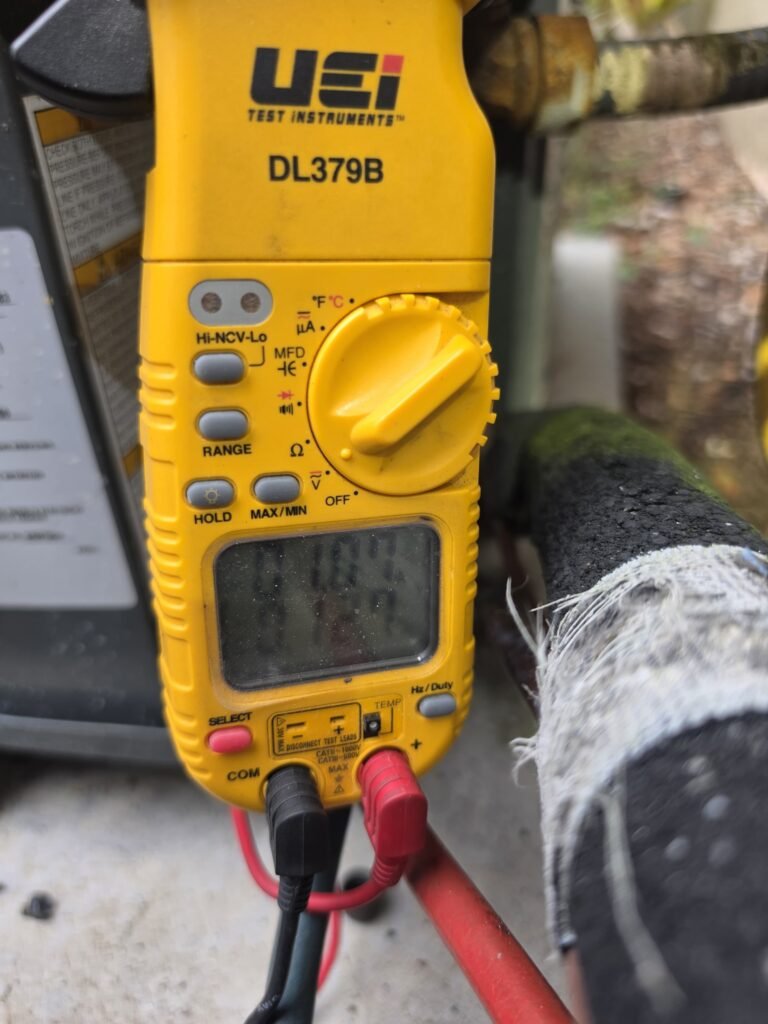
The failed capacitor solved the immediate no-cool problem, but the more useful long-term finding on this Tampa job was the fan motor’s electrical draw. Aridel measured the current while the motor was running and found it was pulling more amperage than it should. In plain language, the motor is working harder than normal to do its job.
That does not automatically mean the motor has failed today. It does mean the motor is wearing out. On a system around 10 to 11 years old, that kind of reading is important because it helps explain why the capacitor may have been under extra strain in the first place. Most homeowners assume capacitor failure is always a one-part event. Sometimes it is. Sometimes the capacitor is also the first visible sign that another component is aging behind it. That is the insider takeaway from this visit in Tampa 33624.
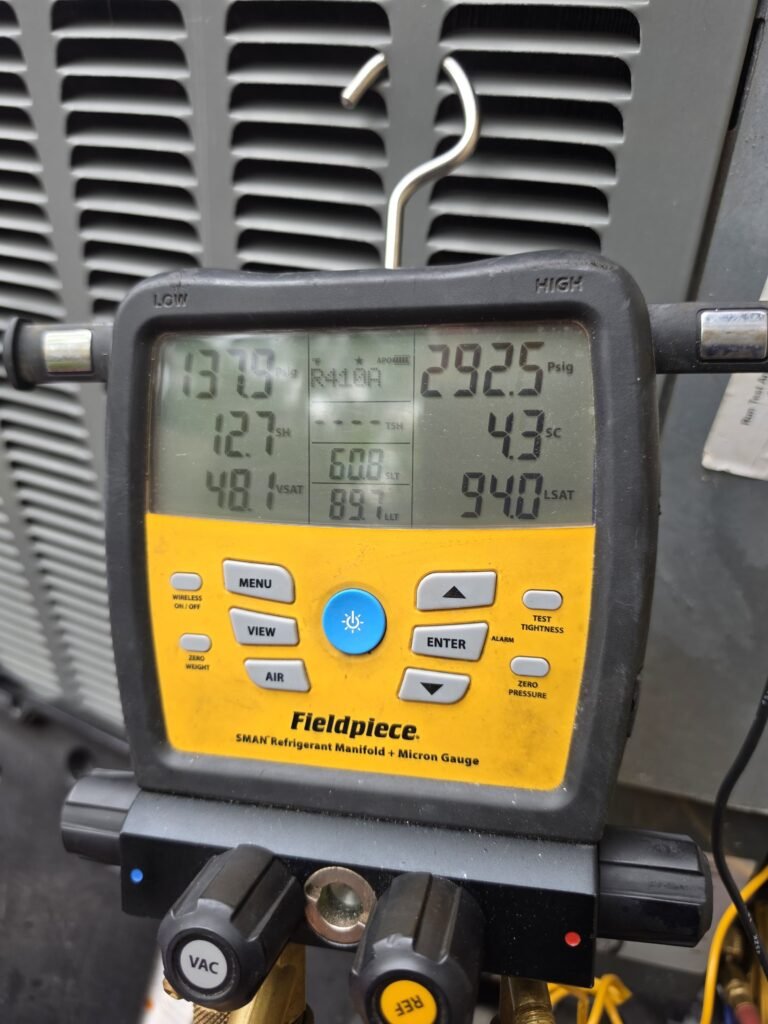
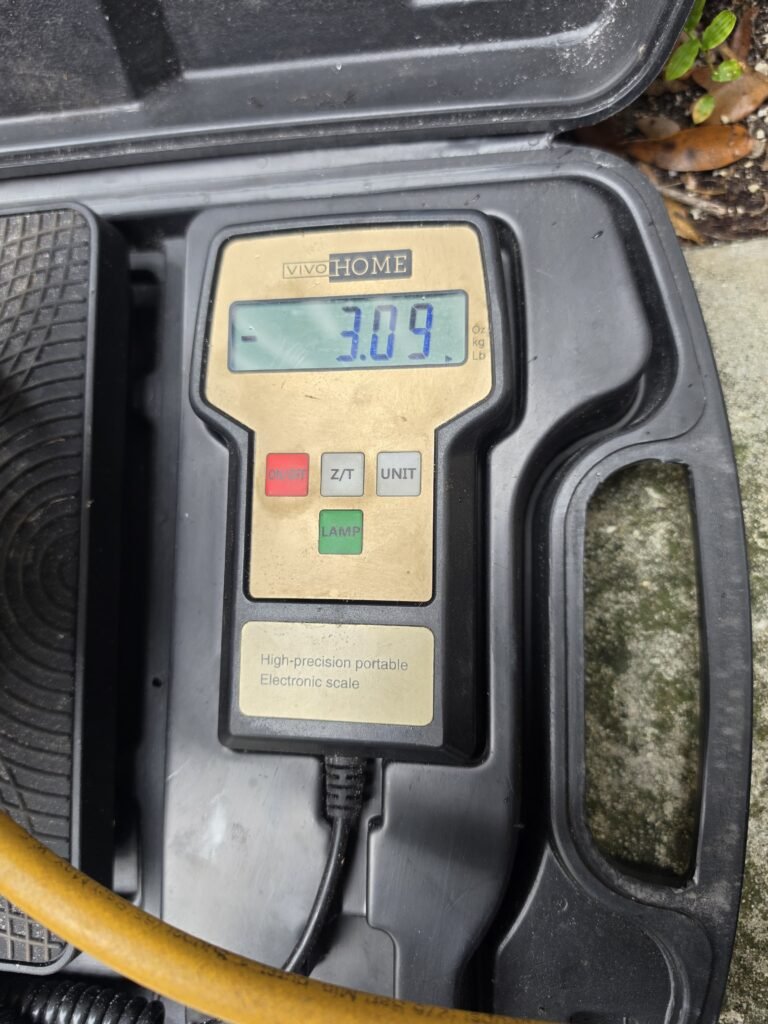
The service ticket also included up to 3 pounds or less of R410A, so this was not just a one-line repair invoice. This visit covered multiple items tied to restoring cooling, and the combined invoice came to $564. You can always review what this work typically costs and approve a written quote before any repair begins.
Why older Florida systems tend to show capacitor failure first
Florida heat exposes weak electrical parts quickly. A capacitor is a small storage device that releases a quick burst of energy to help motors start and keep running. In a place like Tampa Bay, where cooling demand stretches across most of the year, that part cycles constantly. By the time a system reaches the 10-year mark, it is common to see capacitor failure before a larger component completely quits.
This job also shows why a homeowner’s description matters. The system was not just “not cooling.” The outdoor fan was not spinning at all. That detail narrows the diagnostic path much faster than a generic comfort complaint. It helps separate a likely electrical or motor-side issue from other possibilities such as ac freezing up or a purely airflow-related problem at the indoor unit.
Because refrigerant was part of the approved scope, it is also worth noting that refrigerant handling is regulated work. Proper charging and recovery practices matter for performance and compliance, which is why licensed technicians follow standards such as EPA Section 608 when working with refrigerant.
What changed after the capacitor replacement on this Amana system
Once the capacitor was replaced, the outdoor unit could start and run the way it was designed to. That restored the fan’s ability to move heat off the condenser, which is the step the system had been missing. After the repair, we verified proper operation so the homeowner was not left guessing whether the house would start dropping temperature again.
The useful lesson from this Barrowe Dr call is that the repair and the recommendation are not always the same thing. The repair was the capacitor. The recommendation was to keep an eye on the outdoor fan motor because its amp draw showed wear. That kind of honesty matters. We do not jump straight to replacing major equipment when a smaller part fixes the immediate problem, but we also do not ignore a warning sign that could leave the homeowner without cooling later.
If you are comparing symptoms or trying to understand the broader world of air conditioning issues, this is a good example of why one failed part should always be read in context with the rest of the system.
Pro Tips for Tampa Homeowners Dealing With Capacitor Failure
Capacitor failure usually gives a few clues before it turns into a full no-cooling call. These tips help homeowners in Tampa catch the pattern earlier and avoid extra strain on the system.
- If the thermostat is calling but the outdoor fan is still, shut the system off and call for service. That prevents unnecessary stress on motors and compressors.
- Pay attention to temperature stalls, especially when the house sticks a couple degrees above the set point for hours.
- On systems around 10 years old, ask whether any motor is drawing higher current than normal. That reading can explain repeat electrical failures.
- If you left a maintenance plan in the past, it is worth returning to regular service. Long Florida cooling seasons are hard on capacitors, contactors, and fan motors.
Capacitor Failure Questions This Tampa Homeowner’s Call Brings Up
What happens if a capacitor fails?
If a capacitor fails, the motor it supports may not start or may run poorly. On this Tampa call, the failed capacitor kept the outdoor fan from spinning, which meant the system could not release heat outdoors. That is why the house stopped cooling properly and stalled around 75 degrees even though the thermostat was set lower.
How much does it cost to fix a capacitor?
The cost depends on what else is included in the visit. On this Barrowe Dr job, the invoice was not a capacitor-only price because the approved work also included refrigerant-related service, so the total reflected a bundled repair visit rather than one standalone part swap. The best approach is a free diagnosis and a written quote before work starts.
How long do capacitors typically last?
Capacitors often last several years, but Florida heat can shorten that timeline. This system was about 10 to 11 years old, which is an age where capacitor failure becomes more common simply because the part has gone through so many start and run cycles. Heavy seasonal use tends to expose weak electrical components earlier.
How do you know if a capacitor has failed?
You know a capacitor has failed when testing confirms it and the symptoms line up. In this case, the homeowner reported that the outdoor fan was not spinning and the home would not cool below 75. Aridel then checked the outdoor unit and confirmed the capacitor had failed, which matched the symptom pattern exactly.
Will an AC unit still run with a bad capacitor?
Sometimes part of the system will appear to run, but it will not run correctly. On this Tampa repair, the failed capacitor prevented the outdoor fan from doing its job, so even though the system was still trying to cool, it could not remove heat effectively. That is why a bad capacitor often shows up as weak or no cooling rather than total silence.
Schedule AC Repair in Tampa, FL 33624
If your system is showing capacitor failure symptoms like an outdoor fan that will not start, warm air, or indoor temperatures that stop dropping, Home Therapist can help. We have served Tampa Bay since 2017, and our team brings licensed HVAC and plumbing expertise to every call. Our HVAC license is CAC1819196, our plumbing license is CFC1431159, and homeowners across the area have left us 1,300+ five-star reviews because we stay clear, honest, and specific about what we find.
For homes in Tampa, FL 33624 and nearby ZIP codes, we offer FREE estimates and FREE diagnosis on every service call. You approve a written quote before any repair begins. If you want a technician to check a no-cooling issue, a failing outdoor fan, or another AC concern, call Home Therapist at (813) 343-2212. You can also review our customer reviews or confirm licensing through Florida DBPR.


