

Plumbing Upgrades Tampa, FL: Which Ones Are Actually Worth It? A Tech’s Honest Breakdown
Most plumbing upgrades Tampa homeowners research come from national home improvement articles that do not account for Florida’s climate. Florida’s nine-month cooling season, 70-plus percent indoor humidity, and water from some of the hardest municipal supplies in the state all change the math. The upgrades worth doing here usually solve a Florida-specific problem. The ones that disappoint are often borrowed from national trends that do not account for our climate.
This is a straight answer from the field: here is what we actually see working, what is over-hyped, and what is genuinely worth budgeting for in a Tampa Bay home in 2026.
Key Takeaways: Plumbing Upgrades Worth It in Tampa, FL
- Tankless water heaters last 5-7 years longer than tank units in Tampa’s hard-water conditions when properly maintained.
- Whole-home repiping with PEX-A eliminates the polybutylene and galvanized pipe failures that cause most major water-damage claims in older Tampa homes.
- Smart leak detectors pay for themselves after a single prevented flood; attic air handlers in Tampa homes create a real moisture risk every season.
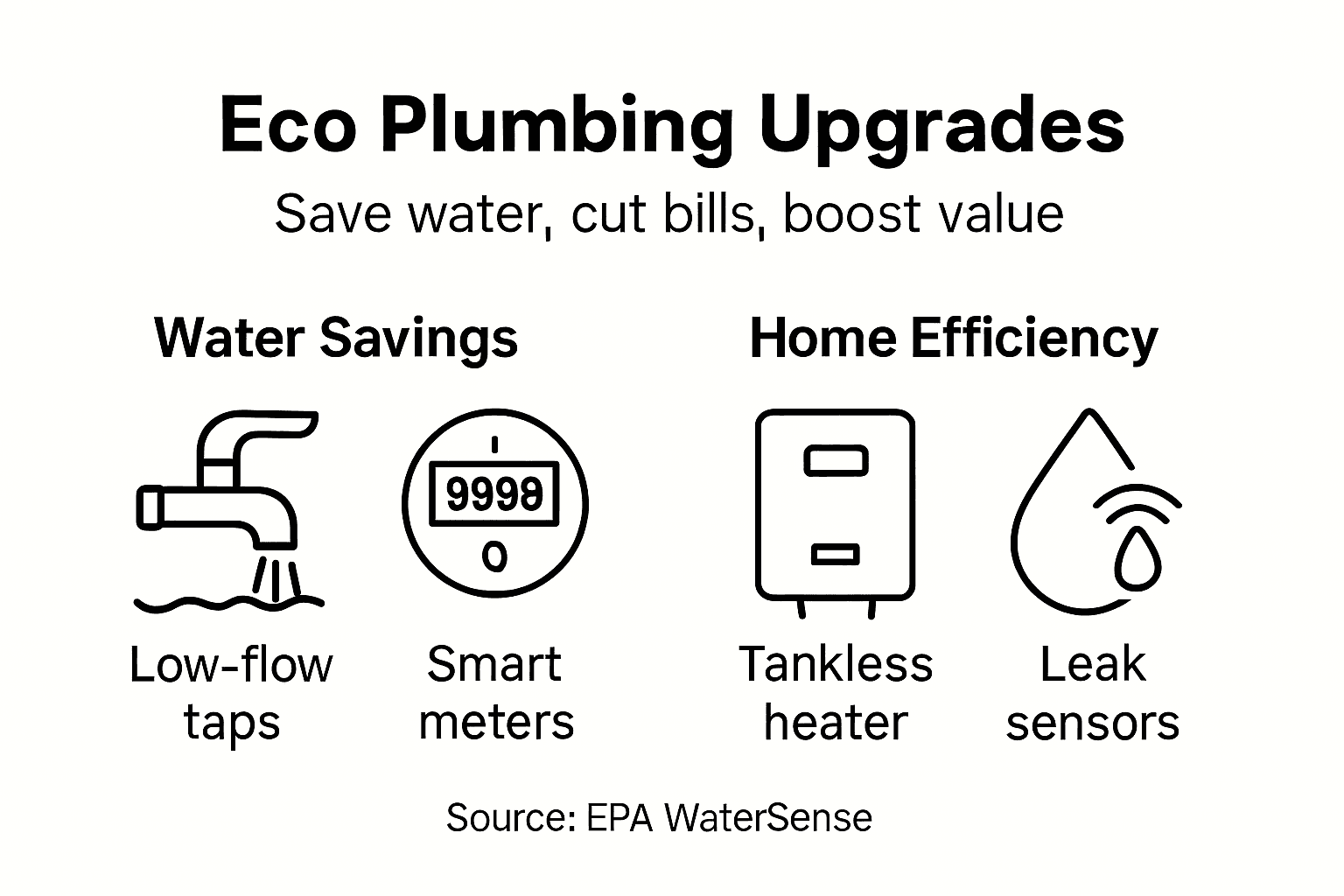
- Low-flow fixture upgrades have the fastest payback in Tampa because TECO electric rates and Tampa Water Department rates both run above the national average.
- Water softener installation is worth serious consideration if your water test shows hardness above 10 grains per gallon (common in Hillsborough County wells and some municipal zones).
- FREE estimates and FREE diagnosis on any plumbing service call.
What Makes Tampa Different From National Upgrade Guides?
Three things set Tampa apart from the national average when it comes to plumbing upgrade ROI: water hardness, heat load, and building stock.
Tampa Water Department and many well systems in Hillsborough County deliver water in the 8 to 15 grains per gallon range. According to the U.S. Geological Survey, anything above 7 grains per gallon accelerates scale buildup in water heater tanks, tankless heat exchangers, faucet aerators, and shower valve cartridges. That hardness shortens expected equipment life by 25 to 40 percent compared to the manufacturer specs written for average U.S. water.
The heat load matters too. AC systems here run 10 to 11 months per year. That constant operation means drain lines stay wet and warm, which is exactly the environment that grows algae fastest. It also means any leak, whether from a water heater, supply line, or fixture angle stop, has zero dry-out time before mold sets in.
Finally, a huge share of Tampa Bay homes were built between 1955 and 1995 using materials that have a well-documented service life issue: polybutylene pipe (1978-1995 builds), galvanized steel supply lines (pre-1970 builds), and cast iron drain stacks (pre-1975 builds). All three are past their expected service life and represent the highest-return upgrade category for affected homes.
Which Plumbing Upgrades Have the Best ROI in Tampa?
| Upgrade | Typical Cost Range | Tampa-Specific Benefit | Payback Window |
|---|---|---|---|
| Whole-home PEX repiping | $4,500 – $9,000 | Eliminates polybutylene/galvanized failure risk; required before selling many 1980s-90s homes | Immediate (insurance, resale) |
| Tankless water heater | $1,800 – $3,500 installed | Eliminates sediment buildup issue; 20-yr life vs 8-12 for tank in hard water | 7 – 10 years (energy + longevity) |
| Smart leak detector (whole-home shutoff) | $400 – $900 installed | Attic air handlers create condensate drip risk; slab leaks common in older builds | One prevented flood event |
| Water softener (Rheem or Halo) | $800 – $2,500 installed | Extends life of water heater, fixtures, dishwasher, washing machine in hard-water zones | 3 – 5 years |
| WaterSense low-flow fixtures | $150 – $500 per bathroom | Tampa Water rates + sewer fees make every gallon count | 2 – 4 years |
| Angle stop valve replacement | $150 – $350 per zone | Plastic angle stops on 1990s-2000s builds fail frequently; metal replacements prevent costly cabinet floods | Immediate (risk reduction) |
Is a Tankless Water Heater Worth It in Tampa?
In most Tampa Bay homes, yes. The math is different here than elsewhere because of water hardness. A standard 40-gallon electric tank unit accumulates scale at roughly twice the rate it would in Atlanta or Denver. Without an annual flush and periodic anode rod check, many tank water heaters in Hillsborough County homes fail before their 8-year warranty period ends.
A Rheem tankless unit, properly sized for household demand and fitted with a sediment pre-filter, routinely runs 18 to 22 years in our area when flushed annually. That extra decade of service life alone often covers the $500 to $800 premium over a tank replacement, before accounting for the roughly 20 percent reduction in water heating energy costs from on-demand operation.
The caveat: you need the right gas line size or electrical service. Undersized gas supply is the most common reason a tankless unit underperforms in a Tampa home. Always get a licensed assessment before tankless installation in Tampa.
Is Whole-Home Repiping Worth It in Tampa?
If your home was built between 1978 and 1995 and has never been repiped, the answer is almost certainly yes. Polybutylene pipe has a documented nationwide failure pattern that accelerates in hot, oxidized water systems like Tampa’s chlorinated municipal supply. The EPA has documented that chlorinated water reacts with polybutylene over time, causing internal flaking and eventual pin-hole failures.
Beyond insurance and resale considerations, an active polybutylene failure in a Tampa home is a mold event within 24 to 48 hours. Our humidity leaves almost no buffer between a pipe leak and a remediation claim. Repiping to PEX-A with proper expansion fittings eliminates that risk entirely and typically comes with a workmanship warranty.
See our whole-home repiping service page for Tampa for what the process involves.
Are Smart Leak Detectors Worth Installing in a Tampa Home?
More so than in most U.S. markets, yes. Two specific Tampa conditions make smart leak detection valuable:
- Attic air handlers: Most Tampa Bay homes have their air handler in the attic. The condensate drain produces several gallons of water per day during peak cooling season. A clogged drain line can overflow a secondary pan, drip through drywall, and saturate insulation before a homeowner notices. A sensor at the secondary pan catches this within minutes.
- Slab construction: The vast majority of Tampa Bay homes sit on concrete slabs. Supply lines run under the slab. A slow slab leak can saturate the subfloor for weeks before showing up as a floor tile problem or unexplained water bill increase. Whole-home flow monitoring catches the unusual consumption pattern before damage compounds.
The leak detection services we offer in Tampa can pinpoint hidden slab and supply-line leaks with acoustic equipment, which is a useful complement to smart monitoring for older homes.
What About Water Softeners in Tampa?
If your home uses well water or is in a Hillsborough County zone with hardness above 10 grains per gallon, a water softener or whole-home conditioner is one of the most cost-effective investments you can make. Hard water leaves calcium scale in water heater tanks that acts as an insulating layer between the heating element and the water, forcing the element to run longer and hotter. The U.S. Department of Energy estimates that heavy scale buildup can reduce water heater efficiency by 20 to 30 percent.
We install Rheem water softeners and Halo whole-home conditioning systems. Both are appropriate for Tampa’s water profile. A Halo system is often preferred when a homeowner wants scale prevention without the sodium discharge of a traditional salt-based softener.
See current pricing and options on our Tampa Bay plumbing pricing guide.
What Plumbing Upgrades Are Over-Hyped for Tampa?
A few trends popular in national home improvement coverage do not translate well to Tampa Bay homes:
- Greywater recycling systems: Florida building code requires significant permitting and separate plumbing runs for greywater reuse. The installation cost is rarely recovered given Tampa’s relatively low irrigation water rates, and the maintenance burden in a humid climate is non-trivial.
- 3D-printed plumbing components: Not yet code-compliant for potable water systems in Florida and mostly a commercial/industrial discussion.
- Programmable shower systems: Useful in cold climates where you want to pre-heat water. In Tampa, water arrives warm from supply lines much of the year, and pre-programming adds complexity without much comfort benefit.
How to Prioritize Plumbing Upgrades in Your Tampa Home
The right order depends on your home’s age and current risk profile. Here is a practical framework:
- If your home was built before 1996: Start with a plumbing inspection to identify polybutylene, failing angle stops, or cast iron drain issues. Address those before anything cosmetic.
- If your water heater is over 10 years old: Budget for replacement now. In Tampa’s hard water, a 10-year-old tank is living on borrowed time. Consider going tankless while the budget is open.
- If you have hard well water: A water softener or Halo conditioner before the new water heater protects your investment and extends fixture life throughout the home.
- If your home has attic air handlers: A secondary pan sensor is a $75 part that prevents a $10,000 ceiling repair. Install it with your next AC maintenance visit.
- Fixture upgrades: Address those last. They have the slowest impact on risk and the fastest payback on utility costs.
Call (813) 343-2212 or visit our plumbing services page for a FREE estimate and FREE diagnosis on any plumbing concern in your Tampa Bay home.
Frequently Asked Questions: Plumbing Upgrades in Tampa, FL
What is the most cost-effective plumbing upgrade for a Tampa home?
For homes built before 1996, whole-home repiping from polybutylene to PEX-A delivers the highest risk reduction per dollar spent. For homes with harder water and an aging tank water heater, switching to a tankless Rheem unit typically offers the best combination of longevity improvement and energy savings in Tampa’s climate.
How do I know if my Tampa home has polybutylene pipes?
Polybutylene pipe is typically gray or black in color and was used in Florida homes built between 1978 and 1995. It connects to fittings using plastic crimp rings rather than copper or brass. A licensed plumber can identify it during a standard inspection. We offer FREE diagnosis on every service call, so you do not need to pay just to find out what type of pipe you have.
Does a tankless water heater require extra maintenance in Tampa?
Yes. Tampa’s hard water means a tankless unit should be descaled with a vinegar flush at least once a year. Without it, calcium deposits accumulate in the heat exchanger and reduce efficiency over time. We include a flush check in our annual plumbing maintenance visits. See our water heater installation and service options for Tampa.
Is a water softener worth it if I have Tampa city water rather than well water?
It depends on your zone. Parts of Hillsborough County municipal supply test between 8 and 12 grains per gallon. At that level, a Halo whole-home conditioner or a Rheem salt-based softener does meaningfully extend appliance life. Request a water hardness test during your next plumbing service call to get a real number before deciding.
How much does a whole-home repipe cost in Tampa?
Most single-story Tampa homes run $4,500 to $7,000 for a full PEX repipe. Two-story or larger homes or those with cast iron drain replacement included can reach $9,000 or more. We provide written quotes before any work starts. See our whole-home repiping page for more detail.
Do plumbing upgrades require permits in Tampa?
Yes. Whole-home repiping, water heater replacement, and water softener installation all require Hillsborough County or City of Tampa permits depending on the location. A licensed plumber pulls the permit as part of the job. Unpermitted work creates problems at resale and voids manufacturer warranties on installed equipment.
More Related Articles
- New Water Supply and Sewer Trench on W Waters Ave: Whole-Home Plumbing Repiping in Tampa, FL 33614
- New Water Lines and Angle Valve Replacement on Bay Pointe Dr: Pipe Replacement in Tampa, FL 33615
- TPR Valve, Anode Rod, and Sediment: What Adalberto Found on Kensington Lake Cir During a Water Heater Flush in Brandon, FL 33511
- Free Plumbing Diagnosis on S Kissimmee St: What Alejandro’s Five-Point Report Found in Tampa, FL 33616
- Garbage Disposal Humming Not Spinning: Grant Park Tampa FL 33619 Job


