Will homeowners insurance cover?
Often yes for sudden water damage. Usually NOT covered: the AC repair itself or mold from prolonged leak. Document with photos.
How fast does drywall damage in Tampa?
Noticeable in hours. Ceiling stain by day 1. Mold starts at 48 hrs in Tampa humidity. Fix immediately.
Can I just clear the drain myself?
Shop-vac at the outside PVC drain end pulls most clogs. $10 DIY try. If fails, call.
Why Tampa drains clog so fast?
Humidity pulls 3-5 gal water/day through the drain. Algae grows in it. Monthly vinegar flush = prevention.
Float switch worth $279?
Absolutely. One prevented ceiling repair saves $500-$3,000. Most insurers discount for having one.
Will homeowners insurance cover?
Most standard homeowners policies (HO-3) cover sudden and accidental water damage from HVAC condensate overflow. If the float switch failed and the drain pan overflowed suddenly, that typically qualifies. If the drain was slowly leaking for months before the ceiling showed damage, many insurers deny the claim as maintenance neglect. Document the date you first noticed the drip, the date the system was last serviced, and whether a float switch was present and functional. A properly functioning float switch that still allowed overflow may support a covered claim. Call (813) 343-2212 for a same-day drain call and documentation of findings for your insurer.
How fast does drywall damage in Tampa?
Faster than almost anywhere else in the country. Tampa’s humidity is 74 percent on average, and attic ceiling cavities see even higher humidity. Wet drywall begins losing structural integrity within 24 hours. Mold spores can germinate on saturated drywall within 24 to 48 hours when ambient temperature is above 70 degrees Fahrenheit, which in Tampa is year-round. A drip that has been running for three days before discovery may have progressed from a cosmetic stain to structural drywall replacement and mold remediation territory. Do not delay diagnosis or drying once water is discovered.
Can I just clear the drain myself?
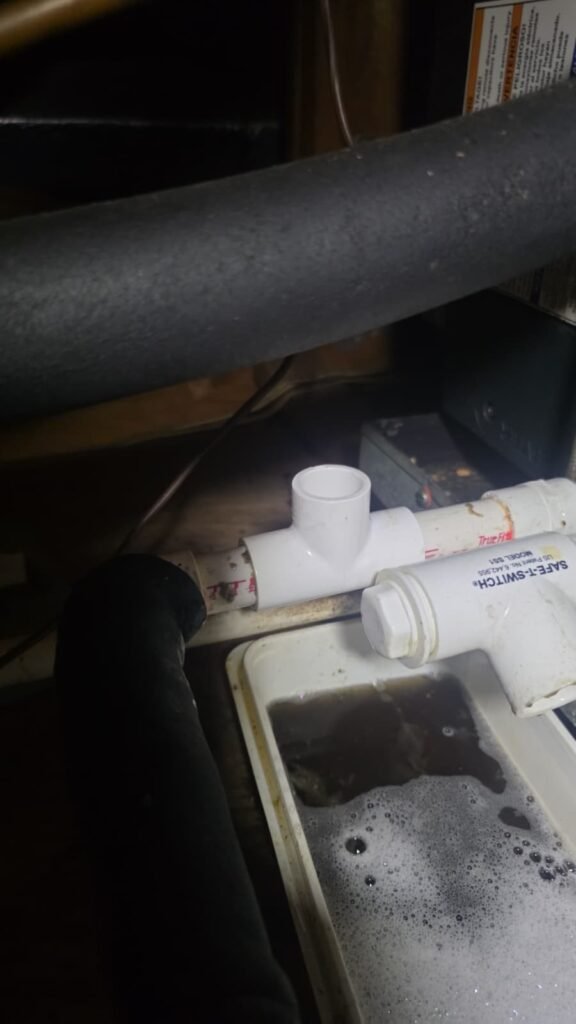
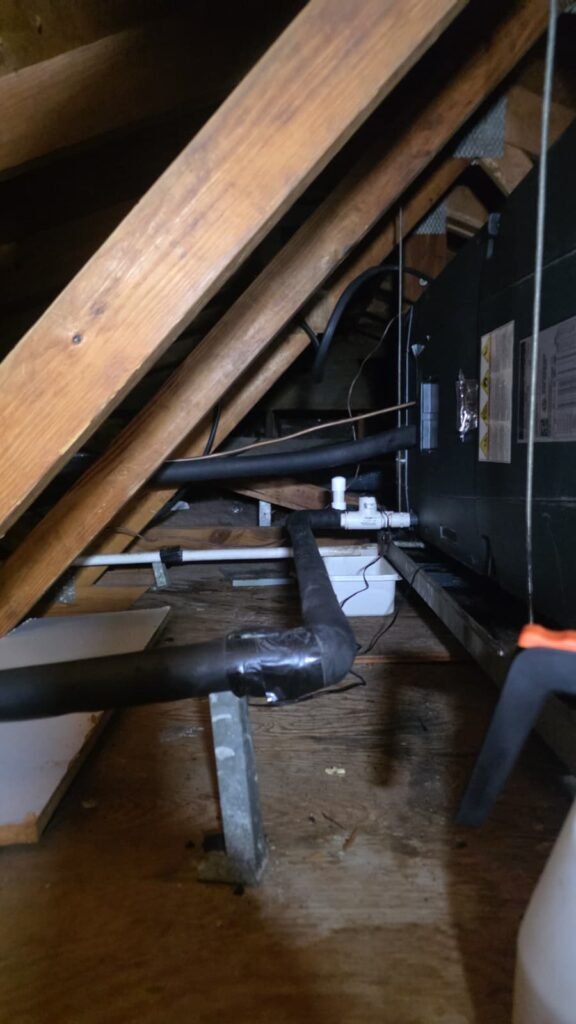
You can attempt a DIY drain clear by pouring a mix of equal parts white vinegar and warm water into the condensate drain access cap (the PVC tee fitting with a removable cap, usually near the air handler). Let it sit for 30 minutes, then flush with water. This works for minor algae buildup in the first foot or two of the drain line. It does not work for full blockages deep in the run, cracked drain pans, or failed float switches. If the ceiling is actively dripping or you can see standing water in the drain pan, call a tech. The underlying pan or float switch may need replacement, not just a flush.
Why Tampa drains clog so fast?
Tampa’s drain lines stay warm year-round because the AC runs almost continuously from March through November. The drain line carries condensate water through a PVC pipe at ambient attic temperature of 100 to 140 degrees in summer. Algae and biofilm thrive in warm, dark, moist environments, and Tampa provides all three conditions simultaneously for eight or nine months a year. Northern homes that run their AC for four months give algae a shorter growing window. Tampa drains need monthly vinegar treatment and annual professional flushing to stay clear.
Float switch worth $279?
Absolutely yes. A float switch at $279 installed protects against ceiling water damage that costs $300 to $800 in drywall repair alone, plus potential mold remediation costs of $1,000 to $5,000 if the moisture is not discovered quickly. In Tampa’s climate, drain lines clog at least once per system life cycle regardless of maintenance. The float switch is the insurance policy that turns a service call into a service call rather than a service call plus a contractor call. Call (813) 343-2212. Licensed CAC1819196.
Does Florida require a float switch on attic air handlers?
Yes. Florida Building Code Section 1411.3 requires overflow protection on HVAC installations in attic spaces, satisfied by either a secondary drain pan with an independent exterior drain line or a float switch wired to shut off the air handler. Hillsborough County inspectors typically require both on attic horizontal systems. Units installed before the 2007 FBC adoption may not have this protection. Adding a float switch to an existing system does not require a permit but must be performed by a licensed CAC contractor. Call (813) 343-2212. Licensed CAC1819196.
My air handler is in a closet on the first floor, not in the attic. Can it still drip through the ceiling?
First-floor closet air handlers drain through a condensate line that typically routes through the wall and out to the exterior or into a floor drain. If the drain line clogs on a first-floor unit, the primary pan overflows into the closet floor and adjacent walls rather than the ceiling above. However, if the home has a second air handler in the attic serving the second floor, that unit is the one that would drip through upstairs ceilings. The distinction matters because the fix is different. A first-floor unit overflow typically requires drain cleaning and possibly a float switch; an attic unit ceiling drip is more urgent due to drywall and mold risk. Licensed CAC1819196.
Why is there water around the outdoor unit as well as dripping from the ceiling inside?
Water near the outdoor condensing unit is typically normal condensation from the coil operating in Tampa’s humidity and does not indicate a problem. The ceiling drip inside is a separate issue from the indoor air handler’s condensate drain. These two water sources are unrelated; the outdoor unit does not drain to the attic or ceiling. If you are seeing both, address the indoor ceiling drip urgently and ignore the outdoor puddle unless it is excessive or the outdoor unit is in standing water, which can indicate a drainage site issue at the pad. Licensed CAC1819196.
How do I know if my secondary drain line is actually discharging outside?
Secondary drain lines in Hillsborough County installations are supposed to terminate at a visible exterior location, often at the eave or through a different exterior wall than the primary line. The intent is that you can see water dripping from the secondary exit when the primary drain has plugged, giving you a visual warning before damage occurs. To confirm your secondary line works, have a technician pour water directly into the secondary pan during the service call and verify it exits at the expected exterior point within 60 seconds. If you cannot locate a second drip edge on the exterior of your home, the secondary line may be missing or incorrectly terminated. Licensed CAC1819196.