


Reviewed by Richard Morales, Co-Owner & FL Class B Air Conditioning Contractor (FL license CAC1819196)
If you are wondering about signs your AC is in trouble, the biggest red flags are short cycling, warm air from the vents, and a power bill that climbs even though your routine has not changed. Those symptoms usually mean the system is struggling, and catching the cause early can prevent a much larger repair.
Most air conditioners do not fail all at once without warning. In Tampa Bay, we usually see a period where the system starts acting differently before it finally stops keeping up. A homeowner may notice the unit turning on and off too often, rooms staying warm even though the thermostat is set low, or a utility bill that suddenly looks wrong. None of those signs automatically means you need a new system. They do mean the AC needs attention soon, because the longer a stressed system runs, the more likely one problem turns into two.
Signs your AC is in trouble often start with short cycling
Short cycling means the air conditioner shuts off and starts back up again too quickly, sometimes every few minutes. A normal cooling cycle should run long enough to remove heat and humidity from the house. When the system keeps stopping and restarting, it is not settling into steady operation.
This matters because startup is one of the hardest parts of the cycle on AC equipment. The compressor and fan motors draw more stress when they kick on than when they are already running. If that happens over and over all day, wear adds up fast.
Short cycling can happen for several reasons, including:
- A thermostat issue, such as bad placement or a calibration problem
- A dirty air filter restricting airflow
- An evaporator coil starting to freeze
- Low refrigerant from a leak
- An oversized system that cools too fast and shuts down early
- An electrical or control problem
For homeowners, the key is not diagnosing the exact cause from one symptom alone. The key is recognizing that frequent on and off operation is not normal. If you hear the outdoor unit start, stop, then start again a few minutes later, especially during a hot Florida afternoon, that is worth checking. Left alone, short cycling can drive up energy use and can shorten compressor life, which is one of the more expensive components in the system.
One important note, a system may cycle a little differently during milder weather or after reaching temperature quickly in the evening. That is not the same as repeated rapid starts during a real cooling demand. We look at the pattern, not one isolated moment.
Warm air from the vents is one of the clearest signs your AC is in trouble
If the thermostat is calling for cooling and the air coming out of the vents feels warm or barely cool, something is wrong. Homeowners often describe this as, “The AC is running, but the house is not getting colder.” That is one of the clearest signs the system is in trouble.
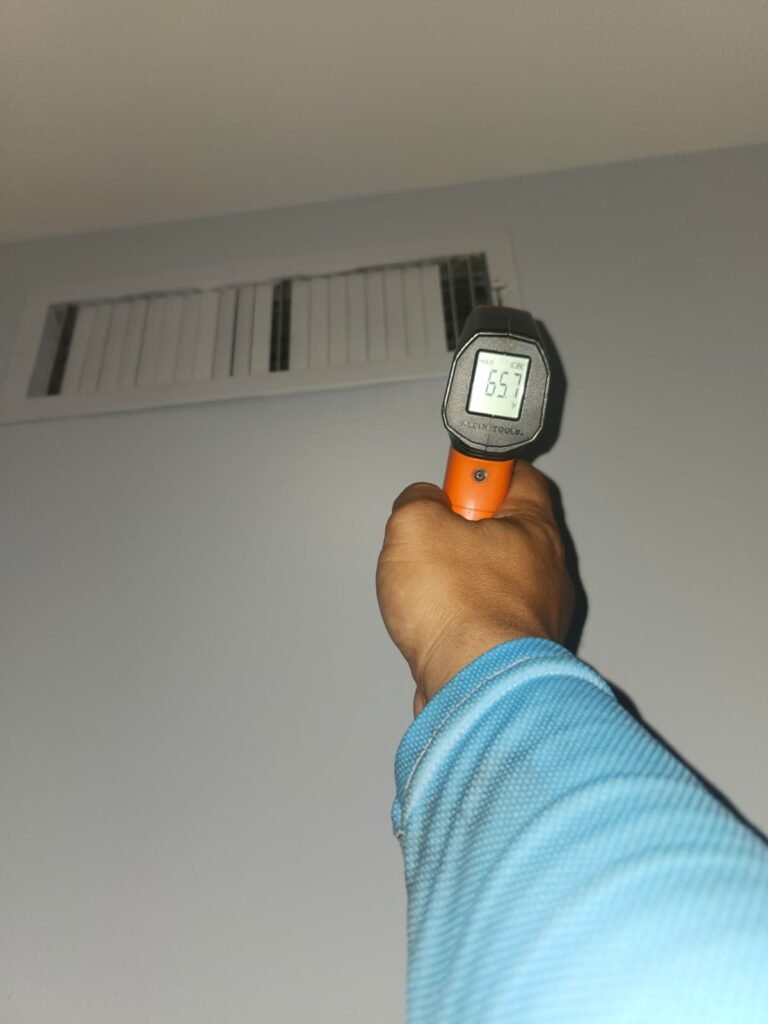
There are a few common reasons this happens. Low refrigerant is one. Refrigerant does not get used up like fuel, so if the charge is low, that usually points to a leak somewhere in the system. Another possibility is a compressor that is weakening or failing. Since the compressor is responsible for moving refrigerant through the cooling cycle, poor compressor performance can leave you with airflow that feels wrong even though the blower is still pushing air.
Warm air can also come from airflow problems. A clogged filter, a dirty indoor coil, a failing blower motor, or blocked return air can all reduce the system’s ability to transfer heat. In some cases, the system may even start to ice up. When that happens, homeowners sometimes notice weak airflow first, then warmer air later as the ice buildup gets worse.
Here is a simple homeowner check that is actually useful:
- Set the thermostat to cool and lower than room temperature.
- Make sure the filter is not heavily clogged.
- Stand at a few supply vents and feel whether the air is clearly cool and moving with normal force.
- Look at the outdoor unit and see whether it is running while the thermostat is calling.
If the indoor fan is blowing but the air is not cooling the house, do not keep dropping the thermostat lower and lower. That usually does not solve the underlying problem. It just makes the system run harder and longer.
In Tampa Bay homes, humidity makes this symptom worse. Even when the air is only a little off, the house can start feeling sticky fast. That is because your AC is not just lowering temperature. It is also removing moisture. Once cooling performance slips, comfort usually drops quickly.
A rising power bill can mean the AC is working harder to do the same job
When a power bill climbs and nothing else in the home has really changed, the AC is often part of the story. That does not mean every high bill points to a breakdown. Florida summers are long, and utility costs naturally rise when outdoor temperatures and humidity stay high. What gets our attention is a noticeable jump that does not match the weather or your normal routine.
A struggling air conditioner uses more electricity because it has to run longer, start more often, or operate less efficiently to produce the same amount of cooling. That can happen with low refrigerant, dirty coils, airflow restrictions, electrical issues, failing motors, or a compressor under stress.
Homeowners usually notice this in one of three ways:
- The bill is up, but thermostat settings have not changed
- The system seems to run much longer than it used to
- The home is less comfortable even though energy use is higher
That last one is especially telling. If you are paying more and getting less comfort, the system is not operating efficiently.
There are a few exceptions worth mentioning. A spike in guests, cooking, laundry, pool equipment, or an electric water heater issue can also affect the bill. So can duct leaks in a hot attic, which are common in Florida. But if the timing lines up with poor cooling, short cycling, weak airflow, or unusual run times, the AC deserves a close look.
Ignoring this symptom is expensive in a quiet way. Many homeowners wait because the system still runs, and technically it has not failed yet. The problem is that inefficient operation often means parts are overheating, pressures are off, or airflow is below what the equipment needs. That is how a manageable repair can turn into a major one.
What we check when these AC symptoms show up
When we diagnose an air conditioning problem, we do not stop at the symptom. Warm air, short cycling, and high energy use are starting points. The real job is finding the cause.
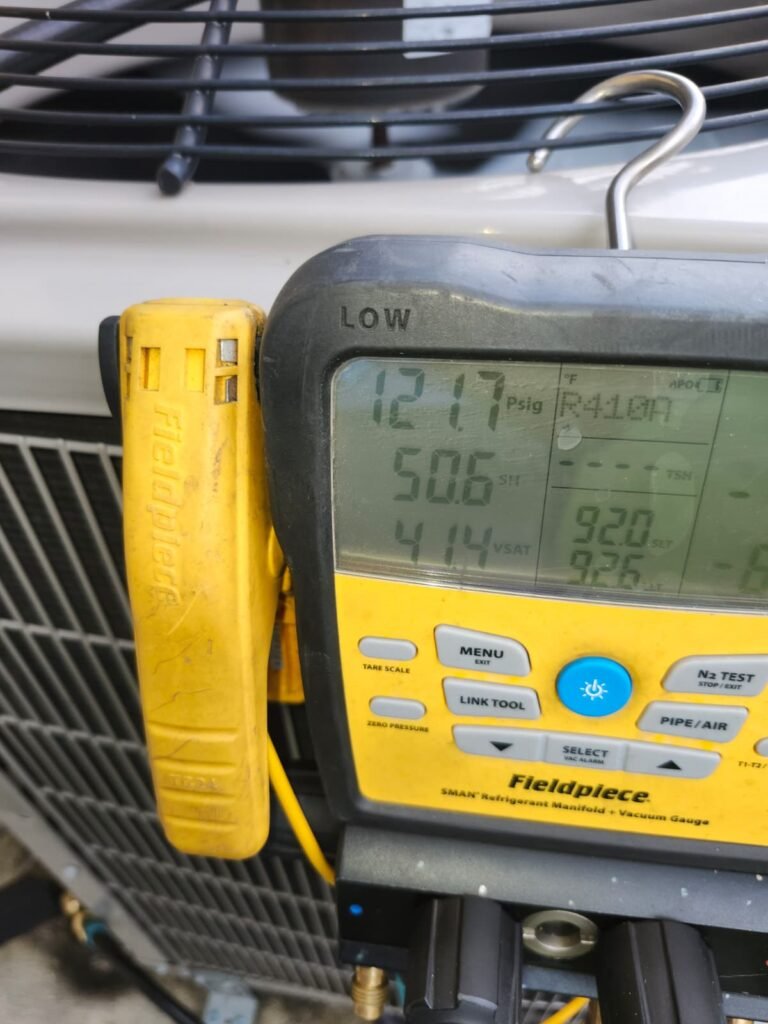
Our process usually includes checking thermostat operation, filter condition, temperature split, airflow, electrical components, drain condition, coil condition, refrigerant behavior, and how the outdoor and indoor sections are operating together. If the system is short cycling, we want to know whether that is being caused by controls, airflow, charge issues, or equipment sizing. If the air is warm, we want to know whether the issue is refrigerant related, electrical, mechanical, or airflow related.
This is also where experience matters. Two systems can show the same symptom and need completely different repairs. A warm house could be a simple capacitor issue, a clogged filter, a blower problem, a leak, or a compressor near the end of its life. Guessing is how homeowners spend money twice.
We are also honest about when a repair makes sense and when it does not. Sometimes the fix is small. Sometimes the system has multiple failing components, poor efficiency, and age working against it. In that case, we will explain the tradeoff clearly. We service every brand, and if replacement is the better path, we install Goodman and Daikin systems based on the home’s needs and budget.
The main thing we want homeowners to know is this, early symptoms matter. Air conditioners rarely get cheaper to fix by waiting through another heat wave.
Pro Tips
- Check your filter monthly during cooling season. A dirty filter can cause weak airflow, higher bills, and even icing. In Florida’s long AC season, filters load up faster than many people expect.
- Pay attention to cycle length, not just whether the system turns on. If the AC starts and stops every few minutes on a hot day, that pattern is more useful than a single strange noise.
- Compare comfort and utility use together. If the house feels worse and the bill is higher, that combination usually points to an efficiency problem, not just hotter weather.
- Do not keep lowering the thermostat to force cooling. If the air is warm or weak, setting the thermostat much lower usually adds strain without fixing the cause.
- Look for changes room to room. Uneven temperatures, weak vents, and long run times often show up before a full breakdown.
What Tampa Bay customers say
“My outside unit stopped working over the weekend. I called Home Therapist on a Sunday and was able to book an appointment for the next day;not needing to leave a message and wait for a call back was very refreshing. Roberto came on time. He was very thorough and quick. He did the repair , educated me on some recommendations but never pressured me to do more . Companys number stored . Any future AC issues , I’ll be calling them again.”
“They were quick and available, when my AC was completely out they were able to come out within 24 hours and quickly found the issue and resolved it same day. Their preventative maintenance program is cost effective and the cost evened out with the repairs I needed. I was recommended to them by a neighbor and I would recommend them to my neighbors”
“They have been amazing from the quote to the installation. They were able to accommodate us last minute. Made all the updates needed and in less than 5hrs we had a new HVAC unit installed. We'll be using them for all of our upgrades”
4.8 from 1,399 reviews · Read more reviews
FAQ
- Is 77 a good temperature for AC in summer?
Yes, 77°F is a solid summer setpoint for Tampa Bay homes. It balances comfort with efficiency during our intense heat and humidity, and it reduces strain on your system. Pairing it with ceiling fans lets the air feel cooler without dropping the thermostat further.
- Is it okay to run AC when it's 60 degrees outside?
Yes, but use caution. Running your AC when outdoor temps drop below 60°F can cause the refrigerant coil to freeze, leading to ice buildup and potential compressor damage. In Tampa Bay, those cooler nights are rare, but switching to fan-only mode on mild evenings protects your system.
Can an AC still cool a little and still be in trouble?
Yes. Many systems keep cooling partially while a real problem is developing. That is why homeowners often wait too long. If the house is cooling more slowly, some rooms stay warm, or the unit runs much longer than normal, the system may still be operating, just inefficiently and under strain.
Does short cycling always mean I need a new air conditioner?
No. Short cycling is a symptom, not a final diagnosis. It can come from something relatively simple, such as a thermostat issue or restricted airflow. It can also point to more serious problems involving refrigerant or the compressor. The important part is finding the cause before repeated starts damage other components.
Why is my AC blowing air but not cooling the house?
If air is coming out of the vents but it is not cold enough, the issue may be low refrigerant, a compressor problem, a frozen coil, dirty components, or an airflow problem indoors. The blower can still move air even when the cooling side of the system is not doing its job correctly.
Should I turn my AC off if it is blowing warm air?
Usually, if the system is clearly not cooling and seems to be running nonstop, it is smart to stop forcing it and have it checked. Continuing to run a struggling system can increase wear. If you suspect icing or very poor airflow, shutting it off can also help prevent further stress while the problem is diagnosed.
Can a high electric bill be caused by something other than the AC?
Yes. Water heating, pool equipment, added occupancy, and other electrical loads can raise a bill. But in Tampa Bay, air conditioning is often the biggest driver of summer energy use. If the higher bill shows up alongside poor comfort, longer run times, or warm vent air, the AC is a likely cause.
Schedule a free AC diagnosis with Home Therapist
If you are seeing signs your AC is in trouble, we can help you sort out whether it is a small repair, a larger issue, or a system that is nearing the end of the road. Home Therapist Cooling, Heating, and Plumbing is licensed in Florida, HVAC CAC1819196 and Plumbing CFC1431159, and we have earned more than 1,300 five-star reviews since opening in 2017.
We offer free estimates and a free diagnosis on every service call. If your air conditioner is short cycling, blowing warm air, or driving your power bill up, call us at (813) 343-2212 to schedule service anywhere in Tampa Bay and surrounding Florida communities.