

What That Gas Smell Really Meant on 30th Avenue North in Saint Petersburg
What does a gas leak smell like? In Saint Petersburg, a gas leak smell usually means mercaptan, the sulfur-like odor added to fuel gas, is escaping from a fitting, valve, or appliance connection that needs testing and repair. In this 33710 job, gas leak detection led to replacement of the stove gas valve and supply hose.
On this 30th Avenue North call in Saint Petersburg, FL 33710, Micheal and our crew were sent out for gas leak detection after concern about a gas odor in the home. The plan was straightforward and careful. We pressurized the gas system from an access valve near the meter, checked the fittings near the stove first, and confirmed the repair path before replacing the gas valve and supply line behind the appliance. That matters on gas work because smell alone can point you toward a problem, but only testing tells you whether the leak is actually at the appliance connection, somewhere else on the branch line, or in another fitting entirely.
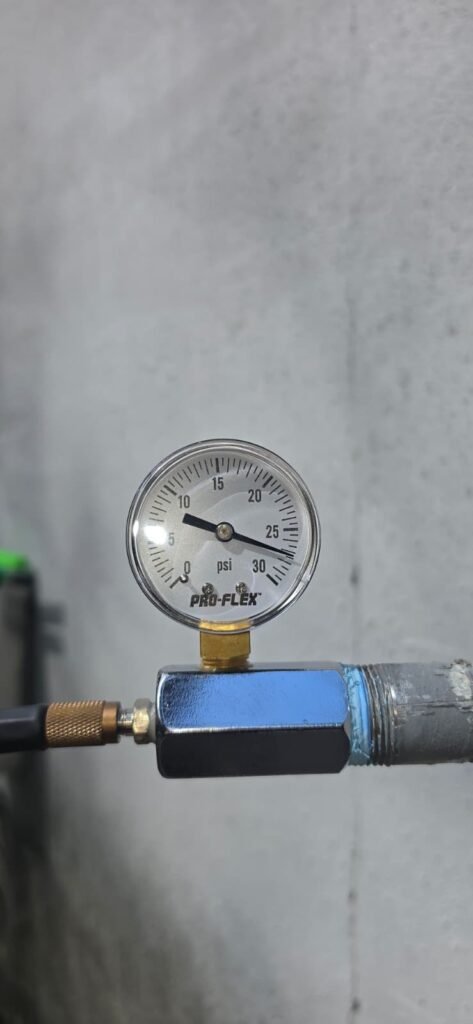
- Service performed: Gas leak detection and stove gas valve with hose replacement
- Neighborhood or street: 30th Avenue North
- Technician: Micheal
- Symptom: Gas odor concern in the home
- What was done: Pressurized the gas system, evaluated fittings near the stove, replaced the valve and supply line
- Parts replaced: Gas valve and stove supply hose
What does a gas leak smell like on a Saint Petersburg service call?
A gas leak usually smells like sulfur or rotten eggs because utility gas is treated with an odorant so people notice it quickly. That smell was the starting point for this Saint Petersburg plumbing call, but it was not the diagnosis by itself. A homeowner can smell gas near a stove and reasonably assume the appliance is the source, yet a proper gas leak detection visit still has to verify the source under test conditions. That is why Micheal began by pressurizing the system from the access point near the meter instead of guessing from odor alone.
That sequence matters. A gas smell can be strongest where air movement carries it, not necessarily where the leak begins. By isolating the system and evaluating the fittings near the stove first, we could tie the symptom to a specific repair decision. For readers looking for plumbing help in Saint Petersburg, this is a good example of why leak confirmation comes before part replacement on any gas line call.
The stove valve and hose were the repair path only after the gas test supported it
The key decision on this job was not simply replacing parts. The key decision was making sure the gas valve and supply line behind the stove were the most likely source before moving forward. The job scope specifically called for evaluating the gas fittings near the stove and elsewhere if necessary, then replacing the valve and hose behind the appliance. That is the right order for detecting a gas leak because a valve, flex connector, and threaded fittings all sit in a small area where even a minor leak can create a noticeable odor.
There is a useful insider point here. Many people think the smell itself tells you exactly what failed. It does not. The smarter approach is to test first, repair second, then have the gas utility re-evaluate the system afterward so the full line can be cleared. That final recheck was part of the expectation on this job, and it is one reason gas work should stay methodical instead of rushed.
Why this Saint Petersburg gas leak detection visit was billed as a combined job
This visit covered two separate items: the gas leak detection work itself and the replacement of the stove gas valve and supply hose after the system was evaluated. Because of that, the $919 invoice was the combined total for diagnosis and repair together, not a standalone price for just one fitting or one single test step. Homeowners comparing service calls should keep that distinction in mind, especially when reviewing what this work typically costs and trying to understand why one gas line invoice may include both testing and corrective work.
The other important cost detail is honesty about scope. The original job language made clear that replacing the valve and hose could not be certified as the final answer until the gas company re-evaluated the system. If the utility found another leak afterward, more work could still be required. That kind of transparency is exactly how these calls should be handled.
The gas company recheck is part of doing this kind of repair responsibly
The repair itself addressed the most likely source identified around the stove, but gas systems deserve a second layer of verification. After a valve and hose replacement, the utility company or gas provider may still need to confirm that the leak condition is fully resolved across the system. That is not a sign the first repair was uncertain. It is a sign the process is being handled correctly.
On a call like this in the 33710 area, the responsible sequence is simple: detect the leak, repair the confirmed issue, then re-evaluate the system. If another weak point shows up later, it can be addressed based on evidence instead of assumptions. Home Therapist takes that approach on every gas line call because safe plumbing work means documenting what was found, what was repaired, and what still needs verification under utility standards such as those referenced through the Florida Building Code.
Pro tips for homeowners who notice a gas smell near the stove
A gas odor around a kitchen appliance deserves attention, but it also deserves a calm response. A few practical habits help homeowners in Saint Petersburg and across Tampa Bay handle the situation more safely.
- Do not assume the stove itself is always the source. The odor may collect near the appliance even when the leak starts at a nearby fitting or valve.
- Do not treat odor as proof of the exact failed part. Detecting a gas leak correctly requires testing, not just sniffing around the room.
- Keep the area around the shutoff and connector accessible. Tight appliance clearances can slow down evaluation and repair behind the stove.
- After a repair, follow through on any recommended utility recheck. Confirmation matters just as much as the part replacement.
- If you want to confirm that a contractor is properly licensed for this type of work, Florida homeowners can use Florida DBPR to verify credentials.
Gas leak detection questions that come up after a stove valve repair
How can you tell if there is a gas leak smell?
A gas leak smell usually has a sulfur or rotten egg odor that stands out from normal cooking smells. In this Saint Petersburg job, the odor concern was the reason for the call, but the actual confirmation came from pressurizing the gas system and evaluating fittings near the stove. Smell is the warning sign that gets attention. Testing is what identifies where the leak is coming from.
What can be mistaken for a gas smell?
Several household odors can be mistaken for gas, especially around kitchens. Burned food residue, drain odors, and stale appliance smells can confuse the situation, but none of those should be used to rule gas in or out. On this job, the right move was to test the system rather than debate the smell. If the concern is strong enough to notice repeatedly, it is strong enough to evaluate properly.
Can a very small gas leak still require repair?
Yes, even a small gas leak can still require repair because the issue is not just odor strength, it is the integrity of the piping and appliance connection. This visit is a good example. The work focused on the stove gas valve and supply hose because those parts can create a localized leak condition that may seem minor at first but still needs correction and follow-up verification.
Can you stay in a house if you think there is a gas leak?
The safest answer is no if the odor is strong or persistent enough to raise concern. Homeowners should follow utility guidance and avoid treating a gas smell as something to watch for a few days. In this case, the concern led directly to a detection visit and a targeted repair path. Gas line issues are one of those situations where fast evaluation matters more than trying to self-diagnose by smell alone.
What are the first signs of a gas leak?
The first sign is often the smell itself, especially near an appliance connection or shutoff area. For this 30th Avenue North home, the concern centered on a possible leak near the stove, which is a common place to begin checking because the valve, connector, and fittings are all concentrated there. The important next step after noticing that sign is professional gas leak detection, not guesswork.
Schedule gas leak detection in Saint Petersburg, FL 33710
Home Therapist handles gas line and plumbing calls across Saint Petersburg and the greater Tampa Bay area with a careful, documented approach. We have served local homeowners since 2017, we hold Florida plumbing license CFC1431159 and HVAC license CAC1819196, and we have earned 1,300+ five-star reviews by staying clear about scope and honest about what a job does and does not solve. That matters on a call like this one, where the right repair was replacing the stove gas valve and hose, but the system still needed re-evaluation afterward to confirm the leak was fully resolved.
If you are in Saint Petersburg, FL 33710 and want a team that will test first, explain the findings plainly, and help you understand the next step, Home Therapist is ready to help. You can also read our customer reviews or check our service area before scheduling. Call (813) 343-2212 for FREE estimates and FREE diagnosis.


