
AC Fan Running But Not Cooling? A Real Riverview Capacitor Fix
Quick answer: If your AC fan is spinning but the house will not cool, the compressor is almost certainly not running, and the most common reason is a failed run capacitor. The capacitor is the part that gives the compressor the surge it needs to start, so when it dies the fan keeps turning while the compressor stays off and the air coming out of your vents is not cold. On the Riverview call in the video below, our tech confirmed a failed capacitor with a meter and had the family cooling again about three hours after the phone rang. Do not open the outdoor electrical cabinet yourself, a capacitor can hold a dangerous charge even with the power off.
On this page: what it means · the real Riverview call · all 8 likely causes · should I turn it off? · what to check safely · cost · FAQ
Why is my AC fan running but no cold air is coming out?
Because the fan and the compressor are two separate parts, and only one of them is working. The fan on top of your outdoor unit moves air across the coil. The compressor, inside that same cabinet, is what actually pumps refrigerant and creates cooling. When the compressor will not start, the fan can keep spinning normally, so from the outside the unit looks and sounds like it is running while the air indoors slowly gets warmer.
A quick way to tell how badly the system is struggling: a healthy central AC drops the supply air roughly 15 to 22 degrees below the return air temperature. If you hold a thermometer at a supply vent and a return vent and the difference is under about 10 degrees, the compressor is not doing meaningful work. That is a homeowner-safe check that tells a tech a lot before they arrive.
What we found on this Riverview call
This family called because their AC had stopped cooling overnight. Here is the job at a glance, then the detail.
| Location | Riverview, Florida (ZIP 33569, 33578, 33579 area) |
| Symptom reported | AC stopped cooling overnight |
| What the tech observed | Fan motor spinning, compressor not starting |
| Diagnosis method | Gauges hooked up on arrival, then capacitor measured with a meter |
| Cause confirmed | Failed run capacitor |
| Part source | Matching size carried on the van, replaced on site |
| Additional finding | Condenser fan motor drawing more current than it should, replacement recommended |
| Time from call to cooling | About 3 hours |
As soon as our tech arrived he hooked up his gauges. The fan motor was spinning but the compressor was not starting, which points straight at the capacitor. He measured it and confirmed the capacitor had failed, then pulled a matching replacement off the van and got the system running again on the spot.
He also caught something the family had not called about: the condenser fan motor was drawing more current than it should, which is an early sign that a motor is on its way out. He recommended replacing it before it fails on a hot day. The family chose to handle just the capacitor for now, which is completely their call. We tell people what we found and let them decide.
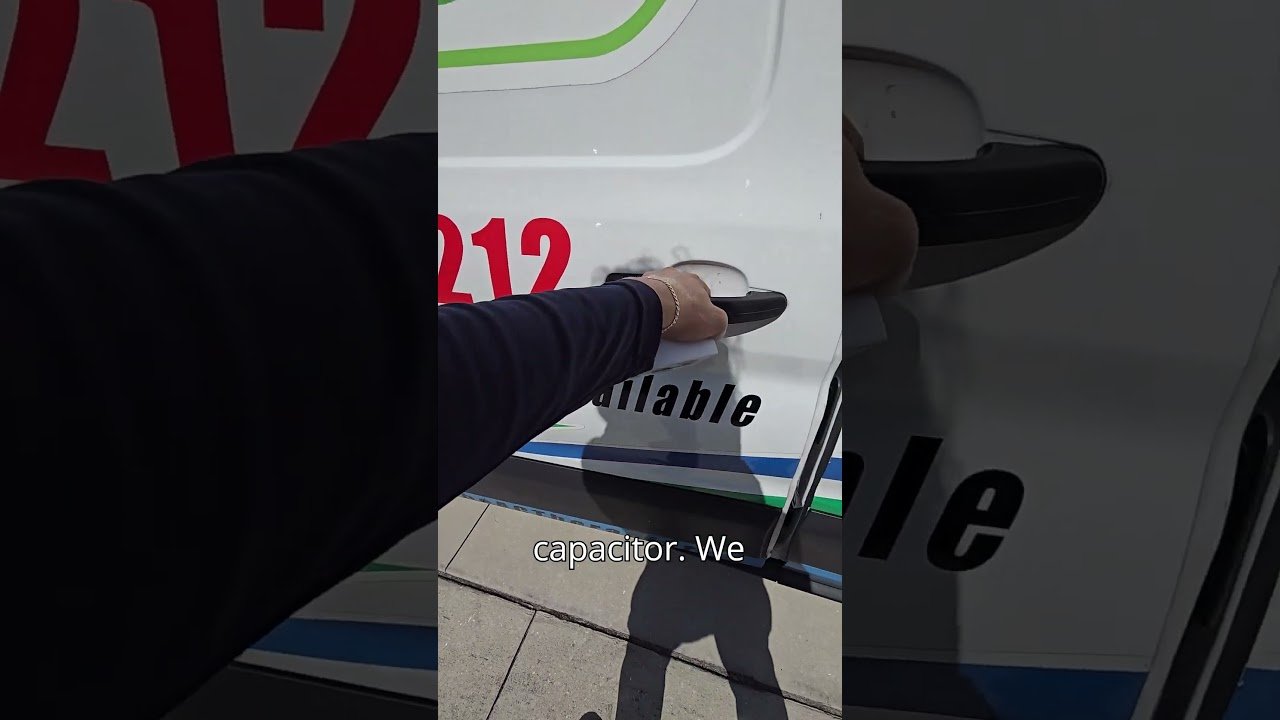
What the video shows
- 0:00 Arrival on the Riverview call, AC stopped cooling the night before.
- 0:08 Gauges hooked up, fan motor confirmed spinning while the compressor stays off.
- 0:20 The capacitor is measured and confirmed failed.
- 0:28 A matching replacement capacitor comes off the van stock.
- 0:36 Condenser fan motor found drawing high current, replacement recommended.
- 0:42 System running again, about three hours after the call came in.
What else causes an AC to run but not cool?
A capacitor is the most common cause, but it is not the only one. These are the failures we actually find in Tampa Bay homes, roughly in order of how often we see them.
| Likely cause | Telltale sign | Safe to DIY? |
|---|---|---|
| Failed run capacitor | Fan spins, compressor silent or humming | No, shock risk |
| Dirty air filter | Weak airflow, possible ice on the coil | Yes |
| Frozen evaporator coil | Visible ice, water around the air handler | Partly, turn it off and thaw |
| Low refrigerant from a leak | Gradual loss of cooling, hissing, icing | No, licensed only |
| Dirty outdoor condenser coil | Unit runs constantly, poor cooling | Rinse only, power off |
| Bad contactor | Compressor never engages, chattering | No |
| Failing compressor | Breaker trips, loud noise, no cooling | No |
| Thermostat or wiring fault | System behaves oddly or not at all | Check settings only |
Is it the capacitor, the contactor, or the compressor?
These three get confused constantly because they produce a similar complaint. The practical difference:
- Capacitor. Fan runs, compressor will not start, often a low hum. Cheapest and fastest of the three to fix. Most residential systems use a dual run capacitor, commonly rated around 35/5, 40/5, 45/5 or 60/5 microfarads at 370 or 440 volts. Capacitors are built to a tolerance of about plus or minus 6 percent, so a tech reading meaningfully below the rating stamped on the can knows it has failed. That is a measurable pass or fail, not an opinion.
- Contactor. The relay that sends power to the compressor. When it is pitted or stuck the compressor never gets the signal at all. Often chatters.
- Compressor. The expensive one. Usually announces itself by tripping the breaker or making a hard mechanical noise. A good tech rules out the cheap parts first, which is exactly what happened on this Riverview call.
This is why a real diagnosis matters. Replacing a capacitor when the compressor is the problem wastes your money, and replacing a compressor when a capacitor would have fixed it wastes a great deal more.
Should I turn my AC off if it is not cooling?
Yes. Turn it off at the thermostat. When a capacitor is failing, the compressor strains to start over and over, and that repeated strain can damage the compressor, which is one of the most expensive parts in the system. Letting a unit run for days while it cannot cool is how a low cost repair turns into a major one. If you see ice on the refrigerant lines or the indoor coil, shut it off and let it thaw fully before anyone works on it.
You can leave the fan set to ON to keep air circulating in the house while you wait for a tech, which helps a little with comfort and does not stress the compressor.
Why is my new AC not cooling but the fan is running?
On a system that is only a year or two old, a worn out capacitor is much less likely, so the causes shift. On new installs we most often find a thermostat wired incorrectly, a refrigerant charge that was not set properly at installation, a unit that was sized wrong for the house, or a metering device problem. Those are installation issues, not wear issues, and if the system is still under manufacturer warranty the parts should be covered. Get it documented and diagnosed rather than living with it, because an undersized or undercharged system will run constantly and cost you every month.
What is the three minute rule for air conditioners?
It is the short waiting period built into most systems, usually around three to five minutes, before the compressor is allowed to restart after it shuts off. The delay exists to protect the compressor: restarting it immediately against high internal pressure, before the oil has settled, is hard on the machine. So if you flip your thermostat off and straight back on and nothing happens outside, that is often normal and not a fault. Wait five full minutes before deciding something is broken.
What can I check myself before calling an AC tech?
A few safe checks can save you a service call, or at least give the tech a head start:
- Thermostat. Set to cool, set several degrees below room temperature, and fresh batteries if it takes them.
- Breaker. Check that the AC breaker has not tripped. If it trips again right after you reset it, stop and call a pro, that is a real electrical fault.
- Air filter. If it is grey and matted, change it. In Florida that should be monthly.
- Return and supply vents. Make sure furniture or rugs are not blocking them.
- Outdoor unit. Clear leaves and clippings away from the cabinet and check the fan is spinning freely.
- Temperature split. Compare supply and return vent temperatures as described above.
What not to do: do not open the electrical cabinet on the outdoor unit. A capacitor stores an electrical charge and can injure you even after the breaker is off, and it has to be discharged properly before it is touched. Fitting the wrong capacitance can also damage the compressor. This is a genuinely fast, low cost job for a licensed tech with a meter and the right part on the truck, and it is not worth the risk to save a short wait.
Why do AC capacitors fail so fast in Florida?
Capacitors take a beating in this climate, and there are four reasons we see them fail earlier here than in cooler states:
- Heat. The capacitor sits in a metal cabinet in full Florida sun. Sustained high temperature is the single biggest factor in shortening its life.
- Run hours. Tampa Bay systems run hard for eight or nine months a year, so the part cycles far more than one up north.
- Age. Most last three to seven years. If yours is in that window, a failure is not a surprise, it is a schedule.
- Power fluctuations. Summer storms and brief outages stress the capacitor every time the system restarts, which is part of why a surge protector on the unit is worth considering.
What does an AC capacitor replacement cost?
An AC capacitor replacement is quoted upfront before any work starts at Home Therapist. That one number covers the diagnosis, the capacitor itself, and the labor. There is no trip fee and no separate diagnostic surcharge, and every capacitor we install is backed by a 5 year warranty. Full details are on our AC capacitor replacement pricing page.
For context on why that is good value: a capacitor sits far below a condenser fan motor replacement and is a small fraction of a compressor replacement, which is why an honest tech checks it first. We stock OEM grade capacitors with the correct microfarad rating and voltage tolerance rather than the cheap import parts that tend to fail again within 12 to 18 months in Tampa heat.
What moves the number on your particular job:
- The capacitance and voltage rating your system needs, and whether it is a single or dual run capacitor
- Whether anything else failed alongside it, a contactor or condenser fan motor being the usual companions
- Whether the visit is after hours or on a weekend
- Whether the part is still covered under a manufacturer or labor warranty
Two things that should always be true: you get a FREE diagnosis on the service call and the exact price in writing before any work starts. If someone quotes you many hundreds of dollars for a capacitor alone, get a second opinion.
How do I prevent the next no cooling breakdown?
You cannot stop a capacitor from ever wearing out, but you can stop it from failing on the hottest day of the year without warning. On a maintenance visit we measure the capacitor against its rating and check motor current draw, so a part that is drifting out of spec gets replaced on a scheduled appointment instead of during an emergency. That is exactly the situation this Riverview family ended up in with their condenser fan motor: we caught it early, so it becomes a planned repair rather than a breakdown.
The rest is simple homeowner habit. Change the filter monthly, keep the outdoor coil clear and rinsed, and do not ignore a system that is running longer than it used to. The U.S. Department of Energy and ENERGY STAR both publish maintenance guidance that lines up with what we do on a tune up.
Frequently asked questions
- Why is my AC not getting cold but the fan is running?
When the fan runs but no cold air comes out, the most common culprits are a failed capacitor, a tripped breaker on the outdoor unit, low refrigerant from a leak, or a frozen evaporator coil. In Riverview's high-humidity summers, a dirty air filter that restricts airflow is also a frequent trigger. Home Therapist offers free diagnosis on every visit and has completed 47 jobs in Riverview.
- Why is my AC blowing cold air but not cooling the room?
If air at the vent feels slightly cool but the room stays warm, the system is likely undersized for the load, has a refrigerant shortage reducing capacity, or has duct leaks losing conditioned air into unconditioned space. Riverview's intense heat and humidity make even a small refrigerant deficit noticeable fast. A licensed technician can measure superheat and subcooling to confirm the cause.
- How do I reset my outside AC fan?
Turn the thermostat to OFF, then go to your electrical panel and flip the outdoor unit breaker off for 30 seconds before resetting it. Wait five minutes before switching the thermostat back to COOL so the compressor pressure equalizes. If the outdoor fan still does not spin after the reset, the capacitor or contactor is likely failed and needs a licensed HVAC technician. Home Therapist holds HVAC license CAC1819196 and provides free estimates.
- Why is my AC off but the fan still blowing?
The most common reason is the thermostat fan setting is switched to ON instead of AUTO, so the blower runs continuously even when the compressor is off. A faulty thermostat relay or a wiring issue can also keep the fan energized. Switching the fan setting to AUTO is the first safe step; if the fan keeps running, call a licensed technician to inspect the control board.
Should I turn off my AC if it is not cooling?
Yes. Turn it off at the thermostat so the compressor stops straining to start, because that repeated strain can damage a far more expensive part. You can leave the fan on to keep air moving in the house.
Can I replace an AC capacitor myself?
We do not recommend it. A capacitor holds an electrical charge that can shock you even with the power off, and installing the wrong capacitance can damage the compressor. It is a quick job for a licensed tech carrying the right part.
How long does an AC capacitor last?
Usually three to seven years. Florida heat and eight to nine months of run time a year push them toward the shorter end of that range.
How long does it take to replace an AC capacitor?
The replacement itself is quick once the part is on hand. On this Riverview call the family went from phone call to cold air in about three hours, including drive time and a full diagnosis.
Do you offer same day AC repair in Riverview?
Yes. We run same day emergency AC service across Riverview and the wider Tampa Bay area, and we carry common failure parts on every van so most repairs finish in one visit.
Want the raw footage and full transcript? Watch the original video and read the transcript.
Key takeaways
- A fan that spins with no cold air almost always means the compressor is not starting, and a failed run capacitor is the most common reason.
- Turn the system off at the thermostat so the compressor stops straining, that is what protects you from a much bigger bill.
- Never open the outdoor electrical cabinet yourself, a capacitor can hold a dangerous charge with the power off.
- A capacitor is measurable against its rating, so a real diagnosis separates it from a contactor or compressor problem quickly.
- Maintenance catches drifting capacitors and high current motors before they leave you without AC in August.
Dealing with an AC that runs but will not cool? See AC repair in Riverview, our capacitor replacement pricing, or all of our air conditioning services across Tampa Bay.
Home Therapist Cooling, Heating, and Plumbing is the local Tampa Bay team for Ac Repair In Riverview">AC repair in Riverview and across the bay. We answer the phone fast, give FREE estimates and a FREE diagnosis on service calls, carry common parts on every van, and stand behind the work with real warranties. We service every brand and install Goodman and Daikin systems. Licensed HVAC CAC1819196 and plumbing CFC1431159.


