

A Full Secondary Pan Shut This Tampa AC Down Before Drywall Damage

A float switch drain pan problem usually means condensate is not leaving the system through its normal path, so water backs up into the secondary pan and the safety switch shuts cooling off. In Tampa, FL 33618, that is exactly what stopped this left-side air conditioning system from running as it should.
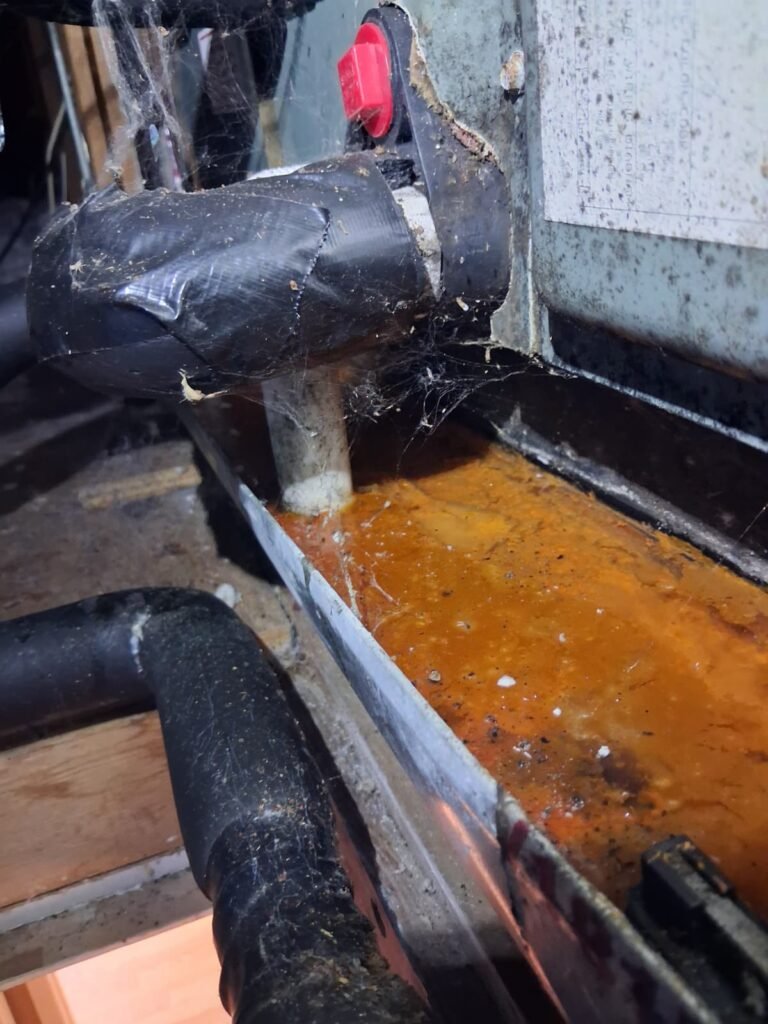
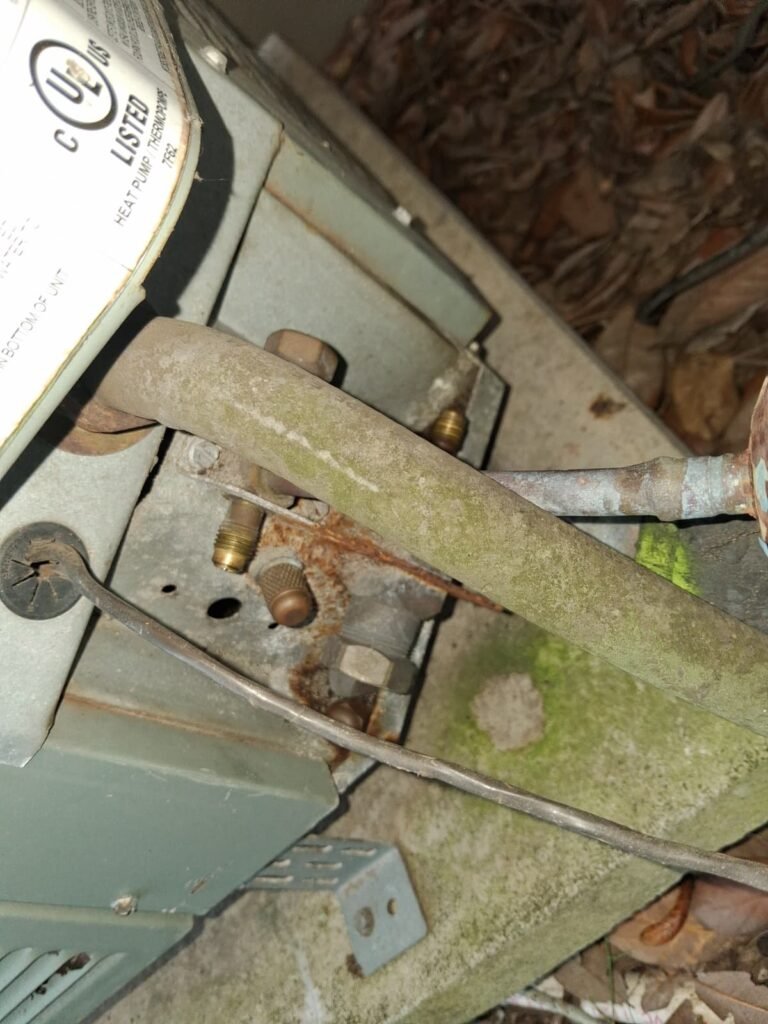
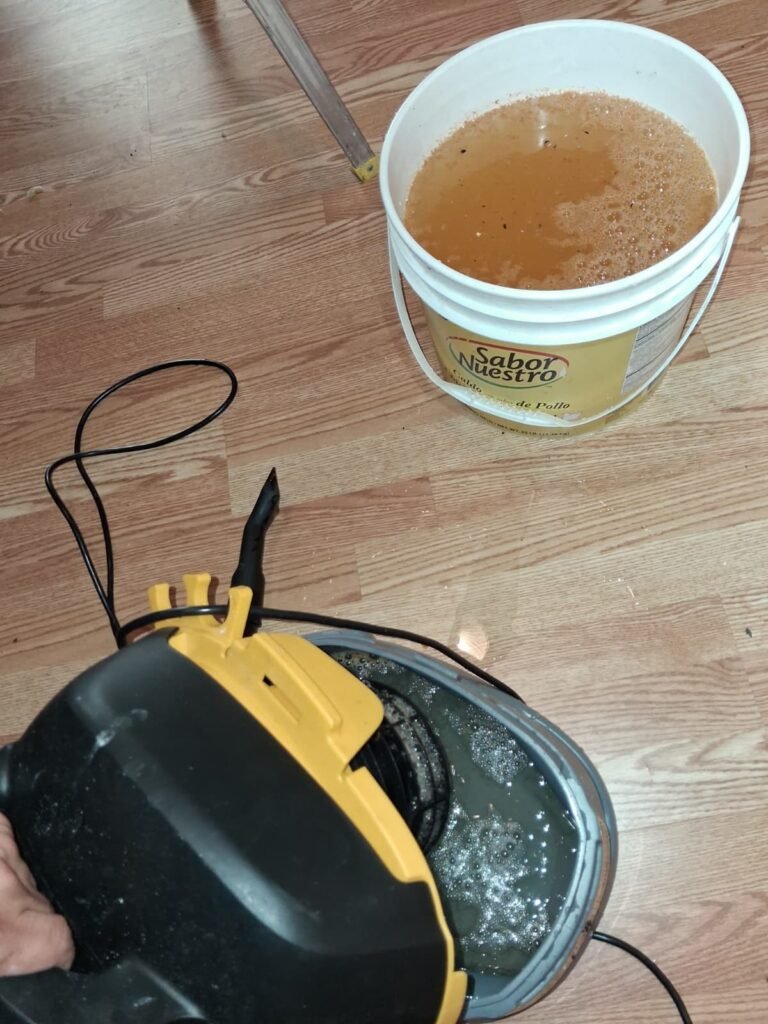
At this N Arrawana Ave home in Tampa, Roberto was called out because the left side of the house was cooling, but not nearly as well as the right. The home has two AC systems, and the homeowner had noticed a clear comfort difference between them. When Roberto inspected the left-side system, he found the secondary drain pan full of water and the safety switch already doing its job. That finding changed the conversation right away. This was not a thermostat complaint or a vague airflow issue. It was a drainage problem that had already reached the backup protection point.
- Service performed: AC diagnosis and draining the secondary pan
- Street: N Arrawana Ave
- Technician: Roberto
- Symptom: Left side cooled weaker than the right side
- Cause: Water backed up into the secondary drain pan
- What was done: Drained the secondary pan and verified the safety shutdown condition
The float switch drain pan was full because condensate was backing up on this Tampa system
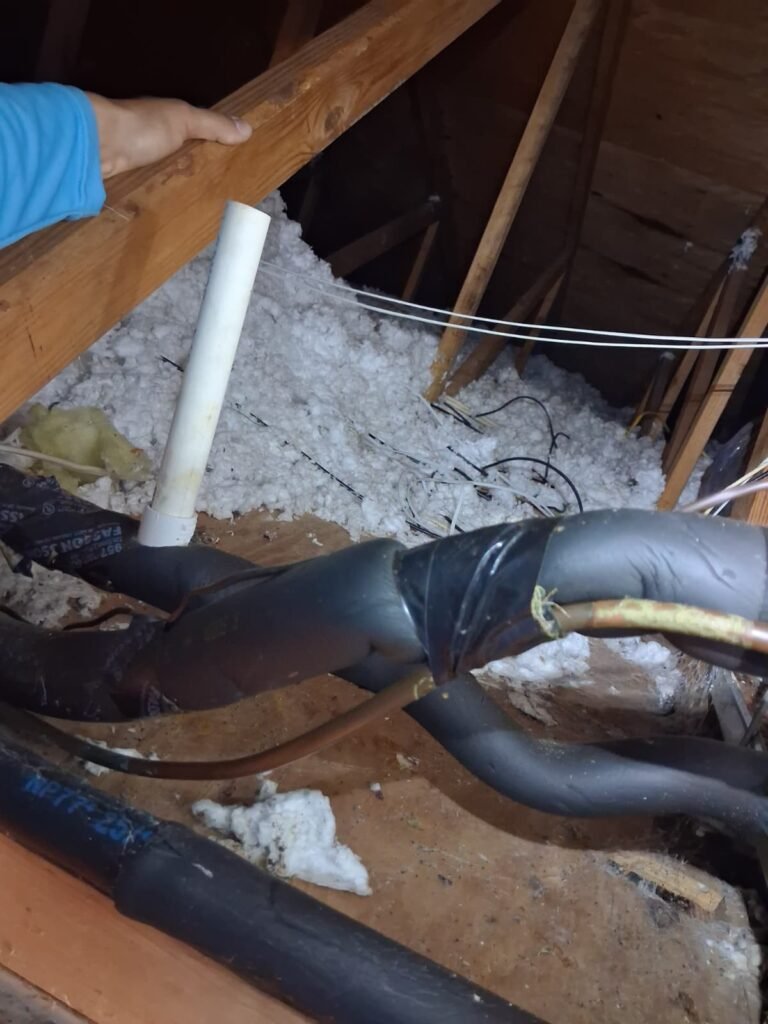
The most important fact on this call was simple: the secondary drain pan was holding water it should not have been holding. That pan sits under the indoor equipment as a backup, not as the normal place for condensate to collect. In everyday operation, the system removes humidity from the air and sends that water away through the primary drain. When that does not happen correctly, water spills into the emergency pan below.
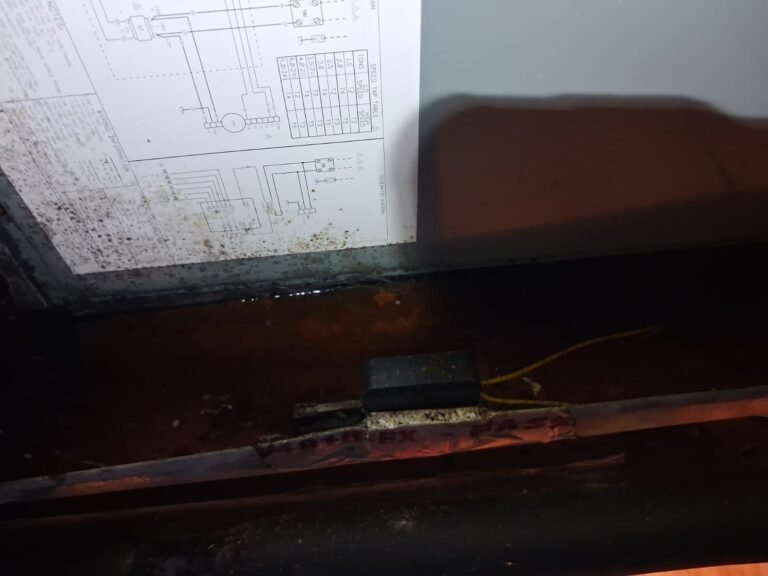
On this call in Tampa, FL 33618, the backup pan had filled enough to trigger the secondary float switch. A drain pan float switch is a small safety device that rises with the water level and opens the circuit so the AC cannot keep running into an overflow. That safety is there to protect ceilings, framing, insulation, and drywall. In this case, it had already shut the system down before the pan could spill over.
This is also why a weak-cooling complaint can be misleading. The homeowner did not report a dramatic no-cool breakdown. The left side still cooled some, just not like the right side. Once the safety switch starts interrupting operation, comfort can drop off in a way that feels inconsistent instead of catastrophic.
The missing primary float switch mattered just as much as the standing water
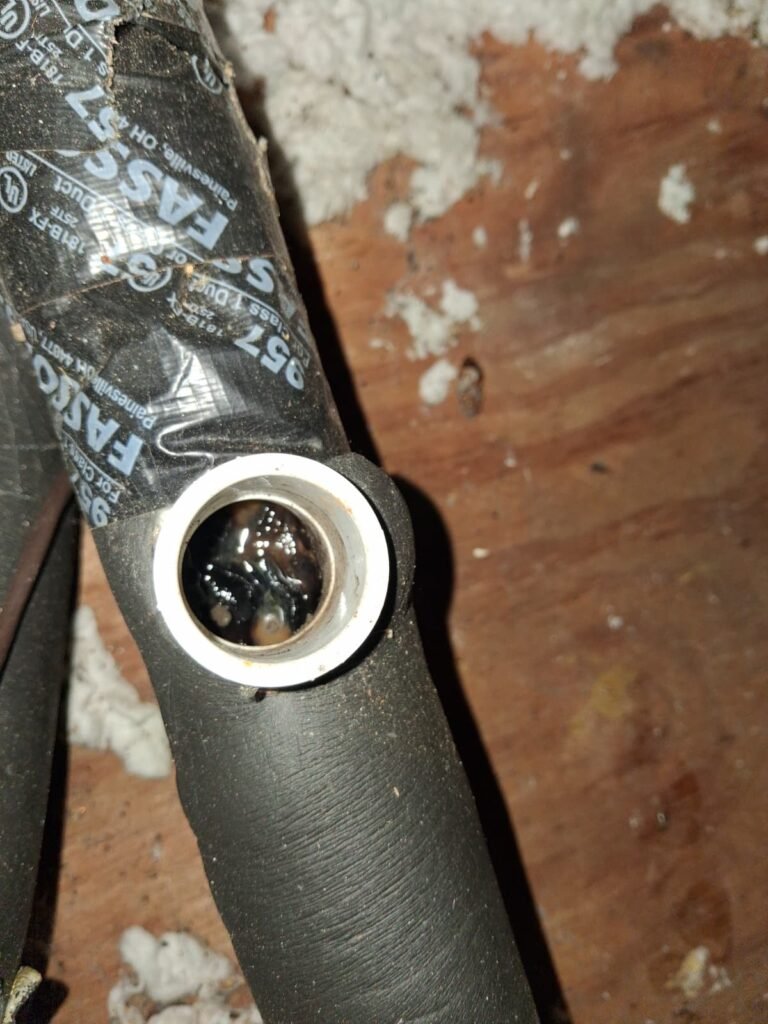
Roberto also found there was no primary float switch on the main drain. The system only had a secondary float switch in the backup pan. That detail matters because the earlier a drainage problem gets interrupted, the less water reaches places it should never be. A primary switch is installed at the main drainage point so the system can shut down before the emergency pan becomes the place catching the overflow.
That is the practical answer behind searches like how to install a float switch on a drain pan Tampa homeowners often make after a leak scare. The bigger issue is not just adding a device. It is making sure the safety strategy matches the drain layout. A secondary drain pan float switch protects the home when water has already escaped the primary path. A primary switch helps catch the problem earlier.
That is also the contrarian takeaway from this visit. Many people assume the float switch itself is the problem when the AC stops. On this job, the switch was not the failure. The switch was the protection that kept a drainage issue from turning into interior damage around the air handler area.
Draining the pan addressed the immediate problem, and this visit came to $199
The approved work on this visit was to drain the secondary pan so the left-side system could be addressed safely and the standing water removed from the emergency catch area. Because there were two line items on the ticket, this was a bundled visit rather than a single flat repair item. The combined invoice for the diagnosis and the labor to drain the secondary pan came to $199.
That price should not be read as a universal number for every condensate issue, because the real cost depends on what caused the backup and whether additional drain work, switch work, or water damage prevention steps are needed. What matters here is that the homeowner had a written quote before any repair began, and the work stayed focused on the actual condition found at the system.
For homeowners dealing with recurring drainage symptoms elsewhere in the house, our drain cleaning in Tampa page explains how we approach blocked drain paths and water flow problems. If you want to see broader feedback from local homeowners before booking, you can also read our customer reviews.
Why this kind of AC drain issue can sneak up on a two-system home in 33618
This Tampa home has two separate air conditioning systems, one serving each side of the house. That setup can make a developing problem easier to miss at first. When one side of the home still feels reasonably comfortable and the other side is only underperforming, many homeowners assume the weaker side just needs a setting adjustment or has older equipment. In reality, a condensate problem can be building quietly in the background.
The homeowner here had moved in during 2023 and did not know the age of the left-side system. No one else had looked at it yet. That situation is common in Tampa Bay homes where inherited equipment keeps running long enough to hide small warning signs. A full secondary pan is one of those warning signs. It tells you the system has already moved past normal drainage and into backup protection.
For general guidance on central AC operation and moisture removal, the U.S. Department of Energy has a useful overview. If you need to confirm contractor licensing before scheduling any HVAC or plumbing work, Florida license records are searchable through Florida DBPR.
In a humid ZIP code like 33618, AC systems spend long stretches pulling moisture out of the air. That means drainage components do real work for most of the year. When the condensate drain pan float switch trips, the system is telling you the moisture side of cooling needs attention, not just the temperature side.
Pro tips for Tampa homeowners dealing with drain pan float switch issues
Drainage problems around an air handler are easier to manage when you treat them as water-management issues, not just cooling issues. A few practical habits help:
- Pay attention to comfort differences between zones or sides of the house. In a two-system setup, weaker cooling on one side can be an early clue that one unit is shutting off on safety.
- If your system has only a secondary float switch, ask whether a primary switch would make sense for the drain layout. Earlier shutdown can mean less risk to surrounding materials.
- Do not bypass a float switch to keep the AC running. The switch is there to prevent overflow, and bypassing it can trade a comfort problem for a repair to drywall or ceilings.
- Check around the indoor unit for signs of standing water or staining, especially during Tampa’s long cooling season when condensate production stays high.
- If drainage concerns keep coming back, ask for the whole path to be evaluated instead of only resetting the switch. The switch reacts to the symptom. The drain path usually tells the real story.
Drain pan float switch questions that came up on this Tampa call
Where is the drain pan float switch?
The drain pan float switch is usually mounted where rising water can trigger it before overflow happens. On this Tampa job, the active safety device was the secondary float switch located in the backup pan under the indoor unit. That means it was protecting the home after water had already escaped the normal drain path. Some systems also have a primary switch at the main drain connection to stop operation earlier.
How do float switches work?
Float switches work by rising with the water level and interrupting system operation when that water gets too high. On this call, the secondary pan filled with condensate backup, the float rose, and the AC shut down as designed. That shutdown can feel like a cooling failure to the homeowner, but it is actually a protective response meant to prevent overflow and interior damage.
Is an AC float switch necessary?
An AC float switch is one of the most useful protections a system can have where condensate overflow could damage the home. This job is a good example of why. The left-side system had already backed water into the emergency pan, and the secondary switch stopped operation before that water could keep rising unchecked. It is a safety device, not a comfort accessory.
Why does my AC float switch keep filling with water?
A float switch does not create the water. It responds to water that is backing up from a drainage problem. On this Tampa visit, the issue was a full secondary pan, which meant condensate was not leaving through the primary drainage path the way it should. If a switch keeps tripping, the right next step is to find out why water is reaching that point, not just to reset the switch.
Do you need a catch drip pan under your AC unit?
A catch pan under an indoor AC unit is there as backup protection when the primary drain fails or overflows. This home had that protection, and it mattered because the pan was the only thing catching the backed-up water once normal drainage failed. The pan is not supposed to be the everyday drain route. When it has standing water, the system needs attention.
Schedule AC repair in Tampa, FL 33618
If one side of your home is not cooling like the other, or if a float switch drain pan issue has shut your system down, Home Therapist can help. We have served Tampa Bay since 2017, and our team handles diagnostics, repairs, and replacement planning with clear written quotes before any work begins. Home Therapist is licensed in Florida for HVAC and plumbing, CAC1819196 and CFC1431159, and we have earned 1,300+ five-star reviews from local homeowners who wanted straight answers and solid workmanship.
For readers in Tampa, FL 33618 and nearby neighborhoods, we offer FREE estimates and FREE diagnosis on service calls. That gives you a clear starting point before deciding on next steps. If your system is tripping a condensate drain float switch, showing signs of backup water, or simply cooling unevenly, call Home Therapist at (813) 343-2212. We service all brands, and we focus on the actual cause of the problem so you can make a calm, informed decision about your home.


