
Commercial AC Installation Tampa: Pastry Shop Job Walkthrough
Quick answer: Commercial AC installation in Tampa means replacing a business's condenser and air handler with equipment sized for the building's heat load, then tying it into the electrical, ductwork, and thermostat. On a recent Tampa pastry shop job, our crew pulled the old condenser and copper lines, poured a new level pad, added hurricane tie downs and UV resistant line insulation, then finished with a new air handler and thermostat that hit a 20 degree temperature split. Free estimates and free diagnosis on every commercial service call.
On this page: What Does Commercial AC Installation Involve · What We Found on This Tampa Pastry Shop Call · How Much Does It Cost to Install a Commercial AC Unit · Why Do Commercial Condenser Pads and Tie Downs Matter in Florida · How Long Does a Commercial AC Installation Take · What Are Signs a Commercial AC System Needs Replacement · What Brands Does Home Therapist Install for Commercial AC · How Do You Maintain a New Commercial AC System · FAQ
What Does Commercial AC Installation Involve?
Commercial AC installation involves replacing or adding a cooling system sized correctly for a business, not just swapping a box for a box. It is a bigger job than a residential change out because commercial spaces have different heat loads, different code requirements, and often older infrastructure that needs to be brought up to current standards.
On a typical commercial job in the Tampa Bay area, our crew is looking at more than just the condenser and air handler. We are checking the condenser pad, the electrical disconnect and wiring, the refrigerant line set, the ductwork or plenum connections, and the thermostat controls. In a lot of older commercial buildings, one or more of these pieces was undersized or installed for a smaller system years ago, and it has to be redone to match the new equipment.
Permitting is also part of the process. Florida requires permits for commercial AC replacement, and inspections check things like the condenser tie down, electrical disconnect, and refrigerant line protection. A licensed contractor pulls those permits and schedules the inspection so the business owner is not stuck with unpermitted equipment.
Commercial systems also tend to run longer duty cycles than residential ones. A pastry shop, restaurant, or retail space is often running ovens, refrigeration, and foot traffic all day, so the AC has to be sized to handle that heat load without short cycling or running constantly and never catching up. That is why a proper load calculation matters, and why grabbing whatever unit is on the truck is not the right approach for a business.
- Removal of old condenser, air handler, and associated wiring
- New or repaired condenser pad, level and rated for the equipment weight
- Correctly sized refrigerant line set with protective insulation
- Electrical disconnect and wiring matched to the new unit’s specs
- Ductwork or plenum sealing to stop conditioned air loss
- New thermostat programmed for the business’s hours
If you are planning a commercial AC installation in Tampa, get a free estimate first so you know exactly what your building needs before any equipment gets ordered.
| Job type | New commercial AC installation at a Tampa pastry shop |
| System components replaced | Condenser unit and air handler |
| Old parts removed | Old condenser, copper lines, and electrical wiring |
| Pad work | Ground leveled and new concrete pad poured |
| Covers replaced | New covers installed since old ones were too small for the new system |
| Storm protection | Hurricane tie downs installed on the condenser |
| Line protection | UV resistant insulation added, copper lines braced |
| Result | Air handler coil pulled for attic install, plenums sealed, new thermostat installed, system achieved a 20 degree temperature split |
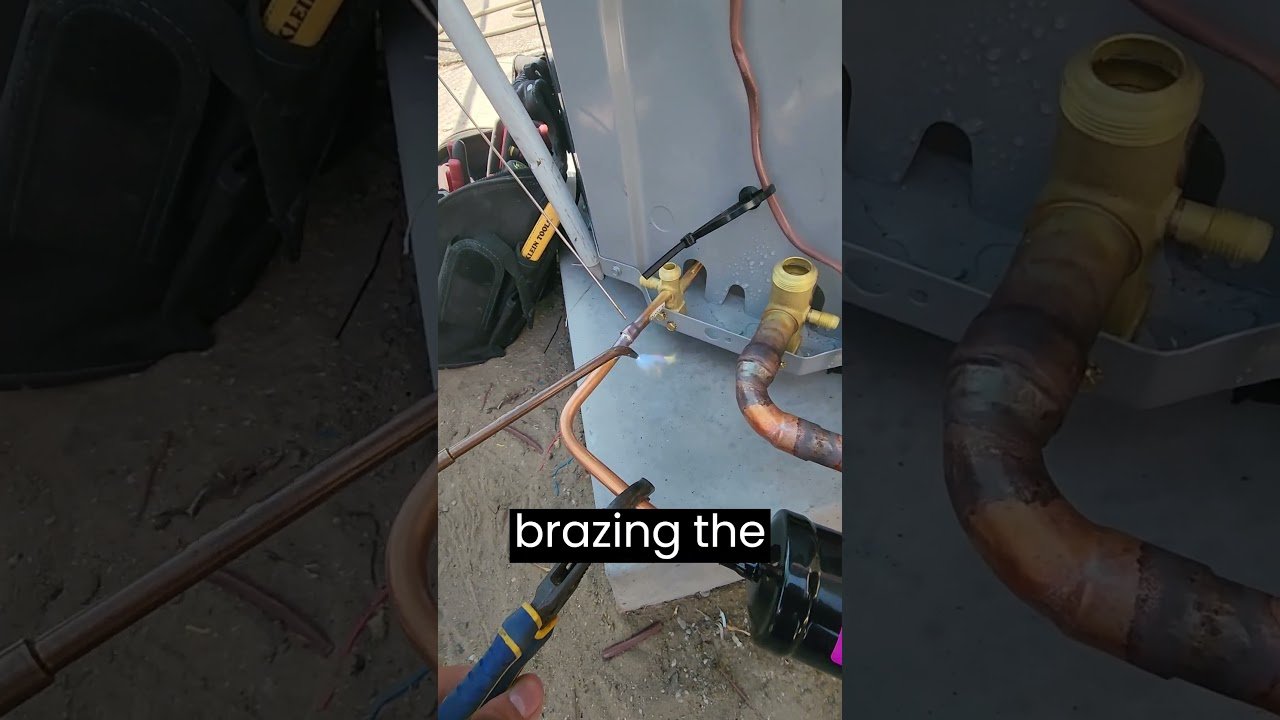
What the video shows
- 0:00 Removing the old condenser unit, copper lines, and electrical wiring
- 0:10 Leveling the ground and pouring a new concrete pad
- 0:20 Installing new condenser covers sized for the new system
- 0:28 Adding UV resistant line insulation and hurricane tie downs
- 0:35 Bracing copper lines and moving to the air handler
- 0:45 Pulling the coil to lift the air handler into the attic, sealing plenums, and setting the new thermostat
What We Found on This Tampa Pastry Shop Call
We found a commercial AC system at the end of its life in a Tampa pastry shop, and the old condenser cover was actually too small for the new system going in. That mismatch is common when a business has been through a few different units over the years without anyone re-checking whether the surrounding parts still fit.
The job started with removing the old condenser unit completely, including the copper refrigerant lines, the electrical connections, and the wiring. Once that was cleared out, our crew leveled the ground to pour a brand new concrete pad. A level pad matters more than people think. If a condenser sits on an uneven or cracked pad, it vibrates, stresses the refrigerant lines over time, and can eventually lead to leaks or compressor problems.
Since the old covers did not fit the new system, we installed new covers sized correctly for the equipment. We also added UV resistant insulation on the copper line set. Florida sun is brutal on exposed materials, and standard insulation breaks down faster here than it would in a milder climate, so UV resistant insulation is the right call on outdoor line sets. Hurricane tie downs went on the condenser too, which is standard practice for any outdoor commercial unit in this region given our storm season.
After the copper lines were braced, the crew moved into the building to handle the air handler. The coil was pulled out of the unit first, which made it much easier to lift the air handler up into the attic space without wrestling the extra weight and bulk of the coil attached. Once it was in position, the plenums were sealed, the wiring and electrical connections were completed, and a new thermostat was installed.
When everything was buttoned up, the system was tested and pulled a 20 degree temperature difference between the return air and supply air, which is right in the range you want to see from a properly installed and charged commercial system. That number tells us the equipment is sized right and installed clean, not just running.
| Likely cause | Telltale sign | Safe to DIY? |
|---|---|---|
| Undersized or mismatched condenser cover | New equipment does not fit existing covers | No |
| Aging commercial condenser near end of life | Frequent repair calls, weak cooling | No |
| Sun damaged copper line insulation | Cracked or brittle insulation, visible line corrosion | No |
| Missing or failed hurricane tie downs | Unit shifted or moved after storms | No |
| Cracked or unlevel condenser pad | Vibration noise, stressed refrigerant lines | No |
| Leaky or unsealed plenum in attic | Weak airflow, hot spots in the building | No |
| Outdated thermostat not matched to new system | Erratic cycling or inaccurate temperature readings | Partial, thermostat swap only |
How Much Does It Cost to Install a Commercial AC Unit?
Commercial AC installation cost depends heavily on the size of the space, the condition of the existing pad, electrical, and ductwork, and whether extra work like a new concrete pad or line set replacement is needed. There is no single flat number that applies to every business, which is exactly why we offer a free estimate before any work begins.
As general industry background, commercial systems are priced differently than residential ones because they often involve larger tonnage equipment, three phase power in some buildings, rooftop or ground mounted units, and more extensive ductwork or plenum work. A small retail space or shop might need something closer to a residential sized system, while a larger commercial kitchen, restaurant, or warehouse could need a much larger unit or even multiple units.
On the pastry shop job, the scope included a full condenser and air handler replacement, a new concrete pad, new covers sized for the equipment, hurricane tie downs, UV resistant line insulation, plenum sealing, and a new thermostat. Each of those line items adds labor and material, and every one of them was necessary because of what our crew found once the old system came out. That is typical for older commercial buildings where the last install did not anticipate future equipment changes.
A few things that tend to push commercial installation cost up:
- Needing a new or repaired condenser pad instead of reusing the old one
- Undersized electrical service that needs upgrading for the new unit
- Ductwork or plenum in poor condition that needs sealing or replacement
- Attic or rooftop access that makes moving equipment more labor intensive
- Permit and inspection requirements specific to commercial properties
The only way to get an accurate number for your building is a free diagnosis and free estimate walk through. We look at the whole system, not just the outdoor unit, before quoting anything.
Why Do Commercial Condenser Pads and Tie Downs Matter in Florida?
Condenser pads and hurricane tie downs matter in Florida because outdoor equipment here deals with heavy rain, shifting ground, and storm season wind loads that most other states do not have to plan for. Skipping either one is one of the fastest ways to shorten the life of a brand new commercial system.
A level, properly poured concrete pad keeps the condenser stable and stops it from settling unevenly into soft ground over time. When a pad is cracked, sunken, or was never leveled correctly, the condenser can shift, which puts stress on the copper refrigerant lines and the electrical connections running to it. That stress shows up later as refrigerant leaks, loose wiring, or vibration noise that gets worse month after month. On the pastry shop job, the ground had to be leveled before a new pad was poured for exactly this reason.
Hurricane tie downs anchor the condenser to the pad so it cannot be lifted or shifted by high winds. This is standard practice for outdoor commercial units across the Tampa Bay area, and it is required by code in most jurisdictions for good reason. A commercial condenser that gets knocked over or dragged during a storm is not just an inconvenience, it is a business shut down until a new unit can be sourced and installed, plus potential damage to the line set and surrounding structure.
UV resistant insulation on the copper lines is the other piece of storm and sun protection. Standard line insulation breaks down under constant UV exposure, cracks, and stops insulating properly, which reduces system efficiency and can lead to condensation issues on the lines. UV resistant insulation is built to hold up under Florida sun for years longer than standard material.
- Level pad prevents shifting, cracked lines, and long term vibration damage
- Hurricane tie downs keep the unit anchored during storm season
- UV resistant line insulation holds up under constant Florida sun
- Bracing the copper lines prevents sagging and rubbing over time
These are not optional upgrades for a commercial property here, they are baseline protection for equipment that has to run reliably in this climate.
How Long Does a Commercial AC Installation Take?
A commercial AC installation typically takes one to a few days depending on how much extra work is needed beyond swapping the equipment itself. A straightforward change out with no pad, electrical, or ductwork issues can move faster than a job like the pastry shop, which required a new pad, new covers, and full plenum sealing.
The timeline usually breaks down into a few phases. First is removal of the old condenser and air handler, including disconnecting electrical and cutting out the old copper line set. Second is any site prep, which on this job meant leveling the ground and pouring a new concrete pad, something that needs time to cure properly before the condenser goes on it. Third is setting the new equipment, running new line sets with proper insulation and bracing, connecting electrical, and installing tie downs. Fourth is the air handler side, which can involve attic or mechanical room access, sealing plenums, and wiring in a new thermostat.
Businesses often want to know how much downtime to expect, especially a food service operation like a bakery or pastry shop where temperature control affects both the product and the customers. Scheduling matters here. We try to work around business hours when possible, and a lot of the prep work, like site evaluation and equipment ordering, happens before the crew ever shows up to start pulling out the old unit.
- Simple equipment swap with existing pad and lines in good shape: faster turnaround
- Jobs needing a new pad, new covers, or electrical upgrades: added time for prep and cure
- Attic or rooftop air handler access: adds labor time for lifting and positioning equipment
- Permit inspection scheduling: can add a day or more depending on the local jurisdiction
Every commercial building is different, so the real answer comes from a free estimate visit where we can look at the existing setup and give a realistic timeline before work starts.
What Are Signs a Commercial AC System Needs Replacement?
The clearest signs a commercial AC needs replacement are frequent breakdowns, weak cooling despite repairs, rising utility bills, and equipment mismatches like the undersized condenser cover found on the pastry shop job. Any one of these on its own might just need a repair, but a combination usually means replacement makes more financial sense.
Commercial systems typically run more hours per day than residential systems because businesses are open longer and often have heat generating equipment like ovens, fryers, or refrigeration compressors adding to the load. That extra runtime shortens the practical lifespan of components compared to a similar system in a house. General industry guidance puts commercial AC equipment life in a similar range to residential, often 12 to 15 years, but heavy duty cycles and poor maintenance can shorten that.
A business owner should also watch for structural mismatches, not just performance problems. On this job, the previous condenser cover was too small for the system that needed to go in, which meant a straight equipment swap was not possible without also replacing the cover. That kind of thing tends to show up when a business has replaced equipment piecemeal over the years without anyone reassessing the whole setup.
- Repeated repair calls for the same system within a short window
- Cooling that cannot keep up during peak production or business hours
- Rising energy bills without a clear cause
- Refrigerant leaks from aging or sun damaged copper lines
- Undersized or mismatched components from past piecemeal repairs
- Condenser pad that is cracked, sunken, or was never properly leveled
If your commercial space is hitting more than one of these, a free diagnosis will tell you whether repair or replacement is the smarter move before you spend money on a fix that will not last.
What Brands Does Home Therapist Install for Commercial AC?
For commercial and residential AC installation, we install Goodman and Daikin equipment. We service all brands on repair and maintenance calls, but when it comes to putting in a brand new system, we stand behind Goodman and Daikin because of the reliability and warranty support behind them.
Choosing what to install is not about brand loyalty for its own sake. Goodman and Daikin both offer equipment across a range of tonnage and efficiency levels that fits commercial applications like retail spaces, restaurants, and small business properties across the Tampa Bay area. Daikin in particular has a strong reputation in the industry for commercial grade components, and Goodman offers solid reliability at a more accessible price point, which matters for business owners managing a budget.
Sticking to two manufacturers also means our techs know these systems inside and out, from the electrical requirements to the refrigerant specs to common issues that show up over time. That familiarity translates into faster diagnosis on future service calls and fewer surprises during installation.
On a job like the pastry shop, matching the right equipment tonnage to the space is the first step, but the installation details around it, the pad, the covers, the line set protection, the tie downs, matter just as much as the brand of the unit itself. A great condenser installed on a bad pad with the wrong cover is still going to have problems down the road.
- Goodman: reliable commercial and residential equipment at a solid value
- Daikin: known industry wide for durability in commercial applications
- Both brands: covered for warranty support and parts availability through our team
- All other brands: fully serviced and repaired, just not what we install new
If you are weighing options for a commercial AC installation in Tampa, ask about Goodman and Daikin options during your free estimate so you can compare tonnage, efficiency, and warranty coverage side by side.
How Do You Maintain a New Commercial AC System?
Maintaining a new commercial AC system comes down to regular filter changes, seasonal professional checkups, keeping the outdoor unit clear of debris, and watching for early warning signs like weak airflow or rising energy bills. A new install is only as good as the upkeep behind it.
Commercial spaces tend to accumulate dust, grease, and debris faster than residential homes, especially in food service environments like a pastry shop where flour dust and kitchen exhaust can settle around vents and filters. Filters should be checked more often than a typical residential schedule, sometimes monthly, depending on how much airborne debris the business generates.
The outdoor condenser needs clear space around it, generally at least a couple feet on all sides, so airflow is not restricted. Landscaping, storage, or delivery pallets stacked near the unit are a common problem we see on commercial properties. The condenser pad and tie downs installed during the job should also get a visual check each storm season to make sure nothing has shifted or cracked.
Professional maintenance visits, ideally twice a year for a commercial system given the heavier runtime, catch things like refrigerant levels, electrical connections, and coil cleanliness before they turn into breakdowns. This matters more for a business than a house because downtime costs money beyond just comfort. A restaurant or shop that loses cooling during business hours is losing customers and product, not just dealing with an uncomfortable afternoon.
- Check or change filters on a schedule suited to the business type
- Keep at least two feet of clearance around the outdoor condenser
- Inspect the pad and tie downs each storm season
- Schedule professional maintenance twice a year for heavy use commercial systems
- Watch utility bills for unexplained increases as an early warning sign
A properly maintained system, installed correctly the first time with the right pad, tie downs, and line protection, is what keeps a commercial AC running for its full expected lifespan instead of failing early.
For general guidance that lines up with what we do on a service call, see the U.S. Department of Energy and ENERGY STAR maintenance guidance.
Frequently asked questions
What is the $5000 rule for AC?
It is a general industry rule of thumb where you multiply the age of the unit in years by the estimated repair cost, and if that number is over 5000, replacement usually makes more financial sense than repair. It is a guideline, not a strict formula, and a free diagnosis gives you a more accurate picture for your specific system.
Can I go straight into commercial HVAC?
Generally no, most technicians build experience on residential systems and complete an apprenticeship or trade program before moving into commercial work, since commercial systems involve larger equipment, different electrical requirements, and more code complexity.
Who is the best commercial HVAC contractor in San Antonio, TX?
We are based in the Tampa Bay area and cannot speak to specific contractors in San Antonio, so we would recommend looking for a licensed, locally reviewed commercial HVAC contractor in that market with strong customer feedback.
Do you install Goodman and Daikin only for AC?
For new AC installations, yes, we install Goodman and Daikin equipment because of their reliability and warranty support. We service and repair all brands on existing systems.
How long does a commercial AC replacement take in Tampa?
A straightforward equipment swap can move quickly, but jobs needing a new pad, new covers, or electrical work, like the pastry shop install, take longer since site prep and curing time factor in. A free estimate visit gives a realistic timeline for your building.
Do I need a permit for commercial AC installation in Florida?
Yes, commercial AC replacement in Florida requires a permit and inspection, covering things like electrical disconnects, condenser tie downs, and refrigerant line protection.
Want the raw footage and full transcript? Watch the original video and read the transcript.
Key takeaways
- Commercial AC installation involves more than swapping equipment, it includes the pad, electrical, line set, ductwork, and permits.
- In Florida, hurricane tie downs, UV resistant line insulation, and a level concrete pad are baseline protection, not upgrades.
- A 20 degree temperature split, like the pastry shop achieved, is a good sign of a correctly sized and properly installed system.
- We install Goodman and Daikin for new AC systems and service all brands for repairs and maintenance.
- Free estimates and free diagnosis apply to every commercial AC installation and service call before any work begins.
Related reading: AC installation across Tampa Bay.
Need help in Tampa? See our commercial AC installation in Tampa, or all of our air conditioning services across Tampa Bay.
Home Therapist Cooling, Heating, and Plumbing is the local Tampa Bay team for commercial AC installation in Tampa and across the bay. We answer the phone fast, give FREE estimates and a FREE diagnosis on service calls, carry common parts on every van, and stand behind the work with real warranties. We service every brand and install Goodman and Daikin systems. Licensed HVAC CAC1819196 and plumbing CFC1431159.
Call (813) 343-2212 or book commercial AC installation in Tampa.


