

A Warranty Coil Job Still Needed Full Refrigerant Work in Tampa
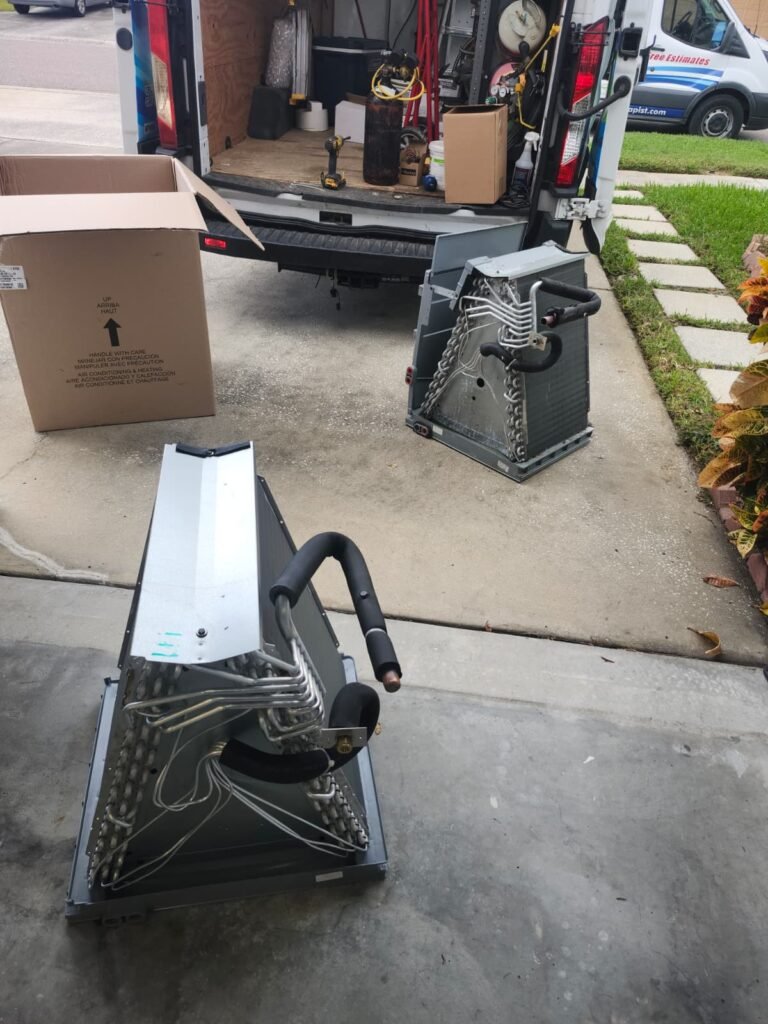
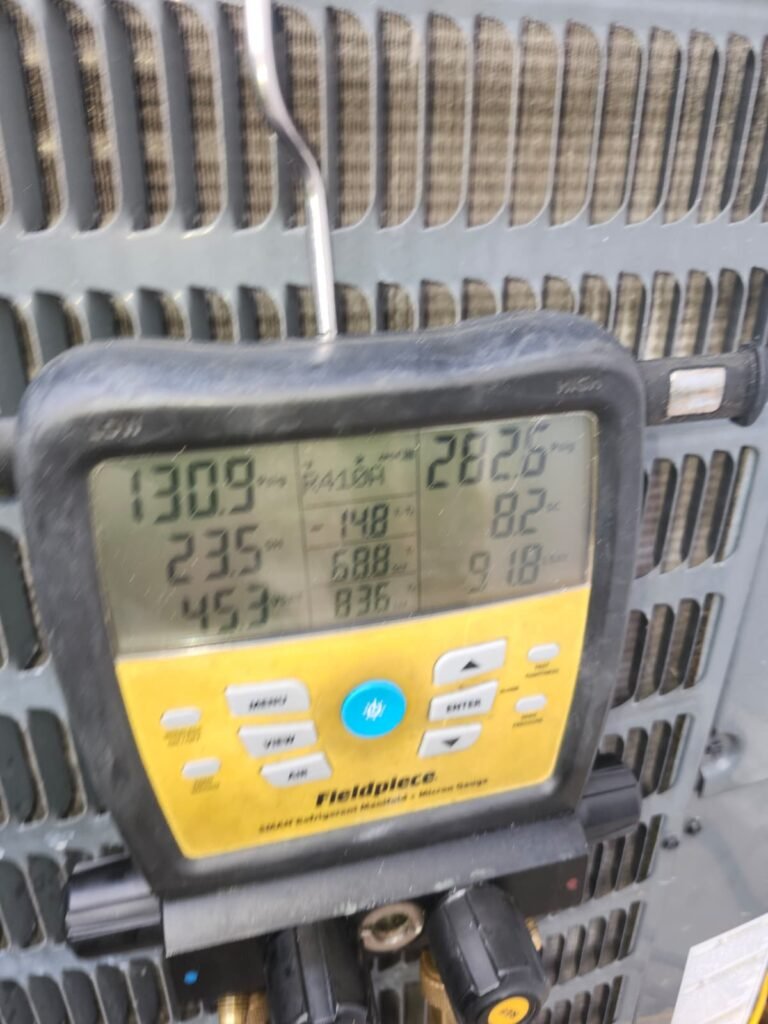
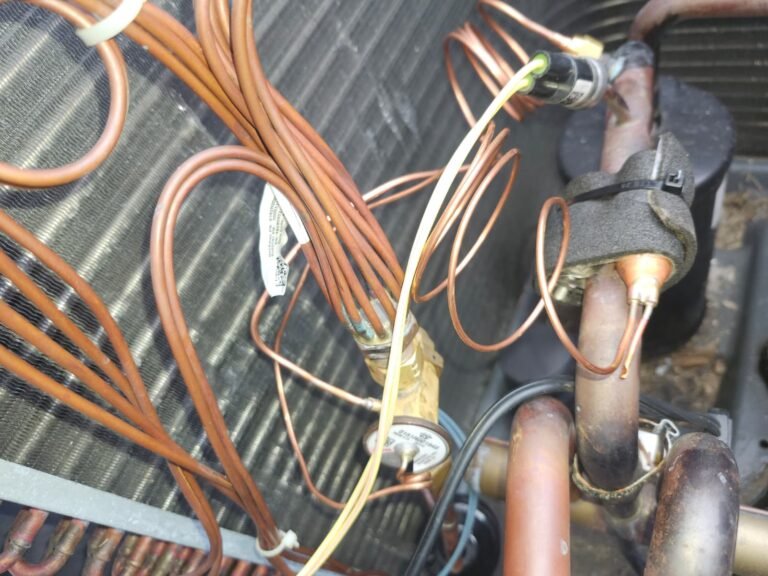
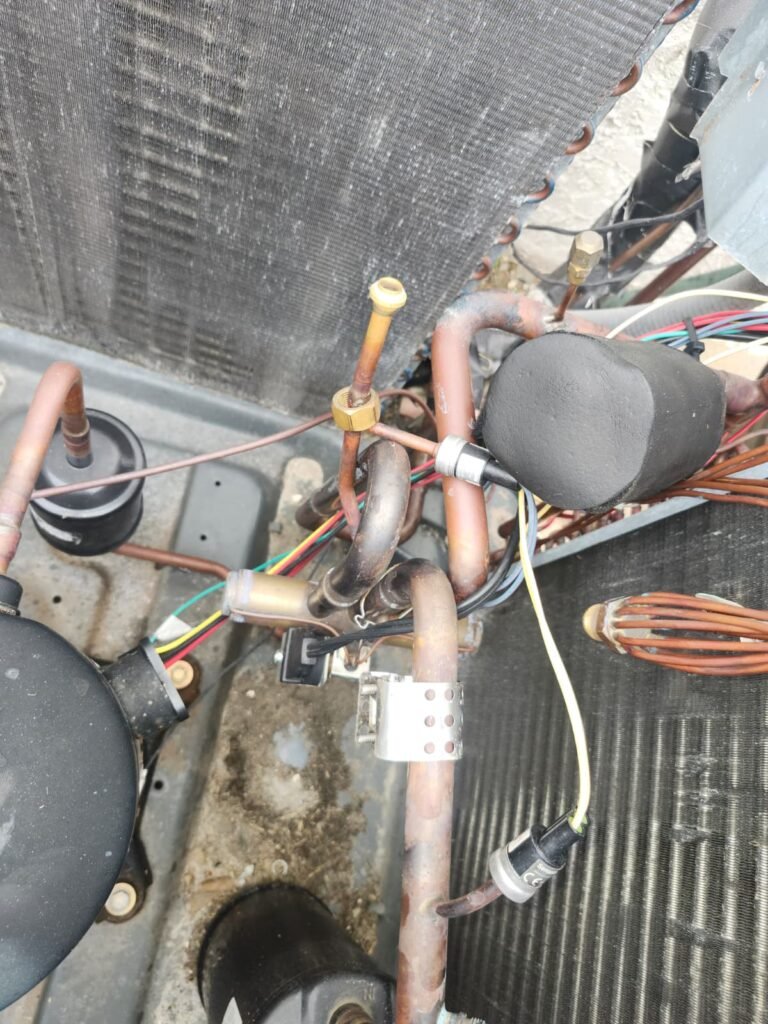
Compressor refrigerant problems in Tampa, FL 33635 often start upstream at the indoor coil or TXV, not inside the compressor itself. On this Georgetown Cir job, a manufacturer-warranty evaporator coil replacement also required a new TXV, a full refrigerant recovery and recharge with R-410A, and a heat strip replacement to restore proper cooling operation.
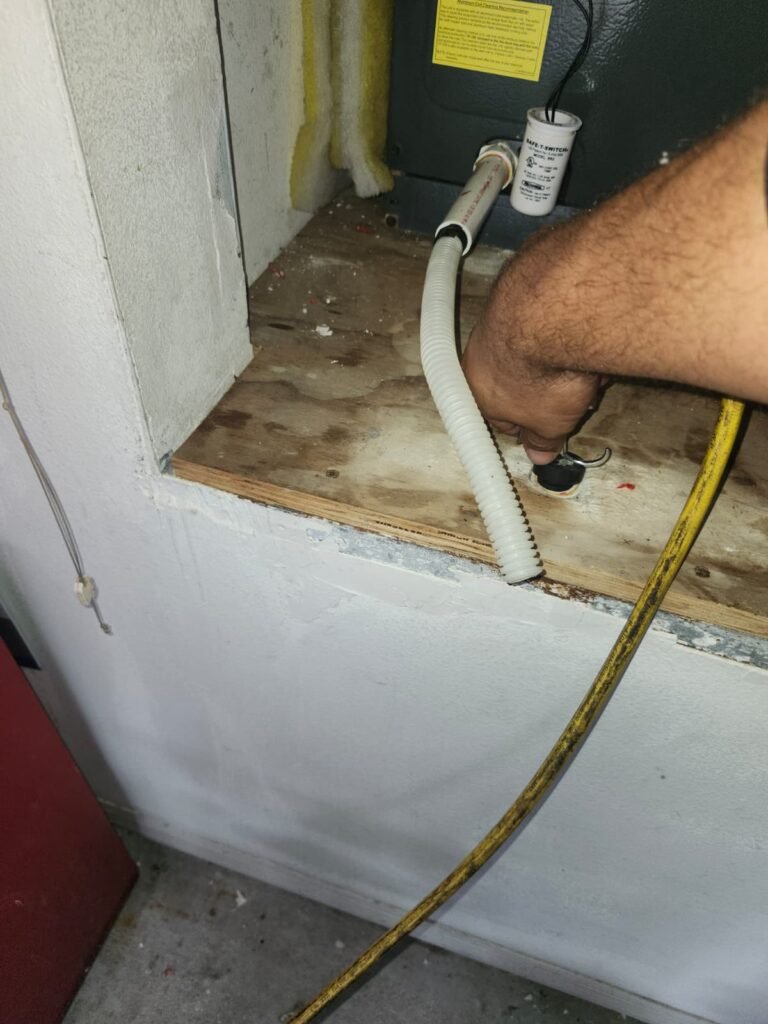
At this Georgetown Cir home in Tampa, FL 33635, Jandiel and our crew handled a repair visit that was larger than a simple parts swap. The homeowner already had a float switch installed, so that line item was removed, but the core work still involved replacing the indoor coil under manufacturer warranty, installing a new TXV, replacing the heat strip, and recharging the system with R-410A after the sealed system was opened. That matters because when people search compressor refrigerant issues, the real cause is often in the refrigerant path before the compressor ever sees normal operating conditions again.
- Service performed: Indoor coil replacement under manufacturer warranty, TXV replacement, heat strip replacement, refrigerant recharge
- Neighborhood or street: Georgetown Cir
- Technician: Jandiel
- Cause: Failed indoor coil and TXV-related refrigerant flow issue
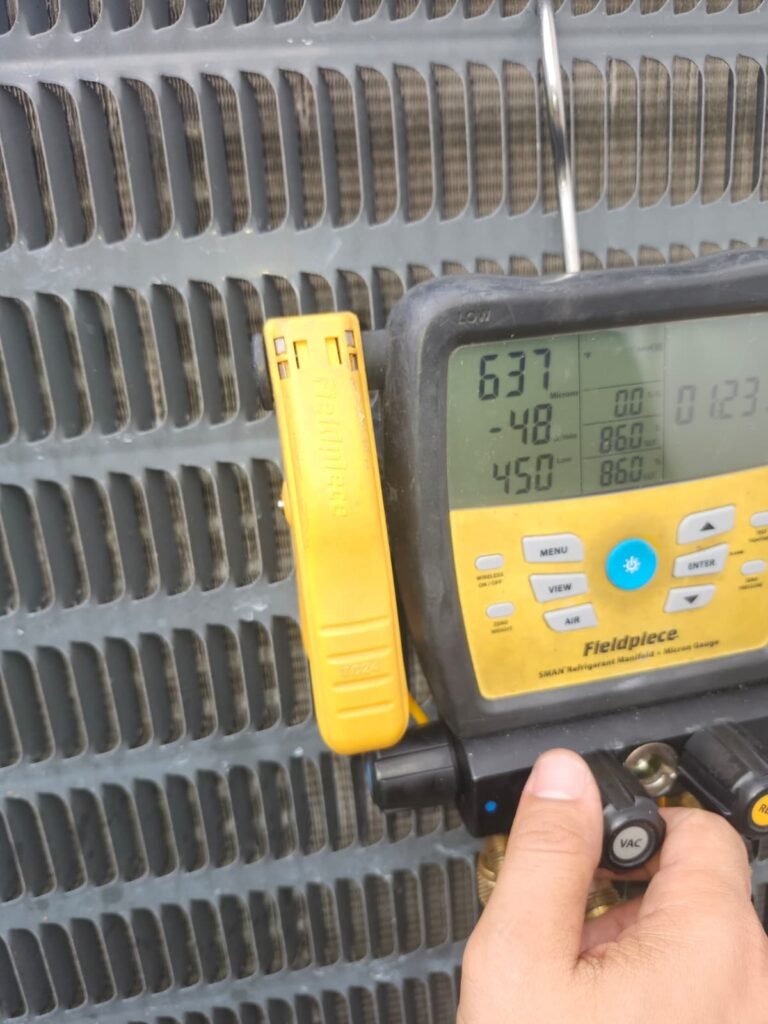
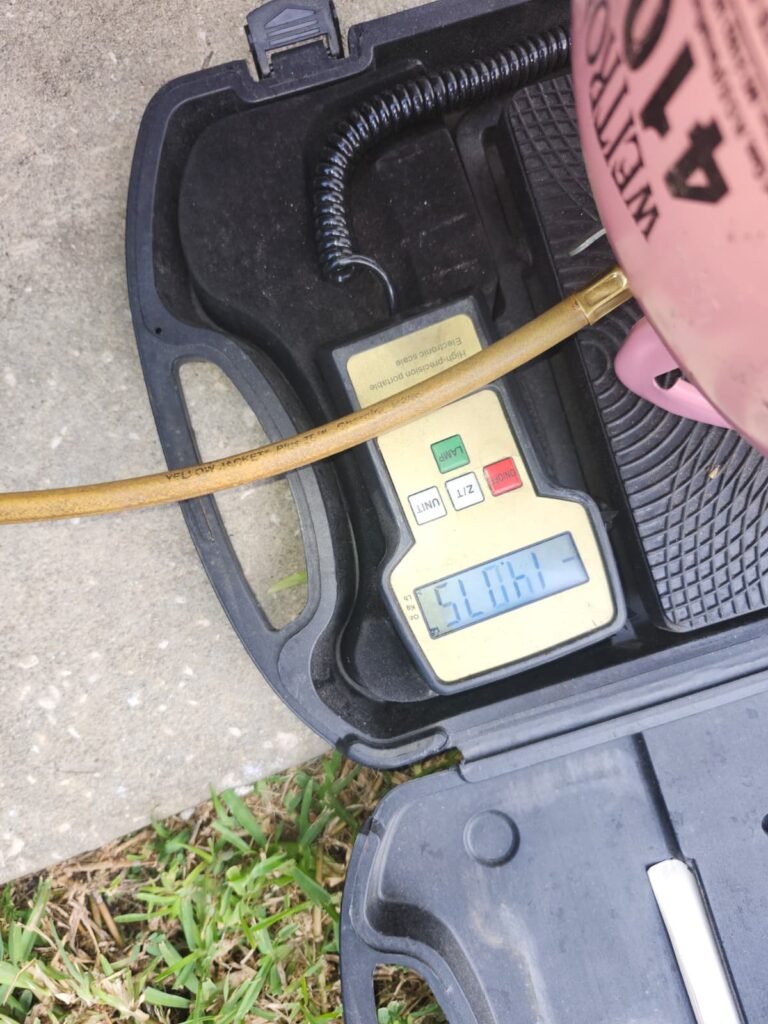
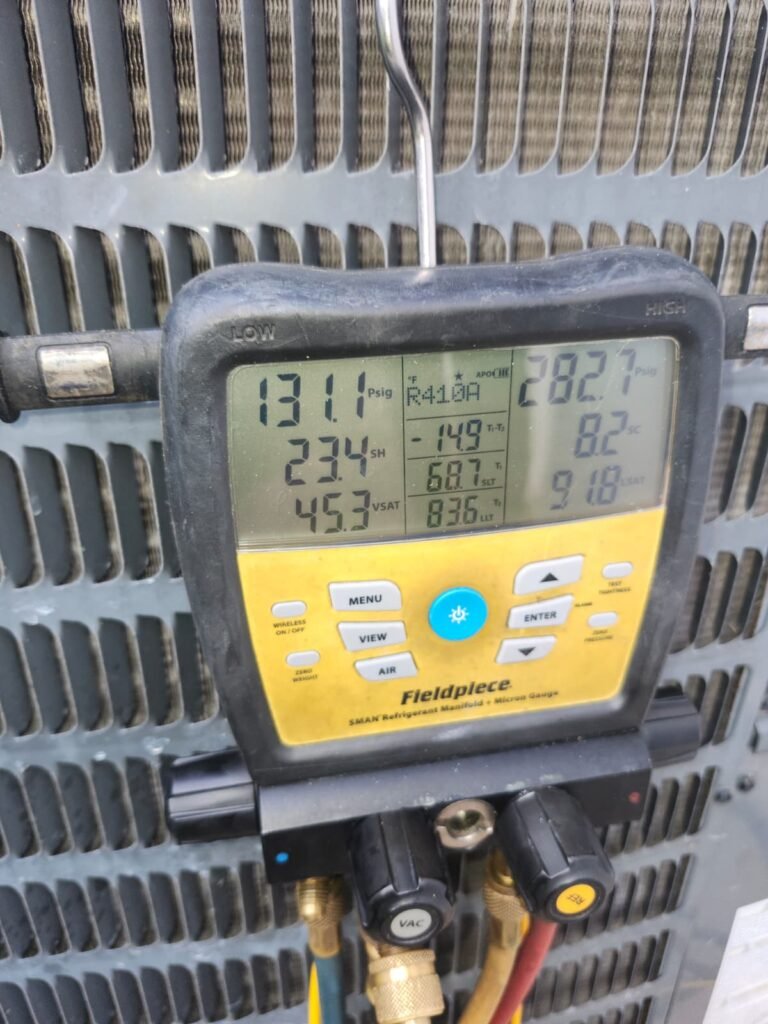
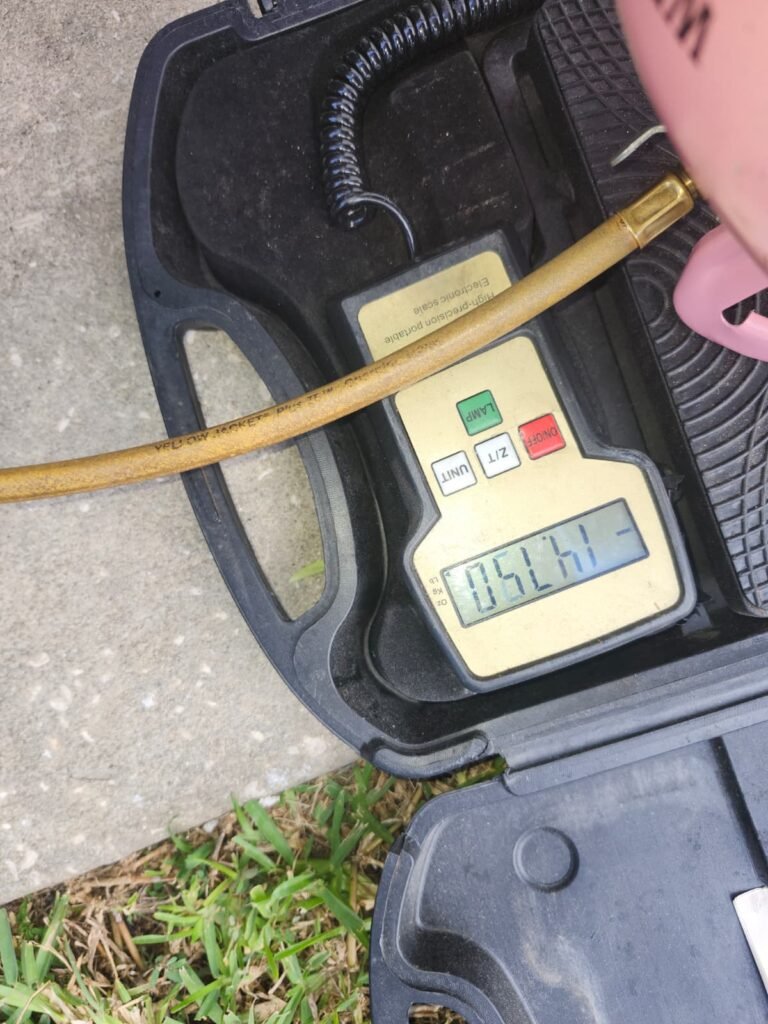
- What was done: Refrigerant recovered, lines flushed, new filter drier installed, vacuum pulled, joints leak-checked, system recharged
- Parts replaced: Evaporator coil, TXV, heat strip
Compressor refrigerant complaints often trace back to the metering and coil side of the system
When a homeowner notices weak cooling, icing, or unstable performance, it is easy to assume the compressor itself is the whole story. On this Tampa job, the refrigerant circuit had to be opened because the indoor coil was being replaced under manufacturer warranty, and the TXV was replaced at the same time. The TXV, or thermal expansion valve, is the part that meters how much refrigerant enters the evaporator coil. If that valve sticks or fails, refrigerant flow becomes erratic. That can lead to poor heat absorption indoors, a frozen coil, and operating conditions that make the compressor work under stress.
This is one reason our AC repair in Tampa calls often involve more than adding refrigerant. The refrigerant has to move through the system at the right rate and in the right state. Inside the compressor, what happens to the refrigerant depends on what reaches it from the evaporator side. If the coil is leaking or the TXV is not feeding correctly, the compressor cannot do its job under normal conditions.
This Georgetown Cir visit covered four meaningful HVAC items, not one simple repair
This visit was not a single-part service call. It covered the indoor coil replacement under manufacturer warranty, TXV replacement, R-410A refrigerant, and a heat strip replacement, with the float switch removed from scope because the homeowner had already installed it. That bundled context matters when looking at cost. The combined invoice for the completed work came to $4,350.
That total makes more sense when you look at the scope. Replacing an evaporator coil means recovering the refrigerant, opening the sealed system, fitting the new coil, flushing the lines with R11 and nitrogen, installing a new filter drier, pulling a vacuum, leak-checking every soldered joint, and then weighing refrigerant back into the system as needed. Adding the TXV at the same time is often the smart move when the metering side is already being opened up, because it addresses refrigerant control at the same point in the repair rather than leaving an older valve in place next to a new coil.
For homeowners comparing symptoms like ac blowing hot air or trying to understand what this work typically costs, the key takeaway is that refrigerant work is rarely just about the refrigerant itself. The parts that contain it and meter it are usually the bigger story.
Replacing the heat strip during sealed-system work solved a second comfort issue at the same visit
The heat strip replacement on this Georgetown Cir job is a good example of why bundled HVAC work can be more efficient than splitting everything into separate appointments. The heat strip is the electric heater inside the air handler. It does not affect summer cooling directly, but it does affect winter heating and overall air handler function. Taking care of that component during the same visit reduced the chance of the homeowner facing another breakdown later with the air handler already open.
This is also the kind of insider decision many homeowners do not see from the outside. Most people focus on the coil because it is the expensive part, but the accessories and companion components around the air handler often decide whether the repair feels complete or temporary. On this job, our crew handled the refrigerant circuit work and the heat strip issue in one coordinated visit, then verified proper operation after the repair.
Opening a sealed system means refrigerant handling has to be methodical and clean
Any time a coil and TXV are replaced, refrigerant handling becomes the center of the job. The old refrigerant has to be recovered properly, the lines have to be flushed to clear contamination or blockage, and the system has to be evacuated before refrigerant is weighed back in. That process is what protects the compressor after the repair. Contamination, moisture, or leftover debris in the line set can shorten component life and create repeat performance problems.
That is why our crew installed a new filter drier on this job and leak-checked every soldered joint before recharging the system. Those are not throwaway steps. They are part of making sure the refrigerant enters the compressor as it should, rather than carrying moisture or non-condensables through the system. Refrigerant handling on jobs like this also follows EPA Section 608 requirements, which is one reason sealed-system work should be done carefully and documented clearly.
For homeowners trying to understand how does a refrigerant compressor work Tampa searches often surface broad explanations, but this job shows the practical version. The compressor depends on the rest of the refrigerant circuit being right first. A bad coil or bad metering valve can make a healthy compressor look like the problem.
Pro Tips for Tampa Homeowners Dealing With Coil and TXV Repairs
Tampa systems run long cooling hours, so sealed-system repairs deserve a little extra attention afterward. A few practical tips can help protect the work that was just done.
- Change the filter on schedule. Restricted airflow can make a new coil run colder than intended and can contribute to icing.
- Pay attention to cooling consistency, not just whether the system turns on. Uneven cooling can be an early sign that refrigerant flow is still not right.
- If your system has had refrigerant circuit work, keep the outdoor unit clear and the thermostat settings steady for the first stretch of operation so performance is easier to judge.
- Do not assume every weak-cooling issue is low refrigerant. In Tampa Bay, metering problems, airflow issues, and coil faults can mimic a simple charge problem.
- If the system starts freezing, shut cooling off and have it checked. Continued operation with an iced coil can hide the real issue and strain other components.
Questions Tampa Homeowners Ask After Coil and Refrigerant Repairs
Does low refrigerant always mean the compressor is bad?
No, low refrigerant does not automatically mean the compressor is bad. On this Tampa job, the work centered on the evaporator coil and TXV, which are both upstream causes of poor refrigerant performance. A compressor depends on correct refrigerant flow and pressure conditions, so leaks or metering faults can create symptoms that feel like compressor trouble even when the root cause is elsewhere.
What state does refrigerant enter the compressor as?
Refrigerant enters the compressor as a low-pressure vapor in normal operation. That matters because the compressor is designed to compress vapor, not liquid. On a job like this one in Tampa, replacing the coil and TXV helps restore the conditions that let refrigerant leave the evaporator properly before traveling through the suction line back to the compressor.
Why replace the TXV when the coil is being replaced?
Replacing the TXV during a coil job is often the practical choice when refrigerant flow control is already in question. This Georgetown Cir repair included both parts because the TXV meters refrigerant into the indoor coil. If the valve is sticking or feeding incorrectly, installing only the new coil can leave the system with the same control problem that caused poor cooling or freezing symptoms in the first place.
Is all refrigerant replaced during a coil replacement?
When the sealed system is opened for a repair like this, the refrigerant handling process becomes part of the job. For this Tampa visit, the scope specifically included recovering the refrigerant, completing the coil and TXV work, pulling a vacuum, leak-checking the joints, and adding R-410A as needed. That is different from a quick top-off because the system has been opened and must be restored correctly.
Which line carries refrigerant from the evaporator to the compressor?
The suction line carries refrigerant vapor from the evaporator back to the compressor. That line matters because it is the return path that tells you whether the indoor side of the system is doing its job. If the coil is leaking, freezing, or being fed incorrectly by the TXV, the refrigerant returning through that line will not reflect normal operating conditions.
Schedule AC Repair in Tampa, FL 33635
If your system is dealing with coil leaks, refrigerant issues, weak cooling, or air handler component failures in Tampa, FL 33635, Home Therapist can help you sort out the real cause without guesswork. We have served Tampa Bay since 2017, and our licensed team handles HVAC and plumbing work under CAC1819196 and CFC1431159. Home Therapist has earned 1,300+ five-star reviews by staying clear about scope, explaining what we find, and doing the repair that fits the actual problem.
For homeowners on Georgetown Cir and across the surrounding service area, we service every brand and focus on practical solutions that hold up in Florida heat and humidity. You can also read our customer reviews if you want to see how that approach feels in real homes. If you need AC repair, refrigerant diagnosis, or a second opinion on a coil or TXV issue, call Home Therapist at (813) 343-2212. We provide FREE estimates and FREE diagnosis, and you approve a written quote before any repair begins.


