

Why a 6-Inch Range Hood Duct Was the Right Call on Palm Warbler Lane in Ruskin
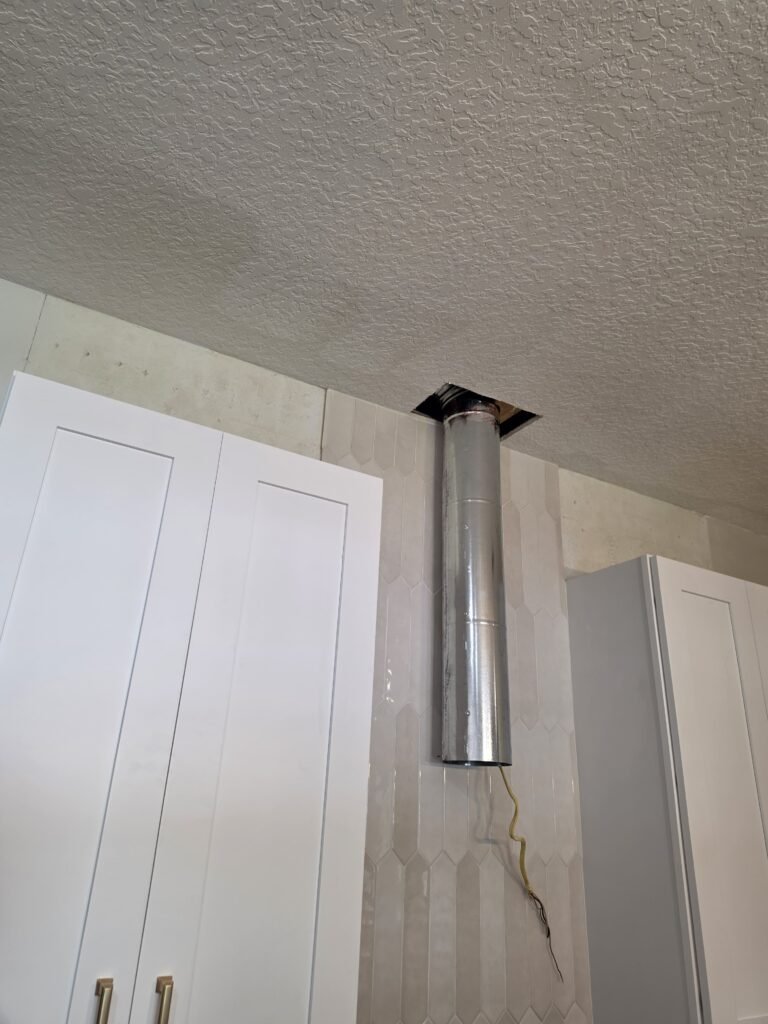
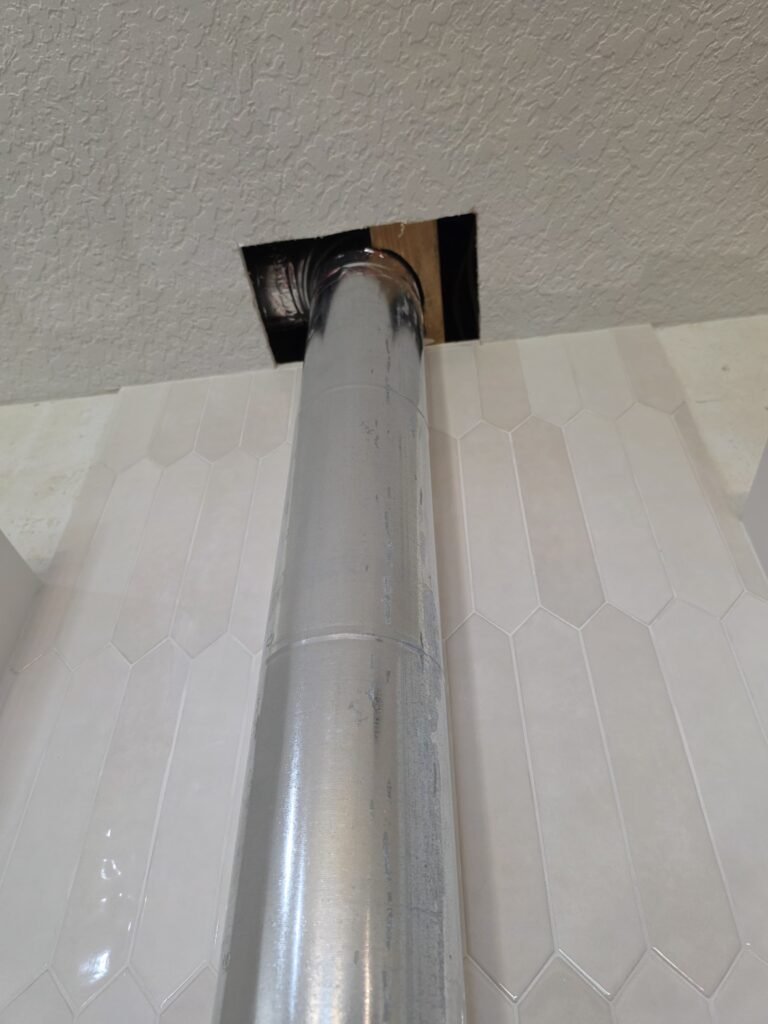
Airflow pressure in ductwork is measured in inches of water column, and in a kitchen exhaust setup the duct size and route directly affect how well the hood can move air outside. On this range hood duct installation in Ruskin, FL 33570, the right answer was a 6-inch exhaust path routed to an exterior vent so the future hood would have a proper outlet.
On Palm Warbler Lane in Ruskin, FL 33570, our crew handled a ductwork-only job for a kitchen hood setup after the homeowner decided her household would install the hood itself. Aridel coordinated the visit around cabinet timing, and the important detail was already clear in the notes: the duct going in needed to be 6 inches. That matters because airflow through ductwork depends on the path being sized to the appliance outlet, not just on getting a vent to the outside. In this home, we installed the exhaust duct and exterior termination so the kitchen setup could move forward without guessing.
- Service performed: Range hood exhaust duct installation
- Neighborhood or street: Palm Warbler Lane
- Technician: Aridel
- What was done: Installed a 6-inch kitchen exhaust duct with exterior vent termination
- Homeowner situation: Cabinets needed to be installed before the ductwork timing was finalized
- Invoice: Combined installation total was $899
The 6-inch duct size was the key decision on this Ruskin range hood duct installation.
The most important job specific on this visit was the duct diameter. The notes stated that the duct to be installed was 6 inches, which meant the future hood also needed a 6-inch outlet. That is not a small detail. When homeowners search airflow pressure in ductwork is measured in inches of what they are usually trying to understand is why one system breathes easily and another feels weak or noisy. In plain language, a fan has to push air through a fixed path. If that path is undersized or poorly routed, static pressure goes up and useful airflow drops.
For a kitchen exhaust application, matching the duct to the hood connection helps the fan move cooking heat, moisture, and odors outside with less restriction. That is why we did not treat this as generic metal pipe work. We treated it as an airflow job first and a duct installation second.
The route to the exterior mattered just as much as the duct itself on Palm Warbler Lane.
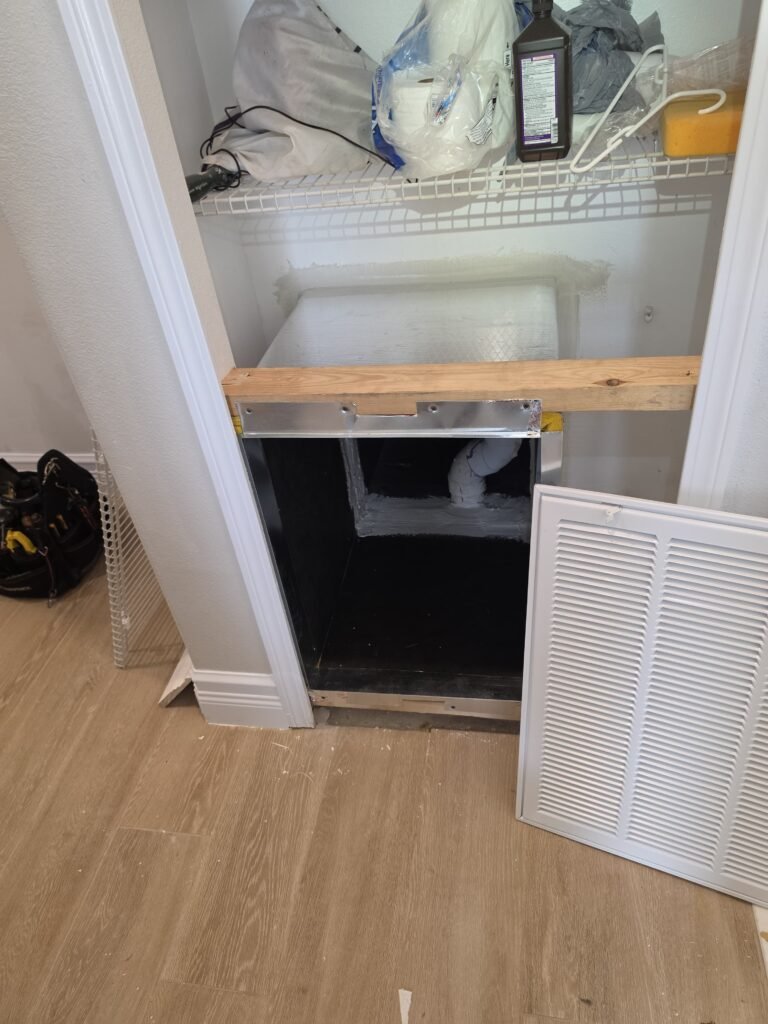
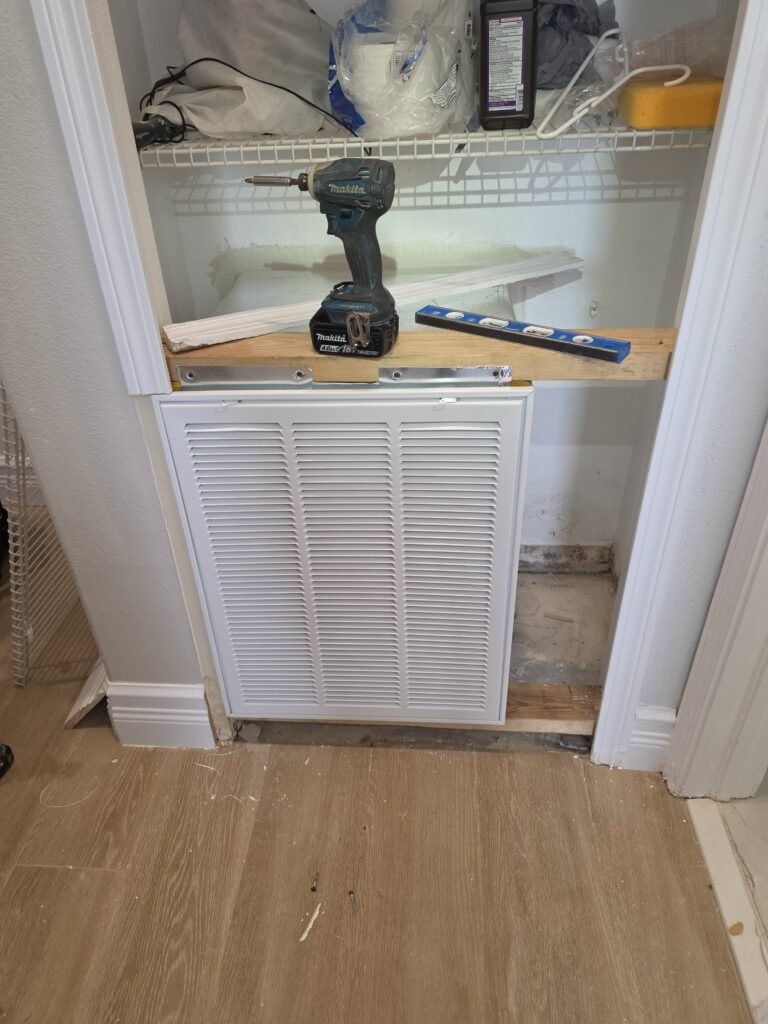
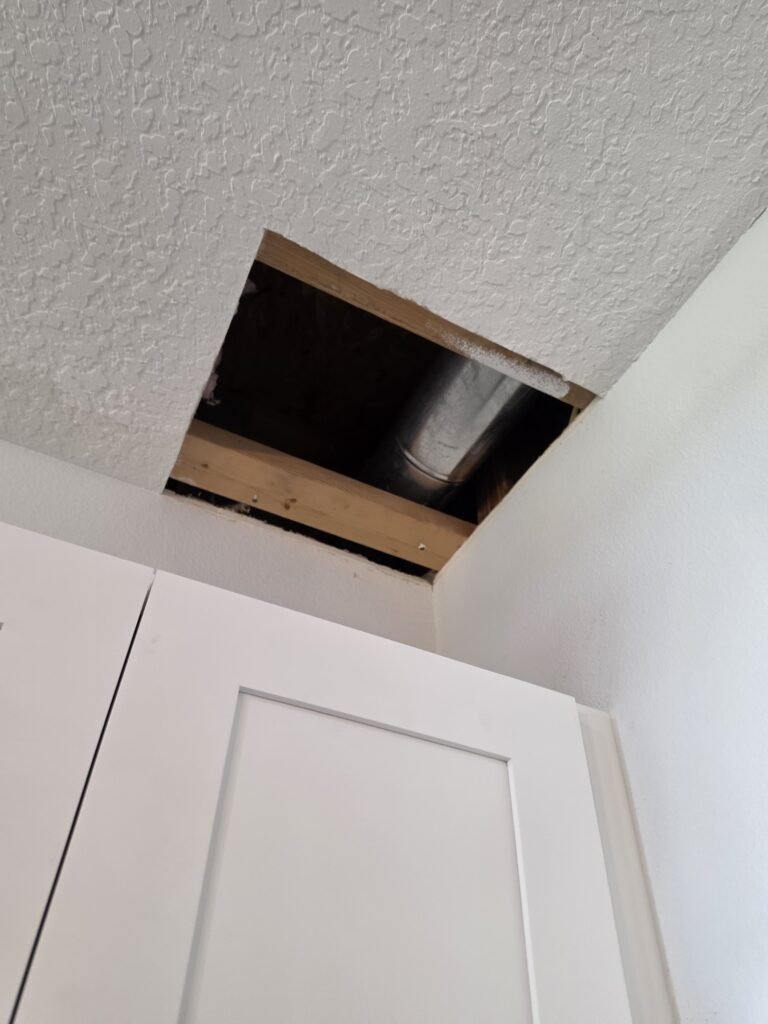
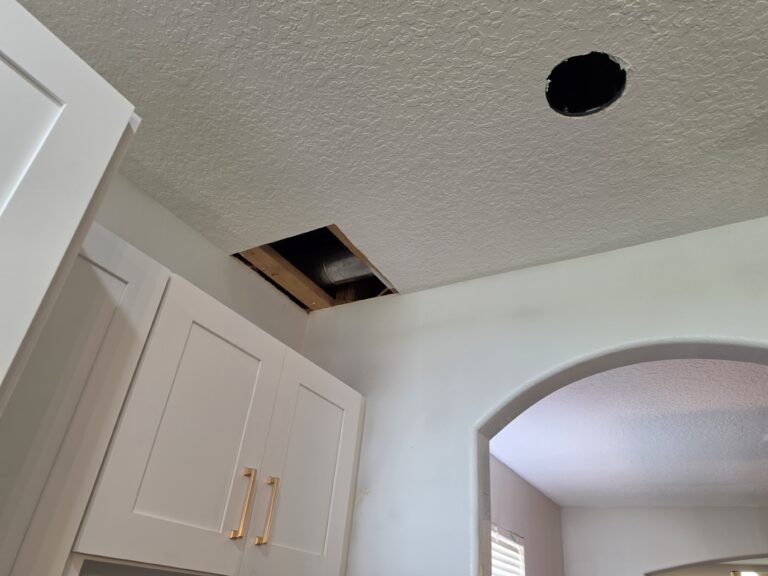
This job description included up to 18 feet of duct and an exterior termination through a soffit, gable, or roof vent. On this home, the visible exterior vent and the interior ceiling run show why route planning matters. Every turn, transition, and termination adds resistance. Even when the duct diameter is correct, a poor path can still create ductwork airflow issues that make a hood feel weaker than it should.
That is one reason our team prefers to think through the whole path before closing anything in around cabinets or finish work. The homeowner waited until cabinet timing was clearer, which was the right move. It gave the installation a better chance of lining up cleanly with the kitchen layout instead of forcing a rushed route later. For homeowners comparing options, our ductwork and air quality page explains how duct layout affects performance beyond just heating and cooling.
There is also a practical insider point here. Many people assume airflow problems come from the fan itself, but on jobs like this the duct path is often the bigger factor. A hood can only perform as well as the exhaust run allows.
What this Palm Warbler Lane visit covered, and how the $899 total fits the scope.
This was a single scope installation centered on the kitchen exhaust duct, not the appliance installation itself. The homeowner chose to move forward with the duct only, while her husband planned to install the hood. Our work covered the duct required to connect the future range hood or microwave exhaust to an exterior vent point, including the termination component. The full installation total for this ductwork job came to $899.
That distinction matters for trust and for planning. The invoice was for the exhaust path, not for mounting or wiring the appliance. If you are comparing similar projects, it helps to understand what this work typically costs and which parts of the kitchen ventilation setup are actually included in the quoted scope.
Proper kitchen exhaust planning also helps avoid broader airflow problems in nearby rooms.
Kitchen ductwork does not operate in isolation. When an exhaust path is poorly planned, homeowners sometimes notice side effects like pressure imbalances, lingering odors, or comfort changes in adjacent spaces. That is part of why people also search how to increase airflow in ductwork Ruskin after renovation work starts. The answer is usually not to force more fan power. The answer is to reduce resistance, keep the path appropriate to the appliance, and avoid unnecessary bends or bottlenecks.
In homes where other duct concerns already exist, we also look at related issues like uneven temperature rooms or ductwork visible leaks. Those are separate problems from a kitchen exhaust run, but they point to the same principle: airflow in ductwork depends on sizing, routing, and sealing, not guesswork. For design standards, the ACCA technical manuals are the industry reference for airflow and duct design, and the Florida Building Code governs local construction requirements.
For readers looking for the local service page behind this topic, we also cover air duct service in Ruskin for homes dealing with airflow and duct performance concerns.
Pro Tips for Ruskin Homeowners Planning Range Hood Ductwork
Kitchen exhaust ductwork is easiest to get right before the finish stage closes in the route. A few practical tips can save time and frustration:
- Match the hood outlet to the duct size. If the hood calls for 6 inches, reducing it can choke airflow.
- Plan the duct after cabinet layout is known. That avoids awkward offsets and unnecessary turns.
- Keep the run as direct as the house allows. Shorter, straighter paths usually move air better.
- Ask what is included in the scope. Duct installation and appliance installation are often two separate tasks.
- If the route must change because of framing or finish conditions, revisit the airflow plan before pushing ahead.
Questions Homeowners Ask After a Range Hood Duct Installation Like This
How is airflow pressure in ductwork measured?
Airflow pressure in ductwork is measured in inches of water column. That reading shows how much resistance the fan is pushing against inside the duct path. On a kitchen exhaust job like this one in Ruskin, the measurement itself was not the focus of the invoice, but the principle absolutely mattered. A correctly sized 6-inch duct helps keep resistance lower than an undersized path would.
How do you increase airflow in ductwork?
You increase airflow in ductwork by reducing restrictions and matching the duct to the equipment. In practical terms, that means proper sizing, fewer sharp turns, a clean route, and a termination that lets air discharge freely. On this Palm Warbler Lane job, the 6-inch exhaust path was the important performance decision because the future hood needs a matching outlet to move air effectively.
Is it true that oversized duct systems can slow down air velocity?
Yes, oversized duct systems can reduce air velocity even though they may lower resistance. The right answer is not simply bigger or smaller. The right answer is correctly sized for the equipment and the application. For this kitchen exhaust installation, the goal was not maximum duct size. It was a 6-inch path that matched the hood connection the home was being prepared for.
How much air flow should be coming out of my vents?
The correct airflow at supply vents depends on the HVAC system design, not one universal number. A kitchen exhaust duct is different because it is dedicated to one appliance and one discharge path. What carries over from both situations is the same rule: airflow through ductwork improves when the duct is sized and routed correctly instead of being adapted after the fact.
Schedule Ductwork and Airflow Help in Ruskin, FL 33570
Home Therapist has served Tampa Bay since 2017, and our team handles real world duct and airflow problems with the same straightforward approach we used on this Palm Warbler Lane job. We are licensed in Florida for HVAC under CAC1819196 and plumbing under CFC1431159, and we have earned 1,300-plus five-star reviews by being clear about scope, findings, and next steps. If you are in Ruskin, FL 33570 and need help with kitchen exhaust ductwork, airflow concerns, or related duct performance issues, we are ready to take a look. You will get FREE estimates and FREE diagnosis, and you approve a written quote before any repair or installation begins. To schedule with Home Therapist, call (813) 343-2212. You can also see our customer reviews or check our broader service area if you are elsewhere in Tampa Bay.


