
Reviewed by Richard Morales, Co-Owner & FL Class B Air Conditioning Contractor (FL license CAC1819196)
An AC disconnect box Tampa homeowners rely on is the weatherproof switch mounted on the wall within sight of your outdoor condenser that lets a technician safely cut all power to the unit. Both the National Electrical Code and the Florida Building Code require one beside the condenser, and a corroded or tripping disconnect typically runs $299 to $350 installed.
Most homeowners never think about the gray box bolted to the wall next to the outdoor AC unit until it stops doing its job. In Tampa Bay, where heat, humidity, and salt air work on outdoor electrical parts year round, the AC disconnect box is one of the first components to corrode and fail. This guide explains what it is, why it is legally required, the difference between fused and non-fused, how it gets sized, and what to do when it goes bad.
What is an AC disconnect box and why does it matter?
The disconnect is a small enclosure, usually mounted on the exterior wall within a few feet of the condenser, that contains a pull-out block or a switch. Its single purpose is safety: it lets anyone working on the system kill power right at the unit instead of walking back to the main electrical panel inside the house. When a tech opens up your condenser to replace a capacitor or contactor, they pull the disconnect first so the unit is completely dead.
It is not an optional accessory. Without a functioning disconnect, servicing the unit safely is not possible, and a missing or broken one is an immediate red flag on any inspection. If you ever see a technician working inside a live condenser without pulling the disconnect, that is a serious safety problem.
Does code require an AC disconnect box Tampa inspectors will accept?
Yes. Under the National Electrical Code, section 440.14 requires a disconnecting means to be located within sight of and readily accessible from the air conditioning or refrigeration equipment. Within sight is defined as visible and not more than 50 feet away. Florida adopts the NEC through the Florida Building Code, so the rule applies to every home AC install and replacement in Hillsborough County and across Tampa Bay.
This is why a permitted AC replacement in our area always includes verifying or replacing the disconnect. If a contractor swaps a condenser but leaves a corroded, undersized, or improperly located disconnect in place, the job can fail inspection. You can review the federal background on electrical safety standards through the U.S. Department of Energy guidance on central air systems.
Fused vs non-fused disconnect and how is the amp rating sized?
Disconnects come in two types, and the right one depends on how your condenser is protected. The size, measured in amps, must match the unit’s electrical requirements listed on the data plate.
| Type | How it works | When it is used |
|---|---|---|
| Non-fused (pull-out) | Simply breaks the circuit; relies on the breaker in the main panel for overcurrent protection | Most common on modern Tampa homes where the condenser is already protected by a dedicated breaker |
| Fused | Contains cartridge fuses that provide overcurrent protection right at the unit | Required when the equipment data plate calls for fuse protection or the circuit is not otherwise protected to spec |
Sizing is not guesswork. The condenser’s data plate lists the minimum circuit ampacity and the maximum overcurrent protection. The disconnect, the wire, and the breaker all have to align with those numbers. A common Tampa residential AC uses a 30 to 60 amp disconnect, but the right figure comes from the plate, not a rule of thumb. Pulling the wrong amp rating off the shelf is a frequent DIY mistake that creates a fire and nuisance-trip risk.
What are the signs an AC disconnect box has failed?
Outdoor location plus Tampa weather means these boxes age fast. Watch for:
- Corrosion and rust on the pull-out block, lugs, or the enclosure itself. Salt air in coastal zips and constant humidity inland both eat at the metal contacts.
- The unit will not turn on at all, even though the breaker is fine, because a burned-out disconnect block is breaking the circuit.
- Burn marks, melted plastic, or a hot smell at the box, which points to a loose or arcing connection.
- A breaker that keeps tripping when the real fault is a degraded disconnect, not the breaker itself.
- A loose pull-out that does not seat firmly, causing intermittent power that makes the AC cut in and out.
If your system suddenly will not run, a failed disconnect is one of the first things a tech checks, alongside the capacitor and contactor. Our AC repair team in Tampa provides a FREE diagnosis to confirm whether the disconnect, the breaker, or a component inside the condenser is the real culprit. If the unit died on a hot night, our emergency AC repair in Tampa can get you cooling again fast.
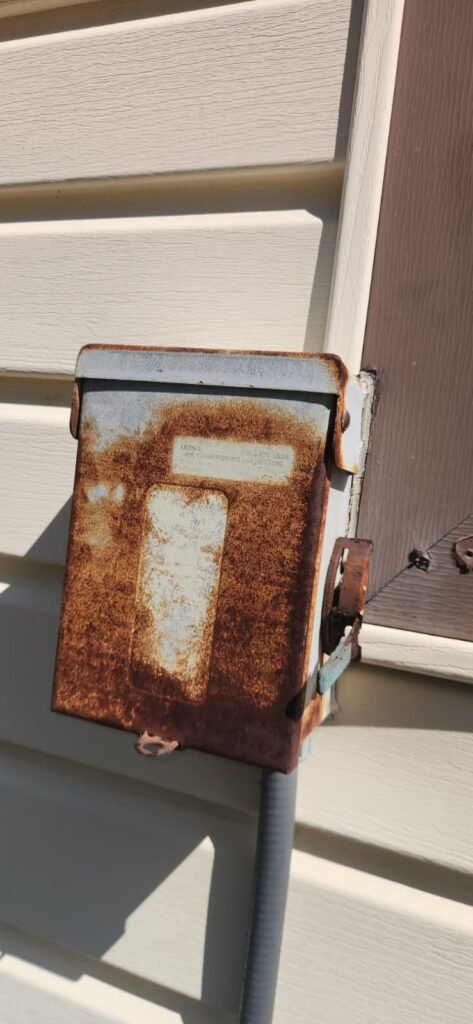
How much does AC disconnect box replacement cost in Tampa?
A disconnect replacement is one of the more affordable AC electrical repairs. The part itself is inexpensive; most of the cost is the licensed labor to pull the old one, verify the wiring and amp rating, and install a code-compliant replacement safely. In Tampa Bay, a straightforward disconnect swap generally falls in the $299 to $350 installed range, depending on whether it is fused or non-fused and the condition of the wiring behind it.
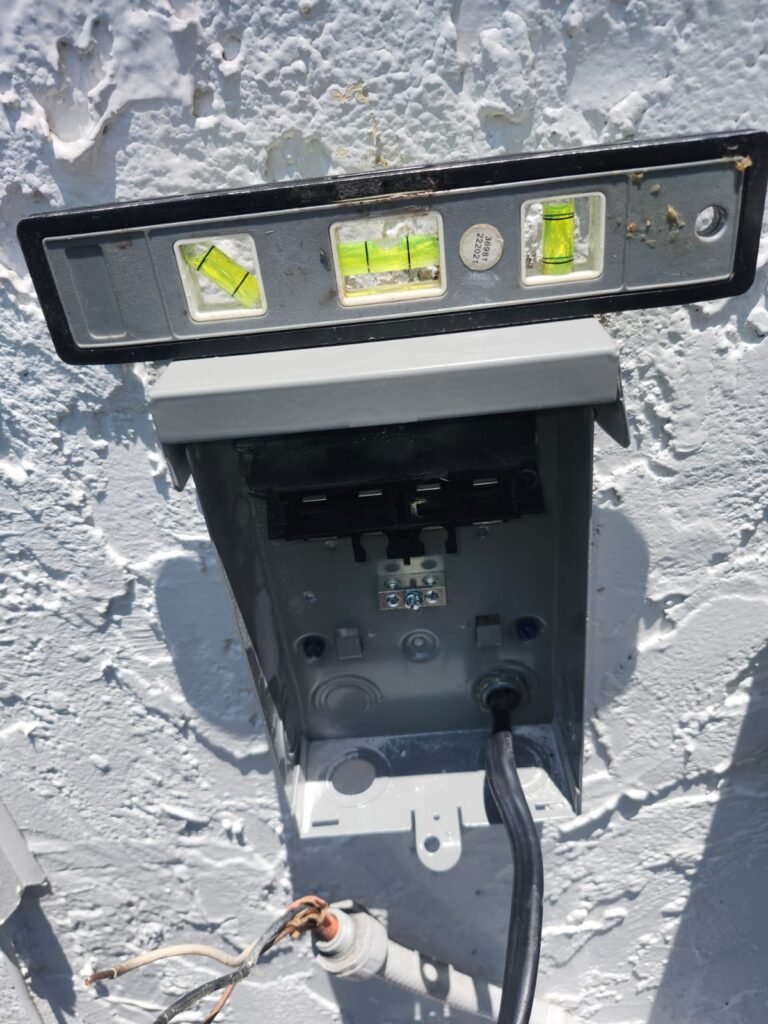
We never charge a fee just to look. FREE estimates and FREE diagnosis come standard on every service call. If the disconnect failure turns out to be tied to a much older system that is failing in other ways, it can be worth weighing the repair against replacement. Our repair versus replace AC guide and our AC replacement cost page lay out that math. Catching corrosion early during routine AC maintenance in Tampa is the cheapest way to avoid a no-cooling emergency.
Key Takeaways
- An AC disconnect box in Tampa is the safety switch by the condenser that cuts power at the unit for servicing.
- NEC 440.14 and the Florida Building Code require a disconnect within sight (under 50 feet) of the equipment on every install.
- Non-fused (pull-out) disconnects are most common; fused ones are used when the data plate calls for fuse protection.
- Amp rating must match the condenser data plate’s minimum circuit ampacity and max overcurrent figures, never a guess.
- Corrosion, burn marks, a unit that will not start, or a nuisance-tripping breaker all point to a failed disconnect.
- Replacement typically runs $299 to $350 installed. FREE estimates and FREE diagnosis.
What Tampa Bay customers say
“Excellent Service ! High Quality Workmanship, Very Efficient and Professional. Reasonably Priced. Would Highly Recommend AC Therapist. Great Company! Jandiel is a Great Technician. He is Honest, Knowledgeable, Kind and Professional!! I will request him with all my Service Needs!!”
“We have been using The Home Therapist for eight years now. Richard and his crew are knowledgeable and professional. We will always call them with any issues.”
“Roberto was excellent, very thorough and did such a beautiful job!”
4.8 from 1,408 reviews · Read more reviews
Frequently Asked Questions
Is an AC disconnect box required by code in Florida?
Yes. The National Electrical Code section 440.14 requires a disconnecting means within sight and within 50 feet of the condenser, and Florida adopts the NEC through the Florida Building Code. Every permitted AC install or replacement in Tampa Bay must include a compliant disconnect.
What is the difference between a fused and non-fused AC disconnect?
A non-fused disconnect just breaks the circuit and relies on the main panel breaker for overcurrent protection, which is the most common setup on modern Tampa homes. A fused disconnect adds cartridge fuses at the unit and is used when the equipment data plate calls for fuse protection.
Why will my AC not turn on even though the breaker is fine?
A burned-out or corroded disconnect block can break the circuit at the unit while the breaker still looks normal. A loose pull-out can also cause intermittent power. A technician should test the disconnect, capacitor, and contactor with a FREE diagnosis before any parts are replaced.
How much does it cost to replace an AC disconnect in Tampa?
A straightforward replacement usually runs $299 to $350 installed, with most of that being licensed labor to verify wiring and amp rating and install a code-compliant box. Home Therapist gives FREE estimates and FREE diagnosis.
More AC Repair Articles
- Condenser Fan Motor vs. Bad Capacitor: How Tampa Bay Homeowners Tell the Difference
- 24 Hour Emergency AC Repair Tampa Bay: Who to Call When It Quits at Night
- AC Shut Off Switch Failure Symptoms in Tampa Bay: When Your Disconnect Is the Problem
- Clogged Drain Line Shutting Down the AC on Stallion Way: Air Conditioning Repair in Valrico, FL 33594
- Dead Blower Motor on Bitter Orange Ave: 220V Universal Motor + Disconnect Switch Replacement in Tampa, FL 33625