
What Does an Air Handler Look Like? Tampa Guide
Quick answer: An air handler is the indoor part of a split AC system in Tampa homes, usually a tall metal box in a closet, garage, or attic. Inside it you will find the evaporator coil, which runs cold or hot depending on your thermostat, plus a blower motor and electrical parts on top. Sheet metal boxes called plenums connect it to your ductwork. On a recent Tampa job, the crew filmed one installed in an attic, feeding air straight into the home's duct system.
On this page: What does an air handler look like · What we found on this Tampa call · What's inside an air handler · Where is my air handler located · What is the difference between an AC and an air handler · How much does air handler repair cost in Tampa · How do you know if your air handler needs repair · How often should an air handler be serviced in Tampa's climate · FAQ
What does an air handler look like?
An air handler looks like a tall rectangular metal box, roughly the size of a small refrigerator, with a hinged or removable panel on the front and a slot where the air filter slides in. If you have ever opened a closet door in a Tampa home and found a metal cabinet with copper lines and wires coming out of the top, that is your air handler. It is the indoor half of a split system air conditioner, and it looks nothing like the outdoor condenser unit sitting on a concrete pad beside your house.
Pop the front panel off and you will see the evaporator coil, which is a bank of finned aluminum or copper tubing that carries refrigerant through the system. Sitting on top of the coil is the blower motor and the electrical components that run the fan. Underneath the coil there is a drain pan to catch condensation, plumbed to a PVC line that carries that water away from the unit.
On the outside, most residential air handlers are plain sheet metal, usually gray or off white, sometimes wrapped in insulation to keep the cabinet from sweating in Florida’s humidity. You will typically see square metal boxes attached to the top or side. Those are plenums, and they are what tie the air handler into the ductwork that carries air to every room in the house.
Where you find it changes what it looks like a bit. In a closet, you usually see the whole cabinet standing upright behind a louvered door. In a garage, it is often mounted on a stand or platform along a wall, exposed and easy to spot. In an attic, which is very common in Tampa Bay construction, the unit usually sits on a plywood platform near the attic access, so from the hatch you may only see the front panel and filter slot, with the rest of the cabinet running back into the insulation.
| Component filmed | Air handler, the indoor unit of the AC system |
| Typical locations | Closet, garage, or attic |
| Unit location on this job | Attic |
| Key part shown | Evaporator coil |
| Coil function | Runs cold or hot depending on thermostat mode |
| Top of unit | Blower motor and electrical components |
| Connection point | Plenums, which attach to the ductwork |
| Ductwork role | Distributes conditioned air throughout the home |
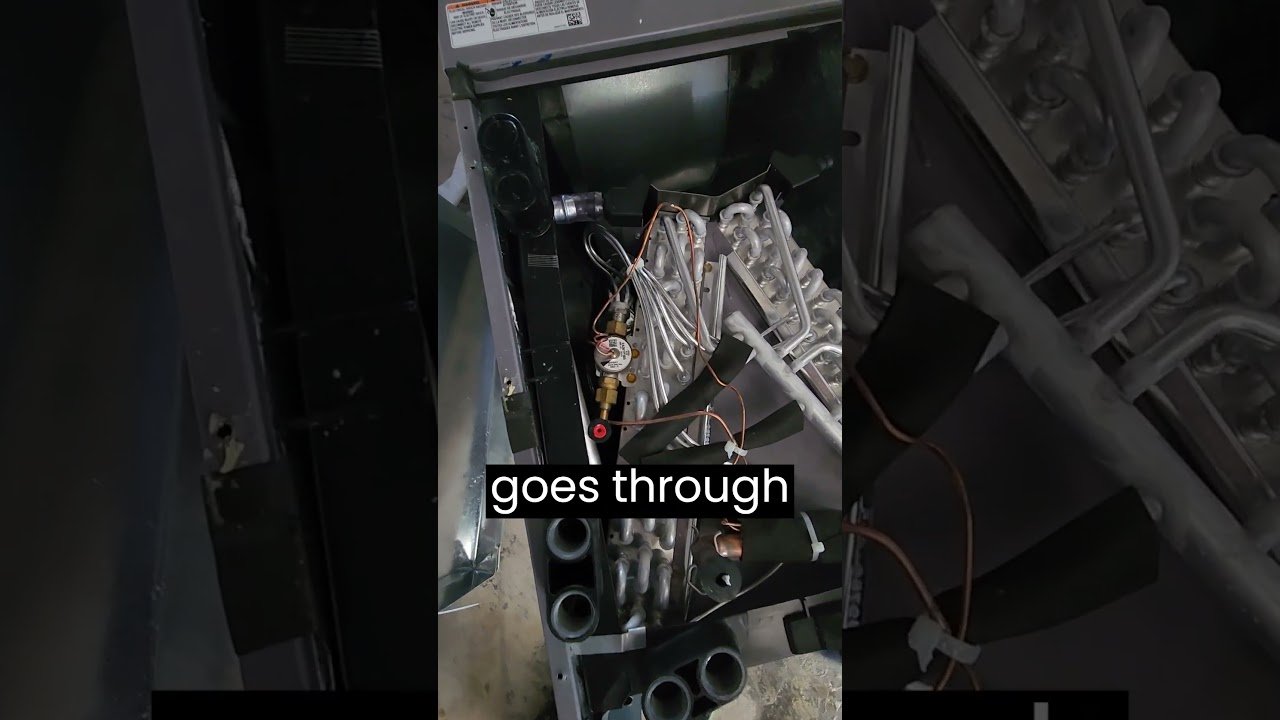
What the video shows
- 0:00 Homeowner asked if they know what their air handler looks like
- 0:06 Air handler identified as the indoor unit, usually closet, garage, or attic
- 0:14 Evaporator coil shown, explained as the part circulating refrigerant
- 0:22 Coil temperature shown to change based on thermostat setting
- 0:30 Blower motor and electrical components pointed out on top of the unit
- 0:38 Plenums shown connecting the air handler to the ductwork
What we found on this Tampa call
Our technician was on a Tampa service call and took a minute to show the homeowner exactly what they had been walking past for years without ever looking at closely.
The unit on this job was installed in the attic, which is one of the three spots you will almost always find an air handler in a Florida home, the other two being a hall closet or the garage. With the panel off, the coil was right there in plain sight. That is the evaporator coil, and its job is to circulate the refrigerant, sometimes called Freon by homeowners even though most systems today use newer refrigerants, through the system. Depending on whether the thermostat is calling for cooling or heat, that coil runs either cold or hot, and air passing over it comes out changed to match.
Above the coil sat the blower motor and the electrical components that keep air moving through the system. That is the part that actually pushes air out of the unit and into the home, and it is one of the more common points of failure our techs see, since motors wear out over years of daily use in Tampa’s long cooling season.
From there, the unit connected into rectangular metal boxes called plenums. Those plenums tie directly into the ductwork, which is the network of metal or flex duct running through the attic that delivers conditioned air to every register in the house. Without a solid connection at the plenum, a homeowner can lose airflow to whole rooms even if the air handler itself is running fine.
The point of walking through it on camera was simple. Most homeowners can name their outdoor AC unit but have never opened the closet, garage, or attic hatch to look at the air handler. Knowing what it looks like and where it sits makes it a lot easier to describe a problem accurately when you call for service, and it means you will recognize when something looks off, like water staining, rust, or a burnt smell near the cabinet.
| Likely cause | Telltale sign | Safe to DIY? |
|---|---|---|
| Dirty air filter | Weak airflow, musty smell near vents | Yes, homeowner can change filter |
| Clogged condensate drain line | Water near the unit, system shuts off unexpectedly | No, needs professional flush |
| Frozen evaporator coil | Visible ice on the coil, warm air blowing from vents | No, cause needs diagnosis first |
| Failing blower motor | Grinding or squealing noise, little or no airflow | No, electrical and motor work |
| Bad capacitor or electrical component | Humming sound, unit won't start, tripped breaker | No, electrical repair |
| Low refrigerant charge or leak | Coil frosting, poor cooling, higher bills | No, refrigerant work is licensed only |
| Loose or damaged plenum or ductwork connection | Some rooms cool poorly, whistling near attic | No, usually needs a technician |
What's inside an air handler?
Inside an air handler you will find the evaporator coil, the blower motor, electrical controls, a filter slot, and a condensate drain pan, all packed into one metal cabinet.
The evaporator coil is the main working part. It is a finned coil, usually copper tubing with aluminum fins, that the refrigerant lines feed into. As refrigerant moves through the coil it either absorbs heat from the air passing over it, which is how cooling happens, or in a heat pump system it can run in reverse to release heat during colder months. Air blown across this coil changes temperature before it heads out into the ductwork.
Sitting above or beside the coil is the blower motor, which is the fan that actually pulls air from the return duct, pushes it across the coil, and sends it out through the supply plenum. This motor runs on a separate electrical circuit with its own components, including capacitors and control boards on many newer systems, which is part of why blower issues sometimes show up as an electrical fault rather than a mechanical one.
Below the coil is the drain pan, a shallow metal or plastic tray that catches the condensation that naturally forms as humid Florida air passes over the cold coil. That water drains out through a PVC line, usually with a trap and sometimes a secondary safety pan or float switch, especially on attic installs where a clogged line can otherwise drip through the ceiling below.
The filter slot is usually near the return side of the cabinet, either at the unit itself or at a return grille elsewhere in the house. This is the one part of the air handler most homeowners actually interact with regularly, and keeping it clean has a direct effect on airflow, coil life, and indoor air quality.
All of this sits inside one insulated metal box, which is why the whole assembly is called an air handler. It handles the air, moving it, conditioning it, and sending it on to the ductwork.
Where is my air handler located?
In most Tampa Bay homes the air handler is inside the house, tucked into a hall closet, a garage, or the attic, not outside like the condenser.
Closets are common in older Tampa homes and in condos, where the unit sits behind a louvered door in a hallway or utility space. It is convenient for service access but does mean the unit is close to living space, so noise and condensation issues get noticed quickly if something goes wrong.
Garages are common in newer construction and single family homes, where the air handler sits on a platform along a wall, sometimes with a small mechanical closet built around it. This location keeps it out of the living area entirely and gives a technician easy access without ladders.
Attics are extremely common across the Tampa Bay area, especially in homes built from the 1980s onward. The unit sits on a platform near the attic access, tied into ductwork that spreads out across the attic floor to feed every room below. The tradeoff with an attic install is heat. Florida attics regularly get very hot in summer, and that heat load can shorten the life of components and make maintenance access tougher, which is one reason attic units tend to need a closer look during a tune up.
A few things to know if you are not sure where yours is. Start by finding your thermostat and tracing which direction the ductwork runs from the ceiling or wall registers, since the air handler is usually along that same path. Check any hallway closet with a louvered door first, then the garage, then the attic access if your home has one. If you genuinely cannot find it, that is a fair question to ask a technician on a service call, and it is worth knowing before an emergency happens, since shutting off power or water to the unit sometimes matters when there is a leak or electrical issue.
What is the difference between an AC and an air handler?
An air conditioner is the whole cooling system, while the air handler is just the indoor piece of that system that moves and conditions the air before it reaches your ducts.
A typical residential split system has two main units. Outside, there is the condenser, the unit with the fan on top that sits on a pad next to the house. It contains the compressor and condenser coil, and its job is to compress the refrigerant and reject heat outdoors. Inside, there is the air handler, which contains the evaporator coil and the blower motor. Refrigerant lines run between the two, carrying refrigerant back and forth so the whole loop can move heat out of the house.
People often say AC unit when they mean the outdoor condenser, and that is fine in everyday conversation, but technically the air conditioner is both halves working together. Without the air handler, the condenser has nothing to circulate air through inside the house. Without the condenser, the air handler has no way to actually cool the refrigerant running through its coil.
There is also a difference worth knowing between an air handler and a furnace, since they can look similar. An air handler by itself does not generate heat, it just moves air across a coil and, in a heat pump system, that coil can produce either cold or hot air depending on the mode. A gas furnace, by contrast, has its own burners and heat exchanger to produce heat directly. In Florida, most homes run heat pump systems, so the air handler is doing double duty, cold in summer, warm in the cooler months, both off the same coil.
Some homes also have a package unit instead of a split system. A package unit combines the compressor, condenser coil, and air handler components into a single outdoor cabinet, with ductwork connecting straight to that outdoor unit rather than to an indoor air handler at all. If your ductwork runs from an attic or closet unit rather than straight outside, you have a split system with a true indoor air handler like the one shown on this job.
How much does air handler repair cost in Tampa?
Home Therapist offers free estimates and free diagnosis on AC service calls, so the first real number you get is a firm quote after a technician has actually looked at your air handler.
What that repair ends up costing depends heavily on what part failed. A capacitor or a simple electrical component is usually one of the lower cost repairs. A blower motor replacement runs higher since it involves more labor and a more expensive part. An evaporator coil replacement, or a repair tied to a refrigerant leak, tends to be the more involved and costlier end of the range, since coil work requires refrigerant recovery and recharge by a licensed technician. Condensate drain issues, like a clogged line or a triggered float switch, are often a quicker and less expensive fix, especially if caught early before water damage happens.
A few things move the price in either direction. The age of the system matters, since parts for an older air handler can be harder to source, sometimes pushing a homeowner toward a full replacement instead of a repair once several components start failing close together. Attic installs can add a bit more labor time than a closet or garage unit simply because of access and heat. Whether the issue is purely mechanical, like a worn motor, versus electrical or refrigerant related, also changes the scope of work.
The reason free diagnosis matters here is that air handler symptoms overlap a lot. Weak airflow could be a dirty filter, a failing blower motor, a duct problem, or a refrigerant issue, and those have very different price tags. Rather than guessing over the phone, a technician can open the cabinet, check the coil, test the electrical components, and give an actual number before any work starts. If you want a written estimate for your specific system in the Tampa area, our AC repair page has more detail on how service calls work and what is included.
- Free diagnosis and free estimate on every AC service call
- Firm price given before any repair work begins
- Repair cost depends on the specific part, not a flat fee
- Catching drain or airflow issues early usually keeps repairs smaller
How do you know if your air handler needs repair?
Weak airflow, water around the unit, ice on the coil, and unusual noise from the blower are the main signs your air handler needs attention.
Weak or uneven airflow is one of the most common complaints. It can mean a dirty filter is choking off air, a blower motor is losing strength, or in some cases the evaporator coil itself has frosted over and is blocking airflow entirely. A frozen coil usually means either restricted airflow or a refrigerant issue, and running the system with ice on the coil can actually make the underlying problem worse.
Water is another big signal. Any moisture around the base of the air handler, staining on a closet floor, a wet spot on a garage wall, or a stain spreading across a ceiling below an attic unit, points to condensate drain problems. The drain line can clog with algae and debris over time in Florida’s humidity, and once it backs up, water has to go somewhere. Many systems have a float switch that shuts the unit down automatically when the drain backs up, so if your AC just stopped working and there is water nearby, that switch may have done its job.
Noise changes are worth paying attention to as well. A grinding, squealing, or rattling sound from the direction of the air handler often points to the blower motor or its mounting hardware. A humming sound with no airflow at all can point to an electrical component, like a capacitor, that has failed.
Other signs include the system running constantly without reaching the set temperature, higher than normal indoor humidity even with the AC running, a musty smell near vents, or a breaker that keeps tripping when the system starts. Any of these are reasons to get a technician out for a free diagnosis rather than waiting, since small electrical or drain issues tend to be a lot cheaper to fix than the damage they cause if ignored for months in Tampa’s heat and humidity.
How often should an air handler be serviced in Tampa's climate?
An air handler should generally get a full professional check once a year, with filter changes handled by the homeowner much more often given Tampa’s long cooling season.
Florida systems run harder and longer than systems in most of the country. Where a lot of the country only runs air conditioning heavily for a few months, Tampa Bay homes often run cooling close to year round. That extra runtime means more hours on the blower motor, more condensation moving through the drain line, and more dust pulled through the filter, all of which adds up to faster wear compared to milder climates.
A general industry recommendation is a filter change every one to three months depending on filter type, household dust, and whether you have pets. Attic units in particular tend to pull dustier air, so checking the filter monthly during peak season is a reasonable habit even if it does not need changing every time.
Beyond the filter, an annual tune up typically covers checking refrigerant levels, inspecting and tightening electrical connections, testing the blower motor and capacitor, flushing the condensate drain line, and inspecting the evaporator coil for dirt or corrosion. In an attic system, a technician will also check the plenum connections and nearby ductwork, since heat cycling and settling insulation can loosen duct connections over time.
Attic installs specifically benefit from a slightly closer eye because of the environment they sit in. Tampa attics regularly reach very high temperatures in summer, and that heat stresses electrical components and can accelerate wear on a system that is already working overtime to cool the house below. Homes near the coast also deal with more airborne moisture and salt, which can affect coils and metal cabinets faster than inland installs.
Staying on a regular maintenance schedule is also how small issues, like a slow drain clog or a coil that is just starting to get dirty, get caught before they turn into a no cool call in the middle of a July heat wave. If it has been a while since anyone looked at your air handler, a free diagnosis is a straightforward way to find out where it stands.
For general guidance that lines up with what we do on a service call, see the U.S. Department of Energy and ENERGY STAR maintenance guidance.
Frequently asked questions
- How to identify an air handler?
An air handler is a large metal cabinet, typically rectangular, housing an evaporator coil, blower fan, and air filter. Look for a sheet-metal box with refrigerant line connections on one side, a removable access panel, and ductwork attached at the top or bottom. It runs quietly indoors whenever your AC or heat is on.
- Where is my air handler located?
In most Tampa Bay homes, the air handler sits in a dedicated indoor space: a utility closet, attic, or garage. Because Florida homes rarely have basements, attic and closet installations are most common. You will find it connected to your return-air duct on one side and supply ductwork on the other.
- Is the air handler inside or outside the house?
The air handler is always inside the house. It works as a pair with the outdoor condenser unit. The air handler handles indoor air circulation and cooling or heating the air; the condenser handles heat exchange outside. Both must communicate through refrigerant lines that pass through an exterior wall.
- Is an air handler the same as a blower?
No, but a blower is one component inside an air handler. The air handler is the full indoor cabinet that contains the blower motor, evaporator coil, filter rack, and sometimes an electric heat strip. The blower is just the fan assembly that moves air through the system. Replacing only a failed blower motor is a common repair our licensed technicians perform under HVAC license CAC1819196.
How can you tell what your air handler looks like?
It is a tall metal cabinet with a removable front panel and filter slot, usually found in a closet, garage, or attic, holding the evaporator coil and blower motor inside.
Is the air handler inside or outside the house?
It is inside the house. The condenser with the compressor and fan sits outside, while the air handler is always indoors in a closet, garage, or attic.
How much does it cost to get an air handler looked at in Tampa?
Home Therapist offers free diagnosis and free estimates on AC service calls, so you get a firm repair price before any work starts, and cost afterward depends on the specific part that failed.
Can I change the filter in my own air handler?
Yes, filter changes are one maintenance task most homeowners can safely do themselves, generally every one to three months depending on filter type and household dust.
Does Home Therapist install new air handlers?
Yes, the company installs Goodman and Daikin AC systems, including air handlers, and services air handlers of all brands for repairs and maintenance.
Want the raw footage and full transcript? Watch the original video and read the transcript.
Key takeaways
- An air handler is the indoor half of your AC system, usually found in a closet, garage, or attic, never outside.
- Inside the cabinet sits the evaporator coil, blower motor, electrical components, filter slot, and condensate drain pan.
- Plenums are the metal boxes that connect the air handler to the ductwork feeding every room in the house.
- Weak airflow, water near the unit, ice on the coil, or unusual noise are signs it is time for a free diagnosis.
- Home Therapist offers free estimates and free diagnosis on AC service calls throughout the Tampa Bay area.
Related reading: AC repair in Tampa.
More of our own footage on this
We have filmed this problem on real Tampa Bay service calls more than once. Each clip below is a different house and a different fault.
Need help in Tampa? See our AC repair in Tampa, or all of our air conditioning services across Tampa Bay.
Home Therapist Cooling, Heating, and Plumbing is the local Tampa Bay team for AC repair in Tampa and across the bay. We answer the phone fast, give FREE estimates and a FREE diagnosis on service calls, carry common parts on every van, and stand behind the work with real warranties. We service every brand and install Goodman and Daikin systems. Licensed HVAC CAC1819196 and plumbing CFC1431159.
Call (813) 343-2212 or book AC repair in Tampa.


