
How Long Does an AC Unit Last? Tampa Tech Explains
Quick answer: Most AC units last 10 to 15 years in Tampa, often less than the national average because of constant heat and humidity. Home Therapist filmed a real call on a 20 year old AC unit in Tampa where the tech confirmed it was still technically safe to run, just no longer worth the money. Once a unit passes 10 years with no warranty, a big repair usually means it is time to replace instead.
On this page: How long does an AC unit last in Tampa · What we found on this Tampa call · When should I replace my AC unit versus repairing it · What is the $5000 AC rule · How much does it cost to put in a new AC unit · Can an AC unit last 30 years · What are the warning signs an old AC unit is failing · How can homeowners extend the life of their AC unit · FAQ
How long does an AC unit last in Tampa?
Most AC units in Tampa last between 10 and 15 years, which is shorter than the 15 to 20 year range you often hear quoted nationally. The gap comes down to how hard a Tampa Bay system has to work. Air conditioners here run almost year round instead of a few months a year like in cooler states, and that constant cycling combined with heavy humidity and salt air near the coast puts extra wear on compressors, coils, and electrical parts.
As a general industry guideline, a well maintained system with a correct install can reach 15 years or a bit more. A system with skipped maintenance, a hot attic install, or coastal salt exposure can start having real problems by year 10 to 12. Sizing matters too. A unit that was installed too small or too large for the home tends to short cycle or run constantly, and either one shortens its life.
- Constant heat and humidity in Tampa Bay compared to milder climates
- Salt air corrosion for homes closer to the coast
- How consistently the system got annual maintenance
- Whether the unit was sized correctly for the square footage
- Quality of the original installation and ductwork
None of this means a 15 year old unit is guaranteed to fail next week. Plenty of older systems keep running. The better question is not just how many years old the unit is, but how much it is currently costing in energy bills and repair calls to keep it alive. A unit that still turns on can still be the single most expensive appliance running in the house every month.
| Unit age discussed on the call | 20 years old |
| Technician's safety verdict | Still safe to run, age alone is not dangerous |
| Main downside of the old unit | Lost efficiency and higher energy bills |
| General replacement guideline given | Replace if over 10 years old with no warranty |
| General repair guideline given | Repair usually worth it if under 10 years and under warranty |
| Big repair on an old unit | Described as paying a big premium for little payoff |
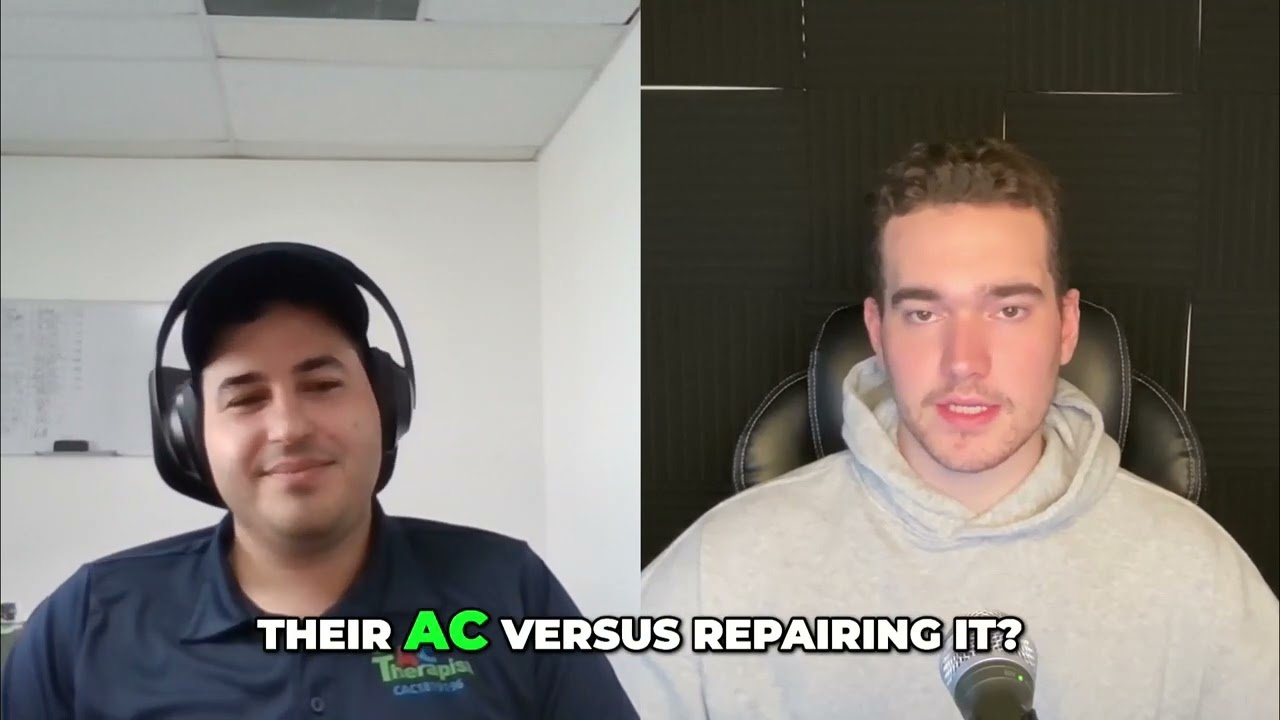
What the video shows
- 0:00 Question posed, is it safe to keep running a 20 year old AC unit
- 0:10 Tech confirms an old unit is still safe if it is currently running
- 0:20 Tech explains the real cost is lost efficiency and higher energy bills
- 0:30 Tech gives the 10 year and warranty rule for repair versus replace
- 0:40 Tech notes a big repair on an old unit means paying a big premium
- 0:50 Bottom line, old with no warranty means replace instead of repair
What we found on this Tampa call
On this filmed Tampa call, the homeowner asked our tech a straightforward question, is it safe to keep using an AC unit that is 20 years old. The answer was yes, but with a big caveat. Any unit, no matter its age, is safe to use as long as it is actually running. Age by itself does not make an AC dangerous. What it does is cost more.
Our tech walked through the real issue with a 20 year old unit still in service. It is not about safety, it is about how much extra a homeowner is paying every single month just to keep an old, inefficient system limping along. Efficiency drops off hard as units age past their design life. That shows up directly on the electric bill, and it also shows up in more frequent service calls as parts wear out one by one.
The tech’s advice matched the general rule techs use across the industry. Anything older than 10 years old with no warranty left is a candidate for replacement, not repair. If a big repair comes up on a unit in that category, paying for it is paying a premium for very little upside, since the rest of the system is aging right along with whatever part just failed. If the unit is under 10 years old and still has a warranty, repairing is usually the better financial move.
This is the exact kind of call we get across Tampa Bay, homeowners who know their system is old and are trying to decide if it is still worth fixing. We offer a free diagnosis on calls like this so the homeowner gets a straight answer instead of a guess, and if replacement makes more sense, we walk through options at ac-replacement-tampa before anything gets scheduled.
| Likely cause | Telltale sign | Safe to DIY? |
|---|---|---|
| Worn out compressor | Warm air blowing, loud clunking or humming from outside unit | No, needs a licensed tech |
| Refrigerant leak in an older system | Ice on the lines, weak cooling, hissing sound | No, refrigerant handling is licensed work |
| Corroded or dirty evaporator coil | Reduced airflow, rising bills, ice buildup indoors | Partial, rinsing an accessible outdoor coil is fine, indoor coil is not |
| Failing capacitor or contactor | Unit hums but will not start, hard starting | No, electrical component work |
| Leaky or damaged ductwork | Uneven cooling room to room, high bills | No, needs proper inspection and sealing |
| Aging thermostat or control board | Short cycling or unit not responding to settings | Sometimes, a thermostat swap can be DIY friendly |
| Clogged condensate drain line | Water near the indoor air handler, musty smell | Yes, homeowners can flush it periodically |
When should I replace my AC unit versus repairing it?
Replace the AC unit if it is older than 10 years and has no warranty left, especially if it needs a big repair. That is the rule our tech laid out on this call, and it is the same rule used across the HVAC trade because it is simple and it holds up in practice.
Here is the logic behind it. A unit under 10 years old that still has manufacturer warranty coverage usually makes repair the smarter financial choice, because the cost of the repair is often lower and parts may even be covered. Once a unit crosses 10 years and the warranty has expired, every repair is coming straight out of pocket, and it is going on top of a system that is already less efficient than a new one and getting closer to a bigger failure anyway.
A big repair on an old, out of warranty unit means paying a big premium for a system that will likely need something else fixed within a year or two. That is money that does not build toward anything. Putting that same money toward a new system, even with financing, builds equity in a unit that comes with a fresh warranty and modern efficiency.
- Under 10 years old, still under warranty: repair is usually worth it
- Under 10 years old, warranty expired: repair still often makes sense for smaller issues
- Over 10 years old, warranty expired, small repair needed: repair may still be reasonable
- Over 10 years old, warranty expired, big repair needed: replace instead
The one thing that does not belong in this decision is fear about safety. A unit does not become dangerous just because it is old. It becomes expensive. That is the real driver behind the replace versus repair decision, and it is why we always start with a free, honest diagnosis rather than pushing replacement on every old system that comes across our schedule.
What is the $5000 AC rule?
The $5000 rule is a quick math trick homeowners and techs use to decide between repairing or replacing an AC unit, and it works like this: multiply the age of the unit in years by the estimated cost of the repair, and if that number comes out above $5000, replacement is generally the better move.
As an example of how the math works in general terms, a 12 year old unit with an estimated $500 repair comes out to 6000, which is above the 5000 threshold, pointing toward replacement. A 6 year old unit with the same $500 repair comes out to 3000, which is under the threshold, pointing toward repair. The rule is not a strict law, it is a gut check that lines up closely with the same guideline our tech gave on this Tampa call, that anything over 10 years with no warranty and a real repair bill is usually not worth fixing.
Where this rule earns its keep is in situations where a homeowner is on the fence. A small repair on an old unit can still make sense if the number stays low. It is the big repairs, compressor failures, major refrigerant work, or coil replacements, on units already past 10 years old that push the math over the line every time.
The rule also captures something the raw math does not show directly, which is the cost of staying inefficient. An old unit that survives a big repair is still an old, inefficient unit the day after the repair. It will keep costing more on the electric bill than a new system would, so the $5000 rule is really a shorthand for a bigger truth, once a unit is old and the repair bill is high, you are paying twice, once for the repair and again every month afterward in wasted energy.
How much does it cost to put in a new AC unit?
The cost of a new AC unit depends on the size of the home, the equipment brand and efficiency rating, and whether the ductwork needs work too, so an exact number really does require a free in home estimate.
In general terms across the Tampa Bay market, a full system replacement, meaning the outdoor condenser and the indoor air handler or coil together, typically lands somewhere in the range of a few thousand dollars up through the higher end depending on the tonnage needed and the efficiency tier chosen. Larger homes need more tonnage, which costs more. Higher efficiency systems cost more up front but lower the electric bill over time, which matters a lot in a hot, humid climate like Tampa where the AC runs nearly nonstop.
A few things that move the price up or down on any replacement quote:
- Size of the home and correct tonnage needed, not just matching the old unit
- Efficiency rating chosen for the new equipment
- Condition of existing ductwork, since damaged or leaky ducts add cost to fix properly
- Whether the indoor air handler, thermostat, or electrical connections also need updating
- Attic or crawlspace access and how difficult the physical install is
We install Goodman and Daikin systems, both established manufacturers with strong warranty programs, and we service all brands for repairs regardless of who installed them. Because every home is different, we do not quote a number over the phone. We send a licensed tech out for a free estimate, measure the home, look at the ductwork, and give a firm number before any work is scheduled. You can see more on what a replacement involves at ac-replacement-tampa.
Can an AC unit last 30 years?
Technically yes, a unit can keep running for 30 years, but that is far outside the normal expected lifespan and it almost always means the system has been under very light use, very well maintained, or both, and it is likely running at a fraction of the efficiency of a modern system.
Most AC equipment is engineered around a 15 to 20 year design life. Getting to 30 years generally means everything went right for that unit, low run hours, consistent annual maintenance, no major corrosion issues, and probably some part replacements along the way that kept it going past its normal window. It does not mean the unit is running efficiently. Compressors, motors, and coils all lose efficiency as they age even if they never fully fail, so a 30 year old unit that is still turning on is very likely costing far more to run per month than a new one would, even before factoring in the risk of a sudden breakdown.
There is also a practical ceiling here that has nothing to do with mechanical wear. Refrigerant types change over the decades, and older refrigerants used in units from that era have been phased out of production. That makes major repairs on very old systems harder to source and more expensive when they are available at all, which pushes the replace decision even more firmly than age alone would.
So while 30 years is possible in rare cases, it is not something to plan around or rely on. The same 10 year and warranty rule from this Tampa call still applies at 30 years, just more urgently. If a unit that old needs any real repair, replacement is almost always the right call.
What are the warning signs an old AC unit is failing?
The clearest warning signs are rising energy bills without a change in usage, weaker airflow, strange noises, short cycling, and the unit struggling to hit the set temperature on hot Tampa afternoons.
Rising energy bills are usually the first thing homeowners notice, and it is also the exact issue our tech pointed to on this call, since efficiency loss is the real cost of running an old unit, not danger. If the electric bill keeps climbing while the thermostat setting stays the same, the system is working harder to do the same job it used to do easily.
Beyond the bill, watch for these signs:
- Weak or uneven airflow from room to room
- Grinding, clunking, or loud humming from the outdoor unit
- The system running long cycles or never fully shutting off
- Short cycling, where it turns on and off rapidly
- Ice forming on the refrigerant lines or indoor coil
- Water pooling near the indoor air handler
- Musty smell when the system runs
Any one of these on its own might be a small, cheap fix. On a unit under 10 years old with a warranty, that is exactly what it usually is. The problem is when several of these show up together on a unit that is already over 10 years old with no warranty coverage left. That combination is when a small annoyance turns into the kind of big repair our tech warned costs a big premium for very little payoff. A free diagnosis is the fastest way to find out which situation you are actually in before spending money on a guess.
How can homeowners extend the life of their AC unit?
Regular maintenance, a clean filter, clear airflow around the outdoor unit, and catching small repairs early are the biggest things a homeowner can control to get the most years out of an AC system.
Filters matter more in Tampa than in a lot of other markets because the system runs so much of the year. A dirty filter restricts airflow, forces the blower motor and compressor to work harder, and speeds up wear on the exact parts that are most expensive to replace. Checking it monthly and swapping it every one to three months depending on the filter type keeps the system breathing properly.
Outdoor unit clearance is another simple one. Keep at least a couple feet of clear space around the condenser, trim back landscaping, and rinse debris off the coil fins with a hose when they get dusty or covered in yard clippings. A unit that can move air freely runs cooler and lasts longer than one that is choked by dirt or shrubs.
Annual professional maintenance is the piece most homeowners skip, and it is the piece that catches small problems, a weak capacitor, a dirty coil, refrigerant slightly low, before they turn into the kind of big repair our tech described on this call. Catching those early keeps a unit under 10 years old firmly in repair territory instead of drifting into replace territory ahead of schedule.
- Change or clean the filter regularly, especially during peak summer months
- Keep the outdoor condenser clear of debris and vegetation
- Schedule annual maintenance to catch small issues early
- Address strange noises or rising bills right away instead of waiting
- Keep the thermostat and ductwork in good working order too, not just the equipment
None of this guarantees a 20 or 30 year lifespan, but it stacks the odds toward getting the full 15 years or more out of a system instead of losing years to preventable wear.
For general guidance that lines up with what we do on a service call, see the U.S. Department of Energy and ENERGY STAR maintenance guidance.
Frequently asked questions
- How do I know if my AC unit needs replacing?
Replace your AC if it is over 10 to 15 years old, needs frequent repairs, or struggles to cool despite running constantly. Tampa's intense humidity and salt-air corrosion near the coast accelerate wear. Home Therapist offers FREE estimates and FREE diagnosis at every visit. Call (813) 343-2212.
- How long do AC units last in Florida?
Florida AC units typically last 10 to 15 years, shorter than the national average due to year-round heavy use, high humidity, and coastal salt-air corrosion in Tampa Bay. Keeping up with maintenance extends that lifespan. Home Therapist provides FREE estimates and FREE diagnosis on every visit. Call (813) 343-2212.
When should I replace my AC unit?
Replace it when it is older than 10 years old and has no warranty left, especially if it needs a significant repair, since that combination rarely pays off compared to installing a new system.
Is it dangerous to run a 20 year old AC unit?
No, age by itself does not make a running AC unit dangerous. The real downside is efficiency loss and higher energy bills, not safety.
Does the AC brand affect how long it lasts?
Brand and installation quality both matter, correctly sized equipment installed properly tends to outlast an undersized or oversized system regardless of brand.
What is the average lifespan of an AC unit in Florida?
Most Florida systems, including in Tampa, land closer to 10 to 15 years because of nearly year round run time, heat, and humidity compared to milder climates.
Want the raw footage and full transcript? Watch the original video and read the transcript.
Key takeaways
- An old AC unit is not unsafe, it is just expensive to keep running.
- The 10 year and no warranty rule is a simple way to decide between repair and replacement.
- A big repair on an old, out of warranty unit is rarely worth the premium you end up paying.
- Tampa heat and humidity generally shorten AC lifespan compared to milder climates.
- A free diagnosis gets you a straight answer before you spend money on repair or replacement.
Related reading: how to decide between repairing and replacing.
More of our own footage on this
We have filmed this problem on real Tampa Bay service calls more than once. Each clip below is a different house and a different fault.
- Watch: Maintenance plays a big role in expanding your ACs lifespan!
- Watch: How Long Should an AC Unit Last in Florida?
- Watch: Is it SAFE to use an AC thats 20yo?
- Watch: If your AC unit is 15-20 years old, it may still be working fine, but…
- Watch: Can an AC really last 30 to 40 years?
- Watch: Does the weather affect your ACs lifespan?
- Watch: How long should an AC last?
Need help in Tampa? See our AC replacement in Tampa, or all of our air conditioning services across Tampa Bay.
Home Therapist Cooling, Heating, and Plumbing is the local Tampa Bay team for AC replacement in Tampa and across the bay. We answer the phone fast, give FREE estimates and a FREE diagnosis on service calls, carry common parts on every van, and stand behind the work with real warranties. We service every brand and install Goodman and Daikin systems. Licensed HVAC CAC1819196 and plumbing CFC1431159.
More AC Installation Articles
- Why Crane Access Shaped This Rooftop Changeout: AC Installation in Tampa, FL 33611
- Expansion Tank Installation in Tampa, FL 33635: 2-Gal Fix
- Commercial AC Installation Tampa: Pastry Shop Job Walkthrough
- Dead Capacitor Reveals a Failing Compressor and Motor: AC Repair + Replacement Recommendation on West Elm Street, Tampa, FL 33615


